How Much Does a Kitchen Island Cost? The Complete Answer
Thinking about upgrading your kitchen but feeling overwhelmed by the costs? You’re not alone—many people struggle with figuring out how much a kitchen island will actually set them back. With so many options out there, it’s easy to get lost in the details.
You’ll typically spend between $1,500 and $5,000 on a kitchen island, depending on size, materials, and design features. Custom styles, high-end materials like marble, and added appliances raise costs, while simple prefabricated islands keep your budget lower.
Installation and maintenance fees also add up, so it’s important to plan ahead.
Whether you want built-in seating or smart storage, understanding these factors helps you make the best choice.
Keep exploring to uncover cost-saving tips and budgeting advice.
Key Takeaways
- Kitchen islands usually cost between $1,500 and $5,000, depending on the design, materials, size, and craftsmanship.
- Custom-built islands give you a tailored fit and style but tend to be more expensive and take longer to install than prefabricated options.
- Material choices vary from budget-friendly options like laminate and butcher block to luxury materials such as quartz, marble, and sustainable bamboo.
- Additional costs might include appliances like cooktops and wine coolers, seating options, and installation work for electrical and plumbing.
- Don’t forget to budget for maintenance, permit fees, and potential upgrades. Also, consider energy efficiency and long-term design trends to maximize value.
How Much Does a Kitchen Island Cost on Average?
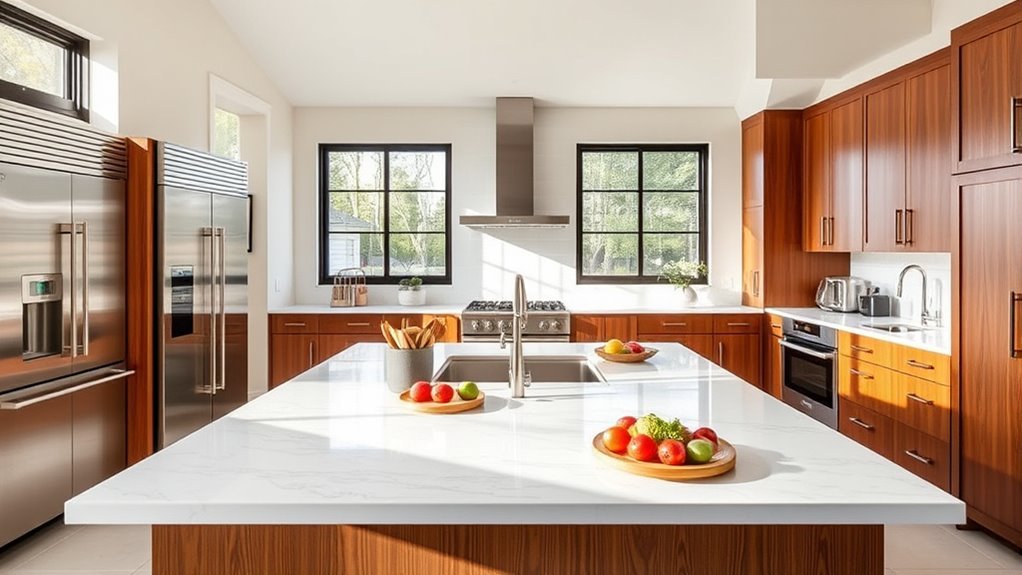
Wondering how much a kitchen island typically costs? On average, you’ll spend between $1,500 and $5,000, depending on the style and materials you pick.
Kitchen island trends lean toward modern designs with sleek lines, minimalist shapes, and multifunctional features. These often include built-in appliances, seating, and smart storage options, which can influence the price.
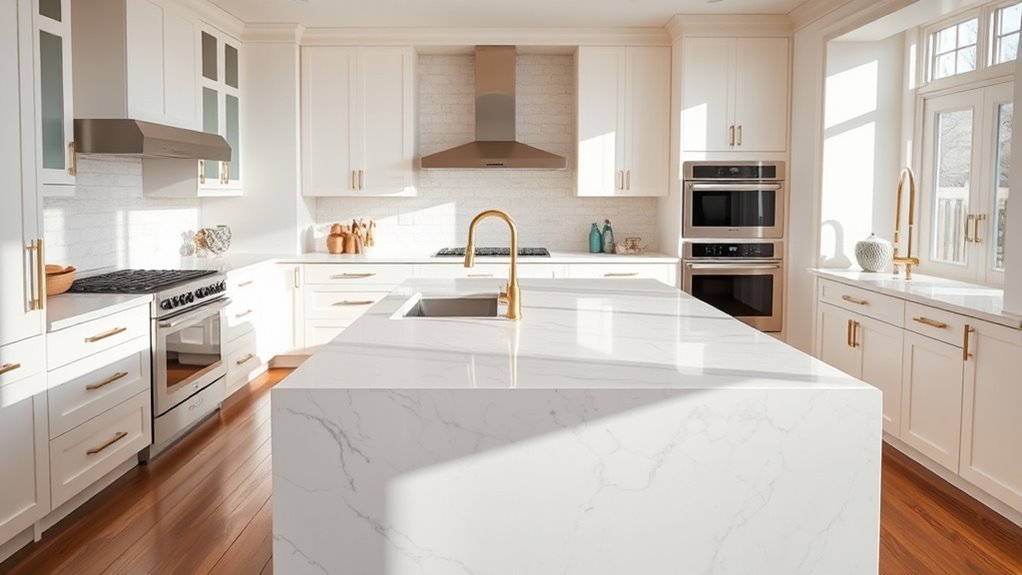
Modern kitchen islands feature sleek lines, minimalist shapes, and multifunctional elements like built-in appliances and smart storage.
If you go for a simple, freestanding island with a basic countertop, you’ll stay on the lower end of the price range. But modern designs with quartz or marble surfaces, custom cabinets, and integrated lighting tend to cost more.
Remember, the average price reflects both materials and craftsmanship. So, it’s good to balance your aesthetic goals with what fits your budget.
Staying updated on kitchen island trends helps you choose a design that’s stylish and practical without overspending.
Key Factors That Affect Kitchen Island Costs
Although kitchen islands can range quite a bit in price, several key factors directly influence how much you’ll spend. When choosing your island, think about how different styles fit your space and your budget.
For example, a simple, minimalist design might cost less than a custom-built island with detailed carvings. Design trends also matter—materials and finishes that are popular now tend to come with higher price tags.
Here’s a quick look at the main factors affecting costs:
| Factor | Impact on Cost |
|---|---|
| Kitchen Island Styles | Custom or detailed styles tend to be more expensive |
| Materials | High-end materials like marble or hardwood can raise costs |
| Design Trends | Popular features like smart tech add to the price |
How Size and Shape Influence Kitchen Island Prices
The size of your kitchen island really matters when it comes to the cost — bigger islands tend to be more expensive. And when it comes to shape, whether it’s rectangular or L-shaped, that can also influence the price depending on the materials used and how complex the design is.
Plus, making sure the island fits well into your space is important, both for how it looks and how it functions. So, it’s a good idea to think about the size and shape carefully before making your decision.
Size Impact On Cost
Three key factors determine how much your kitchen island will cost: its size, shape, and overall design. When focusing on size impact, size considerations and size flexibility are really important. Larger islands naturally require more materials and labor, which increases costs.
But you can adjust the size within your space to balance functionality and budget. Smaller islands save money but might limit workspace and storage options.
Here’s a quick cost overview based on size:
| Island Size | Approximate Cost Range | Notes |
|---|---|---|
| Small (3-4 ft) | $500 – $1,500 | Compact, budget-friendly |
| Medium (5-6 ft) | $1,500 – $3,000 | Balanced size and cost |
| Large (7+ ft) | $3,000 – $7,000+ | Expansive, higher price |
Adjusting the size wisely helps you get the best value and makes sure your island fits perfectly in your kitchen.
Shape Variations Pricing
When you factor in both size and shape, the cost of your kitchen island can vary a lot. Different shape styles like rectangular, L-shaped, or circular impact not just how it looks but also the price.
For example, a simple rectangular island usually costs less than a custom L-shaped one because it’s easier to build and install. Intricate curves or multi-level designs need more craftsmanship, which pushes costs higher.
If you want a unique shape that matches your kitchen’s style, you’ll likely spend more on materials and labor. Understanding how shape styles affect pricing helps you balance your budget with your desired look.
Choosing the right shape ensures your kitchen island fits well without surprises in the cost.
Space Utilization Effects
Understanding how different shapes affect your kitchen island’s price is just part of the picture. You also need to think about how size and layout impact space efficiency and design flexibility.
Larger islands give you more storage options and improve workflow by offering plenty of prep space and easy movement. On the other hand, compact islands are great for smaller kitchens, maximizing space without sacrificing cooking convenience.
The shape can also encourage social interaction. L-shaped or curved islands create natural gathering spots, while rectangular ones focus more on functionality. When planning your island, consider how its size and shape will fit your cooking needs and social habits.
This way, you’ll invest in a kitchen island that fits your space perfectly and boosts your kitchen’s overall usability.
Custom-Built vs. Prefabricated Kitchen Islands
Choosing between a custom-built and a prefabricated kitchen island can really impact your budget and how flexible your design can be. If your space is unique or you want a specific look, a custom design is probably your best option.
Custom-built islands fit perfectly to your kitchen’s layout, making the most of every inch and matching your style exactly. But keep in mind, they usually cost more and take longer to install.
Custom-built islands maximize your kitchen’s space and style but often come with higher costs and longer installation times.
Prefabricated islands come in standard sizes and designs, making them more affordable and quicker to set up. While they’re less flexible, they’re great if you want a simple solution without waiting weeks.
In the end, your choice depends on balancing your budget with how much you want the island to fit your space perfectly. If space is tight and style matters, go for custom-built. If you want a quick, budget-friendly upgrade, prefabricated islands are a practical choice.
Materials: Budget to Luxury Options
Since the material you pick directly affects both the look and cost of your kitchen island, it’s important to weigh your options carefully. If you’re working with budget materials, consider laminate or butcher block for affordable countertop options that still offer style and durability. These materials pair well with simple storage solutions and basic hardware upgrades to keep costs down.
On the other hand, luxury finishes like quartz, marble, or granite enhance your island’s appearance and longevity but come at a higher price. You can customize design styles and color choices to match your kitchen’s aesthetic, from modern minimalism to rustic charm.
Don’t forget sustainability factors. Bamboo and recycled materials provide eco-friendly alternatives without sacrificing style. Ultimately, your choice of materials impacts not just cost but also functionality and visual appeal. Balance your budget with your vision to create the perfect kitchen island.
How Kitchen Island Appliances and Seating Affect Cost
When you’re thinking about adding appliances like sinks or cooktops to your kitchen island, keep in mind that the costs can add up pretty fast. It really depends on what kind of appliances you pick and the brands you go for.
And don’t forget about seating! Whether you’re opting for simple stools or built-in benches, these choices will also impact your budget and how much space you have. Plus, it’s a good idea to consider installation costs and ongoing maintenance — those little expenses can add up over time too.
Appliance Types and Prices
Adding appliances and seating to your kitchen island can really impact the overall cost. When choosing appliances, think about both efficiency and trusted brands, as they affect upfront prices and long-term savings.
Higher efficiency models might cost more at first but can save you money on energy bills later. Popular brands tend to be pricier but often offer better reliability and style.
Here’s how different appliances can affect your budget:
- Built-in microwaves: $200 to $800
- Wine coolers: $500 to $2,000
- Induction cooktops: $600 to $2,500
- Under-counter refrigerators: $1,000 to $3,000
- Pop-up power outlets: $100 to $300
Choosing the right mix of appliances helps improve functionality without blowing your budget.
Seating Options Impact
Two key factors that greatly influence your kitchen island’s cost are appliances and seating options. When it comes to seating, your choice of styles—like bar stools, benches, or built-in seating—directly impacts the budget.
Your space planning is also important; tighter layouts might limit the size and style of seating you can have, which affects material choices and overall price. Design preferences, such as upholstered cushions or custom finishes, can raise costs but make the space more comfortable and visually appealing.
Don’t forget about functionality. Seating that doubles as storage or adjustable-height stools can add value but also increase expenses. The layout, like whether seating wraps around the island or is only on one side, also influences the cost.
Balancing these elements helps ensure your kitchen island fits both your lifestyle and your budget.
Installation and Maintenance Costs
Choosing appliances and seating for your kitchen island isn’t just about the initial cost. It also impacts installation complexity and ongoing maintenance expenses.
Different installation methods can affect labor costs, especially when plumbing or electrical work is needed. The type of seating you pick can also influence how often you’ll need to maintain or repair your island.
Keep these tips in mind to manage costs effectively:
- Built-in appliances often require professional installation, which can increase expenses.
- Adding electrical outlets and plumbing makes installation more complex.
- Durable seating materials help reduce the need for frequent maintenance.
- Regular cleaning and upkeep can prevent costly repairs.
- Opt for appliances with accessible maintenance features for easier care.
Kitchen Island Labor and Installation Costs
When you include labor and installation, the cost of a kitchen island can add up quickly. Labor rates differ depending on where you live, and how complicated your island is can affect how long installation takes. If your island needs plumbing or electrical work, expect to pay more in labor costs.
Here’s a quick overview of typical labor and installation expenses:
| Task | Estimated Cost |
|---|---|
| Basic installation | $300 – $700 |
| Electrical work | $500 – $1,200 |
| Plumbing installation | $400 – $1,000 |
| Custom carpentry labor | $50 – $100 per hour |
Your total labor cost depends on what’s involved and the skill level needed. Installation can take just a few hours for simple setups or several days for more complex designs. Understanding these factors helps you plan your budget and avoid surprises during installation.
Tips to Save Money Without Sacrificing Style
Want to save some cash on your kitchen island without sacrificing style? One way is to go for affordable materials that still look fantastic. You don’t have to break the bank to get that stylish vibe you’re after.
Another tip is to consider pre-made designs. They can really cut down on costs and save you a lot of time since you won’t have to start from scratch. Plus, if you’re feeling handy, tackling some of the installation tasks yourself can help keep expenses down—just make sure you’re comfortable with the process so everything still looks polished!
Choose Affordable Materials
Affordable materials can make a big difference in your kitchen island’s final cost without sacrificing style. Picking budget-friendly options wisely lets you create a stunning centerpiece without overspending.
Consider materials that look great but won’t break the bank. Here are some affordable choices you might want to try:
- Laminate countertops: Durable and available in many designs
- Butcher block: Warm, natural wood that’s budget-friendly
- MDF with veneer: Smooth finish at a lower price
- Painted plywood: Customize colors without high costs
- Concrete overlays: Modern look with affordable installation
Opt For Pre-Made Designs
How can you save money on a kitchen island without giving up style? Opting for pre-made designs offers a smart solution. Prefab advantages include lower costs and quicker installation since the island arrives ready to use. You’ll avoid custom fabrication delays and expensive labor, making it budget-friendly.
Plus, many pre-made islands come in trendy styles, so you won’t sacrifice aesthetics. However, keep in mind design limitations. Pre-made options might not perfectly fit your kitchen’s dimensions or match your exact style preferences.
But with a bit of creativity, you can choose a versatile model and personalize it with paint or hardware to suit your space. Embracing pre-made designs balances affordability and style, helping you create the kitchen island you want without breaking the bank.
DIY Installation Tips
Tackling your kitchen island installation yourself can cut costs considerably while letting you maintain stylish control. By choosing the right DIY materials and mastering simple installation techniques, you’ll save money without sacrificing design. Start with a clear plan and don’t rush the process.
Here are some tips to guide you:
- Pick lightweight, durable DIY materials for easy handling.
- Measure twice, cut once to avoid costly mistakes.
- Use modular installation techniques to simplify assembly.
- Secure the island properly for safety and stability.
- Add personal touches like paint or hardware for style.
With these steps, your kitchen island will be both functional and beautiful. It proves that smart DIY can deliver high-end results without the high price.
Is a Kitchen Island Worth the Investment?
Wondering if a kitchen island will truly add value to your home? The benefits go beyond just extra counter space. It boosts your kitchen’s functionality with more storage, prep areas, and even seating options. These features can make your kitchen more appealing to potential buyers, increasing your home’s marketability.
When thinking about investment returns, a well-designed kitchen island often recoups a good part of its cost during resale. It not only modernizes your kitchen’s look but also improves flow and usability, which many homebuyers love. The key is to pick a design that fits your space and lifestyle without taking over the room.
If you want a smart investment, a kitchen island can be worth it when it balances style, practicality, and cost. It’s more than just a trend — it’s an upgrade that pays off in everyday convenience and long-term value.
How to Budget for Your Kitchen Island Renovation
Before you dive into your kitchen island renovation, it’s important to set a clear budget. This helps you keep costs in check and avoid any surprises along the way. Understanding your financial limits upfront makes the whole process smoother.
Start by making a list of must-haves versus nice-to-haves. Then, estimate costs for materials, labor, and any extra plumbing or electrical work needed. This way, you can prioritize features without overspending.
Keep these key points in mind: define your maximum spend to stay focused, research material costs so you’re not caught off guard, and set aside funds for unexpected expenses. Don’t forget to include installation and permit fees in your budget.
Finally, plan for future maintenance and upgrades. It’s a good idea to consider long-term costs to keep your kitchen island looking great and functioning well for years to come.
Frequently Asked Questions
What Are Popular Kitchen Island Design Trends in 2024?
You’ll love how popular kitchen island design trends in 2024 focus on modern materials like quartz, concrete, and sustainable wood. These options give your space a sleek, contemporary look.
Multi-functional designs are also big this year, combining storage, seating, and prep areas into one. You’ll find islands with built-in charging stations or hidden appliances, making your kitchen more efficient and stylish.
Embracing these trends helps you create a practical yet trendy hub for your home.
How Do I Choose the Right Lighting for My Kitchen Island?
To choose the right lighting for your kitchen island, focus on pendant styles that match your decor and provide plenty of light. Pick fixtures that complement your overall kitchen look and make the space feel inviting.
Think about where to hang your lights. Pendant lights should hang about 30-36 inches above the island surface to prevent glare but still give good illumination. This height usually works well for most spaces.
You might want multiple smaller pendants or a single linear fixture, depending on your island’s size. Smaller pendants create a more delicate look, while a larger fixture can make a bold statement.
Remember to balance style with functionality. Good lighting makes your kitchen more welcoming and ensures you can easily see what you’re doing.
Can a Kitchen Island Improve Home Resale Value?
Think of a kitchen island as the shining centerpiece that draws buyers in like moths to a flame. Yes, a well-designed kitchen island boosts your home’s resale value by offering extra counter space, storage, and a social hub.
These benefits make your kitchen more functional and appealing, which can help your home stand out in the market. Adding one often pays off when it’s time to sell.
What Maintenance Do Kitchen Islands Typically Require?
You’ll want to regularly clean your kitchen island based on its materials. Wood needs gentle wiping and occasional oiling, while granite or quartz require sealing and non-abrasive cleaners.
Maintenance tips include avoiding harsh chemicals, wiping spills promptly, and checking for loose hardware or scratches. If your island has a butcher block top, sanding and resealing yearly keeps it looking fresh.
Following these steps guarantees your island stays functional and attractive for years.
Are Portable Kitchen Islands a Practical Alternative?
Yes, portable kitchen islands are a practical alternative, especially if you need flexible space-saving solutions. You can move them around easily, which helps when you want to create more room or change your kitchen layout.
Benefits of portable islands include extra storage, more prep space, and sometimes even built-in appliances. If you like changing your kitchen’s flow or have limited space, a portable island is a great option without a permanent commitment.
Conclusion
When you think about adding a kitchen island, you might picture friends gathering, sharing stories over a casual meal. Coincidentally, the cost often matches the joy it brings—balancing size, materials, and installation to fit your budget.
Whether you choose custom or prefab, investing wisely means you’ll cook up more than meals; you’ll create memories.
So, with a little planning, your kitchen island becomes both a centerpiece and a smart investment you’ll love.
In the end, understanding the costs of a kitchen island helps you make the best choice for your space and budget.