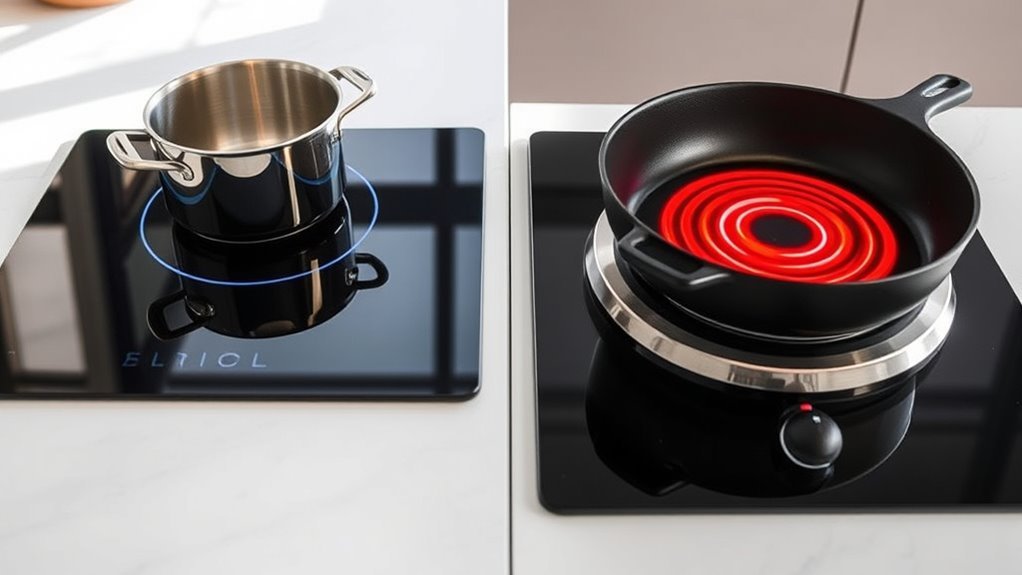
Induction vs. Electric Range: Which Is Better?
Cooking upgrades can feel overwhelming, especially with so many options out there. If you’re tired of slow heating or inconsistent temps, you’re not alone. Many people struggle with choosing the right stove that balances speed, safety, and cost.
That’s why understanding the differences between induction and electric ranges is so helpful.
If you want faster cooking and precise temperature control, induction ranges are your best bet. They’re more energy-efficient, safer with cooler surfaces, and easier to clean than electric ranges.
While induction costs more upfront and needs compatible cookware, you’ll save on energy bills over time.
Electric ranges are cheaper initially and work with any cookware but cook slower and use more energy.
You’ll find detailed insights on cost, safety, and installation ahead to help you decide.
Key Takeaways
- Induction ranges cook faster and give you precise temperature control, unlike electric ranges which tend to be slower and less even.
- They’re more energy-efficient, with about 84% efficiency compared to 70% for electric. That means lower bills and a smaller environmental footprint.
- Electric ranges usually cost less upfront, around $400 to $1,000. Induction ranges are pricier, from $1,000 to $2,500, but save money over time thanks to their efficiency.
- Induction cooktops are safer because their surfaces stay cooler and they often have automatic shutoff features. Electric ranges tend to stay hot longer, increasing the risk of burns.
- You need magnetic cookware and special installation for induction. Electric ranges work with most cookware and standard outlets, making them more convenient.
How Induction and Electric Ranges Work
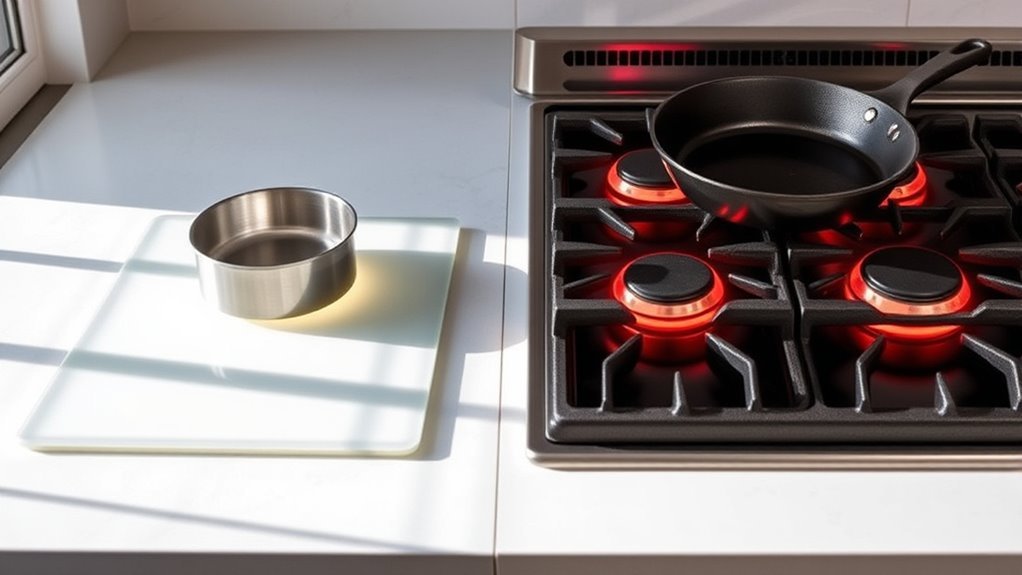
While both induction and electric ranges use electricity to cook food, they operate in fundamentally different ways. Induction technology uses electromagnetic fields to directly heat pots and pans, making your cooking experience faster and more efficient. In contrast, electric ranges rely on electric heating elements that warm up and transfer heat to your cookware, meaning the surface itself gets hot.
When it comes to cooking methods, induction offers precise temperature control, letting you adjust heat quickly and maintain consistent cooking. Electric heating tends to have slower response times, which can affect your ability to fine-tune temperatures. Regarding safety standards, induction ranges stay cool to the touch since only the cookware heats up, reducing the risk of burns. Electric ranges can remain hot longer, which might concern some users.
Energy consumption also differs: induction is generally more energy-efficient, appealing to those mindful of power use. Ultimately, your preferences will shape which cooking method suits you best.
Induction vs. Electric: Which Cooks Faster and Why?
How quickly your meal gets on the table often depends on the type of range you use. When comparing induction and electric ranges, induction clearly wins in cooking speed. Induction ranges use electromagnetic fields to directly heat your cookware, which means the heat transfers almost instantly.
This direct heating boosts cooking speed, allowing you to boil water or sauté vegetables much faster than with a traditional electric range. Electric ranges rely on heating coils that warm up first and then transfer heat to your cookware, causing a delay.
This slower heat distribution means you wait longer for your food to cook. Plus, electric ranges often have uneven heat distribution, leading to hot spots and inconsistent cooking results.
Comparing Energy Efficiency of Induction vs. Electric
Since energy efficiency directly impacts your utility bills and environmental footprint, it’s important to understand how induction and electric ranges compare.
Induction ranges use electromagnetic energy sources to heat cookware directly, making them about 84% efficient. This means more energy goes into cooking your food and less is wasted as heat. Traditional electric ranges rely on resistive heating elements that transfer heat to the cookware, with roughly 70% efficiency.
Induction ranges heat cookware directly with about 84% efficiency, outperforming traditional electric ranges at 70%.
This difference means induction cooking uses less electricity overall, reducing your energy consumption. Because induction draws energy more precisely and quickly, it also lowers your environmental impact by cutting down on unnecessary power use.
Plus, if your electricity comes from renewable sources, induction’s efficiency maximizes the benefits of cleaner power. By choosing induction, you’re saving money and minimizing your carbon footprint, making it a smarter choice for your kitchen and the planet.
Upfront and Long-Term Costs of Each Range
When you’re thinking about getting a new range, it’s smart to consider both the upfront cost and what you’ll save on energy bills down the line. The initial price is just one part of the picture — you’ll also want to keep in mind how much it might cost to maintain and repair your range over the years.
Let’s take a closer look at what you can expect from induction and electric models, so you can make the best choice for your kitchen and budget.
Initial Purchase Price
Comparing the initial purchase prices of induction and electric ranges can help you decide which fits your budget better. Analyzing the costs shows electric ranges usually have a lower upfront price, making them a good choice if you’re watching your spending.
Induction ranges tend to be more expensive upfront but offer advanced features. Think about your budget carefully before making a decision.
| Range Type | Average Initial Cost | Budget Impact |
|---|---|---|
| Electric | $400 – $1,000 | More affordable |
| Induction | $1,000 – $2,500 | Higher upfront cost |
| Mid-Range | $700 – $1,500 | Balanced option |
This comparison helps you weigh your options without overlooking the initial purchase price.
Energy Efficiency Savings
Energy efficiency plays a key role in cutting both upfront and long-term cooking costs. When you choose an induction range, you tap into lower energy consumption because it heats cookware directly. This means less wasted heat and faster cooking times, which helps save on your energy bills over time.
Induction ranges also stand out as eco-friendly options because they reduce electricity use while still offering powerful performance. On the other hand, traditional electric ranges tend to lose more heat during cooking, which can increase your energy consumption and costs.
While their initial price might be lower, you could end up spending more in the long run due to higher electricity bills. So, if you’re looking to save money and help the environment, induction is a smart choice that benefits both your wallet and the planet.
Maintenance and Repair Costs
Both induction and electric ranges come with their own maintenance and repair costs that can affect your budget over time. Induction ranges usually have fewer exposed parts, so they tend to need repairs less often, but replacing parts can be more expensive.
Electric ranges might need repairs more often, especially for heating elements, but the parts are generally cheaper. When comparing costs, think about warranty options and how easy it is to get service in your area. Induction units often require specialized service.
Following simple maintenance tips like regular cleaning and using troubleshooting guides can help you avoid costly repairs. DIY repairs are easier with electric ranges because their design is simpler. Overall, balancing initial costs with ongoing maintenance will help you decide between induction and electric ranges.
Safety Features of Induction vs. Electric Ranges
While induction and electric ranges serve the same basic purpose, their safety features differ quite a bit. Knowing these differences can help you pick the right option for your kitchen’s safety.
Surface Coolness and Child Safety: Induction cooktops stay cool except under the pot, which means less risk of burns and makes them safer for kids. Electric ranges have hot coils or glass tops that stay hot longer, increasing burn hazards.
Overheating Issues and Fire Risks: Induction ranges detect when cookware is on and shut off automatically if none is present, reducing fire risks. Electric ranges can overheat if left on, which makes them more prone to fires without automatic shutoff features.
Induction Hazards and Electric Safety: Induction can emit low electromagnetic fields, which are generally safe but worth considering if you have sensitivities. Electric ranges don’t have this issue but may pose electrical hazards if not maintained properly.
Which Cooking Styles Suit Induction vs. Electric?
When you’re trying to decide between induction and electric cooktops, it’s all about how you like to cook and what tools you have. Induction stoves offer super precise heat control, which is perfect if you love simmering or delicate cooking techniques. But keep in mind, you’ll need magnetic cookware like cast iron or certain stainless steels because induction works through magnetic fields.
On the other hand, electric ranges tend to have a more traditional feel. They heat up more slowly but can be great if you prefer a more straightforward, no-fuss cooking style. Plus, they work with almost any cookware, so you don’t have to worry about switching your pots and pans.
And don’t forget to think about energy efficiency. Induction is usually more energy-efficient since it heats up quickly and directly, which can save you some power if you’re cooking often. So, consider your kitchen habits and what kind of cooking experience you want when choosing between these two.
Heat Control Precision
When cooking, precise heat control can make all the difference in achieving the perfect dish. Induction ranges excel here because they respond to temperature changes quickly, so you can adjust the heat instantly.
Electric ranges, on the other hand, offer strong heat retention. They keep steady temperatures once heated, which is great for slow-cooking or simmering.
Understanding these differences helps you choose the right range for your cooking style. If you need quick adjustments, induction is the way to go. For steady, consistent heat, electric might be better.
Induction’s fast response works well for recipes that need frequent heat changes, like sautéing or melting chocolate. Electric ranges support steady simmering and slow-cooking.
When it comes to high-heat searing, induction heats quickly but cools fast. Electric surfaces stay steady, making them ideal for searing steaks or other meats.
Cookware Compatibility Needs
Cookware compatibility plays a crucial role in choosing between induction and electric ranges. With induction, you’ll need cookware made of magnetic materials like cast iron or stainless steel with a magnetic base because the cooktop heats the pan directly.
If your current pots and pans aren’t compatible, you might have to buy new ones. Electric ranges, on the other hand, work well with almost any cookware, including aluminum, copper, or glass.
In terms of cooking techniques, induction is great for quick temperature changes and precise simmering. It’s perfect for delicate sauces or fast stir-frying.
Electric ranges offer steady, consistent heat, making them ideal for slow cooking or baking. Understanding these differences helps you pick the range that best fits your kitchen and culinary style.
Energy Efficiency Differences
The type of cookware you use affects more than just compatibility. It also influences how efficiently your stove heats. Induction ranges usually use less energy than electric ones because they directly heat the pot or pan, reducing wasted heat. This means you save energy and reduce your environmental impact.
Think about these points when choosing which cooking style is right for you:
- Induction is great for quick, precise cooking since it heats fast and cools down quickly.
- Electric ranges provide consistent heat, making them ideal for slow-cooking and simmering.
- Both types require flat-bottom cookware, but induction needs magnetic materials for efficiency.
Cleaning and Maintenance: Which Is Easier to Keep Pristine?
How often you clean your stove can really impact your kitchen routine. When comparing induction and electric ranges, cleaning methods and maintenance tips are key in deciding which is easier to keep spotless.
Induction cooktops have a smooth, flat surface that’s quick to wipe clean. Spills don’t stick around, making cleanup simple and hassle-free. Electric ranges, especially coil models, need more effort to clean around burners and drip pans, which takes extra time.
| Feature | Induction Range |
|---|---|
| Surface Cleaning | Wipes clean in seconds |
| Maintenance | Minimal, no coil or burner parts |
| Emotional Feel | Frustration-free upkeep |
With induction, you spend less time scrubbing and more time enjoying your kitchen. Electric ranges can be stubborn with grime, so they often need more frequent, careful cleaning.
Your choice depends on how much effort you want to put into stove maintenance and how much time you’re willing to spend cleaning.
Cookware Compatibility for Induction and Electric Ranges
When you’re using an induction range, it’s important to make sure your cookware is magnetic. Basically, your pots and pans need to be compatible with induction cooktops to work properly. On the other hand, electric ranges are a lot more flexible—they let you use almost any kind of pot or pan without any fuss.
Getting the hang of these differences can really help you pick the right cookware for your stove. So, whether you’re upgrading your kitchen or just want to make sure you’re using the best tools, knowing what works with induction versus electric makes all the difference.
Induction Cookware Requirements
Because induction cooktops use magnetic fields to generate heat, you’ll need cookware that’s compatible with this technology. Not all cookware materials work with induction, so understanding induction compatibility is essential. Here’s what you should look for:
- Magnetic Base: Your cookware must have a magnetic base, usually made from ferrous metals like cast iron or magnetic stainless steel.
- Flat Bottom: A flat, smooth bottom ensures proper contact with the cooktop, which improves heat transfer and efficiency.
- Size Match: The cookware’s diameter should closely match the size of the induction burner for optimal performance.
Before buying, test your cookware with a magnet. If it sticks firmly, it’s induction-compatible. This simple test helps avoid frustration and ensures smooth cooking on your induction range.
Electric Range Material Flexibility
Induction cooktops demand specific cookware, but electric ranges give you much more freedom. With an electric range, you can use almost any type of cookware, from cast iron and stainless steel to aluminum and copper.
This flexibility means you’re not limited by material and can choose pots and pans based on your cooking style or budget. Electric ranges also accommodate a wide variety of cookware, so you can experiment with different brands and materials without worries about compatibility.
While induction requires magnetic materials for proper heating, electric heating elements work with all materials. This makes durability more important than magnetic properties.
If you want versatile cookware options and don’t want to replace your current pots and pans, an electric range offers that convenience and adaptability.
Installation and Kitchen Setup Tips for Your New Range
Although choosing the right range is important, proper installation and kitchen layout make a big difference in performance and safety. To ensure your new induction or electric range works well, focus on these installation tips and layout ideas:
- Check Electrical Needs: Induction ranges usually need a dedicated 240-volt outlet, while electric ranges might have different power specs. Make sure your wiring matches what your range requires before installing.
- Measure for Fit: Double-check your kitchen space can fit the range comfortably. Leave enough room around it for ventilation and easy use—no cramped areas.
- Plan Ventilation and Safety: Place your range near a vent hood or exhaust to handle heat and fumes. Also, ensure your layout allows safe movement to avoid accidents.
Which Range Offers Better Value for Your Budget?
How do you determine which range stretches your budget further without sacrificing quality? Start by considering upfront costs, energy efficiency, and long-term maintenance.
Electric ranges usually cost less initially, making them appealing if you’re watching expenses. However, induction ranges, while more expensive upfront, save money over time thanks to better energy efficiency and faster cooking.
Electric ranges are cheaper upfront, but induction saves money long-term with efficiency and speed.
When assessing value, think about your cooking habits. If speed and precision matter most, induction might be worth the higher price. If you want something reliable and straightforward without extra features, an electric range could be a better choice.
Don’t forget installation costs. Induction may require electrical upgrades, which can add to your expenses. At the end of the day, the best value depends on what matters most to you—whether that’s saving upfront or over the long run.
Frequently Asked Questions
Can Induction or Electric Ranges Be Used During Power Outages?
You can’t use induction or electric ranges during power outages because they rely entirely on electricity to work. Power reliability is key for these appliances to function.
If you experience frequent outages, you might want to consider cooking alternatives like gas stoves or portable propane burners. These don’t depend on electricity.
Having backup options ensures you can keep cooking even when the power’s out, so you avoid disruptions in your meal prep.
Do Induction or Electric Ranges Affect Kitchen Humidity Levels?
You might think cooking on induction or electric ranges spikes your kitchen’s humidity, but that’s not entirely true. Because induction offers better cooking efficiency, it heats food faster and wastes less energy, producing less excess steam.
Electric ranges can emit more moisture since they take longer to cook. So, if moisture control matters, induction helps keep your kitchen drier, making it easier to maintain comfortable humidity levels while you cook.
Are There Any Health Concerns Linked to Using Induction or Electric Ranges?
You don’t need to worry much about health risks when using induction or electric ranges. The electromagnetic fields from induction cooktops are low and generally considered safe for most people.
Both types offer good cooking efficiency, which helps maintain food quality. If you have medical devices like pacemakers, it’s best to consult your doctor about induction.
Can Induction or Electric Ranges Be Used With Outdoor Kitchens?
Imagine a sleek induction cooktop humming quietly beside a sturdy electric range under the open sky. You can use both for outdoor cooking, but induction’s energy efficiency shines, heating pots directly with minimal heat loss.
Electric ranges, while reliable, may struggle in windy conditions and waste more energy. So, if you want quick, efficient outdoor cooking, induction’s your best bet.
Both can work outdoors with the right setup and protection from the elements.
How Do Induction and Electric Ranges Impact Home Resale Value?
You’ll find that both induction and electric ranges can positively impact your home’s resale value, but energy efficiency really matters to buyers.
Buyers often prefer induction ranges because they’re more energy-efficient and heat up faster, making your kitchen more appealing. But some still prefer traditional electric ranges because they’re familiar and easy to use.
To boost resale value, think about your local market and highlight the energy-saving benefits of whichever range you choose.
Conclusion
Choosing between induction and electric ranges is like picking a race car or a reliable sedan. Remember when Jamie switched to induction and cut cooking time by 30%, feeling like a pro racer in the kitchen?
If speed, safety, and efficiency matter most, induction’s your winner. But if you prefer a straightforward, budget-friendly option, electric’s got your back.
Weigh your priorities, and you’ll find the perfect match that makes cooking a joy every day—whether you choose induction or electric.