Your Guide to Built in Oven Microwave: Choosing With Confidence
Many people struggle with choosing the right built-in oven microwave that fits their kitchen and lifestyle. With so many options out there, it’s easy to feel overwhelmed and unsure where to start. You’re not alone—finding a reliable, versatile appliance can make all the difference in your cooking routine.
You’ll want to pick a built-in oven microwave with multiple cooking modes like convection and grilling for versatile meals.
Measure your space carefully to find the right size and balance capacity with kitchen flow. Set a realistic budget, considering installation and energy efficiency.
Trust brands like Samsung or Bosch for quality and features. Focus on durable materials and easy maintenance to keep it looking and working great.
Keep exploring to uncover tips on installation and functions that fit your lifestyle.
Key Takeaways
- Choose a built-in oven microwave that offers multiple cooking modes like convection, grilling, and microwave for more versatile meal options.
- Measure your kitchen space carefully to pick the right size and ensure it fits seamlessly into your setup.
- Set a clear budget that considers features, installation costs, and long-term energy savings.
- Prioritize models from trusted brands such as Samsung, Bosch, LG, Electrolux, and Whirlpool for better quality and durability.
- Go for energy-efficient appliances with durable materials and easy-to-maintain finishes to keep your kitchen looking great.
Must-Have Features for Built-In Oven Microwaves
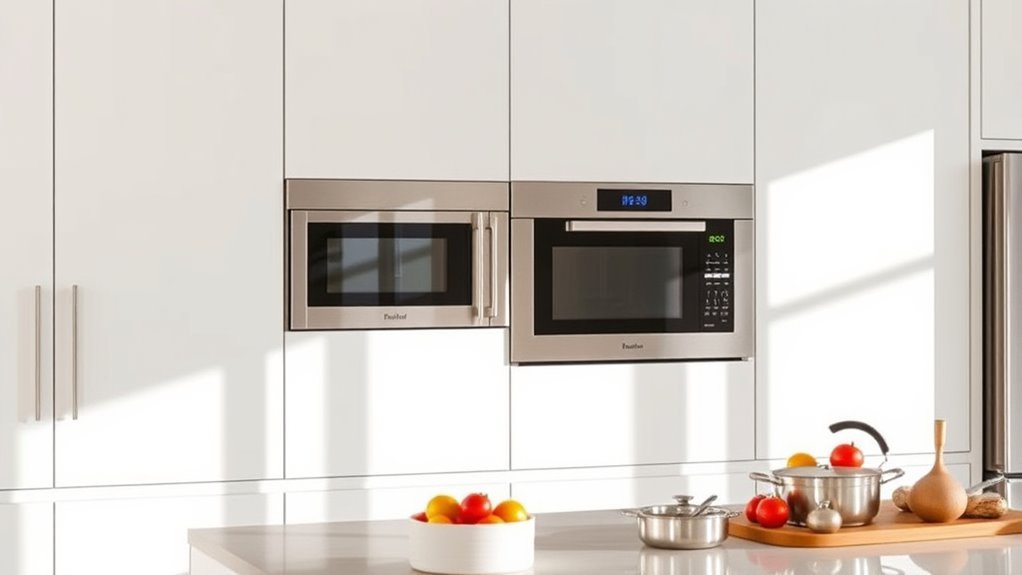
When choosing a built-in oven microwave, focus on features that make cooking easier and more versatile. Look for models with multiple modes like convection, grilling, and microwave so you can prepare all kinds of dishes effortlessly.
Sensor cooking technology is a real game-changer. It automatically adjusts time and power, so your meals come out perfectly cooked every time. Touch controls and digital displays make operation simple and straightforward.
Sensor cooking technology ensures perfectly cooked meals by automatically adjusting time and power for effortless operation.
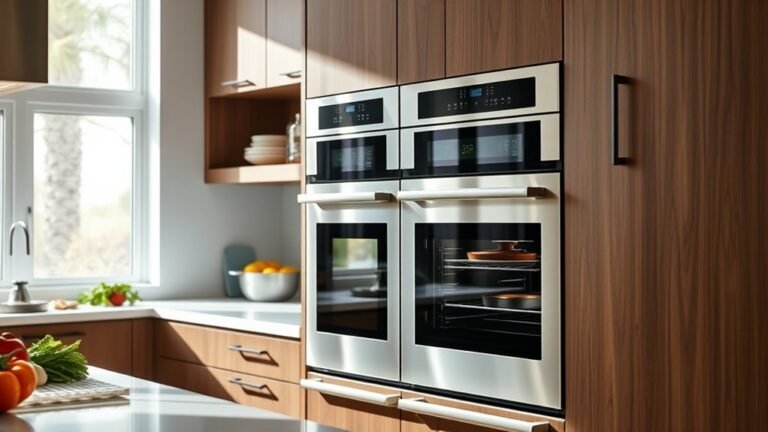
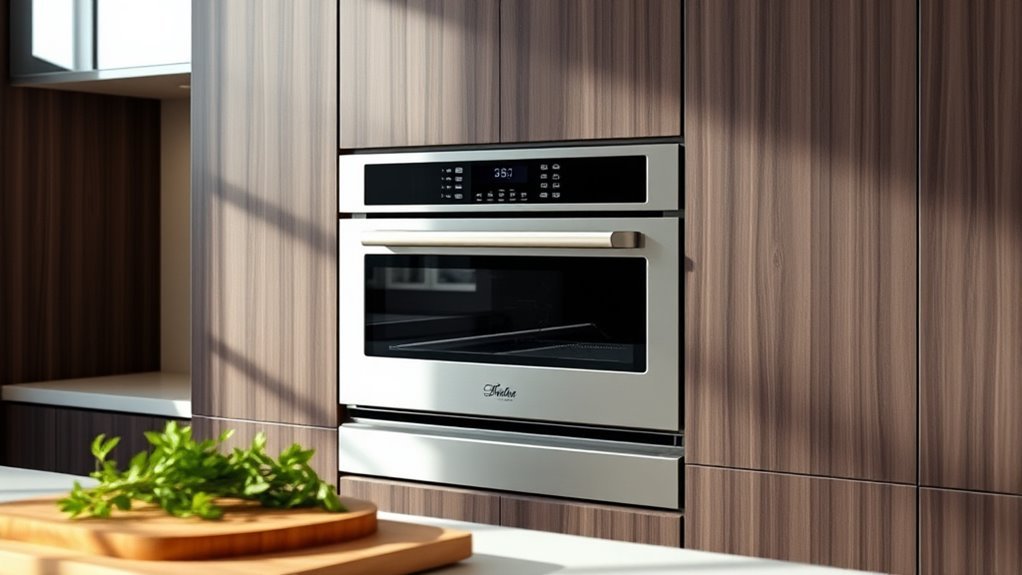
Don’t forget about design. Your built-in oven microwave should match your kitchen’s style, whether it’s sleek stainless steel or matte black. A flush installation creates a clean, modern look that blends seamlessly with your cabinetry.
Consider intuitive door mechanisms too, like soft-close or slide-open doors, to enhance the overall user experience. These small details can make a big difference in daily use.
Choosing the Right Size for Your Kitchen
First things first, grab a tape measure and figure out the space where you want to put your built-in oven microwave. You want to make sure it fits perfectly without any hassle. Once you’ve got that sorted, think about how much oven space you actually need. Are you cooking big meals for the family, or just quick snacks? Picking the right size means you get the most out of your appliance without it taking up unnecessary space. It’s all about finding that sweet spot between size and functionality!
Measure Available Space
Start by measuring the exact dimensions of the space where you plan to install your built-in oven microwave. Knowing the precise space dimensions guarantees your appliance fits perfectly without causing installation headaches later.
Use a tape measure to record width, height, and depth, and double-check these numbers for accuracy. Don’t forget to review the installation requirements specified by the manufacturer, such as clearance for ventilation and electrical connections.
These details are essential to confirm proper fit and safe operation. Keep in mind that built-in units often require additional space around them for air circulation, so factor that into your measurements.
Taking these steps upfront saves you time and money, helping you choose a built-in oven microwave that fits your kitchen seamlessly.
Consider Oven Capacity
Although the available space sets the stage, considering the oven capacity guarantees your built-in oven microwave meets your cooking needs without overcrowding your kitchen. Oven sizes vary widely, so it’s important to match the cooking capacity to your typical meal prep.
If you often cook for a family or entertain, choose a larger capacity to handle multiple dishes or bigger portions. For singles or couples, a smaller oven size usually suffices, saving space while still delivering efficient performance.
Keep in mind that a bigger oven size doesn’t always mean better. It should align with your cooking habits. By focusing on the right cooking capacity, you ensure your built-in oven microwave fits your lifestyle and kitchen, providing convenience without excess bulk.
Balance Size and Functionality
Finding the right balance between size and functionality ensures your built-in oven microwave fits seamlessly into your kitchen without sacrificing performance.
When choosing the right size, think about your available space to make sure it fits well. A bulky unit might disrupt your flow, while a smaller model could limit your cooking options.
Measure carefully and compare dimensions with your cabinetry to keep your design looking great. Remember, your built-in oven microwave should complement your style, not overpower it.
Focus on models that offer versatile features in a compact size so you get maximum functionality without crowding your layout.
Setting Your Budget for an Oven Microwave
Before you start shopping, it’s a good idea to figure out how much you’re willing to spend on an oven microwave. Think about what features are really important to you and try to find a good balance between price and those features. After all, you want something that fits your needs without breaking the bank.
And don’t forget to consider the long-term savings—things like energy efficiency and how durable the model is can make a big difference over time. So, it’s worth investing a little more upfront if it means saving money and hassle down the road.
Assess Your Financial Limits
Since oven microwaves come in a wide range of prices, it’s helpful to figure out how much you’re willing to spend before you start shopping. Knowing your budget keeps the process realistic and stress-free.
Being honest about your finances helps you avoid overspending or sacrificing essential features. It’s all about planning so you find a microwave that fits both your needs and your wallet.
To get a clear idea, try these steps:
- Look at your monthly expenses to see how much room you have for a new appliance.
- Set a maximum price to narrow down your options and avoid impulse buys.
- Remember to include costs like installation or extended warranties that might add to your overall budget.
Compare Price Versus Features
Once you’ve set your budget, it’s time to weigh the features that matter most against the price tags. A thorough price comparison helps you find ovens that give you the best value without overspending.
Don’t just go for the cheapest option; focus on analyzing which features actually improve your cooking experience. Look for essentials like convection cooking, sensor technology, and surfaces that are easy to clean.
Compare models side by side, noting how their features match your needs and budget. This way, you can be sure you’re investing in an oven microwave that balances cost and functionality.
Plan For Long-Term Savings
While choosing an oven microwave, you’ll want to think about more than just the initial cost—planning for long-term savings can save you money and hassle later on. Think of your purchase as a long-term investment, where energy efficiency and durability matter a lot.
Opting for an energy-efficient model helps cut down on power bills, making it cheaper over time. Also, consider features that boost convenience and reduce maintenance costs. Setting a realistic budget helps balance the upfront price with future savings.
Keep these tips in mind when planning your budget:
- Look for good energy ratings to save on electricity.
- Choose reliable brands with solid warranties for durability.
- Consider models with versatile functions to avoid buying extra appliances.
This way, you get great value without sacrificing quality or performance.
Best Brands and Reliable Models to Consider
When choosing a built-in oven microwave, you’ll want to focus on brands known for their durability and performance. Samsung models offer sleek designs combined with smart controls, making them a popular choice.
Bosch emphasizes precision and quality craftsmanship, ensuring consistent results. LG brings innovation with intuitive interfaces and efficient cooking.
Electrolux is trusted for long-lasting performance and user-friendly operation. Whirlpool provides versatile solutions that fit various kitchen styles and budgets.
Frigidaire stands out for straightforward functionality and affordability. Panasonic is renowned for quick, even heating and advanced inverter technology.
KitchenAid offers robust build quality and professional-grade features, perfect if you love serious cooking. Considering these brands helps you pick a model that fits your needs and lasts, so you can cook confidently every day.
Cooking Functions Explained
Built-in oven microwaves come with a variety of cooking modes like grilling, baking, and defrosting. These options are pretty handy because they let you choose the best method for whatever you’re cooking. Getting to know these functions can really help you make the most out of your appliance.
And the cool part? Many of these microwaves also have multi-function settings. That means you can mix different cooking methods together, which can save you time and often results in more evenly cooked dishes. It’s all about making your cooking experience easier and more efficient!
Common Cooking Modes
Since built-in oven microwaves combine multiple cooking technologies, knowing their common modes helps you get the most out of them. You’ll find modes like convection cooking, which circulates hot air for even, traditional baking results.
Microwave grilling adds a crispy finish to your dishes, while steam baking locks in moisture for tender meals. Sensor cooking takes the guesswork out by adjusting time and power based on your food’s moisture levels.
Here are three key modes to know:
- Combination cooking uses microwave energy and convection heat together to speed up cooking without sacrificing texture.
- Defrost settings thaw food evenly without partially cooking it.
- Rapid preheating cuts down waiting time before baking or roasting.
Mastering these modes guarantees you cook efficiently and deliciously every time.
Multi-Function Benefits
Understanding the common cooking modes helps you appreciate the full range of functions built-in oven microwaves offer. With options like grilling, baking, and convection, you can prepare a variety of meals without needing multiple appliances.
This multi-functionality saves you both time and effort in the kitchen. Plus, the space-saving design means you won’t sacrifice countertop area, making it perfect for smaller kitchens or a streamlined look.
You’ll enjoy switching between modes effortlessly, adapting to whatever recipe you’re working on. Choosing a built-in oven microwave with these benefits gives you more than just a microwave—you get a compact, all-in-one appliance that handles many cooking tasks efficiently.
It’s a smart choice for maximizing both functionality and space.
Energy Efficiency in Built-In Oven Microwaves
Although built-in oven microwaves combine convenience and style, their energy efficiency is an important factor when choosing the right model for your kitchen. You want to minimize energy use without sacrificing performance, so looking at efficiency ratings can help you find models that balance power and sustainability.
Choosing a built-in oven microwave means balancing energy efficiency with stylish convenience and optimal performance.
When evaluating energy efficiency, keep these points in mind:
- Efficiency Ratings: Look for models with high energy star ratings or similar certifications to ensure lower electricity consumption.
- Power Settings: Opt for microwaves with adjustable power levels so you don’t waste energy on overcooking.
- Cooking Time: Generally, faster cooking cycles mean less energy is used overall.
Materials and Finishes: Durability and Style
The materials and finishes you pick for your built-in oven microwave are key to both how long it lasts and how it looks. Different options like stainless steel, glass, and coated metal each have their own durability and maintenance needs.
Finish choices not only reflect current style trends but also influence how easy it is to clean and keep looking new. Color options and textures play a big role in making your microwave stand out or blend seamlessly into your kitchen.
| Material Type | Finish Option |
|---|---|
| Stainless Steel | Brushed or Polished |
| Glass | Glossy or Matte |
| Coated Metal | Textured or Smooth |
| Aluminum | Anodized or Matte |
| Ceramic | Glossy or Satin |
Choosing the right combination ensures your microwave stays stylish and functional, matching your durability needs and your kitchen’s vibe.
Matching Your Oven Microwave to Your Kitchen Style
Your choice of materials and finishes sets the stage for how your built-in oven microwave fits into your kitchen’s overall design. To achieve harmony, think about how it complements your kitchen’s style. You want it to blend seamlessly with cabinetry, countertops, and other appliances.
Consider colors, textures, and styles that match your theme, whether modern, rustic, or classic. Here are three ways to match your oven microwave to your kitchen style:
- Pick finishes that mirror or contrast tastefully with your cabinetry, like stainless steel for a contemporary look or matte black for a sleek vibe.
- Choose design details that match your style, such as minimalist controls for modern kitchens or retro knobs for vintage-inspired spaces.
- Keep the overall color palette in mind to ensure your oven microwave enhances your kitchen’s visual flow rather than clashing with it.
Installation Tips for Built-In Oven Microwaves
When installing a built-in oven microwave, it’s important to plan carefully to ensure a secure fit and proper ventilation. Measure the cabinet space precisely to make sure your unit fits perfectly.
Follow the manufacturer’s instructions closely during installation to avoid mistakes. Check that the electrical connection matches the microwave’s requirements, and use a dedicated circuit if recommended.
Adhere to manufacturer guidelines and verify electrical compatibility for safe and effective microwave installation.
Pay attention to safety throughout the process. Make sure there’s enough clearance for ventilation to prevent overheating. Secure the microwave firmly within the cabinet to avoid shifting or tipping when in use.
If you’re unsure about electrical wiring or mounting, don’t hesitate to hire a professional. Proper installation not only protects your device but also keeps your home and family safe.
Maintaining and Caring for Your Oven Microwave
Keep your built-in oven microwave running smoothly by doing regular maintenance and cleaning. Simple cleaning tips and maintenance routines can help extend its lifespan and keep it working at its best.
Start by wiping down the inside and outside after each use to prevent buildup. Use a mild detergent or a mixture of vinegar and water for tougher spots.
Here are some key maintenance tips to keep in mind:
- Clean the turntable and trays regularly to prevent food residue from piling up.
- Check and clean the microwave vents to avoid overheating.
- Inspect the door seals for damage and wipe them gently to keep a tight seal.
Avoid harsh chemicals that could damage surfaces, and always unplug the appliance before deep cleaning.
Frequently Asked Questions
Can I Use a Built-In Oven Microwave Without Professional Installation?
You can try installing a built-in oven microwave yourself, but it’s not always easy.
Make sure to carefully follow the user manuals to stay safe and ensure it fits properly.
These appliances often need secure mounting and electrical work that might require a professional.
If you’re comfortable with basic electrical tasks and have the right tools, it could be doable.
Otherwise, it’s safer to hire a pro to avoid damage or potential safety hazards.
Are Built-In Oven Microwaves Safe for Children to Use?
Yes, built-in oven microwaves can be safe for children to use, but it’s important to focus on safety and supervision. Make sure to teach your kids how to operate the appliance properly.
Always supervise them while they’re using it to prevent accidents. Many models have child lock features you should activate to avoid accidental use.
How Long Is the Typical Warranty for Built-In Oven Microwaves?
You’ll feel like you’ve hit the jackpot when you find a built-in oven microwave with a solid warranty! Usually, the warranty lasts one to two years and covers most parts and labor.
Some brands even offer extended coverage for key components, giving you extra peace of mind. Always check the fine print so you know exactly what’s covered and how long you’re protected against unexpected repairs or defects.
Can Built-In Oven Microwaves Be Repaired Easily if They Break?
Yes, built-in oven microwaves can be repaired fairly easily if they break, but repair costs vary depending on the issue.
Common problems like faulty door switches, magnetron failure, or control panel issues are usually fixable by a professional technician.
However, some repairs might be costly, so it’s a good idea to compare repair costs with the price of a new appliance.
Regular maintenance can help you avoid frequent breakdowns and keep your microwave running smoothly.
Do Built-In Oven Microwaves Require Special Electrical Outlets?
About 30% of built-in oven microwaves need dedicated circuits because of their power needs. You’ll often require a special electrical outlet, usually a 240-volt one, for safe operation.
When you’re planning the installation, make sure to check the manufacturer’s specs and local codes. This helps prevent overloading circuits and keeps everything running smoothly.
Following these tips ensures your appliance operates safely and reliably in your kitchen, giving you peace of mind.
Conclusion
Choosing the perfect built-in oven microwave is like finding the right key to unlock your kitchen’s full potential. With the must-have features, proper size, and trusted brands in mind, you’ll cook with confidence every time.
Match your appliance to your style, set a smart budget, and follow simple installation and care tips to keep it running smoothly.
You’re now ready to transform your kitchen into a culinary haven that’s both stylish and functional!