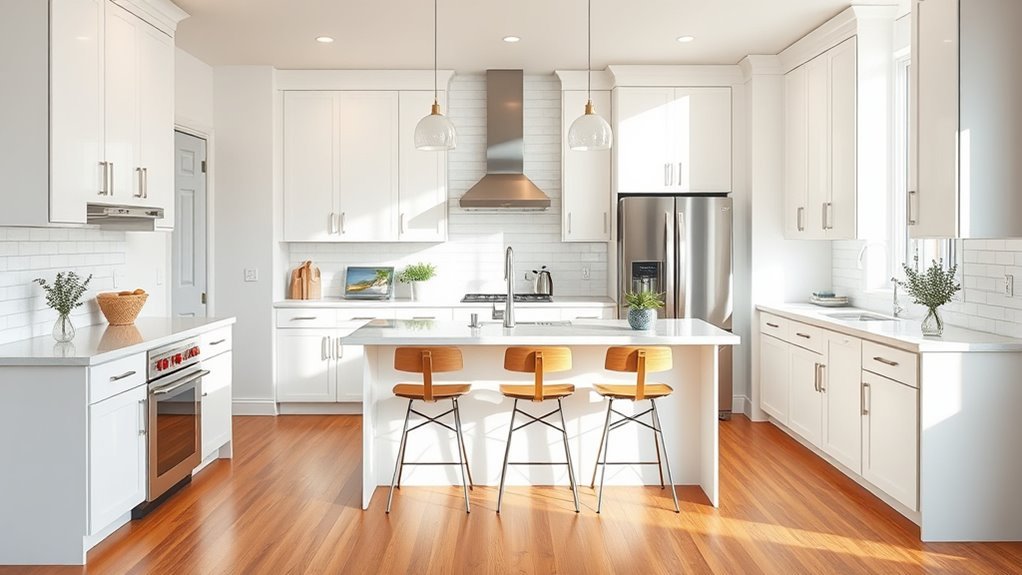
How Much Should a 10X10 Kitchen Remodel Cost? The Complete Answer
Thinking about a 10×10 kitchen remodel? You’re not alone—many homeowners feel overwhelmed trying to figure out what it will cost. It’s a big project with lots of choices, and budget worries are common.
You should expect to spend between $12,000 and $35,000 to remodel a 10×10 kitchen, depending on your choices for materials, appliances, and labor. Cabinets and countertops have the biggest impact on cost, so selecting durable, mid-range options helps balance quality and budget.
Labor costs vary by location and project complexity, especially if you add custom features or upgrade appliances.
Keep planning smartly, and you’ll find ways to save or splurge effectively as you investigate the details.
Key Takeaways
- A 10×10 kitchen remodel usually costs between $12,000 and $35,000, depending on materials, appliances, and labor.
- Cabinets and countertops play a big role in your budget. Mid-range options offer a good mix of durability and style.
- Labor costs vary based on your location and the complexity of the work. More intricate designs and fixture removals can bump up expenses.
- Splurging on durable countertops and energy-efficient appliances is a smart move. Saving on cabinet refacing can also help lower costs.
- Clear communication with your contractor and careful planning of your layout can prevent costly plumbing or electrical changes later on.
How Much Does a 10×10 Kitchen Remodel Cost?
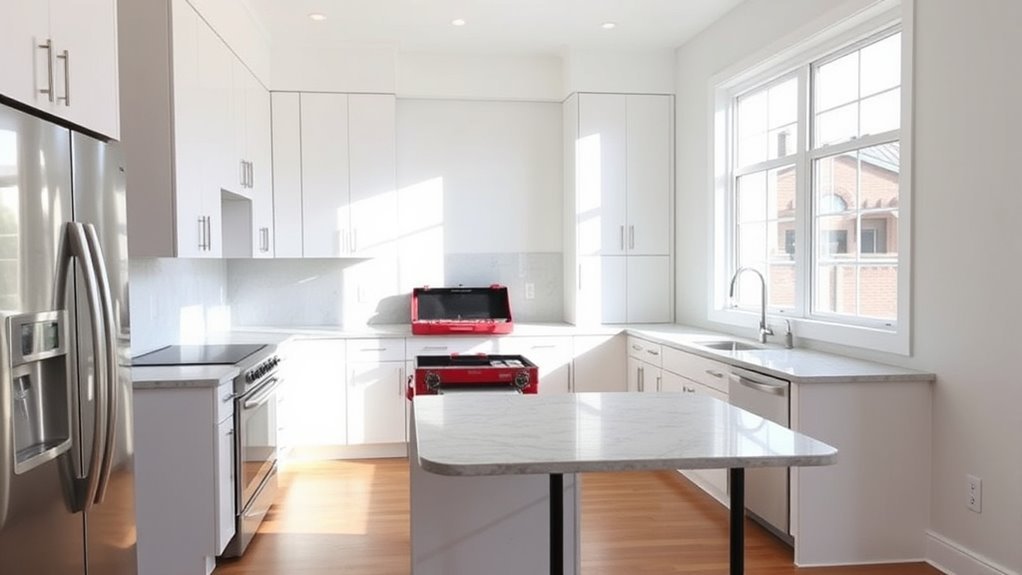
Wondering how much a 10×10 kitchen remodel will cost? You’ll find that prices vary, but having a clear budget breakdown can really help you plan.
On average, expect to spend anywhere from $12,000 to $35,000, depending on your choices. This range covers essentials like cabinets, countertops, flooring, appliances, and labor.
To keep your remodel manageable, focus on renovation tips that stretch your dollars without sacrificing style. Prioritize updating cabinets and countertops since they impact the kitchen’s look the most.
Consider mid-range materials for durability and aesthetics. Also, plan your layout to avoid costly plumbing or electrical changes.
Which Factors Affect Your Kitchen Remodel Budget?
When you’re thinking about remodeling your kitchen, there are a few main things that can really impact how much it will cost. The type of materials you pick makes a difference—high-end countertops and cabinets will cost more than basic options.
Then, there’s the cost of labor and installation. Skilled workers and specialists can add up, so it’s good to keep that in mind as you plan your budget.
Your kitchen’s design and layout also matter—more complicated layouts or custom features can drive up the price. Knowing about these factors ahead of time helps you make smarter choices that fit within your budget and still give you the kitchen you want.
Material Quality Choices
Although you might focus on design and layout, the quality of materials you choose plays a big role in your kitchen remodel budget. Your options for material durability affect how long your kitchen lasts, while sustainability choices impact cost and the environment.
Selecting high-grade materials means paying more upfront but can save money on replacements later. Here’s a quick look at some common options and their qualities:
| Material Type | Durability Level | Sustainability Rating |
|---|---|---|
| Quartz Countertops | High | Moderate |
| Laminate Cabinets | Medium | Low |
| Solid Wood Floors | High | High |
| Ceramic Tiles | High | Moderate |
| Recycled Glass | Medium | High |
Weigh these factors carefully to find the right balance between budget, quality, and eco-friendliness.
Labor and Installation
Several factors influence the labor and installation costs in your kitchen remodel, and understanding them can help you manage your budget effectively.
Labor rates vary depending on your location and the expertise required for the job. Skilled professionals demand higher wages, especially for specialized tasks like electrical or plumbing work.
The installation techniques you choose also impact costs. Complex methods or custom fittings take more time and skill, which increases labor expenses.
If your project involves removing old fixtures or fixing structural issues, expect higher labor charges.
Efficient planning and clear communication with your contractor can help you control these costs. By considering labor rates and installation techniques upfront, you’ll avoid surprises and keep your 10×10 kitchen remodel within budget.
Design and Layout
Because your kitchen’s design and layout determine both functionality and aesthetics, they play an essential role in shaping your remodel budget. When planning, focus on improving your kitchen workflow to make cooking and cleaning more efficient.
A well-thought-out layout minimizes unnecessary movement, saving time and effort daily. Space optimization is vital, especially in a 10×10 kitchen, where every inch counts. Incorporating smart storage solutions or adjusting cabinet placement can improve usability without expanding your footprint.
Keep in mind that changing plumbing or electrical setups to fit a new layout will increase costs. Sticking to your existing layout saves money, but if you want a more open or custom design, be prepared for higher expenses.
Ultimately, your design choices directly impact both the budget and how enjoyable your kitchen will be.
How Cabinet Choices Affect Your Kitchen Remodel
Your cabinet choices really influence how much your kitchen remodel will cost since materials can vary a lot in price. It’s worth thinking about the style and design options too, so everything matches your vision perfectly. And don’t forget, choosing between custom cabinets and prefabricated ones can make a big difference in both your budget and how long the project takes.
Material Impact On Cost
When you choose cabinets for your kitchen remodel, the materials you select play a major role in determining the overall cost. Different materials vary widely in price because of their durability and appearance.
For example, solid wood cabinets tend to be more expensive because they last longer and have a classic look that many homeowners love. On the other hand, laminate or MDF cabinets are more budget-friendly but might not be as durable or attractive.
You’ll want to balance how important durability is to you with the style you want. Higher-end materials often raise the cost but also make your kitchen look better and last longer.
Making smart material choices helps keep costs in check without sacrificing quality.
Style And Design Variations
Cabinet style and design play an essential role in shaping the overall look and feel of your kitchen remodel. Your choice sets the tone, whether you prefer modern aesthetics with sleek lines or vintage charm through classic finishes.
Minimalist designs often highlight clean color palettes and open layouts, creating airy, functional spaces that feel larger. You can also prioritize eco-friendly options by selecting sustainable materials that reduce environmental impact without sacrificing style.
Ergonomic features boost usability, making everyday tasks easier and more comfortable. By focusing on these elements, you ensure your cabinets not only match your kitchen’s style but also improve its practicality.
Thoughtful cabinet choices directly influence both the atmosphere and efficiency of your remodeled space.
Custom Vs. Prefabricated Choices
Although choosing between custom and prefabricated cabinets can seem overwhelming, understanding their differences helps you make the best decision for your kitchen remodel. Custom cabinetry offers tailored designs, unique finishes, and a precise fit, making them perfect if you want a personalized look and are willing to invest more time and money.
Prefabricated materials come ready-made in standard sizes and styles, which makes them more affordable and quicker to install. If you’re working within a tighter budget or timeline, prefabricated cabinets are a practical choice.
Keep in mind, though, that custom cabinetry provides greater flexibility in design and functionality. Prefabricated options, on the other hand, offer convenience and cost savings. Your choice will significantly impact your kitchen’s style and overall remodel cost.
Countertop Prices: What You Need to Know
How much you spend on countertops can really impact your kitchen remodel budget. Picking the right material affects both the look and the cost. You’ll find options from budget-friendly laminates to high-end natural stones.
Countertop installation costs can vary based on the material’s weight and complexity. For example, granite takes more labor to install than laminate does.
Here’s a quick price guide to help you plan:
| Countertop Material | Average Cost per Sq Ft (Installed) |
|---|---|
| Laminate | $20 – $40 |
| Quartz | $50 – $100 |
| Granite | $40 – $100 |
| Marble | $50 – $150 |
| Butcher Block | $40 – $90 |
Keep in mind, custom edges and backsplashes can add to the installation costs. Knowing these factors helps you balance style and budget effectively in your remodel.
How Flooring and Lighting Affect Your Remodel Cost
Where should you focus when budgeting for your kitchen remodel? Flooring and lighting play a big role in your overall cost and the space’s final look.
Flooring trends are always changing, from classic hardwood to modern luxury vinyl planks or eco-friendly bamboo. Your choice impacts installation costs and how durable the floor will be.
Lighting options also vary a lot—from budget-friendly recessed lights to statement pendant fixtures or under-cabinet LED strips. Each has different price points and energy efficiency.
Think about these factors to find the right balance between style and cost:
- Popular flooring styles like wide-plank wood or patterned tiles can increase expenses.
- Energy-efficient lighting can save you money in the long run but might cost more upfront.
- Custom lighting designs create ambiance but can also add to installation complexity and price.
Should You Replace Appliances in Your Remodel?
When you’re remodeling your kitchen, it’s a good idea to think about whether replacing your appliances is the right move for your budget and style. New appliances can really boost efficiency and give your space a fresh, updated look.
But at the same time, they can also add quite a bit to your overall costs. So, it’s worth weighing the benefits against the expense to figure out what makes the most sense for your remodel.
Appliance Replacement Benefits
Although replacing appliances during a kitchen remodel can add to your upfront costs, it often pays off by improving energy efficiency, enhancing functionality, and boosting your home’s overall value. Upgrading to newer models increases appliance efficiency, which means you’ll enjoy noticeable energy savings on your utility bills.
Plus, modern appliances come with advanced features that make cooking and cleaning easier, saving you time and effort daily. Consider these benefits when deciding:
- Reduced energy consumption lowers monthly expenses.
- Improved appliance performance streamlines kitchen tasks.
- Updated appliances increase your home’s market appeal.
Cost Considerations
Upgrading your appliances can bring clear benefits, but it also adds to your remodel budget. When considering replacement, think about how it fits within your overall kitchen design and financial plan.
New appliances can boost energy efficiency, functionality, and style. But they often cost quite a bit. If your current appliances are in good shape, you might want to keep them and put your funds toward cabinets or countertops.
On the other hand, if your appliances are outdated or don’t match your new design, replacing them can really upgrade your kitchen’s look and value. In the end, weigh the costs against your priorities and how much you’re willing to spend.
Smart budgeting will help you decide if upgrading your appliances makes sense for your project.
Common Add-Ons That Increase Remodel Costs
Since you want your kitchen remodel to stand out, you’ll probably consider add-ons that improve both style and functionality. These features can really transform your space but often come with unexpected costs that bump up your overall budget. Knowing the common add-ons helps you plan better and avoid surprises.
Here are three popular add-ons that tend to increase remodel costs:
- Custom cabinetry with built-in organizers for better storage
- High-end appliances like smart refrigerators or professional-grade ovens
- Upgraded countertops, such as quartz or granite, instead of laminate
Each of these upgrades makes your kitchen more appealing but can significantly raise the price. When choosing add-ons, think about their benefits versus your budget to prevent unexpected expenses. Being aware of these common cost drivers helps ensure your 10×10 kitchen remodel delivers the style and function you want without overspending.
How to Set a Realistic Budget for Your 10×10 Kitchen Remodel
Before you start your 10×10 kitchen remodel, it’s important to set a realistic budget that fits your goals and financial situation. Good budget planning begins with estimating costs for materials, labor, and unexpected expenses.
Break down your total budget into key categories to help keep your spending on track and prevent surprises. Here’s a simple table to guide you:
| Category | Estimated Cost | Notes |
|---|---|---|
| Cabinets | $3,000 – $5,000 | Choose quality versus style |
| Appliances | $2,000 – $4,000 | Think about energy efficiency |
| Labor | $3,000 – $6,000 | Includes installation |
| Contingency | 10-15% of total | For unexpected costs |
Where to Save and Where to Splurge on Your Kitchen Remodel
After setting a clear budget for your kitchen remodel, the next step is deciding where to save and where to spend. Focus on budget priorities by identifying splurge areas that impact daily use and style, like countertops and appliances. Use saving strategies on elements that don’t affect function as much, such as cabinet hardware or paint colors. Smart design choices and material options can help you avoid renovation pitfalls and balance luxury features with cost-effective upgrades.
Prioritize splurges on daily-use features while saving on less functional details for a balanced kitchen remodel.
Here are some planning essentials to evaluate:
- Invest in durable countertops and energy-efficient appliances as key splurge areas.
- Save on cabinet refacing or repainting instead of full replacements.
- Choose cost-effective upgrades like modern lighting fixtures to refresh the space without breaking the bank.
This approach helps you blend aesthetics with practicality, making sure your remodel feels high-end without overspending.
How Labor Costs Influence Your Kitchen Renovation
When you plan your kitchen renovation, labor costs are a key part of your overall budget. Knowing current labor market trends helps you anticipate changes in hourly rates and the availability of skilled workers.
For example, a tight labor market can increase prices, so timing your project during slower seasons might save you money.
It’s also smart to negotiate with contractors to get the best value. Don’t hesitate to ask for detailed quotes and compare bids from different professionals.
Clear communication about your project scope helps prevent hidden fees later on. Keep in mind, skilled labor impacts both the quality and timeline of your remodel.
Balancing cost with expertise is essential. By staying informed about labor trends and negotiating well, you can keep labor expenses in check without sacrificing your kitchen’s final look and functionality.
Frequently Asked Questions
How Long Does a 10X10 Kitchen Remodel Typically Take?
A 10×10 kitchen remodel usually takes around 4 to 6 weeks. It’s a good idea to consider your budget because unexpected costs can impact how long things take.
Staying updated on design trends can help you make quicker decisions, which speeds up the process. Delays often happen when waiting for materials or permits, so plan ahead.
Clear communication with your contractor and sticking to your chosen design will help keep everything on track. That way, you’ll be enjoying your new kitchen sooner.
Do I Need Permits for a 10X10 Kitchen Remodel?
Yes, you’ll likely need permits for your 10×10 kitchen remodel, especially if your project involves electrical, plumbing, or structural changes. Local remodeling regulations vary, so it’s a good idea to check with your city’s building department before starting.
Following these rules helps ensure your kitchen design meets safety standards and keeps you from running into fines. Even small updates might require permits, so it’s smart to confirm requirements early.
This way, your remodel stays smooth and compliant, saving you headaches down the line.
Can I Live in My Home During the Kitchen Remodel?
Yes, you can live in your home during the kitchen remodel, but you’ll need to focus on safety and plan your budget carefully. Remodeling can bring dust, noise, and limited access, so it’s smart to set up a temporary cooking area away from the construction zone.
Proper budget planning is essential to cover unexpected costs that might come up during the project. Staying organized and cautious will help keep your home safe and comfortable throughout the remodel.
What Are the Best Kitchen Layouts for a 10X10 Space?
The best kitchen layouts for a 10×10 space are open concept designs that maximize flow and make your area feel larger. You’ll want to focus on smart storage solutions like vertical cabinets, pull-out shelves, and corner organizers to keep everything tidy.
A U-shaped or L-shaped layout works great, giving you plenty of counter space without crowding. With these options, your small kitchen will feel both efficient and inviting.
How Do I Choose a Reliable Contractor for My Remodel?
Choosing a reliable contractor is like finding the captain for your kitchen’s voyage. You want someone skilled and trustworthy. Start by checking contractor qualifications and licenses to guarantee expertise.
Ask for references and look at past projects to get a sense of their quality. It’s also important to discuss the project timeline upfront to avoid surprises down the line.
Don’t hesitate to get multiple quotes. Trust your instincts— a reliable contractor will communicate clearly and respect your vision throughout the remodel.
Conclusion
A 10×10 kitchen remodel can either transform your space or drain your wallet, depending on the choices you make. You might splurge on sleek countertops but save on flooring, or invest in custom cabinets while opting for budget lighting.
Balancing where to spend and where to save is key. Smart planning turns a costly project into a stylish upgrade. You don’t have to break the bank to love your kitchen, especially with a clear budget in mind.
Remember, a well-thought-out plan can make a 10×10 kitchen remodel both affordable and impressive. It’s all about making smart choices to maximize your investment.