What Is a Wall Oven? The Complete Answer
Are you tired of bending down or reaching up to use your oven? Many people struggle with awkward kitchen layouts that make cooking less enjoyable. You’re not alone—finding the right appliance can make a big difference in your daily routine.
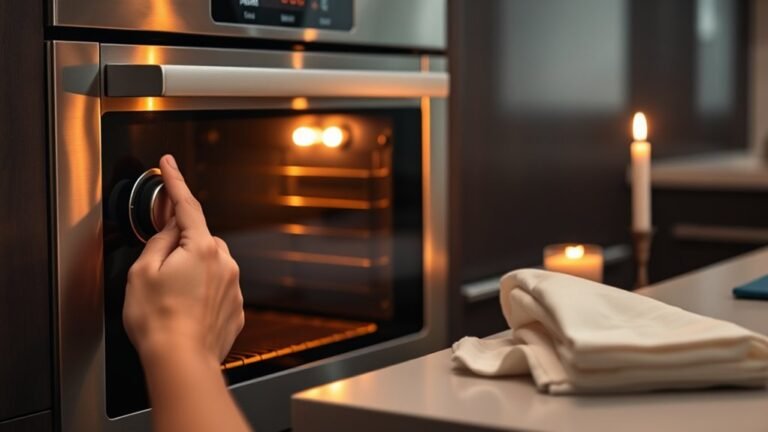
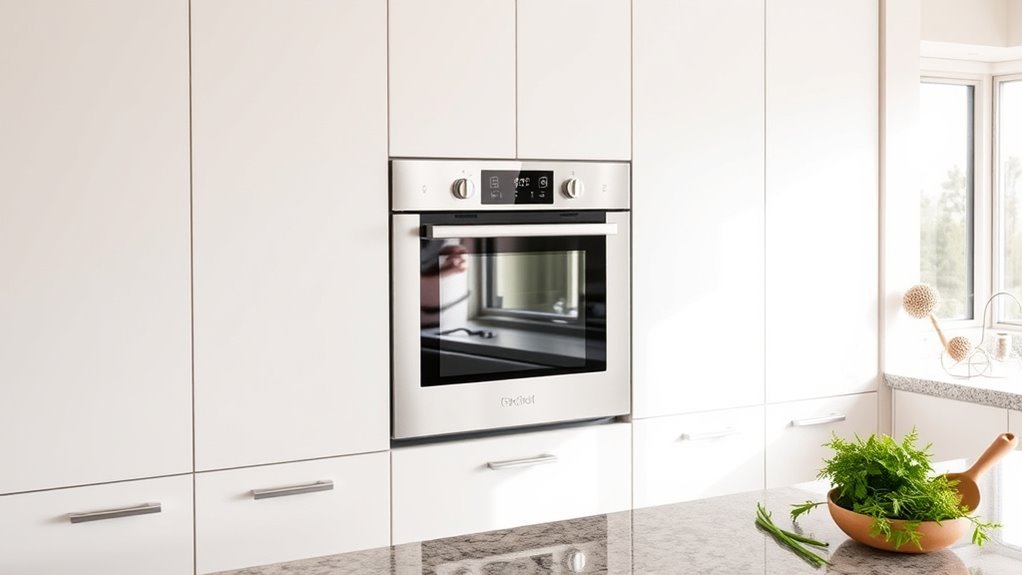
A wall oven is a built-in kitchen appliance installed at eye level, giving you easy access and freeing up counter space. It uses electric heating and often convection fans to cook food evenly, and comes in various types like electric, gas, steam, or combination models. You can pick single or double ovens depending on your needs.
Besides convenience, wall ovens improve your kitchen’s workflow and style. Investigate more to see how they can enhance your cooking experience.
Key Takeaways
- A wall oven is a built-in cooking appliance installed at eye level for easy access and seamless kitchen design.
- It uses electric heating elements and convection fans to cook food evenly and efficiently.
- Wall ovens come in electric, gas, convection, steam, and combo models, giving you lots of versatile cooking options.
- They free up counter space and can operate separately from cooktops, making your kitchen workflow smoother.
- You can choose between single or double units to match your cooking needs and kitchen size.
Wall Oven Basics: What They Are and How They Work
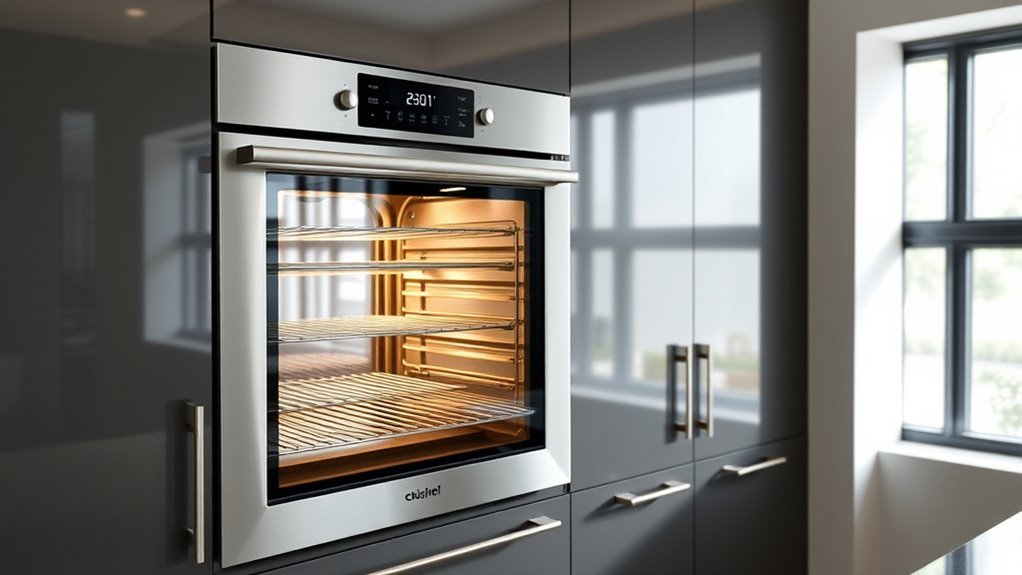
A wall oven is a built-in appliance designed to fit seamlessly into your kitchen walls, saving counter space and giving your kitchen a sleek, modern look. Understanding the basics means knowing how they evolved and how they work.
Wall ovens started as an alternative to traditional ranges, giving homeowners more flexibility in their kitchen layouts. Over time, advancements in technology have improved cooking precision, energy efficiency, and user control.
Wall ovens evolved to enhance kitchen design flexibility while boosting cooking accuracy, efficiency, and ease of use.
Most wall ovens use electric heating elements and convection fans to distribute heat evenly, so your food cooks consistently. You can control the temperature and cooking modes easily with digital panels or knobs.
Since they’re installed at eye level, wall ovens make it easier to check on your food without bending over. When you get these fundamentals, you’ll see how wall ovens blend style and functionality, reflecting decades of innovation in kitchen appliances.
Types of Wall Ovens Explained
Although wall ovens come in various styles, choosing the right type depends on your cooking needs and kitchen setup. You’ll find basic electric and gas wall ovens, each offering different heating methods.
If you want faster, more even cooking, look for models with convection options. They circulate hot air for better results. For healthier cooking or retaining moisture, steam ovens are a great choice because they use steam to cook food gently.
You can also choose between single or double wall ovens depending on how much cooking space you need. Single ovens save space and are perfect for smaller kitchens. Double ovens give you flexibility to cook multiple dishes at different temperatures at the same time.
Some wall ovens even combine steam and convection features, offering more versatility in how you cook. Ultimately, picking the right wall oven means balancing your cooking style, kitchen layout, and features like steam or convection options.
Wall Ovens vs. Traditional Range Ovens
When you compare wall ovens to traditional range ovens, you’ll notice clear differences in design and functionality that impact your cooking experience. Wall ovens offer several benefits that can make your kitchen workflow and cooking more efficient.
- Placement Flexibility: Wall ovens are installed at eye level, so you don’t have to bend down to check your food. This makes cooking more comfortable and safer.
- Separate Cooking Areas: Unlike range ovens combined with stovetops, wall ovens let you use the oven and cooktop independently. This allows you to prepare multiple dishes at the same time.
- Space Utilization: Wall ovens free up valuable countertop space and can fit into cabinetry, creating a sleek, streamlined look.
- Enhanced Cooking Efficiency: Many wall ovens come with advanced features and convection options. These promote even heat distribution and faster cooking times.
Choosing a wall oven can boost your kitchen’s functionality and make meal prep smoother and more enjoyable.
Choosing the Right Size Wall Oven
Before you pick out a wall oven, it’s a good idea to measure your kitchen space carefully. You want to make sure it’ll fit perfectly without any surprises. Think about whether a single oven or a double oven makes more sense for your cooking style and daily needs.
And don’t forget to consider the oven’s capacity. If you often cook big meals or entertain guests, a larger oven might be the way to go. On the other hand, if you usually prepare smaller dishes, a compact size could do the trick.
Measuring Your Kitchen Space
Choosing the right size wall oven starts with accurately measuring your kitchen space. Before you shop, take a close look at your layout to find the best spot for the oven. Use reliable tools like a tape measure or laser distance measurer for accuracy.
Follow these simple steps:
- Measure the height, width, and depth of your intended oven space.
- Note any nearby cabinets or appliances that could impact placement.
- Make sure there’s enough clearance for ventilation and door swing.
- Double-check your measurements to avoid ordering an oven that won’t fit.
Accurate measurements help you pick a wall oven that fits perfectly with your kitchen. This ensures a seamless look and smooth installation.
Don’t skip this step—getting it right is key to a successful setup.
Single vs. Double Ovens
After measuring your kitchen space, it’s time to choose between a single or double wall oven. Single ovens are great if you want to save space and energy, making them perfect for smaller kitchens or simpler cooking needs.
Double ovens give you more flexibility since you can cook multiple dishes at different temperatures at the same time. They’re ideal for larger families or if you love to entertain often.
| Feature | Single Oven Advantages | Double Oven Benefits |
|---|---|---|
| Space | Compact and saves kitchen space | Needs more space |
| Cooking Flexibility | One temperature setting | Two separate cooking zones |
| Energy Use | Uses less energy | Might use more energy but saves time |
| Cost | Usually more affordable | Generally higher priced |
Pick the one that fits your kitchen size and how you like to cook for the best results.
Oven Capacity Considerations
When choosing a wall oven, it’s important to consider its capacity to match your cooking style and household size. The right size ensures even heat distribution and that you can handle your family’s needs without wasting energy.
Think about your typical meal portions and household size to pick the right oven volume. If you often bake large dishes or cook for many, a larger capacity might be ideal.
Your cooking habits also matter. Do you prefer quick meals or do you enjoy baking big batches? This can help determine the best oven size for you.
Installation height is another factor. Choose a height that makes it easy to access and comfortable for everyone in your household.
Don’t forget about ventilation needs and energy efficiency. Good airflow and efficient use keep your kitchen safe and help maintain your kitchen’s aesthetic.
Essential Wall Oven Features to Consider
Although wall ovens come in various styles, you’ll want to focus on features that match your cooking habits and kitchen space. Start by considering smart features like touchscreens, Wi-Fi connectivity, and app controls. These let you preheat remotely or get alerts when your food’s ready, making cooking more convenient.
Energy efficiency is another key aspect. Look for ovens with high Energy Star ratings to save on electricity bills and reduce your environmental impact. You might also want convection cooking, which circulates hot air for faster, more even results.
Self-cleaning options can save time and effort, so check for steam or pyrolytic cleaning modes. Don’t forget customizable racks and temperature probes, which improve versatility and precision.
Installation Requirements for Wall Ovens
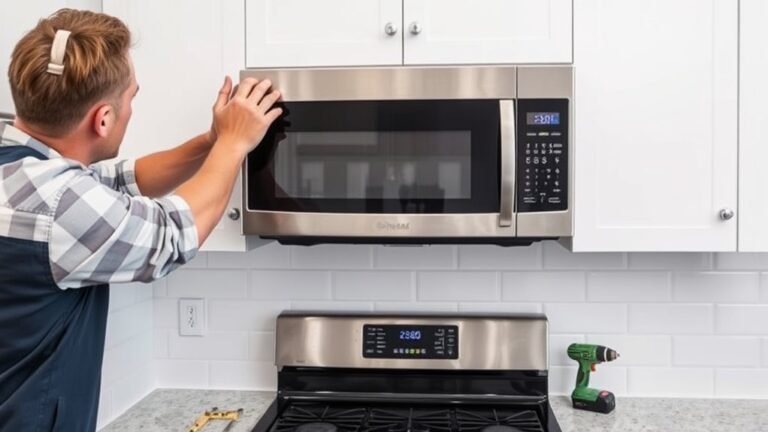
Since wall ovens need to fit securely and function safely, you’ll need to follow specific installation requirements. Adhering to installation guidelines guarantees your oven operates efficiently and reduces risks. Here’s what to keep in mind:
- Proper Wall Support: The cavity must support the oven’s weight, so reinforce the wall framing if needed.
- Correct Dimensions: Measure the installation space accurately to match the oven’s specs, allowing for ventilation gaps.
- Electrical Requirements: Wall ovens often need a dedicated 240-volt circuit and proper wiring. Check your home’s electrical system compatibility.
- Ventilation Clearance: Confirm there’s enough space for heat to escape, preventing overheating and maintaining safety.
Following these steps helps your wall oven fit perfectly and operate safely. Always consult the manufacturer’s installation guidelines and consider hiring a professional electrician to meet electrical requirements precisely.
Space Considerations When Adding a Wall Oven
After confirming your wall oven meets installation requirements, you’ll want to evaluate the space it will occupy in your kitchen. Proper placement is key to keeping your kitchen functional and avoiding overcrowding.
Measure the available space carefully, including both width and depth, to ensure the oven fits seamlessly without blocking cabinets or walkways. Think about how the oven’s location impacts your workflow—placing it near prep areas or the refrigerator can save you time.
Carefully measure width and depth, and position the oven near prep zones or the fridge to optimize workflow.
Also, consider countertop space around the oven for safely placing hot dishes. Don’t forget to account for door swing clearance; your wall oven’s door needs room to open fully without hitting other appliances or walls.
Finally, think about how the placement complements your overall kitchen design and traffic flow. Planning carefully will help you integrate your new oven smoothly into your kitchen layout, making your space both functional and attractive.
Benefits of Installing a Wall Oven
When you choose to install a wall oven, you’ll notice right away that it frees up a lot of counter space, making your kitchen look tidier and more organized. It’s a great way to create a cleaner, more streamlined layout without sacrificing functionality.
Plus, wall ovens give you more flexibility in where you place them, which means you can customize your kitchen to better suit your cooking style. If you like having multiple ovens, installing more than one becomes much easier, giving you even more options for meal prep.
And let’s not forget about convenience—wall ovens are typically easier to access because they’re installed at a comfortable height. That means less bending down or reaching up, so handling hot dishes becomes safer and less of a strain on your back.
Space-Saving Kitchen Design
Although kitchens come in all shapes and sizes, installing a wall oven can really free up valuable counter and floor space. Its compact design helps you optimize your layout, so you can create multifunctional areas without sacrificing flow.
You’ll also enjoy better appliance integration, making your kitchen look sleek and streamlined. Here’s how a wall oven benefits your space-saving kitchen design:
- It increases design flexibility by freeing up lower cabinet areas.
- It boosts visual appeal with modern aesthetics that match your decor.
- Positioning the oven at an ergonomic height makes for a better kitchen flow.
- It allows you to make smarter use of vertical space, maximizing every inch of your kitchen.
Choosing a wall oven means you get both function and style in a smaller footprint.
Enhanced Cooking Versatility
Maximizing your kitchen space with a wall oven doesn’t just improve the design. It also expands your cooking options. With precise temperature control, you can try out different techniques, from gentle baking to advanced roasting.
This flexibility helps you boost flavors and get consistent results every time. Multi-dish cooking becomes easier too, as many wall ovens come with separate compartments or convection settings. This allows you to prepare several meals at once without mixing flavors.
Plus, wall ovens make quick recipe adjustments simple. You can easily change cooking times and temperatures to suit different ingredients or dietary needs. Installing a wall oven isn’t just a kitchen upgrade—it’s a versatile tool that enhances your meal prep and culinary creativity.
Improved Ergonomic Access
Because wall ovens are installed at eye level, you’ll find it much easier to monitor your cooking without bending or reaching awkwardly. This ergonomic design makes your kitchen tasks more comfortable and safer.
You won’t have to stoop down to check your food, which helps reduce strain on your back and knees. With better ergonomic access, you can:
- Easily slide dishes in and out without awkward angles
- Quickly read oven settings and timers at a glance
- Maintain better posture while cooking
- Minimize the risk of spills or accidents from reaching
Common Wall Oven Problems and Fixes
When your wall oven acts up, it can be frustrating, but many common problems have simple fixes you can try yourself. If your oven isn’t heating properly, start by checking the temperature calibration. Compare the oven thermometer reading to the setting and adjust the calibration as needed, following your manual.
Another common issue is heat loss caused by a worn or damaged door seal. Inspect the seal for cracks or gaps and replace it if necessary to ensure proper heat retention and efficient cooking. If the oven doesn’t turn on, double-check the power supply and circuit breaker to rule out electrical issues.
Check your oven door seal for damage and verify power connections if the oven won’t start.
For uneven cooking, try rotating your dishes halfway through. This helps compensate for hot spots and ensures more even results. Addressing these problems quickly can help you avoid costly repairs and keep your wall oven running smoothly.
And don’t forget—your user manual is a great resource for model-specific tips and safety precautions before you start fixing anything.
How Wall Ovens Can Transform Your Kitchen
Although a wall oven might seem like just another kitchen appliance, it can dramatically change how you cook and organize your space. Installing a wall oven can improve both your kitchen’s look and your cooking efficiency in ways you might not expect. Here’s how it transforms your kitchen:
- Streamlined Layout: You can place the oven at eye level, so you don’t have to bend down. This makes cooking safer and easier.
- Maximized Counter Space: With the oven built into the wall, you free up valuable counter areas. That extra space is perfect for prep and other tasks.
- Modern Look: Wall ovens give your kitchen a sleek, integrated appearance. It instantly upgrades your kitchen’s overall style.
- Improved Workflow: Having the oven separate from the cooktop means you can cook multiple dishes at once with less hassle.
Embracing a wall oven boosts your kitchen’s functionality and visual appeal. It turns your space into an efficient, stylish area you’ll love.
Frequently Asked Questions
Are Wall Ovens More Energy-Efficient Than Microwave Ovens?
Wall ovens generally have higher energy consumption than microwave ovens, so they aren’t more energy-efficient. You’ll find microwaves use less power because they cook food faster by directly heating water molecules.
However, wall ovens offer better cooking efficiency for baking and roasting, delivering even heat and consistent results. If your priority is quick reheating or simple meals, a microwave saves energy.
For thorough cooking, a wall oven works best even though it uses more energy.
Can a Wall Oven Be Used for Grilling or Broiling Outdoors?
You can’t use a wall oven for grilling or broiling outdoors because it’s designed to stay indoors, like a cozy hearth tethered to your kitchen.
Grilling techniques rely on open flames and ventilation that a wall oven can’t provide outside.
For outdoor cooking, you’ll need a grill or broiler built to handle the elements and give you that smoky char.
Keep your wall oven inside where it shines best.
Do Wall Ovens Require Special Cookware Compared to Traditional Ovens?
You don’t need special cookware for wall ovens, but choosing the right materials can make a difference in your cooking.
Since wall ovens often distribute heat evenly, using pans made of stainless steel, cast iron, or heavy-duty aluminum can help you get the most out of that feature.
Avoid thin or warped pans, as they might affect how well your food cooks.
How Do Wall Ovens Affect Home Resale Value?
Wall ovens can boost your home resale value by improving your kitchen’s design and highlighting modern, space-saving features.
Buyers tend to like the sleek look and efficient use of space, especially in smaller kitchens where every inch counts.
By installing a wall oven, you’re making your kitchen more functional and stylish, which can help your home stand out in the market.
Just make sure it fits well with the overall kitchen design to maximize its appeal.
Are There Wall Ovens Designed for Tiny Homes or RVS?
If you’re tight on space, like in tiny homes or RVs, wall ovens with space-saving designs are your best friends. These compact models fit snugly, making the most of every inch without cramping your style.
You’ll find options that balance size and performance perfectly, so you won’t have to sacrifice cooking power. Choosing one means you’re cooking smart and sleek, turning small spaces into big kitchens.
Conclusion
Now that you know what a wall oven is and how it works, you can confidently pick the perfect one for your kitchen. Whether you prefer classic features or modern tech, a wall oven adds both style and efficiency.
It’s like a trusty pocket watch in a digital age—timeless and reliable. Installing one can truly transform your cooking space, making meal prep easier and your kitchen more organized.
So go ahead, upgrade your kitchen with this smart addition, and enjoy the benefits of a dedicated wall oven.