Chest Freezer vs. Upright Freezer: Which Is Better?
Many people struggle with choosing the right freezer for their needs.
Whether you’re trying to store bulk items or just want quick access to frozen foods, finding the perfect fit can feel overwhelming. You’re not alone in this dilemma — it’s a common challenge for many.
If you need more storage for bulk items and want better energy efficiency, a chest freezer is your best bet.
It keeps temperatures steady and costs less upfront but takes up more floor space.
If you want easier organization, quick access, and a freezer that fits a smaller kitchen, go with an upright.
It’s pricier and uses more energy but saves space.
Keep exploring to find which style truly fits your lifestyle and needs.
Key Takeaways
- Chest freezers are great for long-term, bulk food storage because they offer better temperature stability and energy efficiency.
- Upright freezers make organization easier with shelves and are more accessible in narrow spaces.
- Chest freezers take up more floor space and need manual defrosting, but they tend to be quieter and cost less upfront.
- Upright freezers fit small kitchens better, support vertical storage, and often come with auto defrost features.
- Choose based on your storage needs, kitchen space, budget, and whether you prefer organization or bulk storage.
Choosing Between Chest and Upright Freezers
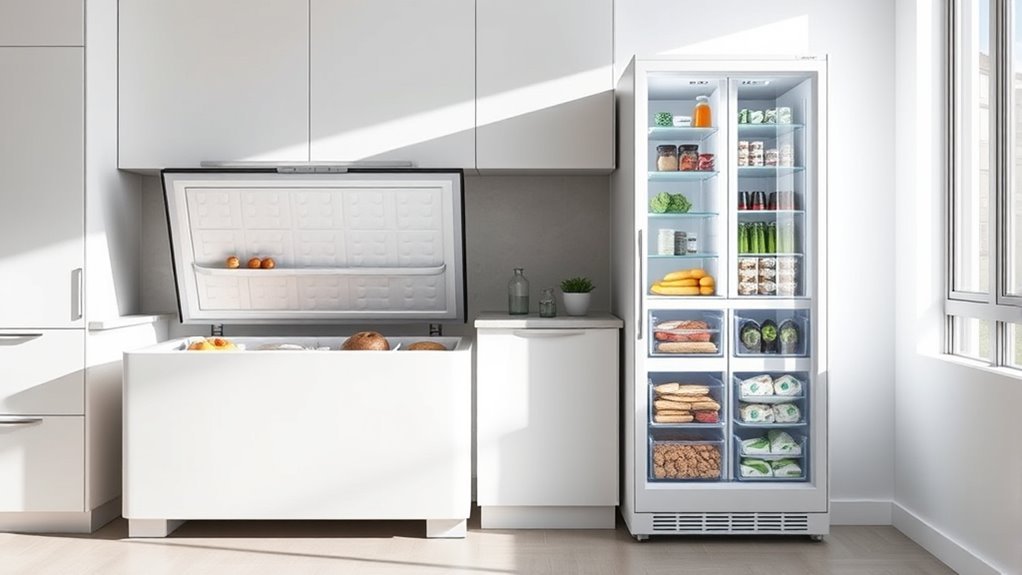
How do you decide between a chest freezer and an upright freezer? Start by looking at key features that match your needs. Chest freezers often give better temperature control, which helps preserve food longer. They’re a good choice if you store large quantities for the long term.
Upright freezers offer more organized storage with shelves and compartments. This makes it easier to find and access items quickly. When shopping, think about your space and how often you need to get to your frozen foods.
Brand comparisons show that some models are more energy-efficient and durable. These are important factors if you want a long-lasting freezer. User reviews suggest that chest freezers tend to be more reliable but can be harder to organize.
Upright freezers are more convenient to use but sometimes use more energy. Consider these points carefully to find the best fit for your lifestyle. Focus on freezer features that support how you store and preserve your food to make the right choice.
Comparing Storage Capacity: Chest vs. Upright
When you’re looking at storage capacity, it’s helpful to think about how each type of freezer uses space and how easy it is to find what you need. Chest freezers usually give you more room for your buck—they tend to have more volume for their size, so you can store a lot without taking up too much floor space.
On the other hand, upright freezers are a bit more convenient because you can see and access your items more easily. It’s simpler to organize and grab what you need without digging through everything. Knowing these differences can really help you decide which freezer will work best for your lifestyle and storage needs.
Space Efficiency Comparison
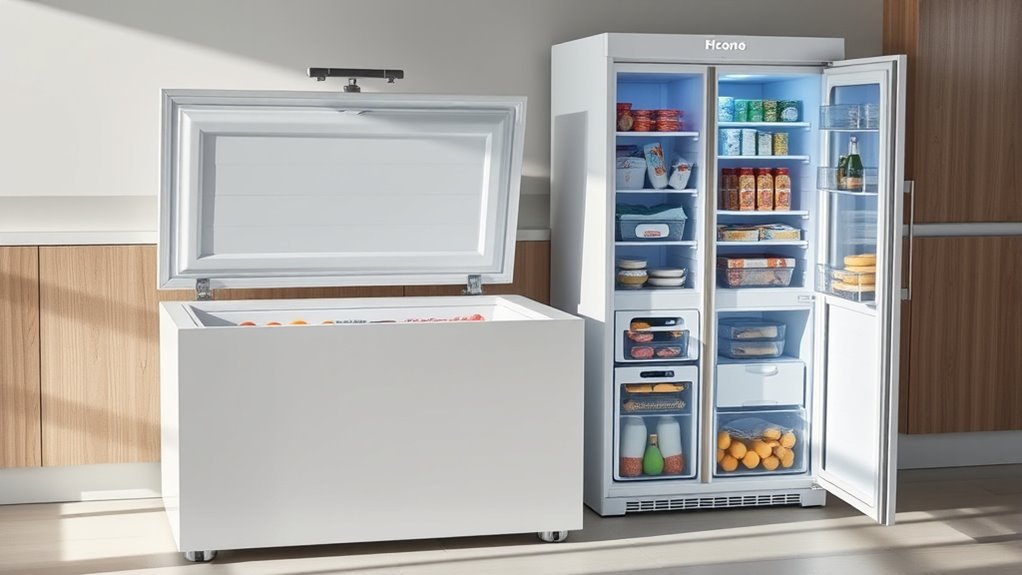
Choosing between a chest freezer and an upright freezer often comes down to how efficiently you can use the available space. Chest freezers rely on horizontal storage, making them great for large items and bulk buying since you can stack bulky goods without worrying about shelf height. But they do take up more floor space, which can be a problem in small or tight kitchens.
Upright freezers maximize vertical storage and fit neatly into narrow spots, saving floor space. Their adjustable shelves help you organize items by size and make access easier. If your kitchen limits floor space and you want vertical storage, an upright freezer is a good choice.
On the other hand, if you need to store large items or stock up in bulk, a chest freezer provides more horizontal space. It’s ideal for those who prioritize storing bigger quantities and bulk goods over fitting into tight spaces.
Accessibility And Organization
What makes one freezer easier to use than the other? It all comes down to accessibility and organization.
Upright freezers have multiple shelves that help with organization and food categorization, making it easy to find what you need. You can quickly spot items thanks to better visibility features.
Chest freezers, on the other hand, can make visibility more challenging and can complicate item retrieval. But they often offer more open space, which is great for flexible storage.
Your choice depends on what you prefer. If quick access and neat shelves matter most, upright models are the way to go. If you want to maximize space for bulkier items and don’t mind digging a little, chest freezers might be better for you.
Both types have unique accessibility features that impact how you manage your frozen goods.
Volume Versus Footprint
Although both chest and upright freezers serve the same purpose, they differ a lot in how they use space. When comparing volume efficiency, chest freezers usually give you more usable storage per cubic foot because their design minimizes air exchange when opened. This means your frozen goods stay better preserved.
On the other hand, footprint considerations matter if space is tight. Upright freezers take up less floor area, making them great for narrow spaces or rooms where you want easy access without bending over. But their volume efficiency tends to be lower because of shelves and door compartments.
Energy Efficiency and Running Costs
When you compare chest freezers and upright freezers, you’ll notice that chest freezers generally use less energy because their design keeps cold air inside better when you open them. This makes a big difference in how much energy they consume overall.
If you do a cost analysis, you’ll see that chest freezers tend to have better efficiency ratings. That means lower electricity bills over time. Upright freezers are more convenient to access, but their vertical doors let more cold air escape, which uses more energy.
Which Freezer Fits Your Space Best?
Thinking about which freezer fits your space best? Well, it really depends on how much room you have and how you like to access your frozen goodies.
For instance, chest freezers usually need more floor space because they open from the top and tend to be wider. But the upside is, they give you lots of deep storage — perfect if you fill up your freezer with large quantities of food.
On the other hand, upright freezers take up less room on the floor, thanks to their vertical design. Plus, they come with shelves and compartments, making it easier to organize everything and find what you need quickly.
Space Requirements Comparison
Choosing the right freezer starts with understanding how much space you have available. If you live in a small space, an upright freezer can be a smart choice since it uses vertical space efficiently, fitting well into tight corners or narrow spots.
Pay close attention to freezer dimensions and layout considerations to make sure it fits your kitchen design or basement storage area. Chest freezers usually need more floor space but are great for garages, making them perfect for larger storage needs outside your main living area.
Think about where you’ll place the appliance to make the most of your space. Whether you want to optimize space in your kitchen or need extra storage in your basement or garage, matching the freezer type to your available space will help keep your home organized and make setup easier.
Accessibility And Organization
Although chest freezers offer a lot of storage space, they can be harder to organize and access because items tend to get stacked on top of each other. You might have trouble seeing what’s inside or grabbing what you need quickly, especially if you don’t use bins to sort your food.
Upright freezers usually come with adjustable shelves, so you can customize the layout to suit your needs. This makes it easier to find and reach items, and you can organize food by type or how often you use it.
Your personal preferences matter here. If quick access and clear organization are important to you, an upright freezer might be a better fit. But if you want to maximize space and don’t mind some extra effort with organizing bins, a chest freezer could work just fine.
Organizing Food in Chest vs. Upright Freezers
When organizing food in a chest freezer, you’ll need to be strategic since items are stacked in a deep, horizontal space that can make it harder to access things at the bottom. Using effective stacking techniques is key to maximizing food storage and minimizing the frustration of digging through layers. Consider these tips:
- Use clear, labeled bins to group similar items together.
- Place frequently used foods on top for quick access.
- Freeze flat, stackable packages to save space.
- Rotate older items to the front to prevent waste.
- Keep an inventory list outside the freezer to track contents.
In contrast, upright freezers naturally support vertical organization with shelves and door bins, making it easier to see and reach everything. However, you still need to avoid overcrowding to maintain airflow and efficiency. By adapting your organizing approach to your freezer type, you’ll keep your food storage neat and practical, helping you find what you need without hassle.
Maintenance and Defrosting Made Simple
When you’re choosing a freezer, it’s a good idea to think about how often each one needs cleaning and whether they need manual or automatic defrosting. It’s something that can really affect how easy or hassle-free maintenance is. Keep in mind, chest freezers can be a bit tougher to get into and clean, which might make keeping them tidy a little more of a chore. So, let’s look at what makes maintaining each type easier and more straightforward.
Cleaning Frequency Comparison
Because chest freezers tend to stay colder with fewer door openings, they usually only need defrosting and cleaning once or twice a year. Upright freezers, on the other hand, get opened more often and may require more frequent maintenance.
To help you stay on top of it, here are some cleaning tips and suggested schedules:
- Check and clean your freezer every 3-4 months if you have an upright model.
- Use soft cloths and mild detergents for cleaning.
- For chest freezers, plan a deep clean during defrosting, about twice a year.
- Remove any frost buildup as soon as you notice it to keep your freezer running efficiently.
- Always unplug your freezer before cleaning to stay safe.
Following these simple tips will keep your freezer running smoothly without any hassle.
Manual vs. Auto Defrost
Regular cleaning helps keep your freezer running efficiently, but how you handle defrosting really makes a difference in how much effort it takes. With manual defrosting, you’ll need to regularly remove ice buildup yourself, which means more frequent defrosting and maintenance.
This process can be time-consuming but usually costs less upfront and uses less energy because the freezer doesn’t run additional defrost cycles. On the other hand, auto defrosting is more convenient since it automatically melts ice, saving you manual labor.
However, auto defrosting tends to use more energy and can increase costs because of the heater element working periodically. If you prefer low maintenance and are okay with slightly higher energy bills, auto defrosting is a good choice. But if you want to save energy and don’t mind defrosting sometimes, manual might be better for you.
Easy Access Challenges
How easily can you reach your frozen goods when it’s time to clean or defrost? Easy access is key for maintenance, especially with bulky frozen items.
Chest freezers often require digging through layers, making defrosting a chore. Upright freezers give you better visibility and reach.
To make things easier, consider smart storage solutions and organizational tools that keep everything within arm’s length.
Try these tips to improve access and make cleaning less of a hassle:
- Use clear, stackable bins to group frozen items
- Label containers for quick identification
- Install slide-out baskets or drawers
- Keep frequently used items near the top
- Regularly rotate stock to prevent deep freezes
These strategies help make defrosting and cleaning less overwhelming, saving you time and effort.
Pricing and Value Comparison
When comparing chest freezers and upright freezers, you’ll see that their prices often match their design and features. A quick look shows chest freezers usually have a lower upfront cost, which makes them a good choice if you’re on a tight budget.
Upright freezers tend to be more expensive because they offer vertical storage and easier access. They also make organizing your items simpler.
In terms of value, chest freezers give you more storage space for your money, great if you need to store bulky items. But upright freezers help you stay organized and use space more efficiently, which might justify the higher price.
Pricing trends also show that energy-efficient models in both types may cost more initially but save you money in the long run.
In the end, it’s all about balancing what you pay now with what you’ll get later. Think about how you’ll use the freezer and which features matter most to you.
Noise and Design Differences
Although both chest and upright freezers serve the same basic function, their noise levels and design features can really affect your experience. When choosing between them, consider how noise and style fit into your space.
Chest freezers usually have better sound insulation, so they tend to be quieter. Upright freezers might make more operational sounds because of how their compressor and airflow are arranged.
Chest freezers are typically quieter due to superior sound insulation compared to upright models.
The design of upright freezers often blends nicely with kitchen cabinetry, adding to their visual appeal. Chest freezers, on the other hand, look bulkier and more utilitarian, making them a better fit for basements or garages.
Upright models also offer easier access with shelves and compartments, which helps with organization.
Best Uses for Chest and Upright Freezers
Since each freezer type offers distinct advantages, choosing the right one depends on how you plan to use it. If you’re into meal prep or need bulk storage for seasonal foods, a chest freezer is a great choice.
It gives you plenty of space for long-term storage and keeps food at consistent temperatures, which helps with preservation. Plus, it’s budget-friendly for emergency supplies or extra food storage.
On the other hand, an upright freezer might be better if your kitchen layout calls for easy access and organization. Its multiple shelves make it simple to find specific items quickly.
Upright freezers are also a good fit for tight spaces, making them perfect for smaller kitchens. Both types help with food preservation, but your decision depends on space and how you want to organize your frozen foods.
Matching Your Freezer to Your Lifestyle
How you live daily plays a big role in choosing the right freezer. Your lifestyle preferences, family size, and cooking habits all influence which freezer fits best.
If you often meal plan and buy in bulk, a chest freezer offers more space for long-term food storage. On the other hand, if your purchasing patterns involve frequent small trips, an upright freezer with easy access might suit you better.
Think about these factors to match your freezer to your lifestyle:
- Family size and typical food storage needs
- Cooking habits and how often you plan meals
- Budget considerations and energy efficiency
- Freezer usage patterns, like bulk storage or frequent access
- Available space and room layout
Frequently Asked Questions
Are Chest Freezers Safer During Power Outages?
Yes, chest freezers are generally safer during power outages because they keep cold temperatures longer thanks to better energy efficiency and insulation.
If you’re worried about keeping your food frozen without electricity, chest freezers’ larger capacity and tight seals help preserve your items longer.
They tend to lose cold air more slowly than upright models, giving you extra time before food starts to thaw and spoil.
Can Upright Freezers Accommodate Large, Bulky Items?
Yes, upright freezers can hold large, bulky items, but they usually don’t offer as much storage space as chest freezers.
You’ll find features like shelves and door bins that help keep things organized and easy to access.
However, the vertical design can limit the size of items you can fit inside.
If you’re storing really large pieces, you might need to rearrange or remove some shelves to make enough room.
Do Chest Freezers Require Special Installation?
Coincidentally, chest freezers don’t need special installation. You just plug them in and place them where you want.
They’re energy efficient too, often using less power than upright models. But because they need more space, it’s best to put them in a well-ventilated area with enough room to open the lid fully.
How Do Temperature Fluctuations Affect Each Freezer Type?
You’ll find temperature fluctuations impact chest freezers less because their design offers better temperature stability. This means your food stays frozen longer during power outages or when you open the lid.
Upright freezers tend to have more temperature swings, which can affect food quality. Plus, chest freezers often have better energy efficiency since they don’t lose cold air as quickly. This helps you save on electricity bills.
Are There Differences in Warranty Coverage Between the Two?
Think of warranty coverage like a safety net beneath a tightrope walker. It catches you if something goes wrong.
You’ll find warranty duration and coverage specifics often vary between chest and upright freezers.
Typically, both offer similar basic coverage, but chest freezers sometimes have longer warranty duration on compressors.
Make sure you check the fine print for coverage details like parts, labor, and potential exclusions to avoid surprises down the road.
Conclusion
Choosing between a chest and upright freezer depends on your space, budget, and how you organize food. Both have their perks, so consider what fits your lifestyle best.
You might worry chest freezers are hard to organize, but with bins and labels, you’ll find what you need quickly. They’re great for storing large amounts of food.
Uprights offer easier access and visibility, making it simple to grab what you want. Just keep in mind they can use more energy over time.
Think about your storage needs and daily routines. Both types can make freezing food hassle-free and efficient, especially when you pick the right one for you.