How to Unclog Kitchen Sink Drain: A Step-by-Step Guide
Dealing with a clogged kitchen sink drain can be frustrating and messy, and you’re definitely not alone in facing this hassle. Many people struggle with slow drainage or unpleasant odors that just won’t go away.
Luckily, there are simple steps you can take to clear it up without calling a plumber.
To unclog your kitchen sink drain, start by spotting slow drainage or bad odors. Gather tools like a plunger, drain snake, gloves, and a bucket.
For minor clogs, pour baking soda followed by vinegar, then flush with boiling water.
If that doesn’t do the trick, disassemble and clean the P-trap or use a drain snake to remove stubborn debris.
Avoid pouring grease down the drain and use a sink strainer to prevent future clogs.
Keep going to uncover more tips and techniques for clear drains.
Key Takeaways
- Notice if your sink drains slowly, or if you smell odors or hear gurgling sounds—that’s often a sign of a clog.
- Try pouring boiling water down the drain, followed by baking soda, and then vinegar if you like. It’s a natural way to break up minor clogs.
- To clear out debris, remove the P-trap using gloves, a bucket, and pliers. Clean it thoroughly to keep your drain flowing smoothly.
- For stubborn blockages, use a drain snake. Insert it into the drain, rotate, and pull out any trapped debris.
- To prevent future clogs, avoid pouring grease down the drain, use sink strainers, and run hot water regularly to flush out buildup.
Spotting a Clogged Kitchen Sink Drain
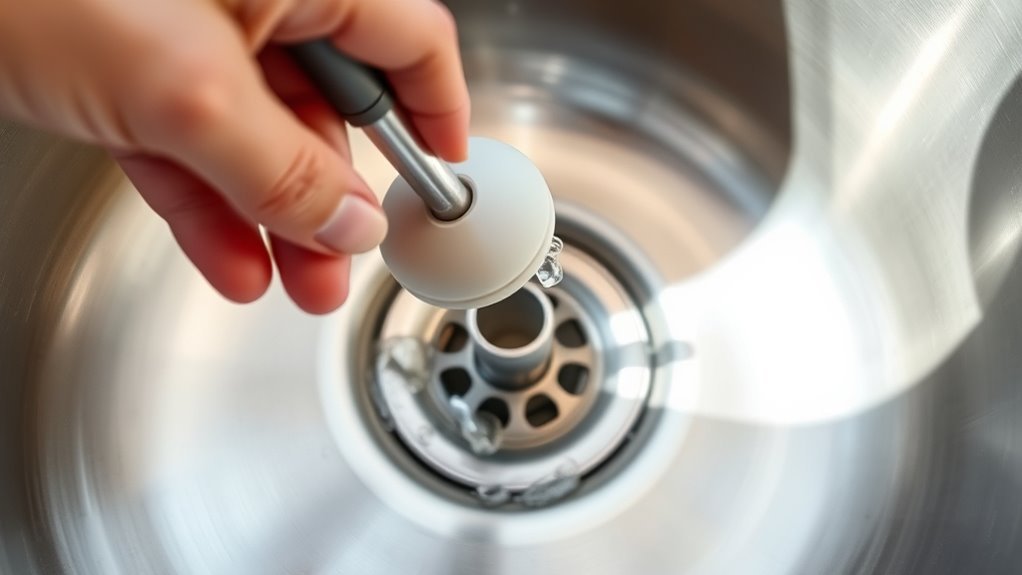
How can you tell if your kitchen sink drain is clogged? You’ll probably notice water draining slowly when you turn on the faucet. Instead of flowing freely, water may pool in the sink or drain sluggishly.
Slow draining water or pooling in your kitchen sink are common signs of a clogged drain.
Keep an eye out for any weird smells too. Standing water trapped by a clog can cause a musty or foul odor. If you see water backing up or hear gurgling sounds, these are clear signs something’s blocking the pipe.
Sometimes, small debris buildup can slow down drainage and cause odors, so don’t ignore these early signs. Spotting these symptoms early lets you fix the problem before it gets worse or causes water damage.
Watch how your sink behaves during and after use. Recognizing these signs helps you stay on top of maintaining a healthy, clog-free kitchen drain.
Common Causes of Kitchen Sink Drain Clogs
Grease, food scraps, and soap buildup are the main culprits behind most kitchen sink drain clogs. When you pour grease down the drain, it cools and solidifies, trapping food particles and causing buildup.
Foreign objects like bottle caps or small utensils can get stuck and block the pipes. Poor plumbing habits, such as disposing of coffee grounds or fibrous vegetable scraps, also contribute to clogs.
Over time, pipe damage from corrosion or improper installation can make blockages worse. Understanding these causes can help you avoid future clogs and keep your sink flowing smoothly.
| Cause | Description | How It Happens |
|---|---|---|
| Grease Buildup | Solidified fats block pipes | Pouring cooking oils or fats down |
| Food Particles | Scraps accumulate and clog | Rinsing plates without scraping |
| Foreign Objects | Items accidentally dropped in drain | Small utensils, caps, or debris |
| Pipe Damage | Corrosion or cracks trap debris | Age or improper plumbing habits |
Essential Tools to Unclog Your Kitchen Sink Drain
Got a clogged kitchen sink? No worries! You’ll want to grab a few key tools—like a plunger and a plumber’s snake. These are pretty much your go-to gadgets for tackling stubborn blockages. And don’t forget, sometimes the simplest household items, like baking soda and vinegar, can work wonders too. Let’s see how these tools and tricks can help you clear that drain quickly and easily.
Must-Have Plumbing Tools
Getting your kitchen sink drain unclogged becomes much easier when you have the right tools on hand. Start with a sink-specific plunger—it creates the pressure needed to dislodge blockages without damaging your pipes.
A drain snake or auger is essential for reaching deeper clogs and is a staple in pipe maintenance. You’ll also want slip-joint pliers to loosen and remove traps under the sink for thorough cleaning.
Don’t forget a bucket to catch water and debris during the process. Finally, wearing gloves protects your hands and keeps the drain hygiene in check.
Having these tools ready guarantees you can tackle clogs efficiently and keep your kitchen sink draining smoothly without calling a plumber every time.
Common Household Items
Three common household items can often clear a clogged kitchen sink drain without needing special tools. Start by pouring a half cup of baking soda directly into the drain. Follow it with a half cup of vinegar solutions—this combo creates a fizzing reaction that loosens grime. Let it sit for 15 minutes, then flush with hot water.
If that doesn’t do the trick, try a salt mixture. Combine salt with baking soda and pour it down the drain, then follow with boiling water. The abrasive action helps break down buildup. For a fresh scent and extra cleaning power, squeeze lemon juice into the drain after these treatments.
Using these simple items saves time and money. They’re essential for quick kitchen sink drain unclogging before calling a plumber.
How to Use Boiling Water and Baking Soda for Minor Clogs
Start by boiling a kettle of water while you gather baking soda. Baking soda helps your drain by breaking down grease and grime thanks to its natural abrasive and deodorizing properties.
Pour about half a cup of baking soda directly into the clogged sink drain. If you want to boost the reaction, follow this with a cup of white vinegar, but this step is optional.
Pour half a cup of baking soda into the drain, then optionally add white vinegar to boost the reaction.
Carefully pour the boiling water down the drain to flush away loosened debris. The boiling water is great for dissolving fats and oils that often cause minor clogs.
Let the mixture sit for 10-15 minutes so the baking soda and hot water can work together. Finally, flush the drain with more boiling water to clear any remaining residue.
This method is eco-friendly, inexpensive, and works best for slow-draining sinks caused by minor blockages. Repeat if needed, but avoid using it for severe clogs.
How to Use a Plunger to Clear Kitchen Sink Blockages
Before you get started with the plunger, take a moment to prepare the sink. Seal up any overflow openings and fill the sink with enough water to cover the cup of the plunger. This makes sure you get a good seal and enough pressure to work with.
Next, position the plunger firmly over the drain. Make sure it’s snug so no air can escape. Then, use quick, forceful thrusts to create pressure that can help loosen up the clog. If you keep at it with the right technique and a bit of patience, you’ll often be able to clear the blockage without resorting to harsh chemicals.
Preparing The Sink
To effectively use a plunger, start by preparing your sink. First, remove any dishes or debris to prevent obstruction and keep the workspace clean.
Next, scoop out excess water with a cup or small container, leaving just enough to cover the plunger’s cup. This helps create a good seal.
If you have a double sink, plug the overflow drain or the second basin. This builds pressure and makes plunging more effective.
Taking these steps ensures your plunging targets the blockage directly. It also promotes better drainage and helps maintain your sink’s hygiene and long-term health.
Effective Plunging Techniques
Once your sink is prepped and the water level is right, focus on using the plunger effectively. Place the plunger cup firmly over the drain to create a tight seal.
Start with slow, steady plunges to build suction, then switch to quick, sharp pushes and pulls. The goal is to maintain pressure without breaking the seal.
Be careful not to lift the plunger too high or let air in, as this reduces suction and slows down progress. Repeat the motion 15-20 times and check if the water drains faster.
If the clog still won’t budge, try repositioning the plunger or adding a bit more water to improve the seal. Mastering these techniques will help you clear blockages quickly and avoid calling a plumber.
Comparing Natural Enzyme vs. Chemical Drain Cleaners for Kitchen Sinks
Although both natural enzyme and chemical drain cleaners aim to clear clogs, they work in very different ways and have distinct effects on your kitchen sink and the environment. Enzyme cleaners use natural bacteria to break down organic matter slowly, offering gentle, eco-friendly odor neutralization. Chemical cleaners act fast by dissolving clogs with harsh substances but may damage pipes and pose safety risks.
Natural enzyme and chemical drain cleaners clear clogs differently, impacting your pipes and the environment uniquely.
Here’s a quick comparison to help you decide:
- Enzyme Effectiveness & Long Term Results: Enzymes work gradually and maintain pipe health over time, leading to fewer clogs in the future.
- Chemical Safety & Environmental Impact: Chemicals can be hazardous to you and harmful to the environment, while enzymes are biodegradable and safer to handle.
- Cost Comparison & Application Methods: Enzyme cleaners might cost more upfront and require repeated use, but chemicals are cheaper and act quickly with a single application.
User experiences often highlight enzymes for sustainable maintenance and chemicals for urgent fixes.
How to Disassemble and Clean the P-Trap to Remove Debris
Start by placing a bucket or bowl underneath the P-trap to catch any water or debris that might spill during removal. Next, use a wrench or your hands to loosen the slip nuts on both ends of the P-trap.
Carefully disassemble the P-trap by removing it from under the sink. Be prepared for some water to drain out. Once removed, inspect the P-trap for clogs or buildup.
Use a brush or an old toothbrush to clean debris stuck inside the trap thoroughly. Rinse the trap with warm water to wash away loosened grime. If the P-trap is metal, check for corrosion or damage and replace if necessary.
After cleaning, reassemble the P-trap by screwing the slip nuts back into place. Tighten them securely but avoid overtightening to prevent damage. Finally, run water to verify there are no leaks and that the drain flows smoothly.
This step efficiently clears common blockages in your kitchen sink drain.
How to Use a Drain Snake for Tough Kitchen Sink Clogs
Grab your drain snake to tackle tough clogs that won’t budge with basic cleaning. Using the right techniques can make a big difference in clearing stubborn blockages quickly and easily.
Use a drain snake to easily clear tough clogs that basic cleaning can’t handle.
Here’s how to use it effectively:
- Insert the snake Slowly feed the snake cable into the drain until you feel resistance. That means you’ve reached the clog.
- Rotate and push Turn the handle clockwise while gently pushing forward. This helps the snake break through or latch onto the debris causing the clog.
- Retrieve and test Carefully pull the snake out, removing any debris caught. Run water to see if the clog is gone. Repeat if needed.
These strategies help you avoid harsh chemicals and protect your pipes. With a little practice, using a drain snake becomes a simple way to keep your kitchen sink flowing smoothly.
Tips to Prevent Future Kitchen Sink Drain Clogs
To keep your kitchen sink draining smoothly, adopting some simple habits can prevent clogs before they happen. Preventive maintenance is all about changing your kitchen routines to stop grease, food scraps, and soap residue from building up.
Regularly running hot water and using strainers can make a big difference in keeping your pipes clear. These small steps can save you time and trouble down the line.
Here’s a quick guide to effective preventive maintenance:
| What to Do | Why It Helps |
|---|---|
| Use a sink strainer | Catches food scraps before they go down the drain |
| Avoid pouring grease | Prevents buildup and blockages |
| Flush with hot water weekly | Dissolves soap and grease deposits |
What to Do If Your Kitchen Sink Drain Won’t Unclog
Having trouble getting your kitchen sink drain to clear? If the usual methods aren’t doing the trick, it might be time to try some alternative solutions. You could use a plumbing snake or even a natural drain cleaner—just be cautious with harsh chemicals because they can damage your pipes.
And if none of these work, don’t hesitate to call in a professional plumber. It’s better to get help sooner rather than later, so you don’t end up making the problem worse.
Alternative Unclogging Methods
When traditional methods fail to clear your kitchen sink drain, try alternative unclogging techniques that target stubborn blockages more effectively. These methods often include eco-friendly solutions and emergency techniques that protect your pipes and the environment.
Baking Soda and Vinegar: Pour half a cup of baking soda down the drain, then follow with half a cup of vinegar. Let it sit for 15 minutes, then flush with hot water to naturally break down grease and debris.
Wet/Dry Vacuum: Use a wet/dry vacuum to suck out the clog. Make sure to seal the drain tightly to get the best suction and remove the blockage.
Manual Snake or Auger: Insert a manual drain snake to physically dislodge tough blockages that are deep in the pipes. It’s a handy tool for stubborn clogs that won’t budge otherwise.
When To Call Professionals
Although you might try several methods to clear your kitchen sink drain, some clogs need professional help. When your efforts don’t work or the clog gets worse, it’s time to call a plumber.
If you notice foul odors, water backing up, or leaks, don’t wait. In urgent cases, emergency services can prevent costly damage.
| Signs to Call Professionals | Why It Matters | What to Expect |
|---|---|---|
| Persistent clog | Indicates deep blockage | Expert diagnosis |
| Water backup | Risk of flooding | Immediate response |
| Bad odors | Possible sewer issues | Safe, effective treatment |
| Leaks around pipes | Structural damage risk | Repairs and replacements |
| DIY methods fail | Avoid worsening problem | Professional tools used |
Trust professionals to handle tough clogs safely and efficiently.
Frequently Asked Questions
Can Clogged Kitchen Sink Drains Cause Bad Odors in My Home?
Yes, clogged kitchen sink drains can definitely cause bad odors in your home. Food particles and grease trapped in the clog become sources of bad smells as they decompose.
To prevent this, you should stay on top of drain maintenance by regularly cleaning and avoiding pouring grease or large debris down the drain.
Keeping your drain clear helps eliminate those unpleasant smells and keeps your kitchen smelling fresh.
How Often Should I Clean My Kitchen Sink Drain to Avoid Clogs?
To keep debris and dishwater buildup at bay, regular drain maintenance is key. Aim to clean your kitchen sink drain at least once a month to keep everything flowing smoothly.
If you start noticing slow drainage or unpleasant odors, it’s a good idea to increase your cleaning frequency. Staying on top of it helps prevent stubborn clogs and keeps your sink smelling fresh.
Consistent care is your best defense against clogs and odors. So don’t wait—ditch buildup every month and enjoy a well-running, fresh-smelling sink.
Are There Any Health Risks Associated With a Clogged Kitchen Sink Drain?
Yes, you can face health risks from a clogged kitchen sink drain. Standing water and trapped food waste provide a perfect environment for bacteria and mold to grow, which can lead to unpleasant odors and potential health issues.
These issues might trigger allergies or respiratory problems, especially for those with sensitivities. To keep your home safe, it’s a good idea to do regular drain maintenance and follow plumbing tips.
Keeping your drain clear not only prevents clogs but also helps protect your family’s health and your home’s hygiene. Don’t ignore it—staying proactive is key!
Can Food Waste Disposals Contribute to Kitchen Sink Clogs?
Yes, food waste disposals can contribute to kitchen sink clogs if you don’t practice proper disposal maintenance.
When food waste isn’t ground up thoroughly or you put fibrous, starchy, or greasy items down the disposal, it can build up and cause blockages.
To avoid clogs, run cold water while using the disposal, avoid overloading it, and regularly clean it to keep everything flowing smoothly and prevent backups.
Is It Safe to Use Chemical Drain Cleaners Regularly in Kitchen Sinks?
It’s not safe to use chemical drain cleaners regularly in your kitchen sink because they can damage pipes and harm the environment.
Instead, try chemical drain alternatives like enzymatic cleaners, which are gentler. You can also use natural unclogging methods such as baking soda and vinegar or a plunger to clear minor blockages.
These options protect your plumbing and keep your kitchen safer over time.
Conclusion
Clogged kitchen sinks affect over 60% of households at some point, showing how common this problem is.
By following these simple steps, you can quickly handle most blockages yourself, saving both time and money.
Remember, regular maintenance like avoiding grease buildup and using strainers can help prevent future clogs.
If your sink doesn’t unclog after trying these methods, it’s best to call a professional plumber to prevent damage and costly repairs.