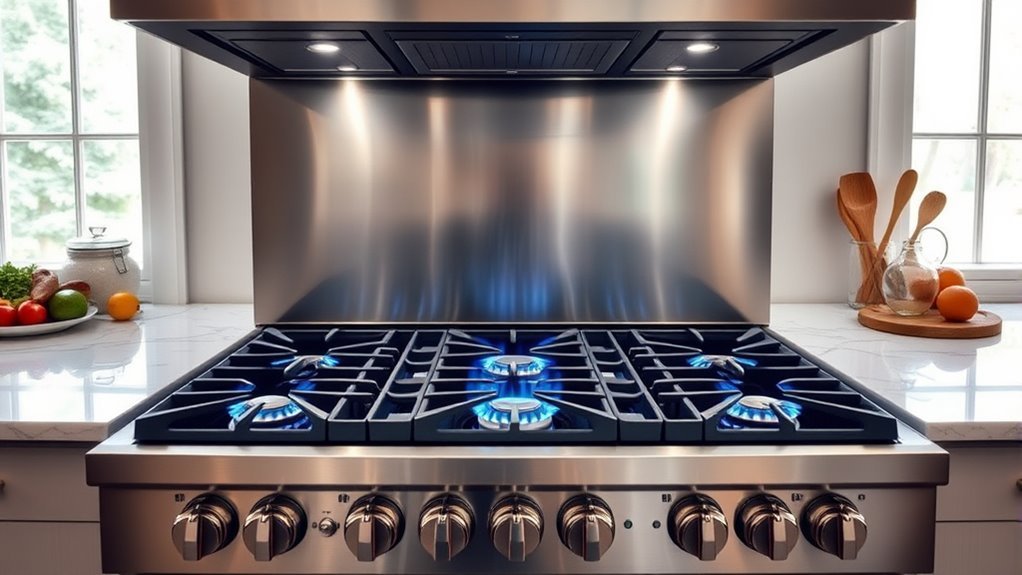
High End Gas Stoves Guide: What to Know Before You Buy
Cooking with a high-end gas stove can feel overwhelming with so many options out there. You’re not alone—many people struggle to find the perfect balance of power, safety, and features.
If you want precise heat control, durable materials, and advanced features like safety shut-offs or smart connectivity, a high-end gas stove is a smart choice.
Choose burners that match your cooking style, whether you prefer sealed for consistency or specific sizes for simmering and boiling.
Decide between propane’s higher heat or natural gas’s cost-effectiveness.
Proper installation and regular maintenance are key to safety and performance.
Keep exploring to uncover insights on features, care tips, and budgeting.
Key Takeaways
- High-end gas stoves give you precise temperature control, helping you achieve accurate and consistent cooking results.
- Burner types and sizes influence how heat is distributed, making it easier to match your stove to different cooking styles and needs.
- Decide between propane and natural gas based on what’s available in your area, your budget, and how much heat you want.
- Features like safety shut-offs, smart connectivity, and digital displays make using and maintaining your stove more convenient and safe.
- Proper installation, regular maintenance, and professional check-ups are key to keeping your stove working well and lasting longer.
Why Choose a High-End Gas Stove?
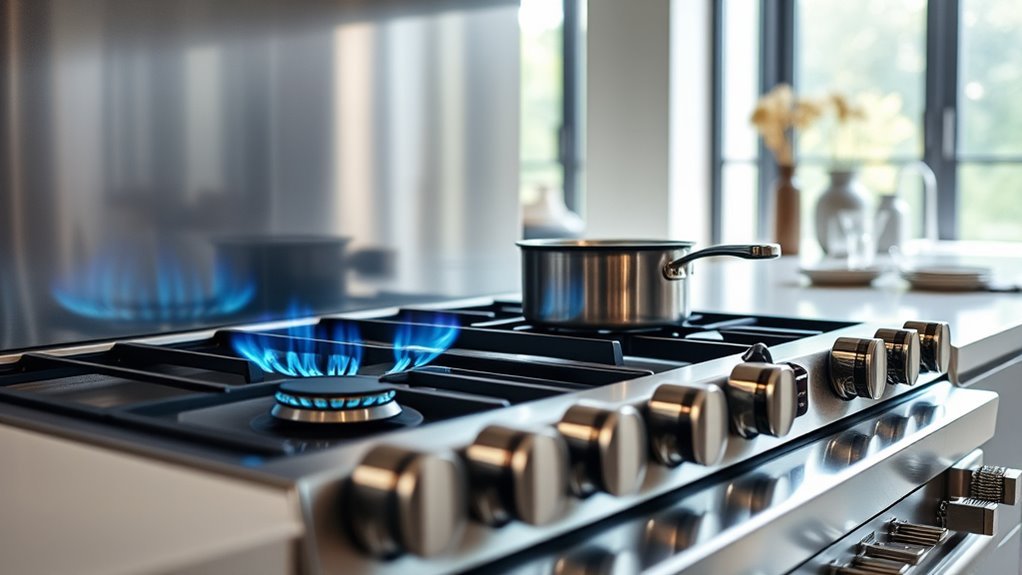
Many home cooks prefer high-end gas stoves because they offer precise temperature control and better heat distribution. When you choose a luxury cooking appliance, you’re investing in consistent performance that can really elevate your kitchen game.
These stoves come with gourmet features like powerful burners, simmer settings, and even integrated griddles. This gives you the flexibility to handle complex recipes with ease.
You’ll also love the durability and sleek design that high-end models bring. They’re both functional and visually appealing. With improved flame control, you can cook delicate sauces or sear meats perfectly every time.
Plus, the materials used often resist stains and wear, making maintenance easier. Choosing a high-end gas stove means upgrading your skills and enjoying professional-grade equipment that meets serious home chef standards.
How to Compare Burner Types and Benefits
When you’re looking at high-end gas stoves, it’s really helpful to understand the different types of burners. Knowing how each one performs can make a big difference in your cooking experience and help you choose the right stove for your needs. So, let’s take a closer look at the main burner options and what makes each one special.
Burner Types Overview
Understanding the different burner types is key to choosing the right gas stove for your kitchen. Burners mainly differ in design and materials, which directly affect how well they perform.
Sealed burners made from durable materials like brass offer consistent heat and resist corrosion better than open burners, often made from cheaper metals. You’ll notice variations in burner size and flame control, which impact cooking precision.
Some burners heat up quickly for boiling, while others provide low, steady simmering. When comparing, pay attention to how burner materials influence longevity and heat distribution.
Efficient burners save energy and make cooking easier by providing even flames. Knowing these basics helps you pick a stove that matches your cooking style and kitchen needs without overspending or losing performance.
Benefits of Each Burner
Although burner types vary widely, each offers unique advantages that can boost your cooking experience. Knowing these benefits helps you pick the right stove to suit your needs, focusing on burner efficiency and heat distribution.
Some burners deliver rapid heat for boiling, while others provide steady, low heat perfect for simmering. Here’s what to consider:
- High-output burners give intense heat for quick cooking and searing.
- Simmer burners offer precise, low heat ideal for delicate sauces and melting.
- Dual-ring burners combine power and control, making them versatile for different dishes.
- Wok burners improve heat distribution with concentrated flames, perfect for stir-frying.
What Fuel Options Work Best for High-End Gas Stoves?
Which fuel option suits your high-end gas stove best depends on your cooking needs and home setup. You’ll usually choose between propane and natural gas, and understanding the differences helps you make the right call.
Propane offers higher heat output, making it perfect if you want intense, quick cooking. It’s also portable, so if your home isn’t connected to a natural gas line, propane tanks are a convenient alternative.
On the other hand, natural gas is often more cost-effective and provides steady, consistent heat, which is great for everyday cooking. When considering fuel efficiency, natural gas stoves generally have lower operating costs over time, especially if you have a reliable gas line.
Propane stoves may cost more per unit of fuel but make up for it with superior heat intensity. Ultimately, your choice depends on what’s available, the cost, and how you like to cook.
Knowing the differences between propane and natural gas will help you optimize your stove’s performance and fuel efficiency.
What Advanced Features Should You Look For?
When you’re shopping for a stove, it’s a good idea to look for advanced features that make cooking safer and more convenient. For starters, precision temperature controls are a game-changer—they allow you to set and maintain exact heat levels, so your dishes turn out just right every time.
Safety should also be a top priority. Make sure the stove has safety mechanisms in place to protect your home and loved ones. Things like automatic shut-off or child locks can give you peace of mind while cooking.
And don’t forget about smart connectivity options. These features can really simplify your life by letting you control and monitor your stove remotely. Whether it’s adjusting the heat from your phone or receiving alerts, smart features are a great addition to any modern kitchen.
Precision Temperature Controls
When cooking with a high-end gas stove, having precise temperature controls helps you get consistent results every time. It means you can fine-tune the heat, avoiding guesswork and burnt meals.
Look for stoves that offer advanced temperature calibration, so you can make small adjustments for exact heat. This makes your cooking more reliable and enjoyable.
Key features to consider include digital temperature readouts for easy monitoring and adjustable flame settings with fine increments. These help you cook with precision.
Smart sensors are also great, as they maintain steady heat through automatic calibration. Plus, memory functions that remember your preferred temperatures add extra convenience.
With these controls, you’ll enjoy better accuracy and repeatable results. Investing in a high-end gas stove becomes truly worthwhile when it makes your cooking easier and more consistent.
Safety Mechanisms Included
Although high-end gas stoves deliver exceptional cooking performance, they must also prioritize your safety. When shopping, focus on advanced safety features that protect your home and family. Key mechanisms include automatic shutoff systems that prevent accidents and flame failure devices that stop gas flow if flames go out.
Here’s a quick look at essential safety features:
| Safety Feature | Purpose |
|---|---|
| Child Locks | Prevent unintended stove use |
| Gas Leak Detection | Alerts you to dangerous leaks |
| Anti Tip Devices | Stop the stove from tipping forward |
Also, look for heat-resistant materials and carbon monoxide sensors. These features ensure your stove is safe, reliable, and built to protect against common hazards like gas leaks and overheating.
Smart Connectivity Options
How can smart connectivity transform your cooking experience? With smart home integration, your high-end gas stove becomes more than just a cooking appliance. It turns into a convenient, interactive hub.
You can control your stove remotely, adjust temperatures, and monitor cooking times from your smartphone, making multitasking much easier. Look for these advanced features:
- Remote control functionality for adjusting burners from anywhere
- Voice command compatibility with virtual assistants like Alexa or Google Assistant
- Real-time alerts for preheating or cooking completion
- Integration with smart kitchen ecosystems for seamless automation
These smart connectivity options not only boost convenience but also improve safety and efficiency. By choosing a stove with these features, you’ll enjoy a modern, connected cooking environment tailored to your lifestyle.
How Temperature Control Affects Your Cooking
Mastering temperature control lets you unlock the full potential of your high-end gas stove, giving you precise command over every dish you prepare. By understanding and applying effective temperature regulation techniques, you can adjust heat levels instantly, making sure your ingredients cook evenly and at the right pace. This control helps prevent burning, undercooking, or overcooking, which can ruin flavors and textures.
Using cooking precision methods like simmering delicate sauces or searing meats at high heat becomes effortless. You’ll notice how consistent flame adjustment allows you to experiment confidently with recipes that demand exact temperature ranges. Your dishes will benefit from better taste, appearance, and nutritional retention.
In the end, mastering these temperature control strategies makes your cooking experience better and your results even more impressive. Your high-end gas stove isn’t just a tool; it’s a partner in culinary excellence that responds instantly to your touch. This lets you create restaurant-quality meals right at home.
How to Match Stove Size and Configuration to Your Kitchen
Now that you’ve got a handle on controlling your stove’s temperature for perfect cooking results, it’s time to think about the size and layout of your gas stove. Matching your stove to your kitchen layout ensures efficient use of space and a smooth workflow.
Consider how well the appliance fits with your existing space to avoid overcrowding and keep everything balanced with other kitchen elements. Make sure it works seamlessly with your cabinetry and ventilation systems.
When choosing the right size and configuration, focus on available counter and floor space. You want a stove that fits comfortably without disrupting how you move around the kitchen.
Think about the number and type of burners you need based on your cooking habits and family size. Select a style and finish that complements your overall kitchen design and appliance palette for a cohesive look.
Key Installation Requirements for High-End Gas Stoves
When you’re setting up your fancy new gas stove, it’s super important to make sure you have good ventilation and enough clearance around it. This keeps your kitchen safe and helps everything run smoothly.
Also, don’t forget to double-check that your gas line and electrical connections match what the stove needs. Getting these details right from the beginning can really make a difference in how well your stove works and how safe it is to use.
Ventilation and Clearance Needs
Because high-end gas stoves produce combustion gases and heat, proper ventilation and clearance are crucial for safe and efficient operation. You’ll want to understand the different ventilation options—like range hoods, downdraft systems, and external vents—to find the best fit for your kitchen.
Clearance standards are just as important to prevent heat damage and ensure safety. Make sure to keep the recommended distances between the stove and any combustible materials.
Choose a ventilation system that effectively removes fumes and excess heat. Also, check local building codes to stay compliant with ventilation and clearance requirements.
Regularly inspect and clean your ventilation components to keep airflow optimal. Following these simple guidelines lets you enjoy your high-end gas stove safely and makes sure it performs at its best.
Gas Line and Electrical Setup
Although installing a high-end gas stove requires careful attention to both gas line and electrical setup, getting these right ensures your appliance runs safely and efficiently.
For gas line installation, make sure you hire a licensed professional to connect your stove to a properly sized gas line that follows local codes. This helps prevent leaks and keeps the fuel flow steady.
Next, check the electrical requirements. Many high-end models need a dedicated 120-volt outlet for features like electronic ignition and smart controls.
Make sure your kitchen wiring can handle the load and that outlets are placed according to the manufacturer’s guidelines.
How to Care for and Maintain Your High-End Gas Stove
Keeping your high-end gas stove in top condition guarantees it performs efficiently and lasts for years. To do this, stick to a consistent maintenance schedule and use proper cleaning techniques.
Regular inspections help you spot wear before it turns into a bigger problem. Avoid common mistakes like using abrasive cleaners or neglecting burner ports, as these can damage your stove.
Here’s how to care for your stove effectively:
- Follow seasonal routines to prevent buildup and corrosion.
- Use protective accessories like burner covers to shield delicate parts.
- Perform troubleshooting tips for minor issues without delay.
- Schedule professional check-ups annually to ensure safety and performance.
Common High-End Gas Stove Issues and How to Fix Them
When you run into problems with your high-end gas stove, fixing them quickly can save you from bigger damage and expensive repairs. Common issues include uneven flames, ignition troubles, and gas leaks.
Poor burner alignment can make heat distribution inefficient, and worn control knobs might make controlling the flame less precise. Regulator problems often cause inconsistent gas flow, so it’s important to check these regularly.
Regularly cleaning the surface helps keep your stove working well and ensures safety. For flame distribution, try adjusting the burner caps and clearing any debris. If ignition isn’t working, clean the igniter and check the connections.
Gas leaks need careful inspection—look at hoses and tighten fittings as needed. For burner alignment, follow your manual to realign the burners properly. If the regulator isn’t functioning right, you might need to replace or service it.
How to Budget for Your High-End Gas Stove Purchase
Since high-end gas stoves come with a variety of features and price points, you should set a clear budget before shopping. Effective budgeting helps you prioritize must-have features while avoiding overspending. Start by researching models that fit your kitchen size and cooking style, then compare prices to find the best value.
To refine your budget, consider these cost-saving tips:
- Identify essential features versus nice-to-haves to focus your spending.
- Check for seasonal sales or manufacturer rebates to reduce costs.
- Factor in installation fees and potential maintenance expenses.
- Set aside a contingency fund for unexpected expenses or upgrades.
Frequently Asked Questions
Are High-End Gas Stoves Compatible With Smart Home Systems?
Yes, many high-end gas stoves feature smart capabilities that let you connect them to your smart home setup.
You’ll find options like Wi-Fi or Bluetooth, so you can control things like temperature, timers, and safety alerts from your phone or device.
These stoves make cooking easier by syncing with your smart gadgets, meaning you can monitor and change settings without leaving the couch or even the kitchen.
Can High-End Gas Stoves Be Used Outdoors Safely?
Yes, you can use high-end gas stoves for outdoor cooking, but it’s important to ensure they have the right safety features.
Look for models with flame failure devices, sturdy construction, and weather-resistant materials to avoid accidents.
Always place the stove on a stable, flat surface away from flammable objects.
Following these precautions will help you enjoy outdoor cooking safely without risking damage or injury.
Do High-End Gas Stoves Increase Home Insurance Costs?
In terms of high-end gas stoves, don’t jump the gun — they don’t automatically hike your insurance premiums.
However, you should check your coverage options because some insurers might see them as a higher risk, which could affect your rates.
It’s best to talk to your agent and be upfront about your stove. That way, you won’t get caught off guard, and you’ll know exactly what’s covered.
What Are the Environmental Impacts of High-End Gas Stoves?
You’ll find that high-end gas stoves do produce gas emissions, which can impact indoor air quality and contribute to greenhouse gases. However, many models focus on energy efficiency, helping reduce overall fuel use.
If you care about sustainability practices, look for stoves compatible with alternative fuels like propane or bio-gas. You can also improve environmental impact by ensuring proper ventilation.
Considering electric or induction options might be a good move if you want a greener kitchen.
How Do High-End Gas Stoves Affect Indoor Air Quality?
High-end gas stoves can increase indoor air pollution because they emit nitrogen dioxide and carbon monoxide. Proper ventilation is necessary to reduce these pollutants and keep the air quality good.
Without enough ventilation, harmful gases can build up, which can affect your health. Using range hoods that vent outdoors or opening windows while cooking can help manage emissions.
These simple steps make your kitchen safer and more comfortable during use.
Conclusion
Choosing a high-end gas stove is like lighting a master chef’s flame in your kitchen—precision, power, and passion all burning bright.
By understanding burners, fuel, features, and care, you’re fueling more than just a stove; you’re igniting your culinary creativity.
Remember, the right stove is your kitchen’s heart, where every meal becomes a masterpiece.
With thoughtful choices and proper upkeep, your investment will keep your cooking dreams glowing strong for years to come.