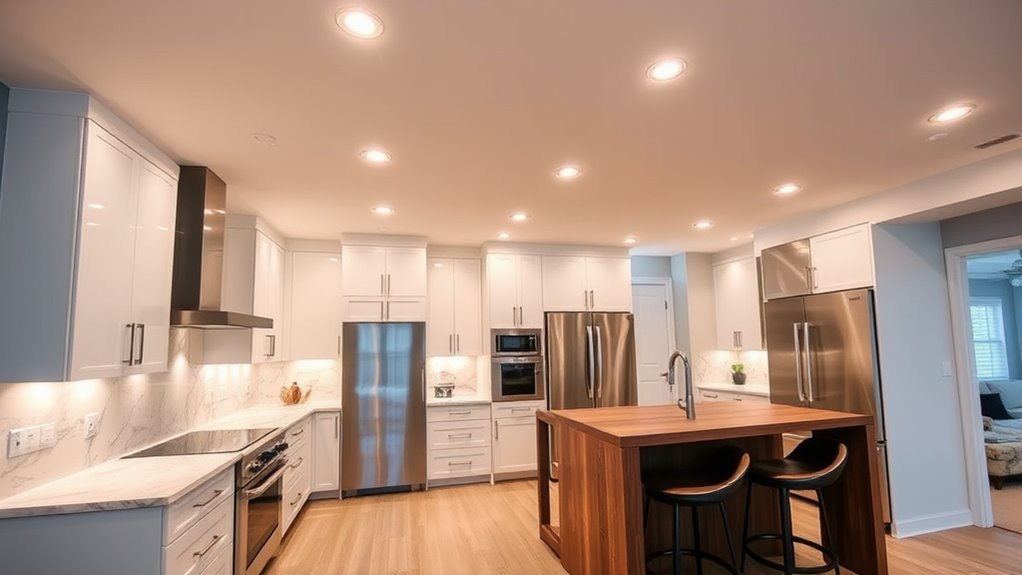
Can Lighting in Kitchen: A Complete Buying Guide
Are you tired of struggling with dull, uneven lighting in your kitchen? You’re not alone—many people find it tricky to create the perfect mix of brightness and ambiance. The right lighting can make all the difference in cooking, cleaning, and enjoying your space.
Can lighting is perfect for kitchens, providing sleek, recessed illumination that balances ambient, task, and accent lighting.
You’ll want to space fixtures 4 to 6 feet apart, use brighter 300-400 lumen lights over prep areas, and choose warm to cool color temperatures (2700K–3500K) to suit different moods.
Opt for energy-efficient LEDs and select trims that match your kitchen’s style. Safe installation and maintenance keep your lights working well.
Investigate how to customize your setup for the best kitchen lighting experience.
Key Takeaways
Can lighting offers sleek, recessed illumination ideal for layered ambient, task, and accent lighting in kitchens. It provides a clean, modern look while enhancing functionality.
Space can lights 4 to 6 feet apart and stagger placement to avoid shadows and ensure balanced lighting. This helps create a well-lit, inviting kitchen space.
Use 300-400 lumens for prep zones and 100-200 lumens for casual areas. Choose warm or cool color temperatures based on the mood and use of each space.
Select fixture types and trims that match your kitchen style. Make sure they are compatible with LED bulbs and dimmers for flexibility and energy efficiency.
Follow safety guidelines during installation. Opt for energy-efficient LEDs and perform regular maintenance to keep your lighting bright and effective.
What Is Can Lighting and Why It Works in Kitchens
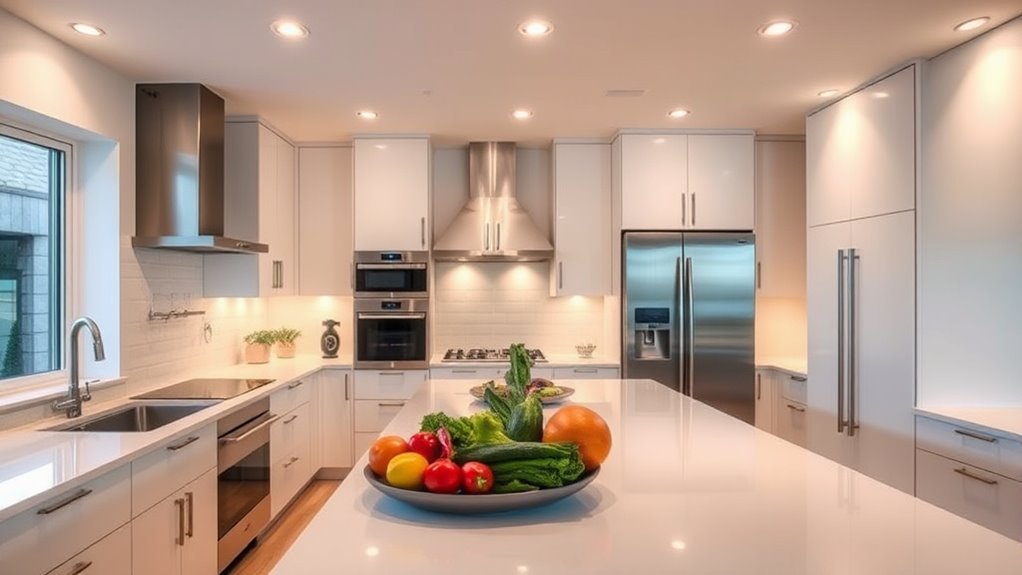
Can lighting, also known as recessed lighting, consists of fixtures installed directly into your ceiling, creating a sleek and unobtrusive look. This design trend fits perfectly in kitchens, where you want effective lighting without bulky fixtures cluttering your space.
When you install can lights, they form essential lighting layers—ambient light for overall brightness, task lighting over counters, and accent lighting to highlight features. These layers boost both functionality and aesthetic appeal.
For installation tips, plan carefully to avoid uneven light distribution. Position lights to minimize shadows and glare, especially over work areas. Since can lights blend seamlessly with your ceiling, they complement various kitchen styles without overpowering the design.
Using can lighting improves your kitchen’s clean, modern look while ensuring practical illumination where you need it most. This balance between form and function is why can lighting remains a top choice in kitchen design trends.
How to Choose the Right Size and Number of Can Lights
How many can lights do you really need to brighten your kitchen effectively? It depends on your kitchen’s size and layout. Start by thinking about size: smaller kitchens usually need fewer, smaller fixtures, while larger spaces might require bigger or more can lights to ensure even lighting.
Next, follow spacing tips to avoid dark spots or overly bright areas. A good rule of thumb is to space your can lights about 4 to 6 feet apart. For instance, if your ceiling height is standard at 8 feet, place lights roughly every 4 feet. Adjust the spacing if you have higher ceilings or specific task areas.
Picking the Best Brightness and Lumens for Kitchen Tasks
Why does brightness matter so much in your kitchen? Because the right lighting intensity directly affects how well you can do tasks like chopping, cooking, and cleaning. Good lighting keeps you safe and makes everything easier.
When choosing the best brightness and lumens for your kitchen tasks, keep these things in mind:
- Task type: Bright, high-lumen lights are great for detailed work like food prep. Softer, lower lumens work well in casual dining or relaxing areas.
- Light layering: Use a mix of ambient, task, and accent lighting to create a balanced and comfortable space.
- Fixture placement: Position can lights to reduce shadows on your work surfaces, making tasks easier.
- Energy efficiency: Pick LED bulbs that give you high lumens but use less power.
Generally, aim for 300-400 lumens per fixture in prep zones and about 100-200 lumens for ambient areas. Adjusting your lighting to fit your kitchen’s needs helps you work smarter and enjoy the space more.
Choosing the Ideal Color Temperature for Kitchen Can Lighting
When it comes to kitchen can lighting, you’ll need to decide between warm and cool light depending on the vibe you’re going for and the tasks you usually do. Warm light gives off a cozy, inviting glow—perfect for relaxing and making your space feel comfy. But keep in mind, it can sometimes change how your food looks, which might not be ideal if you want your dishes to appear their best.
On the other hand, cool light tends to be brighter and crisper. It offers a cleaner, more energizing feel and does a better job of highlighting the true colors of your food. So, understanding the difference between these two options can really help you strike the right balance—making your kitchen both welcoming and highly functional.
Warm Vs. Cool Light
Although both warm and cool lighting have their benefits, choosing the right color temperature for your kitchen lighting depends on the atmosphere you want to create and how you use the space. Warm light (2700K–3000K) offers a cozy, inviting feel, making it perfect for ambient lighting that makes your kitchen feel homey.
Cool light (3500K–5000K) provides brighter, more focused illumination, which is ideal for task lighting where clarity and precision matter. Think about these points when deciding:
- Use warm light for relaxed, social settings
- Choose cool light for cooking and detailed tasks
- Combine both for versatile lighting layers
- Match color temperature with your kitchen’s style and color palette
This balance ensures your kitchen is both functional and welcoming.
Impact On Food Appearance
While selecting the right color temperature influences your kitchen’s mood and functionality, it also affects how your food looks under the lights. Choosing can lighting with a color temperature around 3000K to 3500K offers the best balance for food presentation.
This range provides natural white light that accentuates the true colors of your dishes without washing them out or casting unnatural hues. Proper color enhancement makes your meals look more appetizing and vibrant, which is especially important if you enjoy cooking or entertaining.
Avoid overly cool (blue-tinted) or warm (yellow-tinted) lights, as they can distort food colors, making it harder to appreciate your culinary creations. So, pick can lighting that highlights your food’s natural appeal, improving both presentation and your overall kitchen experience.
How to Pick the Best Can Lighting Fixtures and Trims
When you’re selecting can lighting, it’s helpful to get familiar with the different fixture types out there so you can find what works best for your kitchen. Once you’ve got a handle on the fixtures, the next step is choosing the right trim style. This small detail can really boost both how your space looks and how well the lighting works. Let’s take a closer look at how these choices can make a difference in your lighting setup.
Fixture Types Overview
Since can lighting fixtures come in various styles and finishes, choosing the right one can feel overwhelming. To make it easier, focus on fixture styles and materials that match your kitchen’s design and how you plan to use the space.
You’ll find options ranging from sleek modern to classic designs. Materials like aluminum, steel, or plastic also vary in durability and look. Here’s a quick overview to help guide your choice:
- New Construction Fixtures: Best for homes without existing ceilings and are easy to install during remodeling.
- Remodel Fixtures: Made to fit into existing ceilings, making them perfect for upgrades.
- Air-Tight Fixtures: Great for energy efficiency and areas prone to moisture.
- IC-Rated Fixtures: Safe for direct contact with insulation, which is important for ceiling safety.
Picking the right fixture type creates a solid foundation before you move on to choosing trims.
Choosing Trim Styles
Choosing the right trim style can transform your kitchen lighting from functional to stylish. When selecting trim styles, consider the trim materials—metal, plastic, or glass—that suit your kitchen’s durability and look.
Trim finishes like matte, polished, or brushed help match or contrast your cabinets and appliances. Pay attention to trim shapes; round trims offer a classic feel, while square trims provide a modern edge.
Don’t overlook trim sizes. The diameter should fit your can lighting fixtures and the room’s scale. Whether you want adjustable trims for focused light or fixed trims for ambient glow, pick styles that complement your kitchen’s design and lighting needs.
Thoughtful choices in trims guarantee both performance and aesthetic appeal.
How to Position Can Lighting for Even Kitchen Illumination
Properly positioning can lighting is key to achieving even illumination throughout your kitchen. To balance ambient lighting with focused task lighting, plan your layout carefully.
Start by spacing cans evenly across the ceiling to avoid dark spots and shadows. Position some fixtures directly above key work areas like countertops and the sink to provide bright task lighting where you need it most.
Avoid placing lights too close to walls or cabinets, as this can create uneven lighting and harsh shadows. Consider these tips for ideal placement:
- Space can lights about 4 to 6 feet apart for balanced ambient lighting
- Install task lighting cans 24 to 36 inches above countertops
- Avoid lining up cans in straight rows; instead, stagger them
- Use dimmers to adjust lighting intensity for different needs
How to Choose Energy-Efficient Kitchen Can Lighting
Want to save some energy and cut down on those electricity bills? The key is choosing the right bulb for your kitchen can lights. LEDs and CFLs are great options—they use less power and last longer. But it’s not just about the bulbs; where you place these lights really matters too. You want to make sure your kitchen is well-lit without wasting energy on unnecessary light. Let’s take a look at how you can find that sweet spot between energy efficiency and smart lighting placement.
Energy-Efficient Bulb Types
While selecting kitchen can lighting, focusing on energy-efficient bulb types can save you money and reduce your environmental impact. LED bulbs are a great choice because they last a long time and use low wattage, giving you excellent energy ratings.
They also provide better color rendering, making your kitchen look vibrant and inviting. When choosing bulbs, think about whether they’ll work with your fixtures and if you want dimmable options for adjustable ambiance.
Opting for eco-friendly choices like LEDs helps cut down on energy use without sacrificing brightness or style. LED advantages include durability and low heat emission, making them both practical and safe.
There are many wattage options available, so you can find the perfect fit for your different lighting needs. Just check your fixture compatibility to avoid installation headaches.
Dimmable options can add flexibility and help you create the perfect mood in your kitchen. Picking the right energy-efficient bulb guarantees a space that’s functional, stylish, and sustainable.
Optimal Lighting Placement
Although choosing energy-efficient bulbs is important, placing your kitchen can lights strategically will make them work even better and save more energy. Start by identifying key task zones like countertops, sinks, and cooking areas where focused lighting is necessary.
Use multiple layers of lighting—ambient, task, and accent—to create a balanced look that complements your kitchen’s style. Think about fixture heights to ensure even light distribution and avoid harsh shadows.
Consider your room size to space bulbs properly, preventing overcrowding or dark spots. Good placement not only improves lighting but also reduces the need for extra lights.
Safe Installation Tips for Kitchen Can Lights
Because kitchen can lights involve electrical work and ceiling modifications, you’ll want to follow safety guidelines carefully during installation. Prioritizing safety helps prevent hazards like electrical shocks or fire risks. Pay close attention to wiring considerations to ensure your can lights work properly and safely.
Here are key tips for safe installation:
- Turn off power at the circuit breaker before starting any work.
- Use wiring connectors and follow local electrical codes precisely.
- Choose IC-rated can lights if installing near insulation to avoid overheating.
- Securely fasten the fixtures to prevent movement or damage.
Combining Can Lighting With Other Kitchen Light Types
When you combine can lighting with other types of kitchen lights, you create a layered effect that boosts both functionality and ambiance. Can lights provide broad, even illumination, but layering them with task lighting like under-cabinet LEDs helps you focus light where you need it most.
Adding pendant lights over your island or dining area introduces ambient accents that enrich style and warmth. This layered lighting approach prevents shadows and glare, making your kitchen safer and more inviting.
You can also include dimmable fixtures to adjust brightness for various activities or moods. By mixing can lighting with other types, you balance practical needs with aesthetic appeal, creating a kitchen that’s both efficient and cozy.
Don’t overlook how combining these elements lets you highlight design features while ensuring every corner is well-lit. This synergy uplifts your kitchen’s overall atmosphere without sacrificing function.
Maintaining and Troubleshooting Your Kitchen Can Lights
Keeping your kitchen can lights in top shape ensures they give you bright, consistent illumination for years to come. Regular maintenance and quick troubleshooting help prevent dim spots or flickering that can disrupt your cooking space.
Maintaining your kitchen can lights ensures bright, steady illumination and prevents flickering or dim spots.
When flickering occurs, start by checking for loose connections or faulty switches. Replacing bulbs with the correct wattage and type often solves many common problems.
Here’s how to keep your can lights working well:
- Regularly inspect bulbs and swap out those that look worn or flicker.
- Clean fixtures to remove dust and grease buildup that can dim the light.
- Check wiring and connections if you notice flickering or lights turning on and off.
- Make sure your dimmer switches are compatible with your bulbs to avoid flicker.
Following these simple steps helps you maintain your kitchen can lights, reduce replacements, and keep your space well-lit.
Frequently Asked Questions
Can Can Lighting Be Used in Outdoor Kitchen Spaces?
Yes, you can use can lighting in outdoor kitchen spaces, but you’ll want to focus on choosing fixtures that are durable enough to handle weather conditions.
Picking lighting rated for outdoor use ensures your setup can resist moisture and temperature changes. This way, you’ll create a cozy outdoor vibe that’s both functional and inviting.
Properly installed can lighting highlights your cooking area and adds to the overall atmosphere of your outdoor kitchen.
Are Can Lights Compatible With Smart Home Systems?
Imagine controlling your kitchen’s warm glow with just a tap or voice command. Yes, can lights are compatible with smart home systems! You can easily integrate smart lighting options, letting you adjust brightness or color to suit your mood.
This not only adds convenience but boosts energy efficiency. You can save power when you don’t need full brightness. So, you get sleek, modern lighting that’s both smart and eco-friendly, right at your fingertips.
How Do Can Lights Affect Kitchen Resale Value?
Can lights can boost your kitchen’s resale aesthetics by offering a sleek, modern look that appeals to buyers. Their clean design creates an open, bright space, making the kitchen feel more inviting.
Plus, their energy efficiency is a strong selling point, helping potential buyers save on utility bills. When you choose quality can lights, you improve both the style and functionality, which can positively impact your home’s resale value.
What Are Common Causes of Flickering in Can Lights?
Flickering bulbs in your can lights can feel like a heartbeat skipping—annoying and unsettling. Usually, flickering happens because of wiring issues, loose connections, or a bulb type that doesn’t match your fixture.
Sometimes, your dimmer switch isn’t compatible with the bulbs you’re using, causing that annoying flicker. To fix it, check your wiring, swap bulbs for the right type, and confirm your dimmer supports them.
Can Can Lighting Help Reduce Kitchen Mold or Mildew?
Can lighting in your kitchen help with mold prevention? While can lighting itself doesn’t kill mold, it helps with moisture control by improving visibility and encouraging better airflow when combined with ventilation.
Properly placed can lights reduce damp, dark corners where mold likes to grow. So, by improving light distribution, can lighting indirectly supports moisture control and helps you keep mold and mildew at bay.
Conclusion
Choosing the right can lighting for your kitchen is like finding the perfect spice. It effortlessly enhances the space and makes everything feel just right.
Think about size, brightness, color temperature, and energy efficiency. These factors help you create a well-lit, functional kitchen that fits your cooking and gathering needs.
Remember to combine can lights with other fixtures for layered lighting. Follow safety tips during installation to keep everything secure and safe.
With proper care and the right choices, your kitchen lighting will shine brightly. This makes every meal prep and moment spent there more enjoyable.