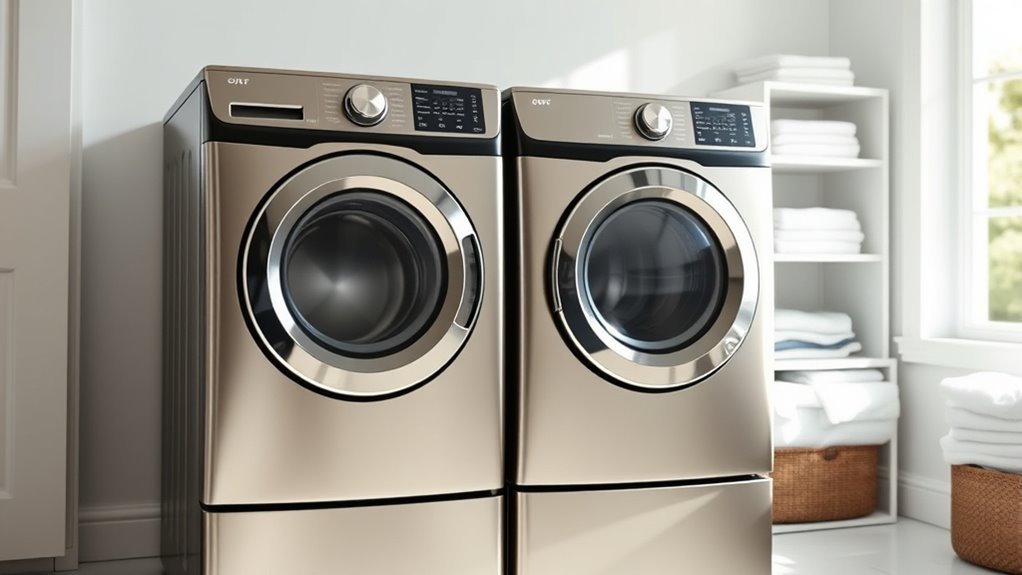
Gas Dryer and Washer Guide: What to Know Before You Buy
Are you tired of dealing with slow drying times or high energy bills? You’re not alone—many people struggle with choosing the right gas dryer and washer that fit their needs and budget.
Finding the perfect pair can feel overwhelming, but we’re here to help.
When choosing a gas dryer and washer, consider that gas dryers dry faster and save energy but need professional installation and venting.
Pick a washer type that fits your space and load size. Front-loaders use less water, while top-loaders handle bulky items well.
Look for energy-efficient models with safety features to cut costs and protect your home.
Matching capacity helps avoid extra cycles and unnecessary energy use.
Keep exploring to find tips on installation, maintenance, and picking the best brands for your needs.
Key Takeaways
- Gas dryers run on natural gas or propane and need professional installation. They dry clothes faster and usually cost less to operate over time compared to electric dryers.
- Front-load washers are energy-efficient and gentle on clothes, while top-load washers tend to be more budget-friendly and handle bulky items more easily.
- To save energy and cut utility bills, look for ENERGY STAR-certified gas dryers and washers.
- Proper installation involves secure gas lines, good ventilation, level flooring, and following local water and electrical codes.
- Regular maintenance helps keep your machines running smoothly. Clean lint traps, check hoses, and run washer cleaning cycles for safety and efficiency.
Gas vs. Electric Dryers: How They Work and Which Is Better
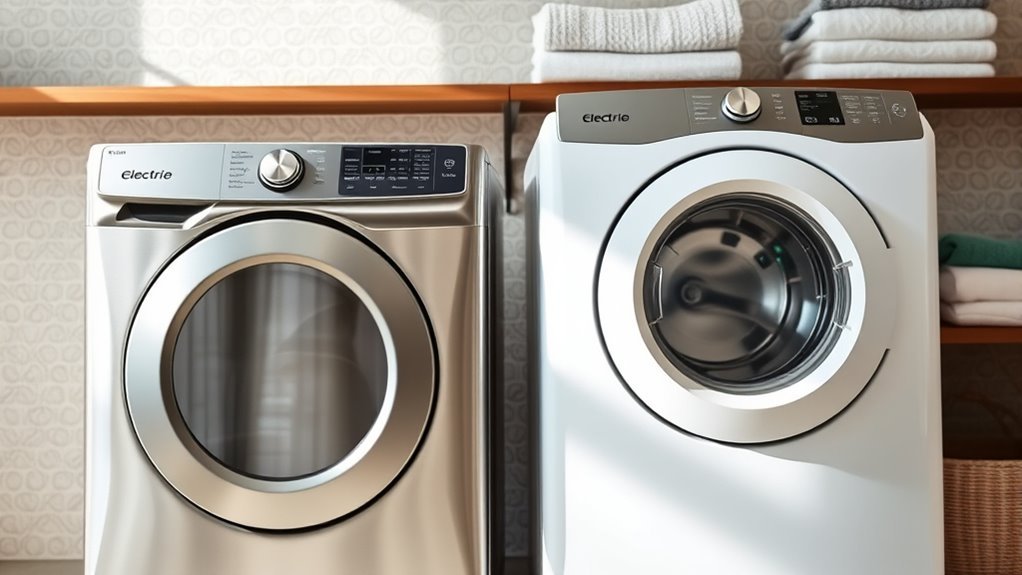
How do gas and electric dryers differ in their operation, and which one suits your needs better? Gas dryers use natural gas or propane to generate heat, offering greater efficiency and faster drying times.
Electric dryers rely on electric heating elements, making installation simpler since they only need a standard electrical outlet.
When you weigh cost comparison, gas dryers often cost more upfront and require professional installation due to gas line hookups. But they tend to save money on energy bills over time.
Electric dryers usually cost less initially but may be pricier to operate depending on electricity rates.
Performance differences include drying speed and heat consistency, with gas dryers typically drying clothes quicker.
Regarding environmental impact, gas dryers emit carbon dioxide, whereas electric dryers’ footprint depends on your electricity source.
Ultimately, your choice depends on your budget, home setup, and energy preferences.
Choosing the Right Washer for Best Performance
What factors should you consider when choosing a washer to get the best performance? First, think about the washer types available—front-loaders and top-loaders. Front-load washers typically use less water and energy, offering gentler cleaning and faster spin speeds. They’re great if you want efficiency and fabric care.
Top-load washers usually cost less upfront and may handle larger, bulkier items easily. Next, consider load capacities. Pick a capacity that matches your household’s laundry volume. If you have a big family, a washer with a higher load capacity will save you time by reducing the number of cycles.
For smaller households, a compact washer with a moderate capacity works well and saves space.
Must-Have Features When Choosing a Gas Dryer
When you’re picking out a gas dryer, one of the first things to keep in mind is its energy efficiency. You want a model that doesn’t just dry your clothes well but also helps keep your utility bills in check. It’s worth taking a look at the energy ratings before making a decision.
Next up is the drying capacity. Think about how much laundry your household usually has—whether it’s just for one or two people or a bigger family. Choosing a dryer with the right size means you won’t waste time drying multiple loads or overloading the machine.
And don’t forget about safety features! Look for options that protect your home and give you peace of mind. Features like automatic shut-off or sensors that prevent overheating can make a big difference in keeping everyone safe while you do your laundry.
Energy Efficiency Ratings
Although many gas dryers look similar, their energy efficiency ratings can vary a lot, which impacts your utility bills and the environment.
When shopping, look for energy efficiency labels like ENERGY STAR, which highlight models that use less gas and electricity. These ratings help you compare dryers based on how well they convert energy into drying power without wasting fuel.
Choosing a dryer with a high energy efficiency rating means you’ll spend less on utilities and cut down your carbon footprint. Don’t forget to check labels that estimate annual energy use — they give a clearer picture of costs over time.
Drying Capacity Size
Energy efficiency ratings help you save on utility bills, but the drying capacity size determines how much laundry you can handle in one load. When choosing a gas dryer, think about how load capacity impacts drying efficiency and your overall laundry routine. Here’s what to keep in mind:
- Match Your Needs: Larger families benefit from dryers with bigger load capacities to handle bulky items and multiple garments in fewer cycles.
- Optimize Drying Efficiency: Overloading a smaller dryer reduces drying efficiency, which wastes energy and can wear out your clothes faster.
- Space and Budget: Bigger capacity models may cost more and need more space, so balance these factors with your laundry needs.
Choosing the right drying capacity size ensures you get efficient performance while saving time and energy.
Safety Features Included
Several vital safety features can protect you and your home when using a gas dryer. Look for models with proper safety certifications to ensure they meet strict safety standards.
An emergency shutoff is essential. It stops the gas flow instantly if a problem arises, preventing accidents. Other features like flame sensors and automatic vent cleaning also help improve safety by reducing fire risk.
Here’s a quick look at key safety features:
| Safety Feature | Purpose |
|---|---|
| Safety Certifications | Verify compliance with safety codes |
| Emergency Shutoff | Instantly cuts gas supply |
| Flame Sensor | Detects flames and shuts off if needed |
| Automatic Vent Cleaning | Prevents lint buildup and reduces fire risk |
Choose a gas dryer with these features to keep your laundry routine safe and worry-free.
Washer Features That Save You Time and Water
If you’re looking to save time and water with your washer, it’s a good idea to choose models that have efficient wash cycles. These cycles can really cut down the time you spend doing laundry, making the process quicker and easier.
Plus, look for washers with water-saving technologies. They help you use less water without sacrificing how clean your clothes get. So, you’re not only saving time but also being kinder to the environment. It’s a win-win all around!
Efficient Wash Cycles
Modern washers offer a range of efficient wash cycles designed to save you time and reduce water usage. By focusing on wash cycle efficiency, you can optimize your laundry routine without sacrificing cleanliness. Here are three ways to make the most of these features:
- Quick Wash This cycle is perfect for lightly soiled clothes. It shortens the wash time while still cleaning effectively, making your laundry more efficient.
- Sensor-Based Cycles These automatically adjust water levels and cycle length based on load size and soil level. They help optimize wash cycles to save resources.
- Eco Mode This cycle uses lower temperatures and less water. It helps cut energy use and water waste without sacrificing performance.
Choosing a washer with these efficient cycles means you get clean clothes faster while conserving water and energy.
Water-Saving Technologies
Building on efficient wash cycles, water-saving technologies take your laundry routine to the next level by reducing water use without compromising cleaning power. Modern washers offer water-efficient options that adjust water levels based on load size, so you never waste a drop.
You’ll also find sensors that detect soil levels and optimize water usage accordingly. Pairing these washers with eco-friendly detergents improves their effectiveness while protecting the environment.
Using less water means shorter cycle times and lower utility bills, saving you both time and money. When shopping, look for Energy Star-rated models with advanced water-saving features to maximize efficiency.
These technologies make it easy to enjoy clean clothes while minimizing your environmental footprint.
How to Match Your Gas Dryer and Washer to Save Energy
When pairing your gas dryer with a washer, choosing appliances that work well together can really cut your energy bills. Focus on compatibility and simple energy-saving tips to get the most out of your appliances.
- Match Capacity: Pick a washer and gas dryer with similar load sizes. This way, your dryer won’t waste energy drying small loads, and your washer won’t overload the dryer. It makes everything more efficient.
- Look for Energy Star Ratings: Choose both appliances with Energy Star certification. These models meet strict energy standards, helping you cut down on electricity and gas use without sacrificing performance.
- Sync Cycle Times: Go for a washer with a high spin speed that extracts more water. When your washer removes more water, your dryer doesn’t have to work as hard, saving you gas and electricity over time.
Installation Tips for Gas Dryer and Washer Sets
Although installing a gas dryer and washer set might seem straightforward, following specific guidelines guarantees safety and efficiency. First, review all installation requirements carefully, like proper venting, gas connections, and electrical setups.
Make sure your gas supply line is correctly installed and leak-free. When placing your dryer, leave enough space around it for airflow and maintenance. Avoid tight corners or cramped spaces that could block ventilation or make hookups harder.
Check that your floor is level to prevent excessive vibration and noise. Secure all connections firmly but don’t overtighten fittings. Also, verify that your washer’s water supply and drainage meet local codes to avoid leaks or flooding.
Taking these steps helps your appliances run smoothly and safely from day one. By paying attention to installation requirements and thoughtful dryer placement, you’ll protect your home and get the most out of your new set.
Avoiding Common Installation Challenges
To steer clear of installation headaches, it’s a good idea to make sure your gas dryer and washer have proper ventilation. Also, check that the gas line connections are secure—that way, you won’t run into leaks or other problems later on.
Don’t forget to double-check your electrical and water hookups too. Making sure everything is connected correctly from the start can save you a lot of time and hassle down the road. Taking these simple steps upfront really helps ensure everything runs smoothly and safely.
Proper Ventilation Requirements
Ensuring proper ventilation is essential for the safe and efficient operation of your gas dryer and washer. Without the right ventilation types and airflow requirements, you risk reduced appliance performance and potential hazards.
To get it right, follow these steps:
- Choose the appropriate ventilation type. Rigid metal ducts are best for durability and airflow efficiency.
- Keep duct length as short and straight as possible to meet airflow requirements and prevent lint buildup.
- Install a vent cap outside your home to protect against pests and weather, while ensuring proper exhaust flow.
Gas Line Safety Checks
Before you connect your gas dryer and washer, it’s important to perform thorough gas line safety checks to prevent leaks and installation problems. Start by scheduling professional gas line inspections to make sure the pipes are intact and not damaged.
These inspections can spot any weaknesses or corrosion that might cause dangerous leaks. Make sure your installation follows local safety regulations, which often specify the right materials and proper venting to avoid hazards.
Don’t forget to check for secure fittings and tight connections. Loose joints can let gas escape, which is risky. If you’re unsure about any step, it’s best to consult a licensed technician.
Taking these precautions keeps your home safe and helps your appliances run smoothly and reliably from the start.
Electrical and Water Hookups
Although gas line safety is essential, you also need to pay close attention to your electrical and water hookups when installing your dryer and washer. Ensuring you meet hookup requirements helps prevent costly mistakes and keeps your appliances running smoothly. Here’s what to focus on:
- Confirm your water supply lines match the washer’s inlet size and pressure specifications to avoid leaks or damage.
- Use a dedicated electrical outlet for your dryer, following voltage and amperage guidelines specified in the hookup requirements.
- Check that all connections are secure and accessible for maintenance, and avoid using extension cords for the dryer’s power supply.
Simple Ways to Calculate Energy Savings With Gas Dryers and Washers
Calculating energy savings with gas dryers and washers starts by understanding your current electricity and gas use. Check your utility bills to see your monthly energy consumption for laundry. Look for the kilowatt-hours (kWh) for electricity and therms or cubic feet for gas.
Next, find the energy ratings of your current appliances, usually on the EnergyGuide label. This helps you compare how much energy each appliance uses.
Check the EnergyGuide label on your appliances to compare their energy consumption easily.
Do a simple cost analysis by comparing these numbers with gas-powered options. Multiply the energy use by your local rates to estimate your monthly costs for each type.
Don’t forget to consider efficiency differences. Gas dryers often use less energy per load, which can save you money over time.
Maintenance Tips to Keep Your Gas Dryer and Washer Running Smoothly
Keep your gas dryer and washer running efficiently by doing regular maintenance tasks. Staying on top of these chores helps prevent breakdowns and extends their lifespan. Focus on these three essential tips:
- Lint removal: Clean the lint trap after every load to improve airflow and prevent fire hazards. Also, check and vacuum the vent hose periodically to avoid blockages.
- Drum cleaning: Wipe the washer and dryer drums with a damp cloth once a month to remove detergent residue and dirt. For the washer, run a cleaning cycle with a washer cleaner or vinegar to eliminate buildup.
- Inspect hoses and connections: Regularly check gas and water hoses for leaks or damage. Tighten connections as needed and replace worn parts promptly to avoid leaks or malfunctions.
How to Choose the Right Brands and Models for Your Laundry Needs
Maintaining your gas dryer and washer well sets a solid foundation, but choosing the right brand and model can really improve your laundry routine. Start by comparing brands to see which manufacturers are known for reliability, energy efficiency, and features that fit your needs.
Look for brands that are known for durability and good customer support, as these factors impact your long-term satisfaction. Next, check out model reviews to see how specific washers and dryers perform in real homes.
Pay attention to capacity, cycle options, and how easy they are to use. Think about your laundry habits—if you wash often or handle bulky items, pick models with larger drums and advanced drying options.
Don’t forget to balance cost and features. The priciest model isn’t always the best choice. Combining brand insights with honest reviews will help you confidently pick a gas dryer and washer that match your lifestyle and budget, making laundry less of a chore.
Frequently Asked Questions
Can I Use a Gas Dryer With Any Type of Washer?
Yes, you can use a gas dryer with most washer types, but you’ll want to check a few compatibility factors.
The main thing is making sure your washer and dryer fit your laundry space and have matching capacity so you don’t overstuff them.
Also, verify that your laundry area can support the gas dryer’s ventilation and gas hookup requirements.
While the type of washer doesn’t directly affect the dryer’s compatibility, matching their size and load capacity will help your laundry days run smoother and more efficiently.
Are Gas Dryers Safe to Use in Small Apartments?
Yes, gas dryers can be safe in small apartments if you meet ventilation requirements and follow safety regulations.
You’ll need proper venting to the outside to prevent carbon monoxide buildup and ensure the dryer works efficiently.
It’s really important to check local codes and make sure you install the dryer correctly.
If you can’t provide adequate ventilation, it’s better to go with an electric dryer instead.
Always put safety first to keep your space comfortable and free of risks.
What Is the Average Lifespan of a Gas Dryer Compared to Electric?
You’ll find that gas dryers typically last around 10 to 15 years, slightly edging out electric ones, which average about 8 to 12 years. This means gas models often hold up better over time.
To keep your dryer running smoothly, follow maintenance tips like regularly cleaning the lint trap and vent. Staying on top of these helps extend your dryer’s life, no matter which type you choose.
Do Gas Dryers Require Special Venting or Ductwork?
Yes, gas dryers do require special ventilation requirements to safely expel combustion gases. When installing, you’ll need a properly sized metal vent duct that leads outdoors. Avoid plastic or vinyl ducts since they can be fire hazards.
For installation tips, make sure the vent path is as short and straight as possible. This helps improve airflow and efficiency. Proper venting not only keeps your home safe but also helps your dryer run smoothly and last longer.
Can I Convert an Electric Dryer to Gas Without Replacing It?
You can’t convert an electric dryer to gas because the conversion options are very limited. Electric and gas dryers have different internal parts made to handle their specific heat sources.
You’d need to replace the entire unit to switch from electric to gas. Installing a gas dryer requires proper gas lines and venting, which electric dryers don’t have.
Trying to convert an electric dryer isn’t safe or practical. The best choice is to buy a new gas dryer instead.
Conclusion
Choosing the right gas dryer and washer is like finding the perfect dance partner. They need to move in sync for the best performance and energy savings.
By considering features, matching models, and planning installation carefully, you’ll avoid common pitfalls and enjoy smoother laundry days.
Keep up with simple maintenance. It will extend their life and help you save time and water.
With the right choices, your laundry routine will feel effortless and efficient every step of the way.