Microwave Oven Exhaust Hood: A Complete Buying Guide
Cooking smells, smoke, and grease can quickly turn your kitchen into a mess, and finding the right microwave oven exhaust hood can feel overwhelming. You’re not alone—many people struggle with choosing the best fit for their space and ventilation needs.
You’ll want to choose a microwave oven exhaust hood that fits your kitchen size and ventilation needs. Decide between vented models that expel air outside and recirculating ones that filter and return air indoors.
Consider noise levels under 50 decibels for a quieter kitchen. Proper installation and regular filter maintenance keep air fresh and reduce odors.
Matching hood size with your cooktop guarantees better performance and avoids installation issues.
Keep exploring to find the perfect fit and keep your kitchen air clean.
Key Takeaways
- Choose between vented hoods that expel air outside and recirculating hoods that filter and return air to the kitchen.
- Match the hood size to your cooktop width and ensure proper mounting height and clearance for installation.
- Consider noise levels below 50 decibels and models with variable fan speeds for quieter kitchen operation.
- Set a budget, compare features and warranties, and avoid common mistakes like poor ventilation type or incorrect sizing.
- Maintain air quality by cleaning or replacing filters regularly and inspecting ducts to prevent blockages and grease buildup.
Different Types of Microwave Exhaust Hoods Explained
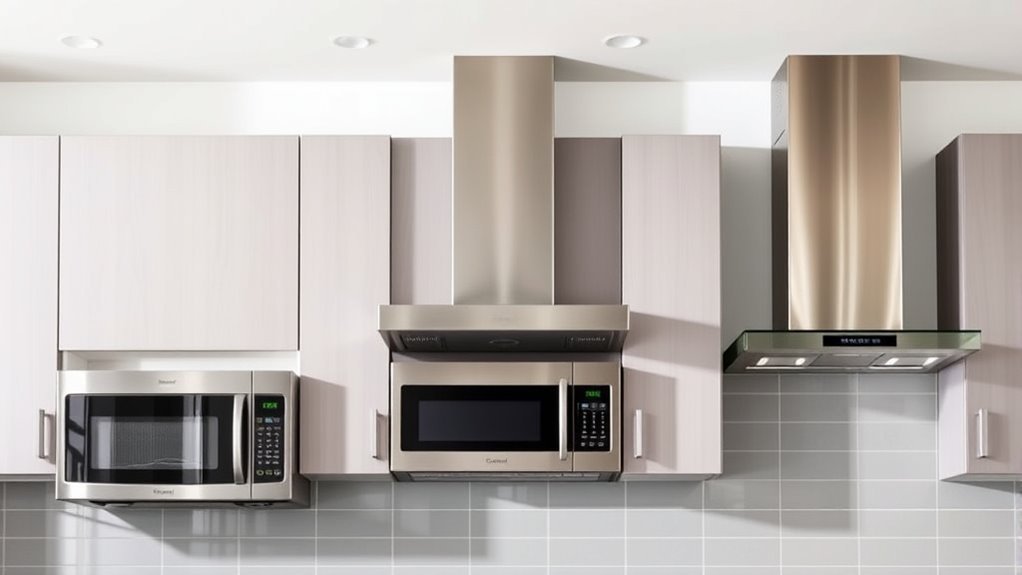
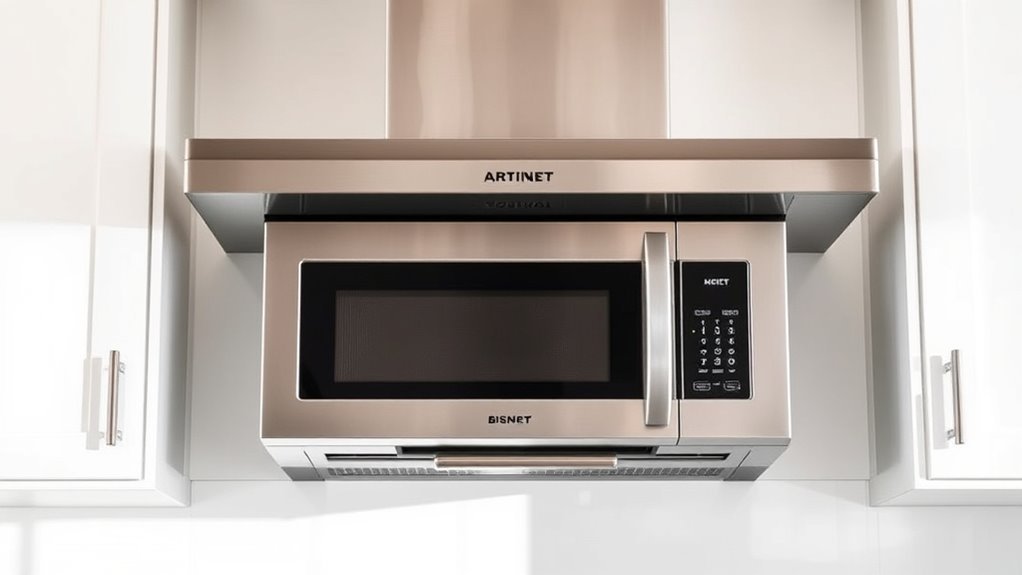
Although choosing the right microwave exhaust hood might seem tricky, understanding the different types can make it much easier. You’ll mainly encounter two types: vented and recirculating. Vented hoods expel air outside your home, while recirculating hoods filter and release air back into your kitchen.
Choosing between vented and recirculating microwave hoods simplifies keeping your kitchen fresh and stylish.
Each type comes in various design styles, from sleek modern finishes to classic looks, so you can easily match your kitchen’s aesthetic. When considering installation tips, keep in mind that vented models require ductwork, so you’ll need space and access to the exterior wall or ceiling.
Recirculating models are easier to install since they don’t need ducts but require regular filter maintenance. Knowing these types and their installation needs helps you pick a microwave exhaust hood that fits your space and lifestyle perfectly.
This way, you can ensure your kitchen stays fresh without compromising on style.
Selecting the Right Size Microwave Exhaust Hood
Choosing the right size microwave exhaust hood is key for good ventilation and a comfortable kitchen. Start by measuring the space above your stove or cooktop carefully, paying attention to the exhaust hood dimensions.
Make sure the hood fits well within your cabinets and doesn’t block doors or drawers. Also, consider the height between the cooktop and the microwave hood—too low can be dangerous, and too high can reduce efficiency.
Your exhaust hood should generally be as wide as your cooktop to capture all the fumes. For example, if your cooktop is 30 inches wide, go for a hood with similar or slightly larger dimensions.
Think about your overall kitchen layout too, so the hood complements your space without making it feel crowded. By matching the size of the hood to your space, you’ll get better ventilation and a neat, functional kitchen.
Ducted or Ductless? Choosing the Right Venting Option
Once you’ve picked the right size microwave exhaust hood, the next step is deciding how it will vent your kitchen air. You’ll choose between ducted and ductless systems, each with its own perks.
Ducted benefits include efficient removal of smoke and odors by venting air outside, which improves air circulation and keeps your kitchen fresher. However, installation differences mean ducted units require venting ducts, which might not be feasible in every kitchen.
On the other hand, ductless advantages include easier installation since they recirculate filtered air back into the room, making them ideal where ductwork isn’t possible. They also offer more style options due to their compact design.
Keep in mind, ductless hoods need regular filter cleaning or replacement to stay effective. Considering these maintenance tips and your kitchen’s layout will help you choose the right venting option that fits your needs and keeps your cooking space comfortable.
What Noise Levels to Expect From Microwave Exhaust Hoods
When you turn on your microwave exhaust hood, the noise it makes can affect how comfortable your kitchen feels. Knowing the noise level helps you pick a model that won’t disrupt your cooking or conversations.
Most microwave exhaust hoods produce noise between 40 and 70 decibels, depending on the fan speed and design. Good sound insulation can make a big difference in reducing this noise, creating a more pleasant environment.
Here are three things to consider about noise levels:
- Quiet Operation: Look for models with noise levels under 50 decibels if you want a quieter kitchen.
- Variable Fan Speeds: Adjustable speeds let you balance ventilation and noise, lowering sound when full power isn’t needed.
- Sound Insulation: Proper insulation inside the hood and ductwork helps keep noise from escaping into your space.
Essential Features for Effective Microwave Exhaust Hoods
When you’re choosing a microwave exhaust hood, it’s important to pay attention to its ventilation power. That way, you can make sure it’s really good at handling all those cooking fumes. Nobody wants a smoky kitchen!
At the same time, you don’t want your hood to be super loud and make everything noisy. Finding the right balance between strong ventilation and quiet operation is what makes a hood both effective and pleasant to use.
Ventilation Power Ratings
Ventilation power ratings show how well a microwave exhaust hood can remove smoke, steam, and odors from your kitchen. When picking the right hood, focus on how efficiently it ventilates and its airflow capacity to keep your cooking area fresh and comfortable.
Here’s what you should keep in mind:
- Airflow Capacity (CFM) – Higher cubic feet per minute means it can remove cooking fumes faster, keeping your kitchen air clean and breathable.
- Ventilation Efficiency – Look for models that give you strong airflow without wasting energy, so you get powerful extraction and save electricity.
- Matching Kitchen Size – Pick a ventilation rating that suits your kitchen’s size and cooking habits to prevent lingering smells and excess moisture.
Noise Level Considerations
How loud is too loud for a microwave exhaust hood? You want one that balances power and quiet operation. Excessive noise can disrupt your kitchen environment, so prioritize models with effective sound insulation.
Good sound insulation materials absorb and block noise, ensuring your hood runs quietly even on high settings. Look for hoods specifically designed for noise reduction, which include features like insulated fan housing and vibration dampeners.
These features minimize the annoying hum or rattling sounds some units produce. When shopping, check the decibel (dB) rating—ideally, it should stay below 65 dB during operation.
Avoid These Common Microwave Exhaust Hood Buying Mistakes
When you’re choosing a microwave exhaust hood, it’s easy to make some common mistakes. For starters, picking the wrong ventilation type can lead to poor airflow and higher energy bills. So, it’s worth taking the time to find one that matches your needs.
Also, make sure the hood fits your microwave size — trust me, nothing’s worse than dealing with installation headaches because of mismatched equipment. And don’t forget about noise levels! You want a hood that’s quiet enough so your kitchen stays comfortable while you’re cooking up a storm.
Incorrect Ventilation Type
Because choosing the wrong exhaust hood type can severely impact your kitchen’s airflow, you need to understand the differences between vented and ductless systems. Selecting the incorrect ventilation type can lead to poor air quality and lingering odors. Here’s what to watch out for:
- Ignoring ventilation requirements: Vented hoods must connect to ductwork, while ductless models recirculate air through filters. Misunderstanding this causes frustration.
- Installation challenges: Ducted systems require professional installation and proper vent placement. This can be tricky and costly.
- Compromised performance: Using a ductless hood where venting is needed reduces efficiency. This leaves your kitchen smoky and uncomfortable.
Make sure you pick the right ventilation type to avoid these pitfalls and keep your kitchen fresh and safe.
Overlooking Size Compatibility
Three key size considerations can make or break your microwave exhaust hood purchase. First, accurate size measurement is essential. You need to match the hood’s width with your microwave and cabinet space to guarantee a seamless fit. If the hood is too wide or narrow, it can cause installation issues and reduce ventilation efficiency.
Second, consider the height and depth to avoid obstructing your kitchen workflow or appliance doors. Finally, follow installation tips closely, especially regarding clearance and mounting height, to prevent future problems. Overlooking size compatibility can lead to costly adjustments or replacing the unit altogether.
Take the time to measure carefully and check manufacturer guidelines so your new microwave exhaust hood fits perfectly and works effectively right from the start.
Ignoring Noise Levels
After confirming your microwave exhaust hood fits perfectly, it’s just as important to pay attention to how much noise it produces. Ignoring noise levels can turn your kitchen into an uncomfortable place. A loud fan might mean it’s not working efficiently, making it harder to clear smoke and odors.
Noisy units can also cause installation challenges, especially if you need to reinforce cabinetry for stability. Don’t let noise ruin your cooking experience.
Here’s what to evaluate:
- Choose models with low decibel ratings to keep your kitchen peaceful.
- Prioritize fan efficiency to ensure quiet yet powerful ventilation.
- Check reviews for any noise-related installation challenges users faced.
Budgeting: Finding a Microwave Exhaust Hood That Fits Your Price Range
When choosing a microwave exhaust hood, you’ll want to balance features with your budget to get the best value. Start by outlining your budget considerations—know how much you’re willing to spend before browsing. This helps narrow down options and avoid overspending.
Next, make pricing comparisons across brands and retailers. Look for models that offer the essential features you need without unnecessary extras that drive up costs. Pay attention to warranties and energy efficiency, which can save money long-term.
Don’t forget to check for sales or discounts that could bring higher-quality hoods within your price range. Remember, a more expensive hood isn’t always better if it exceeds your needs. By focusing on your budget and comparing prices carefully, you’ll find a microwave exhaust hood that fits your price range while delivering reliable performance.
This strategic approach guarantees you get the best bang for your buck without compromising quality.
Installing Your Microwave Exhaust Hood: Key Tips
Before you begin installing your microwave exhaust hood, it’s important to measure the space carefully so it fits just right. You don’t want to end up with a hood that’s either too big or too small, so taking that extra time to get the measurements right is definitely worth it.
Next, make sure your ventilation setup is proper. Good airflow is key to keeping your kitchen smoke-free and comfortable while you cook. Double-check that the venting route is clear and that everything is working as it should.
Finally, when it comes to securing the hood, don’t skimp on the hardware. Tighten those mounting screws well to keep your exhaust hood stable and safe. A secure install means you won’t have to worry about it wobbling or coming loose over time.
Measuring Space Accurately
Measuring space for your microwave exhaust hood might seem simple, but getting it right is key to ensuring a proper fit and good ventilation. Using the right measuring techniques can save you from costly mistakes and help your hood look great in your kitchen.
Start by carefully measuring the width, height, and depth of the space available. This helps prevent any installation issues down the line.
Don’t forget to account for clearance around cabinets and walls. Leaving enough room ensures the hood fits well and has proper airflow.
Before you buy, double-check all your measurements. It’s worth the extra effort to avoid frustration and delays during installation.
Ensuring Proper Ventilation
Since proper ventilation is essential for your microwave exhaust hood to work effectively, you’ll want to make sure the ducting is correctly installed and unobstructed. Start by choosing the shortest, straightest duct path to maximize ventilation efficiency.
Avoid sharp bends or long runs that can restrict airflow and reduce your hood’s performance. Use smooth, rigid metal ducts instead of flexible ones to improve airflow management and minimize resistance.
Seal all duct connections tightly with foil tape to prevent leaks that could compromise ventilation. Also, verify the exhaust vents outside, not into an attic or crawlspace, which can cause moisture buildup.
Securing Mounting Hardware
Proper ventilation sets the foundation, but securing your microwave exhaust hood firmly is just as important for safe and stable operation. You need to master the right mounting techniques and select the correct hardware for a reliable installation.
Here’s how you can make sure your exhaust hood stays secure:
- Choose the right hardware types—use heavy-duty screws, brackets, and anchors suited for your wall material to prevent loosening over time.
- Follow proper mounting techniques—align the exhaust hood correctly, make sure it’s level, and tighten all fasteners evenly to avoid stress points.
- Double-check stability—after mounting, gently shake the hood to ensure it doesn’t wobble, keeping your kitchen safe.
How Microwave Exhaust Hoods Enhance Kitchen Air Quality
When you cook with a microwave oven, smoke, steam, and odors can quickly fill your kitchen. A microwave exhaust hood helps improve air quality by providing essential air purification and moisture control. It traps airborne grease and removes excess humidity, preventing condensation and mold buildup. This keeps your kitchen fresher and more comfortable.
Here’s how a microwave exhaust hood makes your kitchen air better:
| Feature | Benefit | Result |
|---|---|---|
| Air Purification | Removes smoke and odors | Keeps the air fresh |
| Moisture Control | Extracts steam | Prevents dampness |
| Grease Filtration | Captures airborne grease | Reduces sticky surfaces |
Maintaining and Cleaning Your Microwave Exhaust Hood
Keeping your microwave exhaust hood clean ensures it works efficiently and lasts longer. If you neglect regular maintenance, grease can build up and block airflow, which can be a fire hazard.
Keeping your microwave exhaust hood clean prevents grease buildup, ensures efficiency, and reduces fire risk.
To keep your hood in good shape, follow these simple steps:
- Regular Filter Replacement: Change or clean filters as recommended. Clogged filters trap grease and odors, making your hood less effective.
- Wipe Down Surfaces Frequently: Use a degreaser or mild detergent to clean both the outside and inside surfaces. This helps prevent stubborn grease buildup.
- Inspect and Clean the Vent: Check the vent duct for blockages or grease buildup. Cleaning it regularly keeps airflow smooth and prevents damage.
Frequently Asked Questions
Can a Microwave Exhaust Hood Help Reduce Cooking Odors in Adjoining Rooms?
Yes, a microwave exhaust hood can help reduce cooking odors in adjoining rooms by improving ventilation. When you use one, it actively pulls smoke, steam, and smells away from your cooking area, preventing them from spreading.
While it doesn’t provide odor absorption like some air purifiers, its strong ventilation keeps your home fresher. You’ll notice fewer lingering odors, especially if the hood is properly installed and regularly maintained.
Are There Smart Microwave Exhaust Hoods With App Control or Voice Commands?
Imagine your kitchen as a command center where you control everything without lifting a finger. Yes, you can get smart microwave exhaust hoods with app control and voice integration.
These smart features let you adjust fan speed, lighting, and even monitor air quality right from your phone or via voice assistants like Alexa or Google. It’s like having a personal kitchen assistant that keeps your cooking space fresh and hassle-free.
How Do Microwave Exhaust Hoods Impact Kitchen Energy Consumption?
You’ll find that microwave exhaust hoods can influence your kitchen’s energy consumption quite a bit.
If you pick one with high energy efficiency, it’ll use less power while still doing a great job with ventilation, keeping your kitchen fresh without increasing your bills.
On the other hand, inefficient models might run longer or use more electricity to clear out odors and smoke.
Can a Microwave Exhaust Hood Be Used in Outdoor Kitchens?
Though it might remind you of a Victorian era contraption, a microwave exhaust hood can absolutely work in outdoor kitchens. You’ll just need to confirm the model you choose meets outdoor installation standards and handles your ventilation requirements effectively.
Outdoor exposure means it must resist weather elements and provide proper airflow. So, pick a hood designed for exterior use to keep your cooking space safe and smoke-free.
What Warranty Options Are Available for Microwave Exhaust Hoods?
You’ll usually find warranty duration for microwave exhaust hoods ranges from one to three years, depending on the brand. Coverage details often include parts and labor for defects in materials or workmanship.
Some manufacturers offer extended warranties or optional plans for added protection. Be sure to check what’s covered, like fan motors or electronic components, so you’re not caught off guard.
Register your product to guarantee full warranty benefits.
Conclusion
Choosing the right microwave exhaust hood can really improve your kitchen’s air quality by removing up to 90% of cooking odors and smoke.
By considering size, noise, venting options, and essential features, you’ll find a model that fits your needs and budget.
Remember, proper installation and regular maintenance keep it running smoothly.
Investing in a quality microwave exhaust hood not only makes cooking more enjoyable but also protects your kitchen environment for years to come.