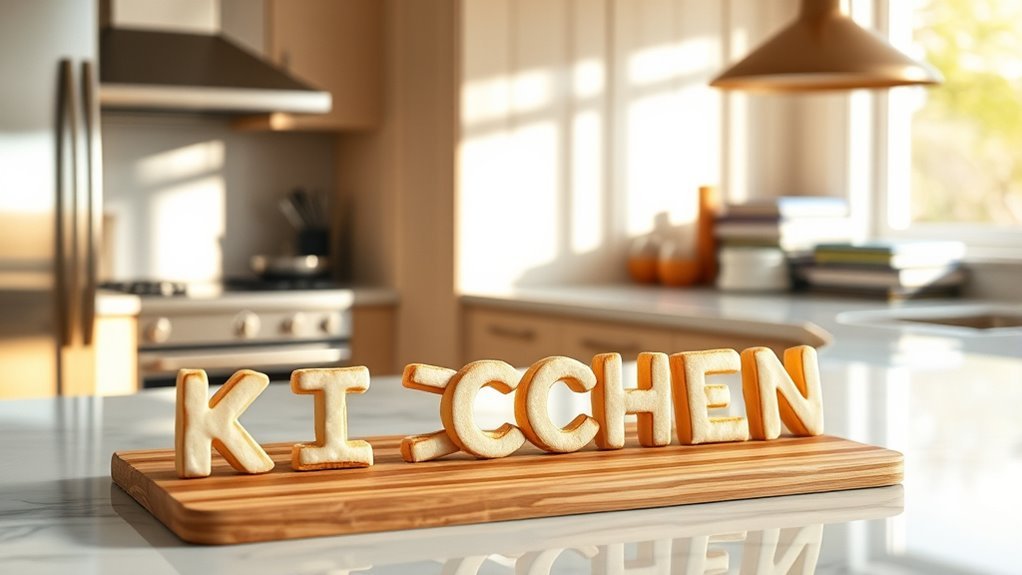
How Do You Spell Kitchen? The Complete Answer
Are you tired of second-guessing how to spell simple words like “kitchen”? You’re not alone—many people struggle with tricky spellings, especially those with tricky letter clusters. It’s frustrating when you know the word but can’t quite get it right on paper.
You spell kitchen as k-i-t-c-h-e-n, with seven letters and a unique “tch” cluster reflecting its Old English and Latin roots. People often misspell it by dropping letters or confusing the “tch” sound.
Both British and American English use the same spelling, so you don’t have to worry about regional differences.
Breaking it into smaller sounds or using mnemonics can make it easier to remember.
Keep exploring, and you’ll uncover helpful tips to perfect your spelling every time.
Key Takeaways
- “Kitchen” is spelled k-i-t-c-h-e-n. It comes from Old English “cycene” and Latin “coquina,” both meaning a cooking space.
- People often misspell it by dropping letters or confusing the “tch” with “ch” because of how it sounds.
- To say “kitchen,” break it into “kitch” and “en.” Mnemonics like K for kettle and T for toaster can help you remember the spelling.
- The spelling “kitchen” stays the same in both British and American English, so you can confidently use it to talk about cooking spaces.
- To get the spelling right, try spell checkers, look it up in online dictionaries, or use flashcards to reinforce what you’ve learned.
How Do You Spell Kitchen Correctly?
Spelling the word “kitchen” correctly is simple once you know the right sequence of letters. You start with a “k,” followed by “i,” then “t,” “c,” “h,” “e,” and finally “n.”
This seven-letter word combines familiar sounds, so getting the correct spelling shouldn’t trip you up. Understanding kitchen origins can help reinforce the spelling in your mind.
The word “kitchen” stems from Old English “cycene,” which traces back to Latin and Greek roots related to cooking spaces. Knowing this history highlights why the “tch” cluster appears in the middle, reflecting the blend of sounds over time.
The word kitchen’s origins reveal the historical blend of sounds forming the distinctive “tch” cluster.
When you focus on the correct spelling, it becomes easier to remember each letter’s place. So next time you write about your cooking area, you’ll confidently spell “kitchen” without hesitation, grounded in both sound and history.
Why Do People Misspell Kitchen?
Even though you now know how to spell “kitchen” correctly, many people still get it wrong. This often happens because of common misconceptions and phonetic challenges.
For example, some might confuse the “tch” sound or assume it’s spelled with a “ch” alone. Others might overlook the silent letters or mishear the word’s pronunciation, leading to mistakes.
Here’s a quick look at why people misspell “kitchen”:
| Reason | Explanation |
|---|---|
| Common Misconceptions | Thinking “kitchen” ends with “chen” |
| Phonetic Challenges | Mishearing “tch” as just “ch” |
| Typing Errors | Swapping letters or omitting “t” |
| Lack of Attention | Skimming too fast and missing the correct form |
Knowing these reasons can help you avoid similar mistakes. Keep these points in mind to spell “kitchen” perfectly every time!
Spelling Variations of Kitchen in British and American English
You might be surprised to learn that the word “kitchen” is spelled the same way in both British and American English. That’s pretty straightforward, right? But when we look at some related words and regional expressions, things get a bit more interesting, as there are subtle spelling differences.
For example, in British English, you’ll often see words like “centre” instead of the American “center,” and “favourite” rather than “favorite.” These tiny variations can sometimes trip you up if you’re not paying attention. So, it’s good to be aware of how these differences might show up in your writing.
All in all, while “kitchen” stays consistent across both versions of English, keeping an eye out for those little spelling tweaks can make your writing clearer and more polished, no matter which version you’re using!
Common British Spellings
Although “kitchen” is spelled the same in both British and American English, you might notice small differences in related words or terms. In British dialects, regional variations can influence how kitchen-related words are pronounced or written informally.
Historically, older British English sometimes used phonetic spellings based on regional accents. This can lead to misconceptions about the standard spelling. Words like “kitchenette” or “kitchener” keep consistent spelling, but local speech patterns might affect informal writing.
When exploring British English, remember these small variations don’t change the official spelling of “kitchen.” They just show the rich diversity of language use across the UK.
American English Differences
Spelling differences between British and American English often cause confusion, but regarding the word “kitchen,” both versions stay consistent. In American vocabulary, you’ll find the spelling “kitchen” used universally, despite regional dialects or pronunciation variations across the U.S.
While language evolution and cultural influences shape slang usage and everyday speech, the spelling remains stable. This helps avoid common spelling challenges seen with other words. If you’re learning English, educational resources emphasize this consistency to help you avoid mix-ups.
Even with diverse accents and informal terms, “kitchen” stays the same in American English. So, when you write or speak, you can confidently use the standard spelling without worrying about regional or cultural variations impacting it.
Pronunciation Tricks to Help You Spell Kitchen
Want to spell “kitchen” correctly? Here’s a quick tip: start by sounding it out slowly. Break it into two parts—“kitch” and “en”—and say each part aloud. This way, it’s easier to remember how the word is spelled because you’re linking how it sounds with the written form.
Sound It Out
Pronunciation tricks can help you remember how to spell “kitchen.” Try breaking the word into smaller sounds like “kit” and “chen.”
Focus on each part separately. When you sound it out, pay attention to common sound combinations and patterns.
The “kit” part is easy because it matches the sounds to the letters K-I-T. The second part, “chen,” might seem tricky, but recognizing the “ch” sound followed by the soft “en” can help.
These phonetic patterns guide you in matching sounds to letters, making the word less intimidating. Practice saying these sounds aloud to reinforce the connection between pronunciation and spelling.
Over time, spelling “kitchen” will become natural and automatic.
Break Into Syllables
Breaking the word into syllables makes it easier to tackle each part when you spell “kitchen.” You can split it into two clear syllables: “kit” and “chen.”
Focusing on these smaller chunks helps you see the structure of the word and reduces the chance of mixing up letters. Using a syllable breakdown lets you approach spelling one piece at a time, which is less overwhelming than handling the whole word at once.
A quick phonetic analysis shows that “kit” sounds just like the first part of “kitten,” while “chen” rhymes with “then.” This insight reinforces the correct letter sequence.
Where Does “Kitchen” Come From?
The word “kitchen” has roots that go back to the Old English word “cycene,” which comes from the Latin “coquina,” meaning a place for cooking. When you look into its etymology, you can see how “kitchen” evolved from these early terms linked to food prep spaces.
Over time, the term shifted from just describing a cooking area to include the whole space where meals are made and sometimes eaten. As it moved through Middle English, you’ll notice spellings like “kitchin” before it became the modern “kitchen.”
Understanding this history helps clarify the spelling and connects us to centuries of language change. When you spell “kitchen,” you’re using a word shaped by history, language shifts, and cultural influences.
All of this centers around the heart of the home—the place where cooking happens. Exploring its origins gives you a richer appreciation for such a simple yet essential word.
How to Use “Kitchen” Correctly in Different Contexts
Knowing where “kitchen” comes from and how to spell it correctly gives you a strong base for using the word right in everyday talk. When you mention the space where food is made, always use “kitchen” to describe that specific room or area.
In cooking, “kitchen” often goes with words like “kitchen appliances,” which include stoves, refrigerators, and microwaves—things you need for preparing food. You might also see “kitchen” used metaphorically, like in “behind the kitchen door,” to mean behind-the-scenes work.
When you’re writing or speaking, remember to use “kitchen” as a noun. Don’t confuse it with related terms like “cook” or “cooking,” which are actions or jobs. Using “kitchen” correctly helps your message come through clearly.
Whether you’re talking about the physical space or the tools inside, using “kitchen” correctly makes your communication clear and confident. Mastering this word means you can talk about culinary spaces and equipment without awkward phrasing or spelling mistakes.
Fun Mnemonics to Help You Spell Kitchen Easily
Want to make spelling “kitchen” a lot easier? You can totally do that by using some fun memory tricks that really stick in your mind. Think about visual aids, like imagining a picture that helps you remember each letter, or using rhymes and word plays that make the spelling pop.
These playful methods turn what might seem like a tricky task into something simple and even enjoyable. So, next time you’re practicing, try out these creative tricks—you might find yourself spelling “kitchen” with no trouble at all!
Creative Memory Techniques
Although spelling “kitchen” may seem straightforward, using creative memory techniques can make it even easier to remember. You can turn spelling practice into fun by including memory games that focus on the letters and sounds in “kitchen.”
Try rearranging letter cards or creating word puzzles that highlight tricky parts like the “tch” combination. Visual aids also boost recall without overwhelming you—think of associating each letter with an image related to a kitchen, like “K” for kettle or “C” for cup.
These simple, engaging strategies help embed the word in your mind so you won’t second-guess your spelling. By mixing memory games with visual aids, you actively strengthen your ability to spell “kitchen” quickly and confidently.
Visual Spelling Aids
Visual spelling aids turn the tricky word “kitchen” into a memorable image that sticks in your mind. You can picture a cozy kitchen scene where each letter stands for something: K for kettle, I for ice cream, T for toaster, C for cup, H for honey jar, E for egg, and N for napkin.
This mental picture makes spelling easier to remember. You might also play spelling games focused on “kitchen” to reinforce these visual cues. For example, flashcards with pictures matching each letter or interactive apps that highlight each letter as you spell can help boost your memory.
Rhyming Word Tricks
Rhyming word tricks are a fun way to remember how to spell “kitchen.” By linking “kitchen” with words that sound similar, like “stitchen” or “bitten,” you create catchy mnemonics that stick in your mind.
You can turn this into rhyming games, challenging yourself to find more words that rhyme. This helps reinforce spelling through fun repetition.
Another good method is using spelling songs that include “kitchen” with rhyming words. It makes the spelling process musical and memorable.
These rhythmic tools help your brain connect the spelling pattern with familiar sounds, reducing confusion.
Common Spelling Mistakes and How to Avoid Them
When you’re learning to spell “kitchen,” it’s easy to mix up letters or drop a key one without realizing it. Common errors often come from language influences or unfamiliar pronunciation guides.
Learning to spell kitchen can be tricky due to letter mix-ups and pronunciation differences.
You can overcome these challenges by using effective spelling strategies and memory aids. Here’s how to avoid mistakes:
- Use educational resources like spelling apps or worksheets to reinforce correct letter order.
- Pay attention to cultural variations in pronunciation that might affect spelling assumptions.
- Break the word into syllables: “kit-chen” to stay focused.
- Use memory aids, like associating “kitchen” with “kit” (a small set) plus “chen,” to help retention.
Top Tools to Check Kitchen Spelling
Spelling tools can quickly help you confirm the correct way to write “kitchen” and catch errors you might miss. Using spell checkers built into word processors or browsers instantly highlights misspelled words, saving you time and frustration.
Online dictionaries offer clear definitions and phonetic guides, so you can fully understand the word and spell it right. Here’s a quick comparison of top tools you can rely on:
| Tool Type | Benefits | Emotion Evoked |
|---|---|---|
| Spell Checkers | Immediate error detection | Confidence |
| Online Dictionaries | Detailed word info | Assurance |
| Mobile Apps | On-the-go convenience | Relief |
Practice Exercises to Master Spelling Kitchen
Now that you know which tools can help you spot and understand the word “kitchen,” it’s time to put that knowledge into action. To master spelling “kitchen,” you need consistent practice with targeted exercises.
Engaging activities make learning both effective and fun. Try adding these methods into your routine:
Use flashcard drills to reinforce letter sequences and improve recall. Play spelling games that challenge you to spell “kitchen” in different contexts. Write the word repeatedly, focusing on each letter to build muscle memory.
Quiz yourself or ask a friend to test your spelling accuracy regularly.
Frequently Asked Questions
What Are the Best Materials for Designing a Modern Kitchen?
You’ll want to choose materials that balance style and durability for modern kitchen layouts. Quartz and granite are top countertop options because they resist stains and scratches.
For cabinets, go with sleek materials like laminated wood or matte-finish MDF. Stainless steel appliances and fixtures add a contemporary touch.
Don’t forget to contemplate glass backsplashes or polished concrete floors to complete your modern kitchen’s clean, streamlined look.
How Can I Organize a Small Kitchen Efficiently?
Start by sorting supplies smartly to streamline your space. You’ll want to maximize kitchen storage by using vertical shelves, magnetic strips, and drawer dividers. Keep frequently used items within easy reach to boost your cooking workflow.
Clear counters and categorize utensils so you can cook confidently without clutter. By cleverly combining compartments and maintaining tidy order, you’ll transform your small kitchen into a smooth, stylish station for all your culinary creations.
What Are Popular Kitchen Color Schemes in Interior Design?
Popular kitchen color schemes often include calming blues, energizing yellows, and neutral grays, all influenced by color psychology to set the right mood. You can add personality with accent walls in bold colors like deep green or vibrant red, creating a focal point.
Don’t be afraid to mix warm and cool tones to balance energy and comfort, making your kitchen both inviting and stylish.
How Do Kitchen Appliances Impact Energy Consumption?
Appliance choices really impact how much energy is used. When you pick energy-efficient options, you cut down on unnecessary electricity, saving money and helping the environment.
Modern appliances often have smart sensors and standby modes, which means they use less power when you’re not actively using them. Choosing high-rated appliances helps lower your kitchen’s carbon footprint and monthly bills.
Smart selections lead to savings that are good for your wallet and the planet. Making these choices makes your kitchen both more budget-friendly and eco-friendly.
What Safety Tips Should I Follow in the Kitchen?
You should always prioritize kitchen hygiene by washing your hands and surfaces regularly to prevent contamination. Keep raw and cooked foods separate to maintain food safety.
Use sharp knives carefully and store them safely. Never leave cooking unattended, and clean spills immediately to avoid slips.
Make sure appliances are unplugged when not in use, and check that smoke detectors work. These steps help keep your kitchen safe and healthy.
Conclusion
You might think spelling “kitchen” is simple, yet those little letters often trip you up. While it feels frustrating to get caught by a common word, keep in mind that mastering it brings confidence and clarity.
Don’t let a small mistake overshadow your progress. With the right tools and tricks, you’ll spell “kitchen” flawlessly every time. Turning confusion into ease and hesitation into pride is totally doable.
Keep practicing; your success is just a step away. Mastering the spelling of “kitchen” will boost your confidence and make you feel more in control.