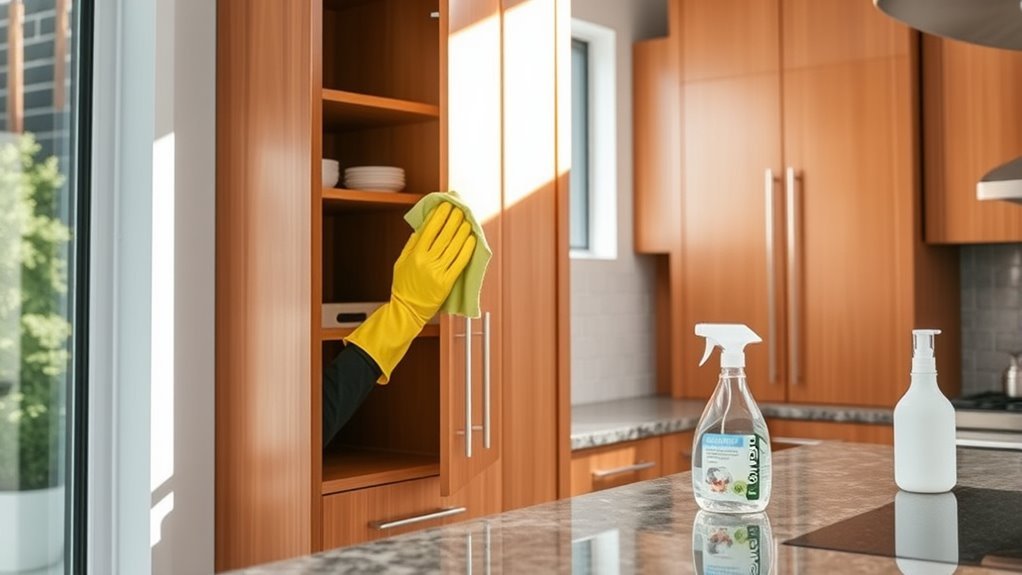
How to Clean Kitchen Cabinets: A Step-by-Step Guide
Cleaning kitchen cabinets can feel like a daunting task, especially when you’re not sure where to start. Many people struggle with stubborn dirt, grease, and fingerprints that seem to build up over time. If you want your kitchen to look fresh and inviting, knowing how to properly clean your cabinets is key.
You’re not alone in this—getting your cabinets sparkling is totally doable with the right approach.
To clean your kitchen cabinets, start by clearing all items and dusting surfaces with a dry cloth. Choose mild detergent and soft microfiber cloths to protect finishes. Identify your cabinet material—wood, laminate, or painted—to pick the best cleaning method.
For wood cabinets, use a gentle soapy mix and dry quickly to avoid moisture damage. Don’t forget to wipe hardware with a damp cloth and polish if needed.
If you want to restore your cabinets fully, you’ll find helpful tips ahead.
Key Takeaways
- Remove all items from your cabinets and dust the shelves with a dry microfiber cloth before you start cleaning.
- Mix a mild detergent with warm water and use a soft cloth to gently clean the surfaces.
- Always test your cleaning solution on a hidden spot first to make sure it doesn’t damage your wood or painted surfaces.
- Clean hardware with a damp cloth and an old toothbrush, then dry thoroughly to prevent water spots.
- For deep cleaning, pay special attention to corners using a soft brush, and consider natural stain removers like vinegar or baking soda.
How To Prepare Your Kitchen Cabinets For Cleaning
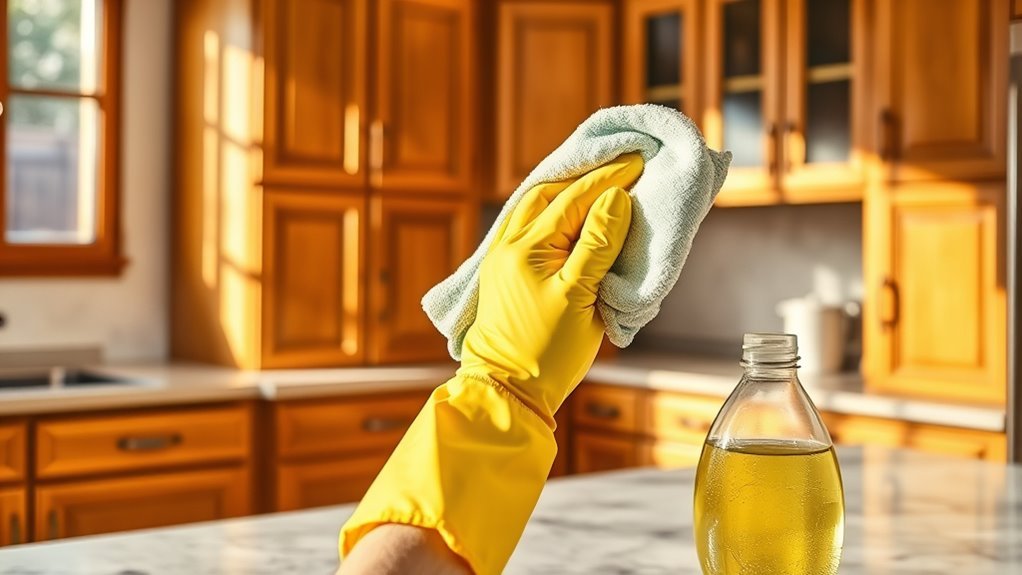
Before you start cleaning your kitchen cabinets, take a few simple steps to prepare them properly. Begin by removing everything from inside and on top of the cabinets. This clears the space and lets you see the condition of your cabinets clearly.
Next, think about how often you clean. If you do it regularly, there won’t be much dirt buildup, so the process will be quicker. But if it’s been a while, you might need to put in a bit more effort.
Regular cleaning prevents heavy dirt buildup, making the process faster and easier each time.
While your cabinets are empty, it’s a good chance to reorganize. Sort through your items and decide what you really need to keep. Group similar things together to make your daily routine easier.
This prep work not only makes cleaning easier but also helps you keep your cabinets organized afterward. Finally, wipe down shelves and surfaces with a dry cloth to remove dust before doing a deeper clean.
Taking these small steps will ensure your kitchen cabinets get thoroughly cleaned and stay tidy longer.
Choosing The Best Cleaning Supplies For Kitchen Cabinets
Once your cabinets are cleared and dusted, the next step is choosing the right cleaning supplies to get them spotless without causing damage. Picking the best products helps protect your cabinets’ finish while effectively removing grime.
Here are four essential tools and supplies to consider:
- Mild detergent or eco-friendly options – Choose gentle, biodegradable cleaners that won’t strip finishes or harm the environment.
- Soft microfiber cloths – These are great for preventing scratches and trapping dust and dirt better than sponges or rough rags.
- Soft-bristled brush – Perfect for cleaning crevices and detailed areas where grime tends to build up.
- Spray bottle with water – Handy for diluting cleaners and rinsing gently without saturating the wood.
Choosing The Right Cleaning Method For Your Kitchen Cabinets
Although choosing the right cleaning supplies is essential, knowing how to use them effectively makes all the difference in preserving your kitchen cabinets. Before you start, consider the type of cabinet materials you have—laminate, wood, or metal—each requires specific cleaning techniques to avoid damage. For example, laminate cabinets can handle gentle scrubbing with a mild detergent, while metal surfaces may need a non-abrasive cleaner to prevent scratches.
Next, test your chosen method on a small, hidden area to verify it won’t discolor or harm the finish. Use soft cloths or sponges rather than rough brushes, which can wear down surfaces. Remember, applying too much water can damage wood cabinets, so dampen your cloth rather than soaking it.
How To Clean Wood Kitchen Cabinets Without Damaging Them
Since wood is sensitive to moisture and harsh chemicals, you’ll want to clean your wood kitchen cabinets carefully to avoid warping or damaging their finish. Proper care helps your cabinets last longer and stay looking their best for years.
Here are some simple steps to clean your wood cabinets safely:
- Dust regularly with a soft microfiber cloth to prevent buildup.
- Use a mild cleaner—mix a few drops of dish soap with warm water—and gently wipe the surfaces with a soft cloth.
- Avoid soaking the wood; wring out excess water to prevent moisture damage.
- Dry immediately with a clean, dry towel to protect the wood’s finish and prevent warping.
The Best Way To Clean Laminate Kitchen Cabinets
When you clean laminate kitchen cabinets, you’ll want to use gentle methods that protect their smooth, durable surface without causing scratches or discoloration. Start by wiping down the cabinets with a soft cloth dampened with warm water and mild dish soap.
This approach uses the best cleaning techniques that balance effectiveness with laminate care. Avoid abrasive scrubbers or harsh chemicals, as they can dull or damage the finish. For tougher spots, mix equal parts white vinegar and water, then gently wipe the area.
Always dry the cabinets thoroughly afterward to prevent moisture damage. Regularly dusting and promptly cleaning spills will keep your laminate cabinets looking fresh.
Easy Ways To Remove Grease From Painted Cabinets
When it comes to removing grease from painted cabinets, you’ll want to use cleaning solutions that are tough on grease but gentle on your paint. It’s all about finding that sweet spot so you don’t end up damaging the finish while getting rid of the grime.
Using safe cleaning techniques is key here. A mild dish soap mixed with warm water usually does the trick and won’t harm your cabinets. Just make sure you’re not using anything too harsh or abrasive, which could scratch or dull the paint.
And hey, adopting a few simple habits can really help keep grease at bay in the future. Regular wiping after cooking, using a splatter guard, or even just being mindful about grease buildup can save you a lot of time and effort down the line.
Effective Grease Removal Solutions
Although grease can stubbornly cling to painted cabinets, tackling it doesn’t have to be complicated. You can effectively remove buildup using simple, grease-cutting solutions that won’t damage your paint. Here’s what to try:
- Mix equal parts white vinegar and water—it’s a natural solvent that cuts through grease easily.
- Add a few drops of mild dish soap to warm water for a gentle yet effective cleaner.
- Use a baking soda paste (baking soda + water) to scrub stubborn spots without scratching.
- For tougher grease, try a commercial degreaser designed for painted surfaces. Just follow the label instructions carefully.
These solutions help you restore your cabinets’ shine while keeping the paint intact. Remember to rinse with clean water and dry thoroughly after cleaning.
Safe Cleaning Techniques
Removing grease from painted cabinets needs gentle care so you don’t damage the finish. Using eco-friendly cleaners or natural solutions like vinegar and water works well.
Avoid harsh chemicals or abrasive scrubbers that can strip the paint or cause scratches. Always test a small hidden spot first to make sure it’s safe.
Use a soft cloth or sponge and work in gentle circular motions. Rinse with a damp cloth and dry immediately to prevent moisture damage.
Preventing Future Grease Build-Up
To keep your painted kitchen cabinets looking fresh, it’s important to tackle grease before it settles in. Prevention and regular maintenance are key to avoiding stubborn build-up. Here are four simple ways to stay ahead:
- Wipe down cabinets regularly with a damp microfiber cloth to remove light grease and dust before it builds up.
- Use a mild degreaser or a mix of vinegar and water weekly for a deeper clean that won’t harm the paint.
- Try to cook away from your cabinets or use a range hood to cut down on airborne grease settling on surfaces.
- Clean any splatters or spills right away to stop grease from hardening and staining your cabinets.
How To Clean And Polish Kitchen Cabinet Hardware And Handles
First things first, you’ll want to take off your cabinet hardware so you can give it a good cleaning. Use a gentle cloth or sponge to wipe away any dirt and grime—that’s what’ll help bring back that nice shine.
Once it’s clean, pick out a polish that’s right for the material—whether it’s brass, nickel, or chrome—so you don’t accidentally damage it. Applying the right product will keep your handles looking fresh and new.
And don’t forget, to keep everything looking great, it’s a good idea to clean and polish your hardware regularly. With a little routine care, your cabinet handles will stay shiny and durable for years to come.
Removing Dirt And Grime
Cleaning the hardware and handles on your kitchen cabinets can instantly brighten their appearance and make your whole kitchen feel fresher. To effectively remove dirt and grime, follow these steps:
Start by wiping down handles with a damp microfiber cloth to remove surface dust. Mix warm water with mild dish soap and soak a soft cloth in it; gently scrub the hardware.
Use an old toothbrush to clean crevices and intricate details where dirt hides. Dry thoroughly to prevent water spots and maintain your kitchen cabinet organization.
For the best cleaning frequency, aim to clean hardware at least once a month or whenever you notice buildup. Keeping handles clean regularly helps maintain both their shine and your kitchen’s overall neatness.
Choosing The Right Polish
Selecting the right polish for your kitchen cabinet hardware can make a big difference in restoring their shine and protecting them from wear.
Choose polish types made specifically for the material of your handles—brass, stainless steel, or chrome each need different care.
For example, a gentle metal polish works well on brass, while a mild cleaner is best for stainless steel. Avoid abrasive polishes that can scratch delicate finishes.
When applying polish, use soft cloths or microfiber towels to prevent damage.
Apply a small amount of polish and rub gently in circular motions to evenly cover the surface.
Afterward, buff the hardware with a clean, dry cloth to boost the shine.
Following these simple steps helps your cabinet hardware look refreshed without risking any damage.
Maintaining Shine And Durability
To keep your kitchen cabinet hardware looking its best, regular care is key for maintaining both shine and durability. Proper maintenance not only keeps it looking great but also helps your handles and knobs last longer.
Follow these easy steps for cleaning and protecting your surface:
- Wipe your hardware with a soft, damp cloth weekly to remove dirt and oils.
- For a deeper clean, use a mild soap solution and steer clear of harsh chemicals that can damage the finish.
- Dry everything thoroughly to prevent water spots and rust.
- To restore shine and add a protective layer, apply a small amount of metal polish or a wax designed for your hardware type.
How To Deep Clean Inside Kitchen Cabinet Shelves And Drawers
Start by removing everything from your cabinet shelves and drawers so you can get to every corner. Once it’s empty, wipe down all surfaces with a mild cleaner or a mix of warm water and dish soap.
Pay close attention to corners and edges where grime tends to build up. Use a soft cloth or sponge to avoid scratching the surfaces. For stubborn stains, a gentle scrub with a soft-bristled brush works well.
After cleaning, let everything dry completely before putting items back. This is a good time to organize by grouping similar items and getting rid of things you no longer need.
Think about adding drawer liners to protect surfaces and make future cleanings easier. They also help keep utensils and tools in place, preventing scratches and spills.
Taking these steps will keep your cabinets fresh, organized, and in great shape inside and out.
How Often Should You Clean Your Kitchen Cabinets?
How often should you clean your kitchen cabinets to keep them looking their best? The answer really depends on your cooking habits and what works best for your schedule. If you cook every day, grease and grime can build up faster, so you might need to clean more often.
Here’s a simple guide to help you stay on top of it:
- Weekly: Wipe down cabinet doors and handles to remove fingerprints and light spills.
- Monthly: Clean the cabinets more thoroughly, especially around the stove or sink where grease and moisture tend to gather.
- Quarterly: Take some time to inspect and clean inside the cabinets, removing crumbs and dust that have collected over time.
- Annually: Do a deep clean of all surfaces, including the insides and outsides of the cabinets, to refresh and protect the finish.
Feel free to adjust the cleaning schedule based on how often you use your kitchen. Regular upkeep helps prevent buildup and keeps your cabinets looking great for longer.
Dealing With Stubborn Stains And Cabinet Damage
Got some stubborn stains on your kitchen cabinets? First things first, try to figure out what caused those spots. Knowing what you’re dealing with helps you pick the best way to clean them up.
And if your cabinets happen to be damaged, don’t wait too long to fix them. Tackling repairs early can make a big difference in keeping your kitchen looking fresh and nice.
Identifying Stain Types
Although stubborn stains can be frustrating, identifying their type is key before you start cleaning your kitchen cabinets. Knowing what kind of stain you’re dealing with helps you pick the right cleaning method and prevents future issues.
Here’s how to recognize common stains:
- Grease – Usually shiny and slippery, caused by cooking oils.
- Water Marks – Look for white rings or spots from spills or steam.
- Food Stains – Often colorful like tomato sauce or coffee and might soak into the wood finish.
- Ink or Marker – Dark, sharp marks that sit on the surface.
Spotting these stains early helps you avoid permanent damage. Once you understand what you’re dealing with, you can protect your cabinets and keep them looking great longer.
Effective Stain Removal
Tackle stubborn stains on your kitchen cabinets by choosing the right cleaning method for each type of mark. Using natural stain removers like vinegar, baking soda, or lemon juice can be effective and gentle. Always test a small area first.
Combine these with stain prevention tips such as wiping spills immediately and avoiding harsh chemicals to maintain your cabinets’ finish. Act promptly to keep stains from setting and preserve your kitchen’s look longer.
| Stain Type | Cleaning Method |
|---|---|
| Grease | Dish soap + warm water |
| Water Rings | Vinegar + olive oil mixture |
| Ink | Rubbing alcohol |
| Food | Baking soda paste |
| Mold | Vinegar spray + sunlight exposure |
Repairing Cabinet Damage
Restore your kitchen cabinets by addressing stubborn stains and physical damage promptly. Tackling these issues early helps maintain their appearance and function. Here’s how to handle common damage and explore cabinet refacing options:
- Clean stains with a gentle mix of baking soda and water to avoid harming the finish.
- Lightly sand minor scratches, then apply matching stain or paint to blend the imperfections.
- For deeper damage, consider using wood filler or touch-up markers designed specifically for cabinets.
- If the damage is extensive, look into cabinet refacing options to refresh your kitchen without replacing everything.
Frequently Asked Questions
Can I Use Natural Cleaning Products on Kitchen Cabinets?
Yes, you can use natural cleaning products on your kitchen cabinets, but it’s important to consider the materials first. Natural ingredients like vinegar, baking soda, and lemon work well on most wood and laminate surfaces without causing damage.
Just be careful to avoid harsh acids or abrasive scrubs on delicate finishes. Always test a small, hidden area first to make sure your natural cleaner won’t harm the surface.
This way, you can keep your cabinets clean and safe using gentle, eco-friendly options.
How Do I Prevent Mold Inside Kitchen Cabinets?
To prevent mold inside kitchen cabinets, focus on controlling moisture. Wipe up spills quickly and avoid storing damp items inside.
Try to improve air circulation by leaving cabinet doors slightly open now and then. This helps reduce humidity buildup inside.
You can also place moisture absorbers or silica gel packets inside the cabinets. They help keep the environment dry and mold-free.
Are There Eco-Friendly Options for Cabinet Cleaning?
You can definitely give your cabinets a fresh shine without harsh chemicals. Think of eco-friendly ingredients as nature’s gentle touch, wiping away grime like a soft breeze.
Vinegar, baking soda, and lemon juice work wonders while supporting sustainable practices. These natural cleaners protect your wood and the planet, so you’re not just cleaning cabinets but also caring for the Earth.
It’s a win-win, making your kitchen sparkle with a green conscience.
What Should I Do if My Cabinets Have a Strong Chemical Smell?
If your cabinets have a strong chemical smell, start by improving ventilation. Open windows and use fans to circulate fresh air.
Place bowls of baking soda or activated charcoal inside to absorb odors. These natural options can help neutralize the smell quickly.
For chemical odors, wipe surfaces with a mixture of vinegar and water. This helps to break down and neutralize the scent.
Repeat these steps regularly, and avoid harsh cleaners that might make the smell worse. These tips will help freshen your kitchen fast.
Can Cleaning Cabinets Improve Indoor Air Quality?
Think of your kitchen like a fish tank. If you don’t clean it regularly, toxins build up. Yes, cabinet maintenance can improve indoor air quality by reducing indoor pollutants like dust, mold, and chemical residues trapped in surfaces.
When you wipe down your cabinets, you’re not just keeping them shiny; you’re clearing the air you breathe. Regular care helps create a healthier home environment by cutting down those invisible irritants.
Conclusion
Now that you’ve got your kitchen cabinets sparkling clean, picture them shining like a knight’s polished armor in a grand hall.
Keeping them tidy doesn’t have to be a chore. Just prep properly, choose the right supplies, and clean regularly.
Remember, gentle care prevents damage and keeps your kitchen looking fresh and inviting.
With these steps, your cabinets will stay beautiful, functional, and ready for whatever culinary adventure comes next. Regular cleaning helps maintain their shine and extends their life, making your kitchen a joy to use.