How to Sharpen Kitchen Knives: A Step-by-Step Guide
Are dull kitchen knives making your cooking experience frustrating? You’re not alone—many people struggle with keeping their knives sharp and safe to use.
Luckily, with a little know-how, you can restore your blades and make prep work easier and safer.
To sharpen your kitchen knives, start by cleaning and drying them thoroughly. Choose a sharpening tool like a whetstone for precision or a honing rod for quick touch-ups.
Maintain a steady 15 to 20-degree angle and use smooth strokes from heel to tip. Hone regularly to keep edges aligned, and avoid over-sharpening to extend blade life.
Proper storage on blocks or magnetic strips preserves sharpness.
Follow these basics, and you’ll master knife care and safety with ease.
Key Takeaways
- Make sure to clean and dry your knives thoroughly before sharpening. This helps keep it safe and makes the sharpening process more effective.
- Choose a whetstone with the right grit, and hold the knife at a 15 to 20-degree angle. This keeps your sharpening consistent and even.
- Use smooth, steady strokes from the heel to the tip of the blade. Avoid jerky motions to help preserve the blade’s quality.
- Regularly hone your knives with a honing rod between sharpenings. This keeps the edge aligned and sharp.
- Store your knives properly—either in a block or on a magnetic strip—and always cut on soft surfaces. This protects the edge and keeps your knives sharper longer.
Why Keeping Kitchen Knives Sharp Matters
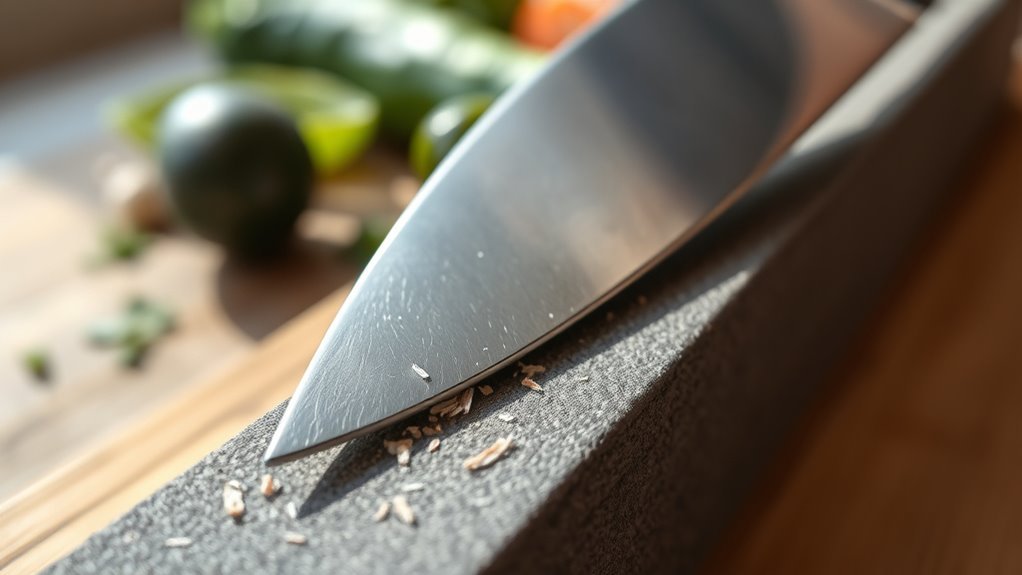
Although it’s easy to overlook, keeping your kitchen knives sharp makes cooking safer and more efficient. When your knives are sharp, you reduce the risk of slipping and accidents, making your kitchen safer.
Dull knives require more force to cut through food, which increases the chance your hand might slip and cause injury. Plus, sharp knives give you better control, so you can slice ingredients cleanly and precisely.
Using dull knives demands more force and raises injury risk, while sharp knives offer cleaner, safer control.
This boosts cutting efficiency, helping you prepare meals faster and with less effort. You’ll notice the difference when chopping vegetables or slicing meat—sharp blades glide through food, while dull ones crush or tear it.
Maintaining sharp knives also preserves the quality of your ingredients, preventing unnecessary bruising or damage. By regularly sharpening your knives, you guarantee every cut is smooth and safe.
This makes your cooking experience more enjoyable and productive. Don’t underestimate the impact of a sharp knife on your kitchen routine.
Identifying When Your Knives Need Sharpening
How can you tell when your kitchen knives need sharpening? Pay attention to how your knife performs during everyday tasks. If cutting feels tougher or you find yourself applying extra pressure, it’s a clear sign the blade has dulled.
Dulling factors like frequent use, cutting on hard surfaces, and improper storage speed up this process. You might also notice uneven cuts or the blade slipping off food rather than slicing through smoothly.
To keep your knives in top shape, consider sharpening frequency based on your cooking habits. If you cook daily, sharpening every few weeks might be necessary, while occasional cooks can wait longer.
Regularly inspecting your knives for these signs helps you sharpen them before performance drops considerably. Recognizing when your knives need sharpening guarantees safer, more efficient food prep and prolongs the blade’s lifespan.
Choosing the Best Tools to Sharpen Kitchen Knives
What tool you choose to sharpen your kitchen knives can make a big difference in both the ease of sharpening and the quality of the edge you achieve. You have several sharpening tools to evaluate, including whetstones, honing rods, electric sharpeners, and manual pull-through sharpeners.
Whetstones offer versatility and precision, letting you control the sharpening angle for a razor-sharp edge. Honing rods are great for quick touch-ups but don’t replace full sharpening. Electric sharpeners provide convenience and speed but can remove more metal than necessary if overused. Manual pull-through sharpeners are user-friendly but may not suit all blade types.
Whetstones offer precision, honing rods quick touch-ups, electric sharpeners speed, and pull-throughs ease—choose what fits your blade and skill.
Your choice depends on your comfort level with sharpening techniques and how often you plan to sharpen. If you want a professional edge and don’t mind a learning curve, whetstones are ideal. For quick maintenance, a honing rod or electric sharpener might be better.
Selecting the right tool guarantees your knives stay sharp and effective.
Preparing Your Kitchen Knife and Workspace for Sharpening
Before you start sharpening, clean your knife thoroughly to remove any food residue or oils that could get in the way of the process. Make sure it’s completely dry to prevent slipping and to keep your blade in good shape.
Next, tidy up your workspace. Clear off the countertops and place a non-slip mat or towel under your sharpening stone or tool. A stable, clutter-free area helps prevent accidents and keeps you focused.
Good lighting is essential so you can clearly see the edge of your blade. Keep your sharpening tools within easy reach to make the process smooth and efficient.
Taking these simple steps will make sharpening safer and more effective, giving you the best results as you hone your kitchen knife.
Sharpening Kitchen Knives With a Whetstone
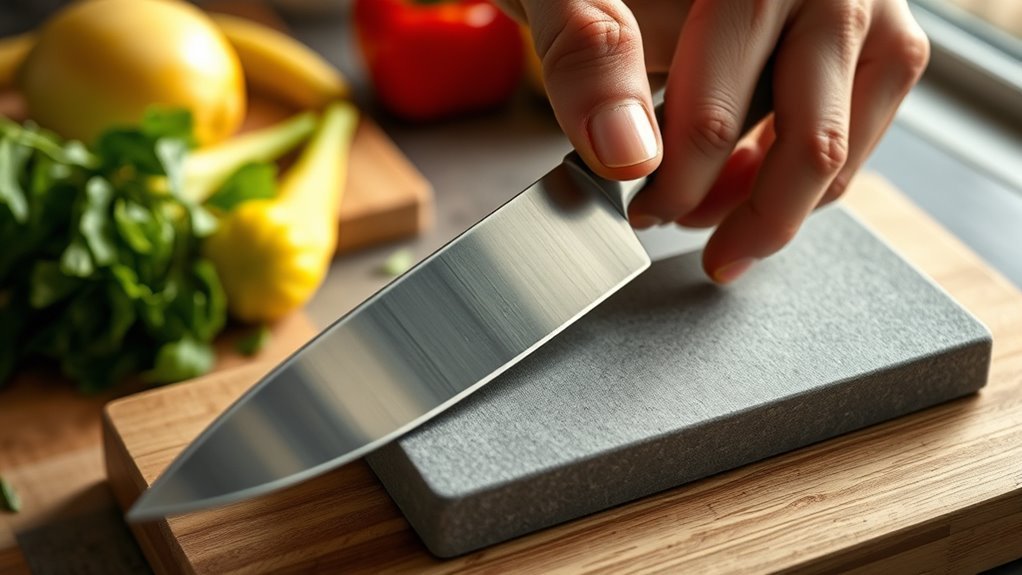
When you’re sharpening your knife with a whetstone, the first thing to do is pick the right grit based on how dull or damaged your blade is. If it’s really dull, go for a coarser grit to reshape and sharpen the edge. For touch-ups or maintaining a sharp blade, a finer grit will do the trick.
As you sharpen, try to keep a steady angle—usually about 20 degrees—and use smooth, even strokes. It might take a little practice to get consistent, but it’s worth it for that razor-sharp edge. And don’t forget, taking care of your whetstone by cleaning and flattening it regularly will keep it working its best.
Choosing The Right Grit
Selecting the right grit for your whetstone is key to getting a sharp kitchen knife.
When choosing grit, match the stone’s coarseness with your knife’s condition. If your blade is dull or chipped, start with a coarse grit (around 200-600) to reshape the edge quickly.
For regular maintenance or minor dullness, a medium grit (800-1500) works best. Finally, use a fine grit (3000-8000) to polish and refine the edge for a razor-sharp finish.
Using the correct grit ensures efficient sharpening, prevents unnecessary wear, and helps extend your knife’s lifespan.
Proper Angle And Technique
Mastering two key elements—angle and technique—will dramatically improve how you sharpen your kitchen knives with a whetstone.
First, focus on maintaining a consistent blade angle, usually between 15 to 20 degrees, depending on your knife type. This angle ensures you remove just enough metal to restore sharpness without damaging the edge.
Use your wrist to hold the knife steady and glide the blade smoothly across the stone. Employ techniques like sweeping strokes from heel to tip, applying even pressure throughout.
Avoid abrupt movements or lifting the blade too often, as inconsistency affects the edge quality. Practicing these sharpening techniques regularly helps you develop muscle memory, making it easier to maintain the correct blade angle and achieve a razor-sharp finish every time.
Maintaining And Cleaning Whetstone
Keeping your whetstone in good condition plays a big role in sharpening your knives effectively. Proper care guarantees consistent results and helps your stone last longer.
After each use, rinse your whetstone with water to remove metal particles and residue. Avoid soap, as it can clog the pores. Use a soft brush or sponge to gently scrub the surface if needed.
Make sure to dry the stone completely before storing it in a cool, dry place. This helps prevent mold or warping. Occasionally, flatten your whetstone with a lapping plate or flattening stone to keep the surface even.
Following these simple cleaning steps will keep your whetstone ready for precise, efficient sharpening every time.
Comparing Manual and Electric Knife Sharpeners
Though both manual and electric knife sharpeners aim to restore your blade’s edge, they operate quite differently and suit different needs. Manual sharpeners give you more control, allowing you to adjust the angle and pressure precisely, which is one of their biggest advantages. You’ll appreciate how portable and affordable they are, too. Plus, manual sharpeners often preserve your knife’s lifespan better by removing less metal.
On the other hand, electric sharpeners offer speed and convenience but come with some drawbacks. They can be harsher on your blades, sometimes removing too much metal quickly, which shortens the knife’s life. Also, their bulk and reliance on power make them less flexible for quick touch-ups or travel.
Choosing between the two depends on your sharpening style, budget, and how often you plan to use them. You might even find having both handy for different situations works best.
Maintaining Kitchen Knife Edges Between Sharpenings
Whether you prefer manual or electric sharpeners, your knife’s edge will eventually need attention between full sharpenings. To keep your blades performing at their best, adopt edge preservation techniques that maintain sharpness longer. Regular honing practices are key here.
Using a honing rod, you realign the blade’s edge, correcting small bends and wear without removing significant metal. Aim to hone your knives every few uses—this simple step extends the time between sharpenings and improves cutting precision.
Store your knives properly to avoid dulling from contact with other utensils or surfaces. Avoid cutting on hard materials like glass or stone; opt for wooden or plastic cutting boards instead. These habits complement honing by preventing unnecessary edge damage.
Common Sharpening Mistakes to Avoid
When you’re sharpening your kitchen knives, it’s easy to make a few common mistakes. For example, using the wrong angle or sharpening too much can really damage the edge of the blade. Nobody wants dull knives, but overdoing it can actually make things worse!
Also, don’t forget about regular maintenance. Skipping those routine touch-ups can cause your knives to lose their sharpness faster and not perform as well.
Using Incorrect Sharpening Angle
One of the most common mistakes you’ll make while sharpening kitchen knives is using the wrong angle. Many sharpening myths suggest that any angle works fine, but the importance of the angle can’t be overstated.
If you sharpen at too steep or too shallow an angle, you risk damaging the blade or failing to get a sharp edge. Most kitchen knives need a sharpening angle between 15 and 20 degrees per side.
To get it right, hold your knife steady and keep a consistent angle throughout. If you’re unsure, try using an angle guide or practice with less expensive knives first.
Over-Sharpening The Blade
Maintaining the right sharpening angle sets you up for success, but it’s just as important to avoid over-sharpening your blade. Sharpening too often or applying too much pressure can cause excessive blade wear, shortening your knife’s lifespan.
Monitor how often you use your knife and what tasks you do with it. This will help you decide when it’s time to sharpen again and prevent unnecessary wear.
| Mistake | Consequence | Fix |
|---|---|---|
| Over-sharpening | Excessive blade wear | Sharpen only when dull |
| High frequency | Weakens edge quickly | Sharpen less often |
| Heavy pressure | Uneven edge removal | Use light, steady strokes |
Keep a balance to preserve your blade’s sharpness without causing unnecessary damage.
Neglecting Proper Maintenance
Failing to care for your knife properly between sharpenings can undo all the effort you put into honing its edge. Neglecting a consistent maintenance routine shortens your knife’s effectiveness and overall lifespan.
After sharpening, make sure to clean and dry your knife thoroughly to prevent rust and corrosion. Store it safely in a knife block or on a magnetic strip to protect the blade from damage.
Regularly honing your knife with a honing steel helps maintain the edge between sharpenings. This reduces the need for frequent sharpening sessions.
Skipping these steps means your knife will dull faster, requiring more aggressive sharpening that can wear down the blade. By sticking to a proper maintenance routine, you preserve the sharpness and extend your knife’s lifespan.
Fixing Dull or Damaged Kitchen Knives
Dull or damaged kitchen knives can turn meal prep into a frustrating task, but you can restore their sharpness with the right techniques. Start by examining your knife for chips or nicks.
Dull or damaged knives slow you down, but proper techniques can quickly restore their sharpness.
For minor damage, use a coarse sharpening stone to perform knife repair by grinding away imperfections. Apply consistent pressure and maintain the correct angle to rebuild the blade edge.
If the blade is severely damaged, consider professional blade restoration to guarantee safety and precision. Once the major flaws are fixed, move to finer grit stones or honing rods to refine the edge and restore sharpness.
Remember, patience during knife repair prevents further damage and extends your knife’s life. Regularly evaluating your knives and addressing dullness or chips early keeps them performing well, making meal prep smoother and safer.
With these steps, you’ll bring your dull or damaged kitchen knives back to peak condition in no time.
Safely Storing and Handling Kitchen Knives After Sharpening
Once you’ve sharpened your kitchen knives, storing and handling them properly protects the sharp edges and keeps you safe. Always place your knives in a knife block or on magnetic strips to avoid dulling the blades and prevent accidental cuts.
Knife blocks keep blades separated and secure, reducing the risk of damage and injury. Magnetic strips offer easy access and display your knives safely while preventing them from banging against each other.
When handling sharp knives, hold them by the handle with a firm grip and avoid touching the blade. Always cut on a soft surface like a wooden or plastic cutting board to maintain the edge.
After washing, dry your knives immediately and store them properly to prevent rust and corrosion. By following these simple steps, you’ll keep your knives sharp longer and make sure your kitchen stays a safe place to work.
Frequently Asked Questions
Can I Sharpen Serrated Knives Using the Same Methods?
You can’t sharpen serrated knives using the same methods as straight-edged blades. Serrated knives need special sharpening tools, like a tapered ceramic or diamond-coated rod, to fit between each serration.
You’ll sharpen each tooth individually, not the entire edge at once. Regular sharpening stones just won’t cut it and could damage the serrations.
Stick to tools designed specifically for serrated edges to keep your knives sharp and in good shape.
How Often Should I Professionally Sharpen My Kitchen Knives?
You should get your kitchen knives professionally sharpened about once or twice a year, depending on how often you cook.
Following knife maintenance tips like regular honing can extend the sharpening interval and keep your blades in good shape longer.
If your knives start to feel dull or you’re having trouble cutting, that’s a sign it’s time to schedule professional sharpening.
Staying on top of this will help keep your knives safe and effective for all your kitchen tasks.
What Types of Kitchen Knives Should Never Be Sharpened at Home?
Sure, go ahead and try sharpening your ceramic knives at home—if you want to turn them into fancy paperweights.
You shouldn’t sharpen ceramic knives or specialty blades yourself; they require professional tools and skills.
Those blades are delicate and can easily chip or break if mishandled.
So, unless you enjoy expensive kitchen disasters, leave those sharp jobs to the pros.
Stick to your trusty steel knives for home sharpening.
Are There Any Foods That Dull Knives Faster Than Others?
Yes, certain foods dull your knives faster. Cutting through tough vegetable fibers really takes a toll on the blade.
Acidic foods like tomatoes or citrus can also wear down the edge over time by corroding the metal.
Frozen ingredients are harder on blades because they require more force, which speeds up dulling.
And if you regularly cut through bone, your knives will definitely lose their sharpness quicker.
Can Sharpening My Knives Improve My Cooking Skills?
Yes, sharpening your knives can definitely improve your cooking skills. When you keep your blades sharp, cutting becomes easier and more precise.
This helps you practice better techniques like even slicing and dicing, which makes your food look better and cook more consistently.
Plus, sharp knives are safer because they’re less likely to slip and cause accidents. They also make cooking less frustrating, so you can work more confidently and efficiently.
Keep your knives sharp, and you’ll see a real difference in your cooking.
Conclusion
Keeping your kitchen knives sharp isn’t just about making prep easier—it’s also about safety. Did you know dull knives cause over 25,000 injuries each year in the U.S.?
By sharpening regularly, you can reduce slips and make cutting much smoother. Follow these simple steps, avoid common mistakes, and take good care of your blades.
With proper maintenance, your knives will stay efficient and safe, turning every meal prep into a quicker, safer experience. Keep sharpening your knives—it’s totally worth it!