Steam Oven vs. Convection Oven: Which Is Better?
Many home cooks feel overwhelmed trying to decide between a steam oven and a convection oven. You’re not alone—choosing the right appliance can be confusing with so many options out there.
Both have their perks, but which one truly fits your cooking style?
If you want nutrient-rich, tender meals, a steam oven is your best bet, locking in moisture and vitamins while cooking faster and using less energy.
However, if you prefer crispier textures and a lower upfront cost, convection ovens excel at roasting and baking with even heat.
Both have cleaning and maintenance pros and cons, so your choice depends on what matters most.
Keep exploring to find which fits your cooking style perfectly.
Key Takeaways
- Steam ovens keep more nutrients and moisture in your food, making them great for healthy cooking of vegetables and delicate proteins.
- Convection ovens are fantastic for roasting and baking, giving food a crispy exterior but sometimes drying out the insides.
- Steam ovens cook faster and use energy efficiently, but they need regular descaling and gentle cleaning to keep them in good shape.
- Convection ovens are usually more affordable upfront but require frequent deep cleaning to handle baked-on grease and spills.
- Your choice depends on whether you value nutrient retention and moisture (go for steam) or prefer crispy results and a lower initial cost (choose convection).
How Do Steam and Convection Ovens Cook Food Differently?
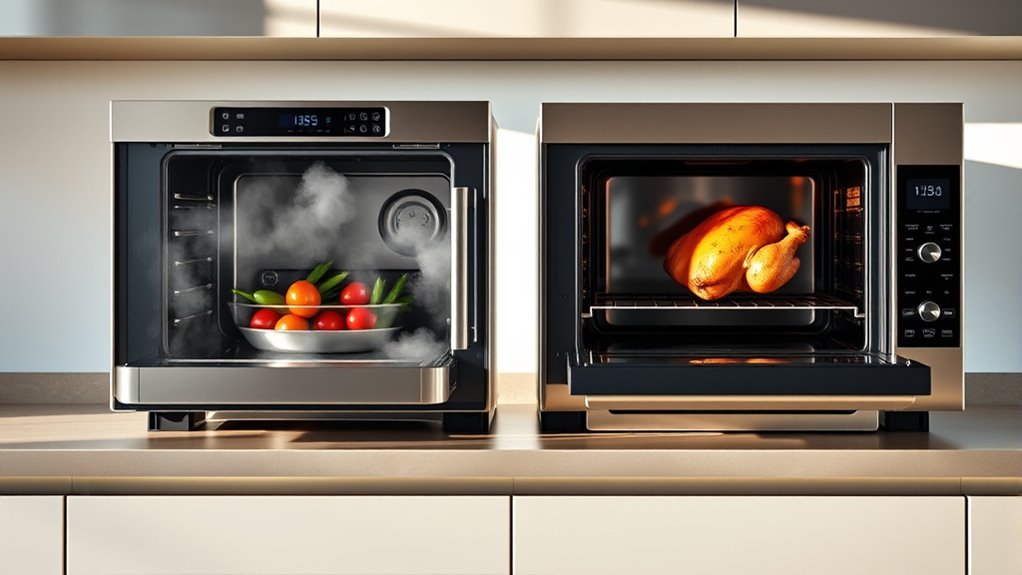
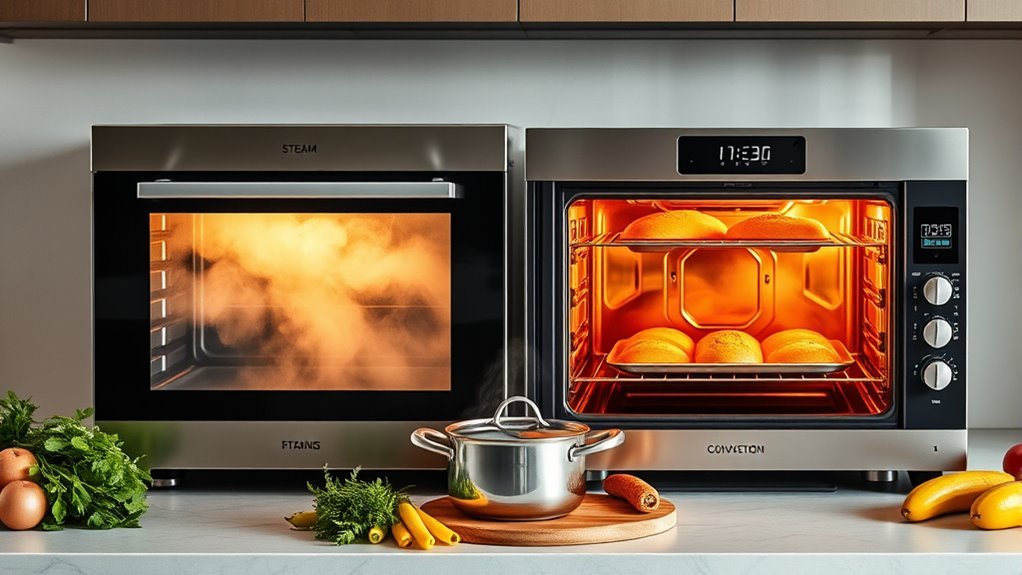
Although both steam and convection ovens heat food, they do it in different ways that change the texture and flavor. When you use steam cooking, the oven injects moisture into the environment, keeping your food juicy and tender.
This method is great for preserving nutrients and avoiding drying out dishes like vegetables, fish, or bread. Convection baking, on the other hand, uses a fan to circulate hot air around your food.
This creates even cooking and a crispy exterior, perfect for roasting meats or baking pastries. You’ll get a golden, crunchy finish with convection that you won’t get from steam cooking.
Key Differences Between Steam and Convection Ovens
When choosing between steam and convection ovens, you’ll notice key differences in how they affect cooking results and appliance features. Steam ovens use moist heat by injecting water vapor during cooking, which helps keep food moist. This is great for delicate tasks like steaming vegetables or reheating without drying out your meals.
Convection ovens depend on a fan to circulate hot air, ensuring even browning and crisping. They’re perfect for roasting and baking when you want that lovely, crispy exterior. Steam ovens shine in flavor by locking in natural juices and aromas, giving dishes a fresh, vibrant taste.
On the other hand, convection ovens boost flavors through Maillard reactions, creating crispy textures and rich, roasted notes. While convection ovens are versatile and excellent for baking and roasting, steam ovens offer a unique approach that’s especially helpful when moisture retention is essential.
Knowing these differences helps you choose the oven that matches your cooking style and flavor preferences.
Nutrient Retention: Steam vs. Convection Ovens
When you’re cooking and want to keep as many nutrients as possible, it’s good to know how different ovens can affect that. Steam ovens tend to do a better job at preserving vitamins because they use moist heat, which helps retain the nutrients in your food.
On the other hand, convection ovens rely on dry heat, which can sometimes lead to a reduction in nutrient levels, especially with delicate vitamins like vitamin C. So, if nutrient retention is a priority for you, steaming might be the way to go.
Nutrient Preservation Efficiency
Understanding how well your oven preserves nutrients can really impact the health benefits of your meals. Steam ovens use moist heat that helps retain nutrients by minimizing loss during cooking. This gentle method prevents vitamins and minerals from breaking down, keeping your food more nutritious.
On the other hand, convection ovens rely on dry, hot air circulating at high speeds, which can cause more nutrient degradation, especially for heat-sensitive compounds. Your choice of cooking method plays a key role in how well nutrients are preserved.
If keeping the most nutrients is a priority, steam ovens have a clear advantage. They cook food evenly without drying it out. So, when you want meals rich in nutrients, a steam oven helps you retain more compared to a convection oven.
Impact on Vitamin Content
Although both steam and convection ovens cook food thoroughly, they affect vitamin content quite differently. When you use a steam oven, the gentle cooking environment helps preserve vitamin stability, especially heat-sensitive vitamins like C and B-complex.
The moist heat prevents excessive nutrient loss, so your body can absorb more vitamins efficiently. In contrast, convection ovens rely on dry, hot air, which can degrade some vitamins faster due to higher temperatures and longer exposure.
This can lead to reduced nutrient absorption when you eat the food. If maintaining maximum vitamin content is important to you, a steam oven is often the better choice. It locks in nutrients and supports your health by helping you get the most out of your meals, without sacrificing flavor or texture.
Achieving Crispy Results: Steam vs. Convection Ovens
Achieving perfectly crispy results depends largely on the type of oven you use and how it cooks. A convection oven uses dry heat and a fan to circulate air, helping you get those crispy crusts you crave.
On the other hand, a steam oven injects moisture during cooking, which boosts flavor and keeps food moist. This creates a better texture contrast—crispy outside, tender inside.
Here’s a quick comparison:
| Feature | Steam Oven | Convection Oven |
|---|---|---|
| Crispy Crusts | Moderate; needs finishing dry heat | Excellent due to dry circulating air |
| Moisture Retention | High; keeps food juicy | Low; can dry out food |
| Flavor Enhancement | Boosts natural flavors with steam | Relies on browning and caramelization |
| Texture Contrast | Crispy exterior, moist interior | Very crispy exterior, drier interior |
Choosing depends on whether you prefer moisture or maximum crispiness.
Cooking Time and Energy Efficiency Compared
When choosing between a steam oven and a convection oven, cooking time and energy efficiency are important factors. Steam ovens usually cook food faster because moist heat transfers energy more efficiently, cutting down on overall cooking time. That means less waiting and lower energy use.
Convection ovens use a fan to circulate hot air, which speeds up cooking compared to traditional ovens. But they generally take longer than steam ovens do.
In terms of energy, steam ovens tend to be more efficient because they cook faster and keep temperatures steady with less energy. Convection ovens, while quicker than standard models, might use more energy since they rely on dry heat and longer cooking cycles.
Knowing how these methods affect cooking time and energy helps you choose the oven that matches your lifestyle and eco-friendly goals.
Best Foods to Cook in a Steam Oven
You’ll notice that steam ovens are fantastic for cooking vegetables, fish, and delicate proteins. They lock in moisture and nutrients, which means your food stays juicy and healthy. Using steam helps keep those vibrant colors and tender textures that make dishes so appealing.
Ideal Ingredients For Steaming
Steaming works wonders with a wide variety of ingredients, especially those that benefit from gentle, moist heat. When you’re steaming vegetables, you preserve their vibrant color, nutrients, and crisp-tender texture.
Seafood steaming locks in moisture and flavor, making fish and shellfish tender without drying out. For dumpling preparation, steam ovens guarantee even cooking, giving you perfectly soft and chewy wrappers.
Rice cooking in a steam oven results in fluffy, well-cooked grains without sticking or burning. Don’t overlook dessert steaming either—cakes, puddings, and custards come out moist and delicate.
Using a steam oven for these foods maximizes their natural qualities, so you get delicious, healthful meals without added fats or oils.
Benefits For Food Texture
Although many cooking methods can change food texture, a steam oven is especially good at improving it with gentle, consistent moisture. This moisture helps prevent dryness and keeps your food naturally tender.
When you use a steam oven, you’ll notice texture improvements, especially with delicate items like fish, vegetables, and baked goods. It’s a game-changer for maintaining quality.
Here’s a quick look at how steam ovens boost texture across different foods:
| Food Type | Texture Improvement | Benefit of Moisture Retention |
|---|---|---|
| Fish | Flaky, tender | Prevents drying out |
| Vegetables | Crisp-tender | Keeps that vibrant crunch |
| Bread | Soft crust, moist crumb | Stops staleness |
| Poultry | Juicy, succulent | Locks in natural juices |
| Rice | Fluffy, separate grains | Prevents clumping |
With these benefits, you’ll get consistently great results every time.
Best Foods to Cook in a Convection Oven
Convection ovens excel at cooking a wide range of dishes quickly and evenly, making them a versatile tool in your kitchen. They’re perfect for roasting meats like chicken and beef, where the hot air circulation helps achieve a crispy exterior while locking in juices.
You’ll also appreciate how convection ovens improve baking, giving you evenly browned pastries, cookies, and bread with a beautifully crisp crust. They really make a difference in achieving consistent results.
When using convection ovens, you can experiment with various cooking techniques, such as roasting vegetables or toasting nuts, to boost flavor. The even heat distribution guarantees your food cooks uniformly, reducing hot spots that can cause uneven results.
Plus, convection ovens speed up cooking times, so you’ll save time without sacrificing taste. It’s a great way to get delicious meals on the table faster and easier.
Cleaning Steam vs. Convection Ovens: Which Is Easier?
When it comes to cleaning, you’ll find that steam ovens tend to deal with residue differently than convection ovens. They often make it easier to loosen up baked-on messes, so you might find yourself spending less time scrubbing.
Think about how often each type needs a good clean and what tools work best for each. Steam ovens usually just need a quick wipe or a run with a cleaning cycle, while convection ovens might require more elbow grease to get rid of grease and grime.
Residue and Stain Removal
Cleaning ovens can be a chore, but understanding the differences between steam and convection models makes it easier to tackle residue and stains. Steam ovens use moisture to loosen baked-on grime, which helps prevent stains and speeds up cleaning.
Convection ovens rely on dry heat, which can bake spills onto surfaces. This often makes stains harder to remove and cleaning more time-consuming.
| Feature | Steam Oven | Convection Oven |
|---|---|---|
| Residue Removal | Easier because steam loosens residue | Harder since residue can harden |
| Stain Prevention | Moisture helps prevent stubborn stains | Dry heat may cause tougher stains |
| Cleaning Time | Quicker with steam cleaning | Longer, often requires scrubbing |
| Cleaning Method | Usually wipe with mild detergent | Might need stronger cleaners |
| Maintenance Tips | Use steam cycles regularly | Clean spills right away |
Choosing a steam oven means you’ll have less stubborn buildup and faster cleanup.
Maintenance Frequency Needed
Maintaining your oven regularly guarantees it performs well and lasts longer. When comparing steam and convection ovens, you’ll find their maintenance schedules differ slightly.
Steam ovens need frequent descaling to prevent mineral buildup, usually every few weeks, depending on your water hardness. You’ll also want to wipe down the water reservoir and interior regularly using gentle cleaning methods to avoid damage.
Convection ovens mainly require you to clean spills and grease after each use. A deep clean once a month helps prevent residue buildup. Their maintenance schedules are generally less demanding because they don’t have water components.
Understanding these differences helps you choose the oven that fits your cleaning routine and lifestyle without hassle.
Cleaning Tools Compatibility
Although steam ovens require special care because of their water components, they usually need gentler cleaning tools than convection ovens. When choosing cleaning supplies, avoid abrasive materials to protect their delicate parts and water reservoirs.
Convection ovens can handle tougher scrubbing since they use dry heat, but you might need stronger cleaners for baked-on grease.
To make cleaning easier, keep these tips in mind:
- Use soft microfiber cloths for steam oven interiors
- Opt for non-abrasive sponges for gentle scrubbing
- Choose mild, water-based cleaning solutions for steam ovens
- Use heavy-duty degreasers suitable for convection ovens
- Pick stainless steel-friendly cleaners for oven racks
Using the right supplies helps you keep both ovens clean without risking damage.
Price and Value: Steam Ovens vs. Convection Ovens
When comparing the price and value of steam ovens and convection ovens, you’ll find that steam ovens usually cost more upfront. This makes convection ovens more budget-friendly at the start.
But if you look at the long term, steam ovens offer benefits like healthier cooking and faster meal prep, which might make the higher price worth it. They can also save you energy and provide versatility that convection ovens can’t always match.
Convection ovens, on the other hand, deliver reliable performance at a lower initial cost. They’re a good choice if you want solid results without spending too much.
In the end, your decision depends on how much you value the advanced features of steam ovens versus the straightforward efficiency of convection ovens. It’s about balancing your budget with the cooking benefits you need.
How to Choose Between a Steam Oven and a Convection Oven
Choosing between a steam oven and a convection oven comes down to understanding your cooking habits and priorities. You want to weigh the benefits of a steam oven against the drawbacks of a convection oven to find what fits your kitchen best. Think about how you cook and what results you’re after.
Ask yourself these questions:
- Do you value moisture retention and healthier cooking? Steam ovens excel here.
- Are you looking for faster cooking times and even browning? Convection ovens deliver that.
- How often do you bake or roast compared to steaming vegetables or fish?
- Is easy cleanup a priority? Steam ovens often make this simpler.
- What’s your budget? Steam ovens usually cost more but offer unique benefits.
Frequently Asked Questions
Can I Use Regular Cookware in Both Steam and Convection Ovens?
You can use regular cookware in both steam and convection ovens, but it’s important to think about what materials your cookware is made of.
For steam ovens, avoid items that might warp or break down with moisture, like untreated wood or some plastics. Metal, glass, and silicone usually work well here.
In convection ovens, most cookware is fine, but those that heat evenly, like aluminum or stainless steel, tend to perform the best.
Always check your cookware’s instructions to make sure it’s safe for oven use.
Are Steam Ovens Safe for People With Respiratory Issues?
Imagine Sarah, who has mild asthma, using her steam oven daily without any breathing issues. Yes, steam ovens are generally safe for people with respiratory issues because their steam provides gentle, moist heat that doesn’t release harmful fumes or irritants.
However, it’s important to have good kitchen ventilation to prevent excess humidity, which could make respiratory symptoms worse.
Always check with your doctor, but overall, steam ovens are safe for your lungs when used properly.
Do Steam Ovens Require a Water Hookup or Reservoir Refill?
Steam ovens don’t always need a direct water hookup. Many models have a removable water reservoir that you’ll need to refill regularly. This setup gives you more flexibility if you don’t have plumbing nearby.
But keep in mind, using a water reservoir means you’ll have to stay on top of maintenance like cleaning and refilling. This is important to make sure the steam production stays consistent.
If you want less hassle, a built-in water source connection might be a better choice. It allows for continuous use without the need to refill manually.
Can Convection Ovens Bake Bread as Well as Steam Ovens?
You can bake bread in a convection oven, but it might not get the same texture as in a steam oven.
Studies show steam ovens can cut baking time by up to 20% because of the added moisture. This moisture helps create a crisp crust and a soft interior.
Without steam, your bread from a convection oven might turn out drier and less airy.
You can improve your results by adding a water tray to add humidity during baking.
How Noisy Are Steam Ovens Compared to Convection Ovens?
You’ll find steam oven noise is generally a bit higher than convection oven noise because of the water pump and steam generation.
Convection ovens mostly rely on a fan, which produces a consistent but quieter hum.
While steam ovens can be noticeable when the steam kicks in, it usually isn’t disruptive.
If you’re sensitive to sound, you might prefer the gentler noise level of a convection oven over the occasional bursts from a steam oven.
Conclusion
Choosing between a steam oven and a convection oven is like picking the right key to unlock your kitchen’s full potential.
Steam ovens preserve vibrant colors and nutrients, much like a gentle rain nourishing a garden. Convection ovens, on the other hand, give your food a crisp, golden finish, like a warm sunbeam.
Think about what flavor and texture you crave most. That will help you find the perfect oven to enhance every meal you create, especially when considering a steam oven versus convection oven.