What’s a Good Dishwasher: A Complete Buying Guide
Finding the right dishwasher can feel overwhelming with so many options out there. Many people struggle to find one that fits their space, cleans well, and doesn’t waste energy.
You’re not alone—choosing the perfect dishwasher is a common challenge.
Choosing a good dishwasher means finding one that fits your kitchen’s space, cleans effectively, and saves energy. Look for styles—built-in, portable, or drawer—that match your layout.
Consider size and capacity for your household, plus features like quiet operation and efficient drying.
Energy Star-rated models cut costs and noise.
Compare trusted brands, prices, and warranties to get great value.
Keeping it clean guarantees long-term performance.
Investigate further to uncover how to pick the perfect match for your needs.
Key Takeaways
- Choose a dishwasher style—built-in, portable, or drawer—that fits your kitchen layout and space requirements.
- Consider size and capacity based on your household needs; most standard models hold 12-16 place settings.
- Prioritize energy efficiency and low noise levels. Look for ENERGY STAR certification and noise ratings below 45 dB.
- Evaluate key features like multiple wash cycles, drying technology, user-friendly controls, and detergent compatibility.
- Compare prices and warranty coverage, and plan for regular maintenance to ensure long-term reliable performance.
How to Choose the Right Dishwasher for Your Home
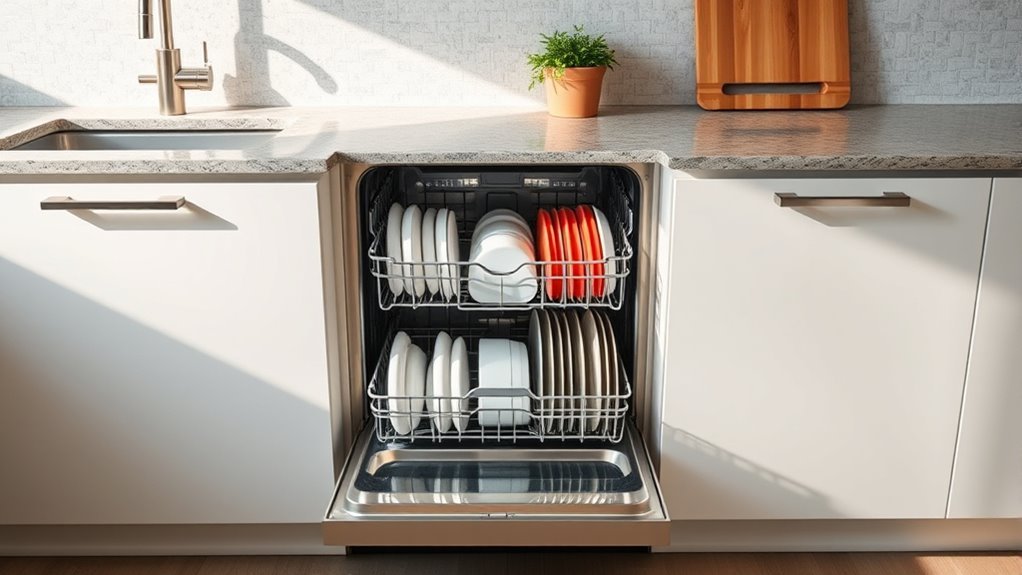
How do you pick the perfect dishwasher for your home? Start by considering the dishwasher styles that fit your kitchen setup and lifestyle. Built-in models are popular for their seamless integration, while portable or countertop options suit smaller spaces or rentals.
You’ll want to think about how each style matches your daily needs and kitchen design. Next, pay close attention to energy ratings. Choosing a dishwasher with a high energy rating not only reduces your environmental impact but also saves you money on utility bills over time.
Look for ENERGY STAR-certified models, as they meet strict efficiency guidelines. Balancing style and energy efficiency guarantees your dishwasher works effectively without wasting resources. Remember, the right dishwasher blends functionality with your home’s unique requirements, so focus on these factors before moving on to size and capacity considerations.
This approach helps you make a smart, sustainable choice that fits perfectly.
Picking the Best Dishwasher Size and Capacity
When you’re trying to pick the right dishwasher size, it’s all about fitting it into your space comfortably. Do you have a small kitchen or just enough room? Then a compact dishwasher might be the way to go. But if you’ve got plenty of space, a standard size could be more your speed.
As for capacity, it’s measured in place settings—think of it as how many full loads you can handle at once. So, consider how many dishes you typically wash in one go. And don’t forget to double-check your kitchen’s measurements before making a purchase, so everything fits perfectly without any surprises.
Standard vs Compact Sizes
Wondering which dishwasher size fits your kitchen best? Choosing between standard and compact models depends on your space and needs.
Compact dishwashers are great if you’re tight on room—they’re easier to fit into smaller kitchens and use less water and energy. Plus, they’re perfect if you don’t generate a large load of dishes daily.
Standard dishwashers require more space and might be overkill if you live alone or have a small household. But if you regularly wash many dishes, a standard size could still be worth considering.
Ultimately, weighing the compact advantages against the standard disadvantages helps you pick the right size without sacrificing your kitchen’s flow.
Capacity Measured in Place Settings
Dishwashers come with different capacities measured in place settings, which directly affect how much you can wash in one cycle. When choosing the right size, think about how many place settings you typically need to clean each day.
A place setting usually includes a dinner plate, dessert plate, bowl, glass, cup, and cutlery. Most standard dishwashers handle 12 to 16 place settings, making them perfect for families or those who entertain often.
If you live alone or have a small household, a model with fewer place settings can help save water and energy. Matching the dishwasher capacity to your needs prevents wasted space and ensures efficient cleaning.
Focus on the number of place settings to pick a size that fits your lifestyle without overloading or underusing the machine.
Space Considerations for Installation
Choosing the right capacity is just one part of selecting a dishwasher that fits your home. You also need to consider the dimensions of the dishwasher to ensure it fits your kitchen space.
Measure the width, height, and depth of the available area carefully. Standard dishwashers are usually 24 inches wide, but compact models can be as narrow as 18 inches.
Don’t forget to check the installation requirements, including clearance for door swing and plumbing connections. If your kitchen layout is tight, these details are really important to avoid costly modifications.
Also, think about where the electrical outlets and water supply are located. By understanding both your capacity needs and space limitations, you’ll find a dishwasher that cleans well and fits perfectly in your kitchen.
Matching Dishwasher Types to Your Kitchen Layout
When you’re figuring out which dishwasher works best for your kitchen, it’s helpful to think about how each type fits into your space. Built-in dishwashers are great if you want a sleek, integrated look that blends right into your cabinets. If your kitchen space is limited or you need more flexibility, portable dishwashers might be the way to go—they can be moved around and stored away when not in use. And if you’re often washing smaller loads or prefer easy access, drawer dishwashers could be a perfect fit, making loading and unloading super convenient.
Built-In Dishwasher Placement
Finding the perfect spot for a built-in dishwasher can really improve your kitchen’s workflow. You want a location close to your sink for easy loading and that meets plumbing needs without costly changes. Usually, placing it next to the sink makes water connections and drainage simpler. Also, think about nearby countertop space for unloading.
Here’s a quick comparison of common placement options:
| Placement | Pros | Cons |
|---|---|---|
| Next to Sink | Easiest plumbing, efficient | Might limit cabinet space |
| Opposite Sink | Flexible layout | Longer plumbing runs |
| Corner Spot | Saves space | Plumbing can be tricky |
| Island Installation | Stylish and accessible | Usually costs more to install |
Choosing the right spot depends on balancing convenience, plumbing ease, and your kitchen’s design.
Portable Dishwasher Advantages
While built-in dishwashers fit neatly into your kitchen layout, portable dishwashers offer a flexible alternative that can adapt to different spaces and needs. One of their biggest benefits is mobility—you can move them wherever there’s a water hookup, making them perfect for small kitchens, rentals, or homes without built-in connections.
Portable dishwashers often come with wheels for easy moving, adjustable racks, and compact designs that save space when not in use. You won’t need to worry about permanent installation or remodeling, which means less hassle and lower upfront costs.
If your kitchen layout changes or you move, your portable dishwasher goes with you. This offers convenience and versatility that built-in models can’t match. That’s why portable dishwashers are a smart choice for flexible living situations.
Drawer Dishwasher Benefits
Drawer dishwashers offer a unique blend of convenience and efficiency that suits a variety of kitchen layouts. With their sleek design, you can load and run smaller loads without wasting water or energy, making them more efficient.
Because each drawer operates independently, you can wash delicate items separately from heavily soiled dishes and customize cycles to your needs. This design also fits well in compact kitchens or under counters, freeing up space and offering ergonomic access without bending.
If your kitchen layout requires flexibility, drawer dishwashers adapt easily, letting you run one or both drawers as needed. In short, choosing a drawer dishwasher means smarter use of space and energy, perfectly matching your kitchen’s flow and your daily dishwashing demands.
Key Features to Look for in a Dishwasher
When choosing a dishwasher, you’ll want to focus on several key features that directly impact performance and convenience. First, consider energy efficiency to save on utility bills without sacrificing cleaning power. Noise reduction is essential if your kitchen is open-plan or near living areas. Look for models with sound-dampening technology.
Check the cycle options and wash settings to match your typical load types, whether it’s heavy pots or delicate glassware. Drying technology varies, so choose one that leaves dishes spotless and ready to store. Verify that the dishwasher supports your preferred detergent types, including pods or powder.
Installation tips matter too. Measure your space carefully and confirm compatibility with your kitchen layout. Finally, don’t overlook design aesthetics. A sleek, modern look can elevate your kitchen’s style while fitting seamlessly into your cabinetry. Keeping these features in mind will help you pick a dishwasher that meets your needs efficiently and stylishly.
Why Energy Efficiency and Noise Level Matter
Because you use your dishwasher daily, choosing one with high energy efficiency and a low noise level can make a big difference in your home’s comfort and utility costs. Saving energy lowers your electricity bill, while quieter models keep your kitchen peaceful, especially in open-plan homes. When shopping, check the dishwasher’s energy star rating and sound ratings to find the best fit for your needs.
Here’s a quick comparison to help you see the impact:
| Feature | High Energy Efficiency | Low Noise Level |
|---|---|---|
| Energy Savings | Up to 30% reduction | Minimal impact |
| Sound Ratings | No direct effect | 40-45 dB is whisper-quiet |
| Comfort Impact | Lower bills | Less disruption |
Prioritize both factors to save money and keep your kitchen quiet and serene.
Top Dishwasher Brands Known for Reliability
Although choosing the right dishwasher can feel overwhelming, focusing on brands known for reliability makes your decision easier. You want a machine that works consistently without constant repairs. Here are three top brands to consider:
Bosch is renowned for reliability. Their dishwashers run quietly and clean well, making them favorites for durability and efficiency.
Whirlpool offers solid cleaning performance and user-friendly features. You can count on their models to leave your dishes spotless every time.
Miele stands out for unmatched durability. Their high-quality build and advanced technology ensure long-lasting performance.
Don’t forget about KitchenAid’s innovation, LG’s smart tech, and Samsung’s modern features. They add convenience and smart controls to your kitchen.
Comparing Dishwasher Prices and Warranty Options
How much should you expect to spend on a dishwasher, and what kind of warranty coverage comes with it? Prices can vary a lot depending on features, brand, and capacity.
Entry-level dishwashers usually cost between $300 and $500, while high-end models can be $1,000 or more. Doing a price comparison helps you find the best value without sacrificing essential features.
Entry-level dishwashers range from $300 to $500, with high-end options exceeding $1,000. Compare prices for the best value.
Keep in mind, a higher price doesn’t always mean better quality. Warranty options also differ by manufacturer.
Most dishwashers come with a one-year limited warranty that covers parts and labor. Some brands offer extended warranties or specific coverage for key parts like the motor or racks.
When comparing warranty options, look at how long coverage lasts, what’s included, and any service fees. Choosing a dishwasher with solid warranty protection can save you money and hassle if issues come up.
Always weigh both price and warranty before making your final decision.
Should You Get a Dishwasher With Smart Features?
Why contemplate a dishwasher with smart features? Smart connectivity can change your kitchen routine by making control and convenience just a tap away. With a smart dishwasher, you get more than clean dishes—you get smarter, easier dishwashing.
Here are three reasons to consider one:
- Remote Monitoring and Control: Start, stop, or check your dishwasher’s status from anywhere with your smartphone. It’s great for busy days.
- Customizable Wash Cycles: Access special cycles designed for different loads, so you get perfect cleaning every time without guessing.
- Maintenance Alerts: Get alerts about filter cleaning or possible issues before they turn into costly repairs.
If convenience and efficiency matter to you, a smart dishwasher can save time and effort daily. But if you prefer simplicity or are on a tight budget, a traditional model might do just fine. Ultimately, smart features add a modern touch that makes dishwashing easier and more convenient.
Maintaining Your Dishwasher for Long-Term Performance
To keep your dishwasher running smoothly, it’s a good idea to clean it regularly and give the filter some attention. If you skip these steps, mold can start to build up, and your dishwasher might not work as well over time. So, let’s look at some easy ways to prevent issues and help your dishwasher last longer.
Regular Cleaning Tips
Although dishwashers are built to handle heavy use, regular cleaning helps keep them running smoothly and prevents buildup that can affect how well they work. To keep your dishwasher in top shape, follow these simple maintenance tips:
- Run a Cleaning Cycle Monthly: Use a dishwasher-safe cleaning solution to get rid of grease, limescale, and odors.
- Wipe Down Seals and Edges: Clean around the door seals and edges to prevent mold and grime from building up.
- Check and Clear Spray Arms: Remove and rinse the spray arms to make sure the water jets aren’t clogged, so water pressure stays strong.
Filter Maintenance Routine
One essential step in keeping your dishwasher running efficiently is maintaining its filter regularly. Dishwashers typically have two filter types: manual and self-cleaning. Manual filters need you to remove and clean them under running water to prevent clogs, while self-cleaning filters use a grinder to break down debris but still require occasional inspection.
Understanding the filter lifespan helps you know when to replace it. Most filters last between one to three years, depending on usage and water hardness. Check your user manual for specific guidance.
Preventing Mold Buildup
Since dishwashers create a warm, damp environment, they can easily become breeding grounds for mold if you don’t take proper care. To keep mold at bay and maintain a clean dishwasher, follow these simple steps:
- Keep the door open after using it. Letting air circulate helps dry out moisture and prevents mold growth.
- Wipe down the seals and gaskets weekly. These rubber parts are where mold tends to build up.
- Run a cleaning cycle once a month. Use dishwasher-safe cleaners or vinegar to remove buildup and kill mold spores.
Tips for Getting the Best Dishwasher Value
When choosing a dishwasher, you’ll want to balance features, efficiency, and price to get the most value for your money. Start by checking energy ratings to guarantee low utility bills without sacrificing performance.
Look for models with effective noise reduction if you prefer quieter kitchens. Consider the variety of cleaning cycles—more options mean you can customize wash settings for different loads, saving water and energy.
Don’t skip user reviews; they offer real insights on reliability and performance over time. Before buying, review installation tips to avoid costly setup errors or surprises.
Also, factor in maintenance costs—some brands require pricier parts or frequent servicing. By weighing these elements, you’ll find a dishwasher that fits your budget and lifestyle, delivering long-term savings and satisfaction.
Frequently Asked Questions
Can Dishwashers Sanitize Baby Bottles Effectively?
Yes, you can sanitize baby bottles effectively using your dishwasher, but you’ll need to choose the right dishwasher settings. Many dishwashers have a sanitize cycle designed to kill bacteria and germs, making baby bottle sanitization easier and safer.
Just make sure to place bottles and parts securely to avoid damage. Always check your dishwasher’s manual to confirm it supports sanitizing. Also, avoid harsh detergents that might harm baby items.
How Do Dishwashers Handle Delicate Glassware?
Did you know that 30% of glassware gets damaged in the dishwasher each year? To keep your delicate glasses safe, look for dishwashers with features like adjustable racks, soft-touch tines, and special glassware protection cycles.
These settings use gentle water pressure and lower temperatures, so your fragile glasses stay both safe and sparkling. Choosing a model with these features means you won’t have to worry about chips or cracks ruining your favorite pieces.
Are Dishwasher Detergents Safe for Septic Systems?
Yes, many dishwasher detergents are safe for septic systems, but you should check the ingredients carefully.
Avoid detergents with harsh chemicals or bleach, as they can harm beneficial bacteria in your septic tank.
Look for biodegradable, phosphate-free options to keep your system healthy.
Using the right detergent helps with proper waste breakdown and can prevent costly repairs.
Always choose products labeled safe for septic tanks to keep everything running smoothly.
Can a Dishwasher Help Reduce Water Usage Compared to Hand Washing?
You know what they say, “A drop in the bucket counts.” Yes, a dishwasher can help reduce water usage compared to hand washing by using water efficiency technology that carefully controls water flow.
You’ll save gallons per cycle, especially with Energy Star models. Besides water, dishwashers also offer energy savings by heating just the right amount of water needed.
What Common Dishwasher Problems Require Professional Repair?
Leaking issues and strange noises are common dishwasher problems that usually need professional repair. If you notice water pooling under your dishwasher or hear unusual grinding sounds, it’s best to call a technician.
They can fix faulty seals, damaged pumps, or worn-out motors. Trying to repair these yourself might cause more damage, so don’t hesitate to get expert help.
Getting the right repairs can keep your dishwasher running smoothly and prevent bigger issues down the line.
Conclusion
Choosing the right dishwasher can make your kitchen routine smoother and more efficient. Did you know that modern dishwashers use up to 70% less water than hand washing? That’s a huge saving for both the environment and your utility bills.
By considering size, features, energy efficiency, and maintenance, you’ll find a model that fits your needs perfectly. Investing wisely in a good dishwasher means enjoying sparkling dishes with less effort every day.