Why Is My Freezer Frosting Up? The Complete Answer
Having a frost-covered freezer can be frustrating and annoying. Many people struggle with this issue, wondering why their freezer keeps frosting up unexpectedly. If you’re tired of dealing with icy buildup and higher energy bills, you’re not alone.
Your freezer is frosting up because warm, moist air keeps entering, often through faulty door seals or from frequent openings. This moisture condenses and freezes on cold surfaces, reducing efficiency and increasing energy use.
Overloaded freezers block airflow, making frost worse. Keeping food sealed, maintaining proper temperature, and checking seals can help prevent this.
If frost builds beyond a quarter-inch, it’s time to defrost. Uncover how to manage these issues and keep your freezer frost-free.
Key Takeaways
- Frost forms when warm, moist air gets into the freezer and condenses on cold surfaces, turning into ice crystals.
- Faulty or damaged door seals let humid air leak in, which increases moisture and frost buildup.
- Overloading or poorly organizing your freezer blocks airflow, leading to uneven cooling and frost accumulation.
- Opening the door frequently introduces humid air, raising the moisture inside and promoting frost formation.
- Incorrect temperature settings and not defrosting regularly cause excess frost, which can make your freezer less efficient.
What Causes Frost to Build Up in Freezers?
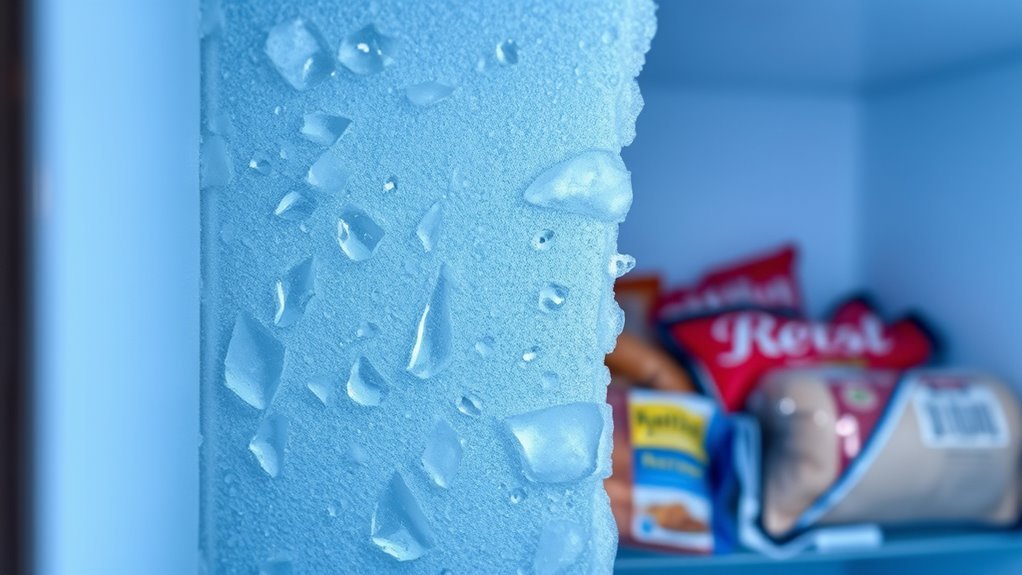
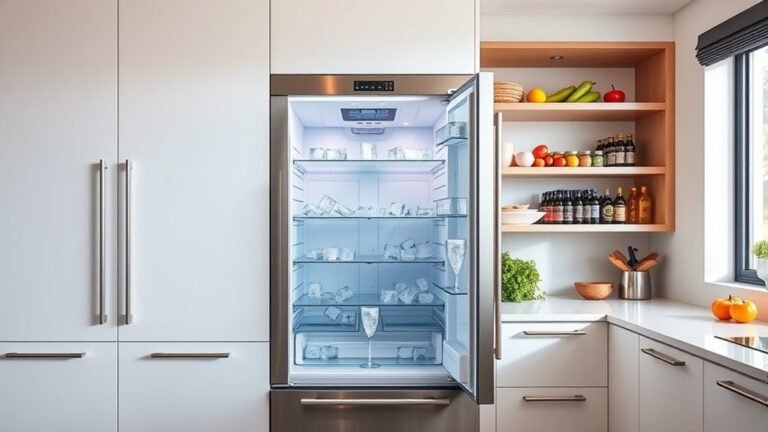
If your freezer is frosting up, it’s usually because moisture has entered the compartment and frozen on the cold surfaces. Frost formation happens when warm, humid air sneaks inside, causing water vapor to condense and freeze.
Frost forms when warm, humid air enters your freezer and moisture freezes on cold surfaces.
Every time you open the freezer door, you’re letting in this moisture, which quickly turns into frost. Another common cause is a faulty door seal that allows air leaks, inviting moisture to settle and freeze inside.
As frost builds up, it reduces your freezer efficiency by insulating the cooling coils, forcing the compressor to work harder and use more energy. This not only raises your electricity bill but also shortens the appliance’s lifespan.
You can prevent excessive frost by minimizing door openings and making sure the door seals are tight and undamaged. Keeping your freezer dry and well-maintained helps maintain peak efficiency and reduces frost buildup.
How Humidity Makes Your Freezer Frosty
You might not notice it, but humidity inside your freezer actually comes from a few different places. For example, whenever you open the door, warm air sneaks in, bringing moisture along with it. Also, if you store uncovered food, it can release moisture into the freezer.
That extra humidity then condenses onto cold surfaces inside, and over time, this buildup turns into frost. To keep your freezer from getting all frosty and icy, it’s a good idea to control the humidity. You can do this by sealing your food properly so moisture can’t escape, and also by opening the door less often. It’s a simple way to keep things running smoothly inside!
Humidity Sources Inside Freezer
Since moisture plays a key role in frost buildup, understanding where humidity comes from inside your freezer is essential. Knowing the main sources helps you control frost more effectively.
The primary condensation sources inside your freezer include:
1. Door Openings
Every time you open the door, warm, moist air enters, raising humidity levels.
2. Stored Food Items
Uncovered or improperly wrapped foods release moisture, which adds to internal humidity.
3. Defrost Cycles
During automatic defrost, melting ice increases internal moisture, and poor ventilation can cause it to linger.
Moisture Condensation Process
Although humidity inside your freezer comes from various moisture sources, the main cause of frost buildup is how that moisture condenses on cold surfaces. When warm, moist air enters the freezer, water vapor hits the cold walls and shelves.
This causes condensation, where vapor turns into tiny ice crystals. Over time, these crystals build up and form frost. Every time you open the door or put warm food inside, you add more moisture.
That extra moisture leads to more condensation and ice formation. The cycle of moisture entering and freezing creates the frosty layer you see. Knowing this helps you understand why your freezer gets frosty, even if there are no obvious leaks or spills.
Preventing Excess Humidity Buildup
When warm air sneaks into your freezer, it brings moisture that quickly turns into frost. To prevent excess humidity buildup, focus on humidity control and making sure your freezer is well-insulated.
Here’s how you can tackle the problem effectively:
- Check and replace door seals regularly to keep warm, moist air out and maintain a steady temperature inside.
- Limit door openings to reduce the amount of humid air entering, which helps control moisture levels.
- Improve freezer insulation by inspecting for damage or gaps that let warm air seep in, increasing frost formation.
Why Door Seals Matter for Frost Buildup
You might not think about it much, but the state of your freezer’s door seals actually makes a big difference when it comes to frost buildup. If the seals aren’t snug, warm air can sneak in without you even realizing it. That warm air brings moisture with it, which then freezes inside the freezer, leading to that pesky frost.
Seal Integrity Importance
If your freezer door doesn’t seal properly, warm air can sneak inside and cause frost to build up quickly. Keeping the seal in good shape is essential to prevent this from happening.
Poor seals let moisture in, which then freezes and causes frost. Regularly cleaning and inspecting the gasket for cracks or wear can help maintain seal integrity. If you notice damage, replacing the seal is key to ensuring a tight closure.
Here are three reasons why a good seal really matters:
- It keeps cold air inside, helping your freezer stay at the right temperature.
- It saves energy by preventing the freezer from overworking.
- It reduces frost buildup caused by moisture getting in.
Air Leakage Effects
Although it might seem minor, any air leakage around your freezer door can quickly lead to frost buildup. When warm, humid air sneaks in through faulty door seals, it causes moisture to condense and freeze inside your freezer.
This not only worsens insulation issues but also disrupts the air quality within, making your freezer work harder to maintain the set temperature. Over time, constant air exchange increases frost accumulation and energy consumption.
To prevent this, regularly check your door seals for cracks or gaps and replace them if needed. Ensuring your freezer door seals tightly preserves proper insulation, improves air quality inside, and keeps frost at bay.
Addressing air leakage is essential for maintaining efficiency and preventing costly repairs down the line.
Why the Right Freezer Temperature Prevents Frost
Setting your freezer to the right temperature is key to preventing frost buildup. When it’s too cold, moisture in the air freezes on the walls, creating frost. On the other hand, if it’s too warm, food may not stay frozen enough, leading to condensation and frost.
Here’s why keeping the right setting matters:
Here’s why the right freezer setting is essential for efficiency, moisture control, and consistent cold storage.
- Preserves freezer efficiency: The compressor doesn’t have to work as hard, which reduces frost and saves energy.
- Minimizes moisture buildup: Proper coldness stops excess humidity from turning into ice inside the freezer.
- Keeps things consistently cold: Stable temperatures prevent frost from forming on your food and freezer surfaces.
How Frequent Door Opening Leads to Frost Problems
Every time you open your freezer door, warm air rushes in, bringing moisture along with it. That moisture then cools down and freezes, which is how frost starts to form. So, the more often you open the door, the more moisture gets in, and the more frost you’ll see building up over time.
If you want to keep frost at bay, try to open the door less often and for shorter periods. It might seem like a small thing, but it can make a big difference in keeping your freezer frost-free and running efficiently.
Warm Air Infiltration
When you open your freezer door often, warm air from the room rushes inside and mixes with the cold air. This causes moisture to condense and freeze on the interior surfaces.
Warm air infiltration disrupts the temperature balance and speeds up frost buildup.
You should think about these factors:
- Air flow: Opening the door frequently lets warm air in, raising humidity levels and increasing frost formation.
- Insulation quality: Poor insulation lets warm air seep in even when the door is shut, making frost problems worse.
- Door seal condition: Damaged or worn seals allow warm air to leak constantly, contributing to frost buildup.
Moisture Buildup Effects
Because you open your freezer door frequently, moist air from your kitchen slips inside and settles on cold surfaces. This moisture quickly condenses and freezes, creating frost buildup.
The moisture effects are more than just an inconvenience. They reduce your freezer’s efficiency by forcing the compressor to work harder. You’ll notice frost in the form of ice layers that take up space and trap cold air unevenly.
Over time, this frost buildup can block vents and cause poor air circulation. This makes it harder for your freezer to maintain a consistent temperature. To minimize these moisture effects, try to limit how often and how long you open the door.
Sealing the door properly after each use also helps prevent moist air from entering and causing frost problems.
How Poor Air Circulation Causes Freezer Frost Buildup
Several factors can disrupt the airflow inside your freezer, leading to frost buildup. When cold air can’t circulate properly, moisture settles and freezes unevenly, creating distinct frost patterns. These airflow issues often cause frost to grow faster in certain areas.
Here are three common causes of poor air circulation:
- Blocked vents: Items placed too close to vents can restrict airflow. This creates cold spots where frost forms more quickly.
- Dirty condenser coils: Dust and debris on coils reduce cooling efficiency. This impacts how air moves inside the freezer.
- Faulty fan: A malfunctioning fan can’t distribute cold air evenly. This results in inconsistent temperatures and frost buildup.
Managing Overloaded Freezers to Prevent Frost
If you pack your freezer beyond its capacity, you’ll block proper airflow and create the perfect conditions for frost to form. Managing an overloaded freezer starts with good organization. Avoid piling items randomly; instead, group similar products together and use clear bins or labels so you can find things easily without leaving the door open too long.
Good storage also means leaving some space between items so cold air can circulate freely. Overstuffing blocks this flow, which causes moisture to settle and freeze. Regularly check what’s inside and remove anything you no longer need. Rotate older items to the front so they’re used first, helping prevent overcrowding.
When and How to Defrost Your Freezer
Frost buildup in your freezer means it’s time to defrost. Knowing when and how to do it can make the process easier and keep your freezer running efficiently. Usually, you should defrost when frost is more than a quarter-inch thick or every six months, whichever comes first.
Here’s how to do it right:
- Prepare: Unplug your freezer and take out all the food. Store perishables in a cooler so they stay fresh.
- Defrost: Leave the door open and let the ice melt on its own. Avoid sharp tools that could damage the surfaces. To speed things up, place a bowl of hot water inside.
- Clean and Restart: Once all the ice melts, wipe the interior dry. Plug the freezer back in and put your food inside again.
Prevent Frost With Simple Freezer Maintenance
Although frost can build up unexpectedly, you can prevent it by keeping your freezer well-maintained. Start by practicing good freezer organization—arrange items so air can circulate freely and avoid overpacking. This helps maintain consistent temperatures and reduces frost buildup.
Regularly check door seals for cracks or gaps. A tight seal prevents warm, moist air from entering and causing frost. Clean the seals and freezer interior with mild soap to remove debris that might compromise the seal’s effectiveness.
Regularly inspect and clean door seals to keep warm air out and prevent frost buildup.
Also, keep your freezer at the recommended temperature, usually around 0°F (−18°C), to minimize frost formation. Defrost your freezer as soon as you notice any frost accumulation to keep it running efficiently.
Incorporate these maintenance tips into your routine to extend your freezer’s lifespan and improve energy efficiency. Staying proactive with simple organization and upkeep will prevent frost, protect your food, and avoid costly repairs.
Freezer Types Most Prone to Frost Buildup
Since different freezer designs handle moisture and airflow differently, some models tend to build up frost more quickly than others. Knowing which types are most prone can help you manage and prevent frost effectively.
Vertical freezers have doors that open like a refrigerator, which lets warm, moist air in each time you open them. This makes frost formation worse, especially if you leave the door open too long.
Chest freezers are better at keeping cold air in because they open from the top. But they can still frost up if the seal isn’t tight or if you leave the lid open often, letting moisture in.
Manual defrost freezers, whether vertical or chest, don’t have automatic systems to remove moisture. This makes them more likely to develop frost since moisture isn’t actively managed.
Knowing these types can help you adjust how you use and maintain your freezer to keep it frost-free.
Frequently Asked Questions
Can Frost Buildup Affect Food Quality or Safety?
Yes, frost buildup can affect your food quality and safety. When frost accumulates, it makes your freezer less efficient, which causes temperature fluctuations that hurt food preservation.
This can lead to freezer burn, making your food dry and tasteless. Plus, inconsistent temperatures might allow bacteria to grow, risking food safety.
To keep your food fresh and safe, it’s a good idea to defrost your freezer regularly and prevent excessive frost buildup.
Does Using Freezer Liners Reduce Frost Formation?
In terms of frost buildup, using freezer liners can really be the ace up your sleeve. They help by improving moisture control inside your freezer, which means less frost forming on the walls and around your food.
How Do Energy-Efficient Freezers Handle Frost Differently?
Energy-efficient freezers handle frost differently by using advanced frost prevention technology, which reduces ice buildup and improves energy savings. You’ll notice they often have better sealing and automatic defrost cycles that prevent frost from forming in the first place.
This means you won’t have to manually defrost as often, saving you time and energy. By minimizing frost, these freezers maintain peak cooling performance and lower your electricity bills.
Are Frost-Free Freezers Completely Maintenance-Free?
Imagine Sarah, who thought her frost-free freezer needed zero upkeep. While frost-free technology prevents ice buildup, it’s not completely maintenance-free.
You still have to follow maintenance tips like cleaning coils and checking door seals to keep it running efficiently. Ignoring these can cause performance issues despite the frost-free design.
Can Frost Buildup Increase My Electricity Bill?
Yes, frost causes your freezer to work harder, which increases energy consumption. When frost builds up, it acts as an insulator, making the freezer less efficient at staying cold.
This forces the compressor to run longer, consuming more electricity. If you want to keep your energy bills down, you should regularly defrost your freezer and prevent excessive frost buildup.
It’s a simple way to save money and keep your appliance running smoothly.
Conclusion
Just like a well-tuned ship braves stormy seas, your freezer needs the right care to keep frost at bay. Managing humidity, sealing doors tightly, and maintaining proper temperature are key steps.
By doing this, you’ll steer clear of icy troubles. Remember, regular checks and timely defrosting are your trusty compass and anchor.
Keep these simple habits in mind, and your freezer will sail smoothly, preserving your food without the frosty battles. If your freezer keeps frosting up, following these tips for avoiding frost buildup will make all the difference.
You’ve got this!