How Much to Install Kitchen Cabinets? The Complete Answer
Are you dreaming of a beautiful new kitchen but feeling overwhelmed by the costs and details involved? You’re not alone—many people struggle with figuring out how much it will actually cost to install new cabinets.
Getting it right can seem tricky, especially with so many factors at play.
You’ll typically spend between $1,200 and $5,000 to install kitchen cabinets, depending on your kitchen’s size, cabinet material, and how complex the job is.
Labor rates, layout, and wall conditions also affect the total cost.
DIY can save money but requires skills and time, while professionals usually work faster and guarantee a better fit.
If you want to understand what impacts pricing and how to budget wisely, there’s plenty more to investigate.
Key Takeaways
- Kitchen cabinet installation costs usually fall between $1,200 and $5,000, depending on the size of your kitchen and how complex the job is.
- Labor rates can range from $50 to over $100 an hour. Skilled installers tend to do a better job fitting everything and finishing faster.
- The type of material you choose for your cabinets, like solid wood, plywood, or MDF, makes a big difference in both the cost and how long they last.
- You might also have extra costs for permits, hardware, wall prep, and taking out old cabinets.
- Doing it yourself can save on labor costs, but it takes time, proper tools, and some skill. Hiring professionals costs more upfront but offers expertise and peace of mind.
Kitchen Cabinet Installation Costs Overview
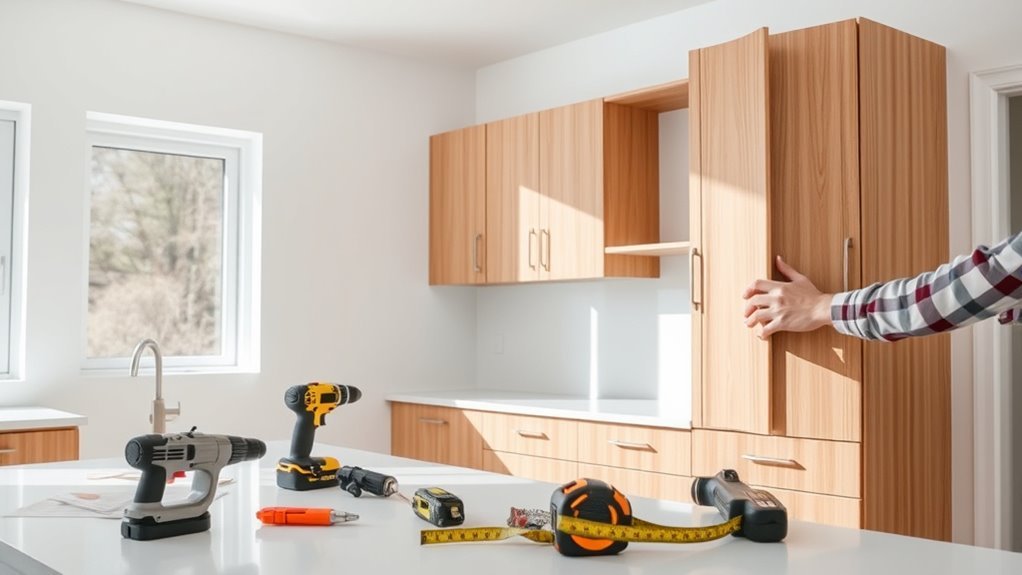
Installing kitchen cabinets usually costs between $1,200 and $5,000, depending on your kitchen size and how complex the job is. When planning, consider current trends, as they can affect both style and price.
Popular options right now include open shelving and mixed-material cabinets, but they might need more precise installation techniques. To save money and avoid headaches, make sure to measure your space carefully before ordering.
Check that your walls are level because uneven surfaces can make installation more difficult. Hiring a professional ensures proper alignment and secure mounting, especially with heavy or custom cabinets.
Don’t forget to include hardware and finishing touches in your budget, as they add to the overall costs. By balancing your style choices with practical tips, you’ll get great value and a trendy kitchen without overspending.
Key Factors Affecting Kitchen Cabinet Installation Costs
Because every kitchen is unique, several key factors will influence how much you’ll spend on cabinet installation. One major factor is whether you need installation permits. Some areas require permits for remodeling work, including cabinet installation, which can add to your timeline and costs. Always check local regulations to avoid surprises.
Another key factor is the design trends you choose. Modern, custom designs with intricate details or high-end finishes often cost more to install than standard styles. The type of cabinets—stock, semi-custom, or custom—also affects installation complexity and price.
The condition of your walls and existing plumbing or electrical setups can impact costs too. Unexpected repairs or adjustments add labor time. Finally, the installer’s experience and location influence pricing, as professionals in high-demand areas may charge more.
Understanding these factors helps you plan your budget and avoid surprises during your kitchen cabinet installation.
How Kitchen Size and Layout Impact Installation Costs
When planning your kitchen cabinet installation, the size and layout of your kitchen really impact the overall cost. Larger kitchens with more cabinets need more materials and take more time, which can drive up expenses. Your kitchen’s dimensions also determine how many cabinets you’ll need and how they fit into the space.
Different layout styles like L-shaped, U-shaped, or galley kitchens can also affect costs. More complex layouts may involve tricky angles, making installation more challenging and increasing labor costs.
Kitchen size influences installation costs because bigger spaces require more cabinets and longer setup times. Meanwhile, layout styles that are more intricate may require extra effort, especially when dealing with unusual angles or configurations.
Proper spacing between cabinets helps ensure your kitchen looks good and functions well. But, achieving this spacing can add to the complexity of installation.
Unique layouts can also create workflow challenges, which might mean extra time and skill are needed. Understanding these factors helps you plan your budget wisely and create a kitchen that’s both functional and efficient.
Comparing Cabinet Materials and Their Price Impact
Your choice of cabinet materials really impacts your overall installation costs, often as much as your kitchen’s size and layout. When comparing options like solid wood, plywood, MDF, and particleboard, you’ll see big differences in price and how long they last.
Solid wood cabinets tend to cost more upfront but are known for their strength and long lifespan. MDF and particleboard are more budget-friendly but might need more repairs or replacements over time, which can add to your maintenance costs.
Plywood hits a middle ground with decent durability at a moderate price. Keep in mind, cheaper materials might save you money initially but could lead to higher upkeep costs later.
Labor Costs for Kitchen Cabinet Installation
Labor costs play a big role in the total price of installing kitchen cabinets. When planning your budget, remember that labor rates can vary a lot depending on where you live, how complex the project is, and the techniques used by professionals. Skilled installers tend to charge more but ensure a precise fit and finish, which can save you time and prevent issues later.
Here are some key factors that affect labor costs:
- Labor rates can range from $50 to $100+ per hour depending on experience and location.
- Installation techniques like custom fitting or leveling on uneven walls can take more time and cost more.
- Kitchen size and layout matter because more cabinets and corners mean more work.
- Preparation needs such as removing old cabinets or fixing walls also add to labor charges.
Understanding these factors helps you estimate your labor costs more accurately and avoid surprises during installation.
Costs of Soft-Close, Lighting & Custom Features
When you’re upgrading your kitchen cabinets, adding soft-close hinges is a nice touch because they make opening and closing the doors super smooth and quiet. But keep in mind, they do come with a bit of a higher price tag.
If you want to brighten up your space, installing lighting inside or underneath your cabinets can really make a difference. Not only does it improve visibility, but it also adds a nice ambiance — just be prepared for the extra cost.
And if you’re looking to make your cabinets stand out, custom features like pull-out shelves or decorative accents are a great way to do that. They can give your kitchen a unique look, but they’ll also add to the overall expense.
Soft-Close Cabinet Costs
Soft-close cabinets add a touch of luxury and convenience to your kitchen by preventing doors and drawers from slamming shut. These soft-close mechanisms not only protect your cabinets but also make your daily kitchen routine smoother.
When considering soft-close cabinet costs, remember the benefits: less noise, longer-lasting cabinets, and easier operation. Installing soft-close hinges and drawer slides usually costs an extra $20 to $50 per cabinet, depending on quality.
Here’s what to expect with soft-close upgrades:
- Better cabinet durability from gentle closing
- Safer kitchen with fewer finger pinches
- Quieter environment
- Higher resale value thanks to upscale features
Choosing soft-close mechanisms is a smart investment for comfort and to help your cabinets last longer.
Lighting And Custom Features
Adding soft-close features improves your cabinets’ functionality, but lighting and custom elements can transform both the look and usability of your kitchen. You can choose from various lighting options like under-cabinet LED strips or interior cabinet lights to brighten workspaces and showcase your kitchenware.
These additions typically cost between $50 and $200 per cabinet, depending on complexity. Custom designs let you tailor your cabinets to fit specific needs, like pull-out shelves, built-in spice racks, or unique finishes.
These personalized features usually add $100 to $500 per cabinet but greatly increase your kitchen’s convenience and style. By combining lighting options with custom designs, you can elevate your kitchen’s aesthetics and create a more functional, inviting space that suits your lifestyle perfectly.
Budgeting for Kitchen Cabinet Installation
Because kitchen cabinet installation involves several cost factors, you’ll want to set a clear budget before starting. Proper budget allocation helps you avoid overspending and keeps the project on track. Start by estimating the total cost, including cabinets, hardware, labor, and any unexpected expenses. Keeping diligent expense tracking guarantees you stay within your limits and can adjust if needed.
Setting a clear budget before kitchen cabinet installation helps prevent overspending and keeps your project on track.
To help you budget effectively, consider these key steps:
- Break down costs into categories like materials, labor, and permits.
- Research prices for different cabinet styles and finishes.
- Set aside a contingency fund of about 10-15% for surprises.
- Use a spreadsheet or app to monitor your spending in real-time.
DIY vs. Professional Installation Costs
When you’re figuring out your kitchen cabinet project, it’s a good idea to compare the costs of doing it yourself versus bringing in a professional. Think about how much time you’re willing to spend and whether you’ve got the skills to handle the job. These things really matter because they can influence not just the budget, but also how smoothly the whole project goes. So, taking a moment to consider both options will help you choose the best route for your kitchen upgrade.
Cost Comparison Breakdown
While installing kitchen cabinets yourself can save money upfront, weighing the costs against professional installation helps you make an informed decision. When considering installation techniques and design styles, the price gap can vary a lot.
DIY reduces labor costs but may require special tools or corrections if mistakes happen. Professionals charge more but bring expertise, ensuring a polished look.
Here’s a quick cost comparison breakdown:
- DIY: Saves on labor but may need to buy tools and take extra time
- Professional: Higher upfront cost but includes skilled installation and warranty
- Complex design styles: Make DIY more difficult and increase pro costs
- Installation techniques: Advanced methods usually need pros, adding to expenses
Balancing these factors can help you pick the best option for your budget and style.
Time Investment Differences
Although installing kitchen cabinets yourself can save money, it demands a significant time commitment that many underestimate. You’ll need to dedicate hours—sometimes days—to measuring, assembling, and securing each cabinet. Effective time management becomes essential to avoid delays and frustration.
Without prior experience, your pace will be slower, which impacts overall installation efficiency. Hiring professionals shifts the burden of time management to experts who streamline the process using specialized tools and techniques. They typically complete installations much faster, reducing disruption to your daily routine.
While the upfront cost is higher, the saved time and effort often justify the expense. Ultimately, consider how much your time is worth and whether you prefer to invest it yourself or leave it to skilled installers for a quicker, more efficient outcome.
Skill Level Requirements
Mastering kitchen cabinet installation requires a certain level of skill that can greatly affect both the cost and quality of the project. If you’re thinking about doing it yourself, you’ll want to understand different installation techniques and have the right tools ready.
Without experience, mistakes can become costly to fix. Hiring professionals might cost more upfront but ensures precision and durability.
Here are some things to consider:
- Being familiar with cabinet alignment and leveling techniques
- Knowing how to handle power tools like drills and levels
- Experience in securing cabinets safely to walls
- Understanding how to adjust doors and drawers for smooth operation
Deciding between DIY and hiring pros depends on your confidence, skills, and equipment availability.
Money-Saving Tips for Kitchen Cabinet Installation
Wondering how you can cut costs on kitchen cabinet installation without sacrificing quality? Start by adopting smart budgeting strategies. Set a clear budget that includes materials, labor, and unexpected expenses.
Prioritize essential features to avoid overspending on unnecessary upgrades. Next, hunt for discount sources like clearance sales, outlet stores, or online deals. Many retailers offer seasonal discounts or promotions that can greatly reduce your costs.
Don’t hesitate to negotiate with suppliers or installers. Sometimes, they’ll offer price breaks to secure your business. Consider partial DIY installation if you have the skills. It can lower labor costs while still ensuring professional results for complex tasks.
Finally, plan your project timeline wisely. Avoid rush charges by scheduling installation during off-peak seasons or days. By combining these money-saving tips, you’ll manage your expenses effectively without compromising the quality or durability of your new kitchen cabinets.
Finding Affordable and Premium Kitchen Cabinets
Once you’ve figured out how to save on installation costs, the next step is picking the right kitchen cabinets that match your budget and style. You’ll find options that are budget-friendly without sacrificing quality, as well as premium choices that are durable and have a beautiful finish.
When choosing, think about these points:
- Material: Laminate or MDF are great budget options, while solid wood is usually more premium.
- Style: Simple designs tend to cost less, whereas intricate details can add to the price.
- Brand: Some brands focus on affordable cabinets, while others are known for high-end craftsmanship.
- Customization: Stock cabinets save money, but custom ones can boost style — though they usually cost more.
Frequently Asked Questions
How Long Does Kitchen Cabinet Installation Typically Take?
Kitchen cabinet installation usually takes one to three days, but it really depends on the project.
The length of time depends on factors like the size of your kitchen, the type of cabinets, and if any prep work is needed.
Things like wall repairs or plumbing adjustments can add to the timeline.
If your cabinets are custom-fit or have a tricky layout, expect it to take longer.
You can speed things up by clearing out the area and having all your materials ready before the installers arrive.
What Tools Are Needed for Kitchen Cabinet Installation?
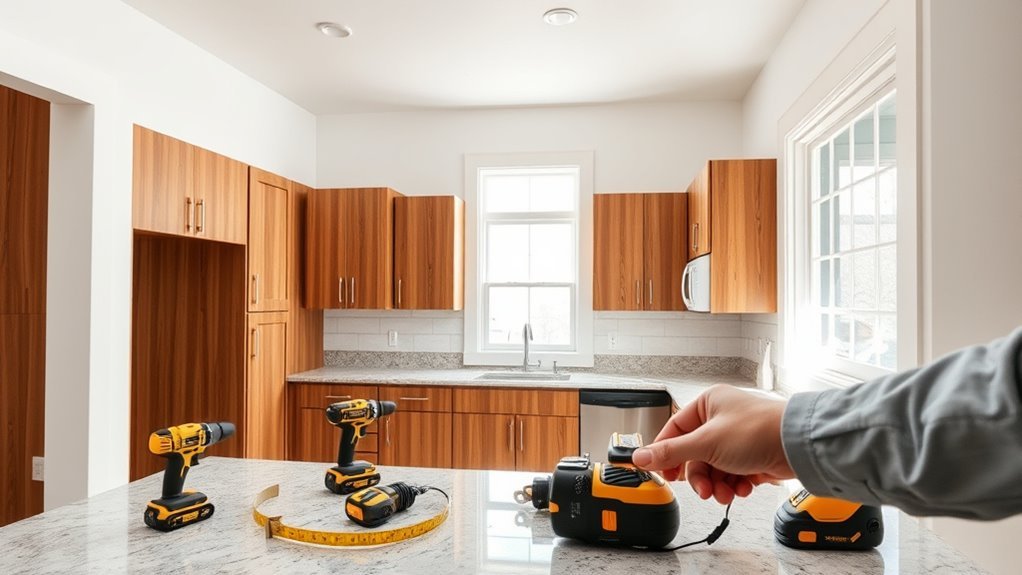
You’ll need a mountain of tools for cabinet installation, but don’t worry — it’s not that crazy! Your list includes a drill, level, tape measure, stud finder, clamps, screwdriver, and a saw.
These tools help you secure your cabinets precisely and safely. Having the right gear makes the job smoother and faster. Without them, you’d be climbing a steep hill barefoot!
Can Kitchen Cabinet Installation Be Done in One Day?
Yes, you can install some kitchen cabinet types in one day, especially if you choose ready-to-assemble or stock cabinets. These are generally quicker to put up because they come pre-made and require less customization.
However, custom or semi-custom cabinets usually take longer because of the need for precise measurements and adjustments. Rushing this part could lead to mistakes, which might end up costing more in the long run.
Planning ahead and having all your tools ready can really help speed up the process. That way, you can enjoy your new kitchen without unnecessary delays or extra expenses.
How Do I Prepare My Kitchen Before Installation?
Before installation, clear your kitchen like a blank canvas. Remove old cabinets, appliances, and personal items so everything’s ready for the new setup.
Double-check your cabinet measurements to make sure they fit perfectly with your kitchen layout. This helps avoid surprises later on.
Protect your floors and countertops with drop cloths to prevent any damage during the work. It’s a simple step that saves headaches.
Have all your tools and hardware ready before starting. Also, confirm that plumbing and electrical connections are accessible and in good shape.
Getting these things done sets the stage for a smooth, efficient cabinet installation without any unexpected hiccups.
What Maintenance Is Required After Installing Kitchen Cabinets?
You’ll want to keep up with regular cabinet cleaning to prevent grease and grime buildup, using a gentle cleaner and soft cloth.
Check your cabinets periodically for any loose hinges or handles, and don’t hesitate to do hardware replacement if you notice wear or damage.
This helps keep your kitchen looking fresh and functioning smoothly. Also, avoid harsh chemicals and excessive moisture to prolong the life of your cabinets and hardware.
Conclusion
Think of installing kitchen cabinets like planting a garden. The size of your space, the quality of your materials, and whether you do it yourself or hire a pro all influence your results.
Understanding costs—from materials to labor—helps you budget wisely. Whether you choose to DIY or bring in experts, planning carefully makes sure your kitchen becomes the heart of your home, full of style and function.
When you know what to expect in costs, your kitchen cabinet installation will be smooth and successful.