How Much Does an Outdoor Kitchen Cost? The Complete Answer
Dreaming of hosting outdoor gatherings but feeling overwhelmed by the costs? You’re not alone. Many people struggle with figuring out how much an outdoor kitchen really costs and what’s worth the investment.
An outdoor kitchen typically costs between $2,000 and $50,000, depending on your choices. You can save money with DIY installation but might sacrifice time and expertise.
Materials like stainless steel or stone increase durability but add to the upfront cost. Appliances and layout size also affect the budget, and local factors like labor rates and permits play a role.
If you want to plan smartly and balance cost with features, there’s plenty more to contemplate.
Key Takeaways
- Outdoor kitchen costs can range from about $2,000 for simple setups to over $20,000 for more luxurious designs with high-end appliances.
- Using durable materials like stainless steel and stone might bump up the initial price but can save you money on repairs and upkeep later.
- Doing the installation yourself can cut costs by 30-50%, but it requires skills, time, and careful planning to get it right.
- Adding features like lighting, seating, or entertainment options will increase the price but make your outdoor space more functional and fun.
- The final cost also depends on factors like location, utility hookups, permits, and seasonal pricing fluctuations.
How Much Does an Outdoor Kitchen Cost?
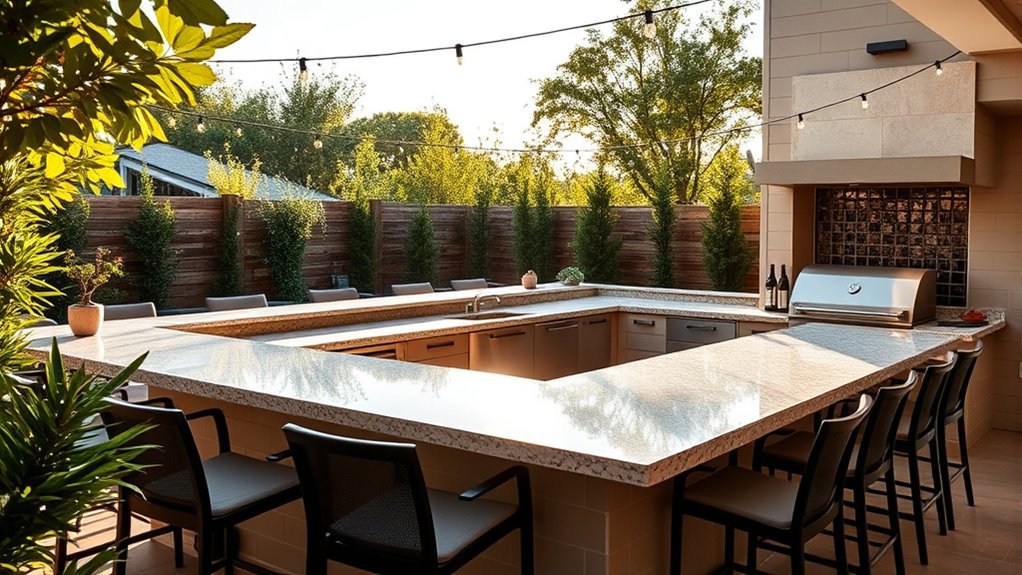
How much does an outdoor kitchen cost? When planning your budget, it’s important to set a clear spending limit based on your needs and space.
Outdoor kitchens can range from a few thousand dollars for a simple setup with a grill and counter to tens of thousands for fully equipped kitchens with high-end appliances and custom countertops.
To keep costs manageable, start with essential features and add extra items later. Focus on what you really need first.
For installation tips, choose durable materials made for outdoor use to avoid costly repairs later. Proper site prep, like leveling the ground and ensuring good drainage, will make installation easier and prevent issues.
If you’re handy, some parts can be installed yourself, saving on labor costs. Overall, good planning and smart choices will help you build an outdoor kitchen that fits your style and budget without surprises.
What Influences Outdoor Kitchen Costs?
Because outdoor kitchens vary widely in design and features, several factors directly affect their overall cost. You’ll find that current design trends can influence pricing, as popular styles might demand pricier materials or specialized craftsmanship.
Location factors matter too. Installing your kitchen on uneven terrain or in a remote area can increase labor rates and complexity. Utility access plays a big role—if your site lacks easy connections to water, gas, or electricity, expect extra expenses.
Seasonal pricing also impacts costs since labor rates and material availability can fluctuate throughout the year. Don’t forget about zoning regulations—they can restrict certain installations or require permits, adding to your budget.
Finally, consider maintenance costs, which will influence your long-term investment. By understanding these elements, you can better anticipate the total expense and tailor your outdoor kitchen project to fit your needs and budget.
How Materials Impact Your Outdoor Kitchen Budget
Since materials make up the majority of your outdoor kitchen’s structure and style, they play a big role in your budget. Choosing durable options like stainless steel or stone might cost more upfront but can save you money on maintenance later.
Think about design aesthetics too. Natural stone gives a classic look, while concrete allows for modern customization, which affects both price and appeal. Weather resistance is also key—materials that handle regional climate challenges can help you avoid costly repairs.
Eco-friendly options may cost a bit more but can boost resale value and sustainability. Keep regional pricing in mind, as some materials are pricier depending on where you live. Lastly, installation complexity varies—custom masonry takes more labor and costs more compared to prefabricated choices.
Balancing these factors helps you create a realistic budget that considers longevity, style, and functionality.
Outdoor Kitchen Appliances and Their Cost Impact
When you’re putting together your outdoor kitchen, it’s a good idea to think about which appliances you’ll really need and how much they might cost depending on the brand. Some brands can be pricier, but they might also last longer or offer better features.
Also, considering energy-efficient appliances can actually save you money over time since they’ll use less power and reduce your utility bills. So, when you’re budgeting, keep these factors in mind—they can really make a difference in the overall cost and functionality of your outdoor space.
Essential Appliance Types
Although outdoor kitchens can vary a lot in design, the appliances you pick will have the biggest effect on your overall cost. Your grill options set the tone, while refrigeration keeps your food fresh.
Countertop materials and storage solutions influence both style and functionality. Sink styles and ventilation are key for convenience and safety.
Finally, the cooking surfaces complete your setup, all of which are influenced by appliance brands.
| Appliance Type | Cost Impact Example |
|---|---|
| Grill Options | $500 – $5,000+ |
| Refrigeration | $300 – $2,000 |
| Countertops | $50 – $200 per sq. ft. |
| Storage Solutions | $200 – $1,000 |
| Sink Styles | $150 – $600 |
Choosing wisely helps keep costs in check while making your outdoor kitchen efficient and enjoyable.
Cost Variations by Brand
If you want to control your outdoor kitchen budget, understanding how different brands affect appliance costs is essential. Brands with strong reputations often charge more but offer better materials, design options, and longer-lasting products.
When comparing brands, think about warranty options and customer support. Reliable service can save you money in the long run. Some brands include installation services in their prices, which can increase upfront costs but add convenience and professional setup.
Premium brands usually invest in durable materials and advanced features, while budget brands might cut corners on these aspects. By weighing these factors, you can pick appliances that fit your budget without sacrificing quality or support.
This way, you’ll keep your outdoor kitchen efficient and enjoyable for years to come.
Energy Efficiency Considerations
Choosing the right brands for your outdoor kitchen appliances is just one piece of the cost puzzle. You should also consider energy efficiency when planning your setup.
Energy-efficient appliances might cost more upfront, but they save you money on utility bills over time. Plus, they reduce your environmental footprint, which lines up with using sustainable materials in your kitchen design.
Opting for appliances with high energy ratings guarantees you get durable performance without wasting resources. Sustainable materials for countertops and cabinetry not only improve longevity but also lower maintenance costs.
DIY vs. Professional Installation: Cost Differences
When you’re trying to decide between doing it yourself or hiring a professional, it’s important to think about the upfront costs. Doing it yourself can definitely save you some cash, but keep in mind, it also takes a good amount of time and skill to get everything done right.
On the other hand, bringing in a pro might cost more initially, but they usually get the job done quickly and correctly, giving you peace of mind. So, it’s really about weighing your budget against how much time and effort you’re willing to put in.
Cost Comparison Overview
How much can you save by building your outdoor kitchen yourself instead of hiring a pro? When you go the DIY route, you cut labor costs significantly, which often make up 30-50% of the total price.
But remember, budget planning is key since you’ll need to source materials and appliances wisely. DIY lets you customize your design style without paying for designer fees, but be honest about your skills to avoid costly mistakes.
On the flip side, professional installation offers expertise that guarantees quality work and compliance with local codes. Pros can also help you optimize your layout and material choices within your budget.
Ultimately, your choice depends on how much you value saving money versus convenience and guaranteed results.
Time Investment Considerations
Although building your outdoor kitchen yourself can save money, it demands a big time investment that many people underestimate. You’ll spend extra time on design, planning carefully, and dealing with seasonal factors that can affect your schedule.
Professionals make this process smoother, but their fees reflect their efficiency and expertise. Here’s a quick comparison:
| Aspect | DIY | Professional |
|---|---|---|
| Design Time | Lots of time; you handle all the details | Minimal; experts guide you |
| Installation Timeline | Longer; depends on your schedule | Faster; planned and executed precisely |
| Project Planning | Intensive; you coordinate all tasks | Simplified; managed by pros |
| Seasonal Considerations | You must adapt to weather yourself | Pros adjust their schedule accordingly |
| Overall Time Impact | High; requires patience and effort | Low; efficient and timely |
Think about these factors carefully before making your decision.
Skill Level Impact
Because your skill level affects both the quality and cost of your outdoor kitchen, you need to consider whether to go DIY or hire a pro. If you have the training and experience, handling simpler designs can save you money.
But for more complex layouts with built-in appliances and plumbing, it’s often best to get professional help. Experts ensure safety, code compliance, and durability, helping you avoid costly mistakes.
If you lack the skills, attempting DIY might lead to errors that end up costing more in the long run. Be honest about your comfort with tools and tasks before making a decision.
In the end, balancing your skills with the complexity of your design will help you choose whether a DIY approach or professional installation makes the most financial sense.
Costs of Extras: Lighting, Seating & Entertainment
Where should you start when adding extras like lighting, seating, and entertainment to your outdoor kitchen? Begin by exploring lighting options that improve outdoor ambiance while considering energy efficiency and installation tips.
Start your outdoor kitchen upgrades with lighting that enhances ambiance and maximizes energy efficiency.
Next, select seating styles that balance comfort with design trends, ensuring they fit your space and budget-friendly choices. Entertainment features, such as weatherproof speakers or outdoor TVs, can uplift your space but require thoughtful placement and seasonal considerations.
Keep these key points in mind:
- Choose layered lighting (task, ambient, accent) for flexibility and style.
- Opt for durable, weather-resistant seating that complements your kitchen’s aesthetic.
- Integrate entertainment features that suit your lifestyle and local climate.
- Factor in installation costs and maintenance to avoid surprises.
How Size and Layout Affect Outdoor Kitchen Costs
Adding extras like lighting and entertainment can enhance your outdoor kitchen, but the size and layout you choose will have a bigger impact on your overall costs.
When planning, focus on size to make sure you’re not overspending on unused space. Proper layout helps balance design with your functional needs.
Efficient use of space allows you to create separate zones—like cooking, dining, and prep areas—without crowding your outdoor area. It’s also important to keep the aesthetic balance so your kitchen complements your yard instead of overwhelming it.
Think about outdoor flow and traffic patterns to prevent congestion and make sure there’s easy movement between zones. Good layout planning can boost usability and cut costs by reducing unnecessary materials and labor.
Basic Outdoor Kitchen Costs and Features
While the size and layout set the foundation, understanding the basic costs and features helps you plan your outdoor kitchen budget effectively. At the entry-level, you’ll focus on essentials that improve outdoor functionality without breaking the bank. Basic outdoor kitchens typically include a grill, simple countertop space, and minimal storage. You can expect to invest between $2,000 and $5,000 depending on materials and appliance choices.
To keep your project aligned with current design trends while staying practical, consider these elements:
- A built-in gas or charcoal grill for efficient cooking
- Weather-resistant countertops like concrete or tile
- Basic cabinetry made from stainless steel or marine-grade polymer
- Essential utilities such as a water connection or electrical outlet
Mid-Range Outdoor Kitchen Costs and Features
How much should you expect to spend on a mid-range outdoor kitchen? Typically, mid-range features can cost between $8,000 and $20,000, depending on your choices and size. With budget considerations in mind, this range offers a good balance between functionality and quality.
You’ll likely get a built-in grill, some countertop space, storage cabinets, and maybe a small refrigerator. Materials like stainless steel and stone are common, offering durability without the luxury price tag.
Mid-range kitchens often include extras like side burners, lighting, and basic sinks, making outdoor cooking more convenient. While you won’t find premium appliances or custom designs here, these features keep your kitchen practical and stylish.
Why Luxury Outdoor Kitchens Cost More
Because luxury outdoor kitchens feature high-end materials and advanced appliances, they naturally come with a higher price tag. When you invest in a luxury outdoor kitchen, you’re not just paying for function but also for style, durability, and exclusivity. These kitchens are designed to enhance your outdoor living experience, blending seamlessly with upscale landscaping and offering unmatched aesthetic appeal.
Here’s why luxury outdoor kitchens cost more:
- Luxury features like built-in refrigerators, pizza ovens, and wine coolers improve convenience and style.
- High-end materials and exclusive finishes provide increased durability and a refined look.
- Custom designs tailored to your space guarantee a unique setup that reflects your taste.
- Professional installation assures safety, longevity, and perfect integration with your outdoor area.
Choosing a luxury outdoor kitchen means you’re investing in premium appliances and craftsmanship that stand the test of time while raising your home’s outdoor appeal.
Frequently Asked Questions
How Do Weather Conditions Affect Outdoor Kitchen Durability?
Weather conditions directly impact your outdoor kitchen’s durability, so it’s important to choose weatherproof materials that can handle rain, sun, and temperature changes.
If you live somewhere humid or snowy, using rust-resistant metals and sealed stone countertops can help prevent damage. These choices make a big difference in how long your kitchen lasts.
Climate also means you should protect your appliances with covers and make sure there’s proper drainage. Taking these steps helps keep your outdoor kitchen looking great and working well for years.
What Maintenance Is Required for Outdoor Kitchen Appliances?
Did you know regular maintenance can extend appliance longevity by up to 50%? To keep your outdoor kitchen appliances in top shape, clean grills and burners after each use to prevent buildup.
Check seals and connections regularly to avoid leaks. Cover appliances when not in use to protect them from the elements.
Following these maintenance tips helps you avoid costly repairs and guarantees your outdoor kitchen stays functional and beautiful for years.
Can I Add an Outdoor Kitchen to a Rental Property?
Yes, you can add an outdoor kitchen to a rental property, but you’ll want to check your rental agreements carefully. Some agreements might restrict major changes or need landlord approval.
Think about your tenants too. If they aren’t interested or can’t handle maintenance, it could cause issues. Make sure to talk openly with both tenants and landlords.
Clear communication helps ensure everyone’s on board. That way, adding an outdoor kitchen can be a smooth upgrade for your property.
Are There Any Permits Needed for Building an Outdoor Kitchen?
Yes, you’ll probably need permits to build an outdoor kitchen, especially if it involves plumbing, electrical work, or structural changes. Checking local building codes and HOA rules early on can save you surprises down the line.
Including permit costs in your budget is a smart move since fees and requirements can vary a lot depending on where you live. It’s a good idea to contact your city’s building department early to get all the necessary approvals and keep your project moving smoothly.
How Do Outdoor Kitchens Impact Home Resale Value?
You might worry an outdoor kitchen won’t boost your home’s resale value enough to justify the cost, but actually, it adds a lot of appeal. Outdoor kitchens improve your entertaining space and offer lifestyle upgrades that attract buyers willing to pay more.
When you install one, you’re not just making your time outside better—you’re also increasing your property’s market value. It creates a unique feature that makes your home stand out when it’s time to sell.
Conclusion
You might think outdoor kitchens start costly, but many people find affordable options that fit their budget perfectly. Whether you go for basic, mid-range, or luxury, the materials, appliances, and size you choose really influence the final cost.
Deciding between a DIY project or hiring professionals can also make a big difference—sometimes saving you money, other times adding value.
So, as you plan your dream outdoor kitchen, remember that cost and style often go hand in hand. An outdoor kitchen cost is more manageable than you might think, especially when you consider your options for outdoor kitchen cost.