Induction Stove Versus Electric: Which Is Better?
Many people struggle with choosing the right stove that balances speed, safety, and cost. It can be confusing to decide between an induction stove and an electric one, especially with so many options out there.
If you’re looking for faster cooking and more precise control, you’re not alone. If you want faster cooking with precise temperature control and better energy efficiency, an induction stove is the smarter choice.
It heats your cookware directly, cutting down heat waste and keeping the cooktop cooler, which adds safety. Electric stoves may cost less upfront and work with any cookware but lose out on speed and efficiency.
If you’re curious about costs, safety features, and which cookware works best, there’s more useful info ahead.
Key Takeaways
- Induction stoves heat cookware directly, making cooking faster and giving you precise temperature control. Electric stoves, on the other hand, heat indirectly, which can be slower.
- They’re more energy-efficient and eco-friendly because induction stoves waste less heat and use less electricity. Electric stoves tend to be less efficient in that regard.
- Induction requires magnetic cookware, so you might need new pots and pans. Electric stoves accept almost any material, giving you more options for cookware.
- Induction stoves usually cost more upfront but can save you money on energy bills over time. Electric stoves are cheaper initially but might cost more in the long run.
- Cooktops stay cooler and have safety features that reduce burn risks. Electric stoves hold surface heat longer, which can be a safety concern.
How Induction and Electric Stoves Work
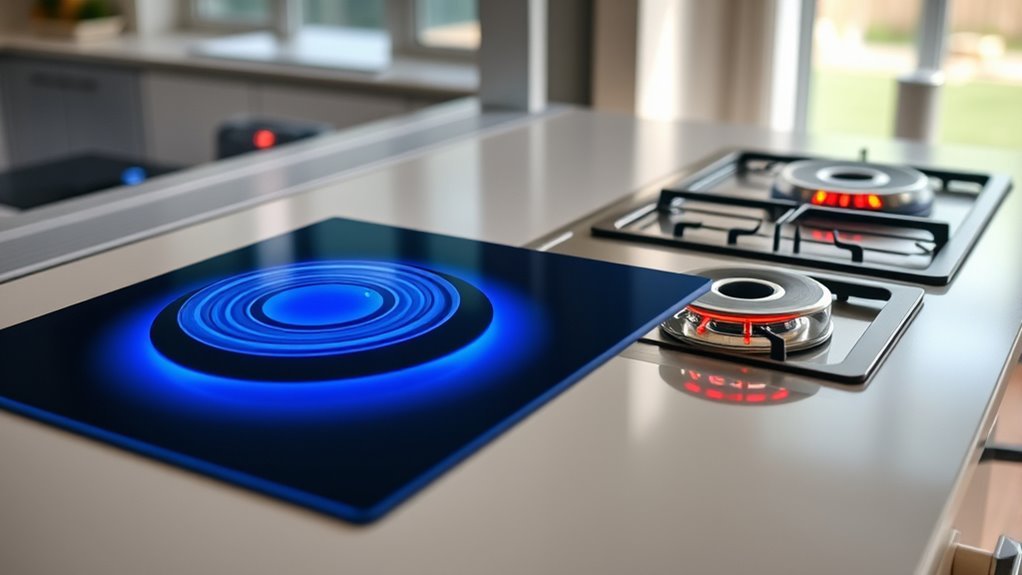
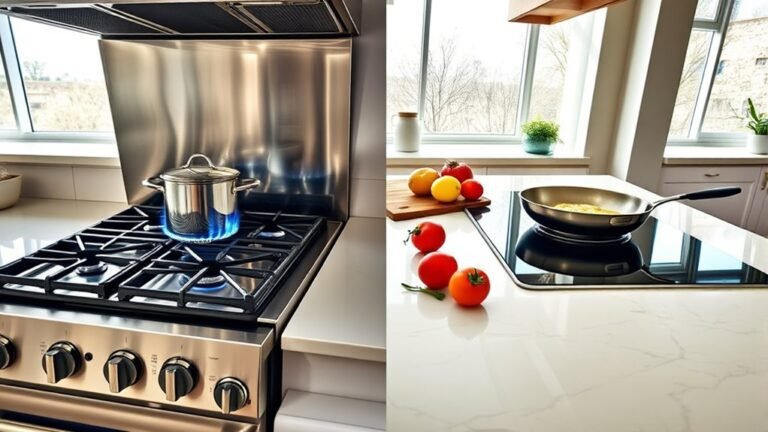
Although both induction and electric stoves use electricity, they work in very different ways to heat your cookware. With induction technology, an electromagnetic field directly heats your pot or pan. When you place compatible cookware on the induction burner, the magnetic field induces electric currents within the metal, causing it to heat up quickly and efficiently. This means the stove’s surface stays cooler since heat is generated in the cookware itself.
Electric stoves, on the other hand, rely on electric components like heating coils or smooth-top radiant elements. These components heat up when electricity passes through them, then transfer heat to your cookware via conduction. The stove’s surface gets hot, and heat moves from the coil or element to the pot or pan.
Understanding this difference helps you see why induction technology offers precise control and energy efficiency, while electric stoves use a more traditional heating method involving direct contact between heated elements and cookware.
Which Stove Cooks Faster?
Since induction stoves heat cookware directly through electromagnetic energy, they usually bring food to temperature faster than electric stoves. Electric stoves rely on heating elements to transfer heat, which takes longer.
You’ll notice that induction’s cooking speed is notably quicker because it doesn’t waste energy warming the cooktop surface first. The direct transfer means your pots and pans heat up almost instantly, cutting down your overall cooking time.
Electric stoves, on the other hand, heat the coil or glass surface, which then warms the cookware. This process takes longer and results in slower cooking speed. But they often have better heat retention once hot, which is useful for simmering or keeping food warm without constant energy input.
Electric stoves heat cookware indirectly, cooking slower but retaining heat well for simmering and warming.
In short, if speed is your priority, induction stoves give you that edge. But if you value consistent heat retention after turning off the burner, electric stoves perform reasonably well.
Temperature Control: Induction vs Electric
When you cook with an induction stove, you get precise temperature control because it adjusts heat instantly by changing the electromagnetic energy. This quick response helps you master precision cooking, making sure your dishes turn out just right. On the flip side, electric stoves rely on heating elements that take longer to change temperature, which can slow down your cooking adjustments.
Here’s how temperature control compares:
- Instant Adjustments: Induction stoves change heat immediately, while electric stoves lag because of slower heat retention.
- Consistent Heat: Induction keeps steady temperatures, perfect for delicate sauces or simmering.
- Better Feedback: Induction lets you feel changes quickly, helping you avoid overcooking or burning food.
If you want control and accuracy in your kitchen, induction stoves clearly offer a better experience than traditional electric options.
Energy Efficiency and Environmental Impact
If you want to save on energy bills and reduce your carbon footprint, choosing the right stove matters. Induction stoves are more energy-efficient because they heat pots directly using electromagnetic energy, minimizing wasted heat. This means you use less electricity for the same cooking tasks compared to traditional electric stoves that heat coils or plates first, losing energy along the way.
When you use an induction stove, you’re also supporting a greener lifestyle, especially if your electricity comes from renewable energy sources like solar or wind. By using energy more efficiently, induction cooking helps lower overall demand on the grid, which can reduce reliance on fossil fuels and shrink your carbon footprint.
Electric stoves, while convenient, generally consume more energy and produce more heat loss. So, if you’re focused on energy efficiency and environmental impact, induction stoves offer a smarter, cleaner cooking option that aligns well with sustainable living goals.
Safety Features Compared
When it comes to safety, you’ll want to think about how each stove manages heat and the chances of getting burned. It’s also important to consider how well they protect against electrical hazards. Let’s take a look at these key safety features to figure out which one might be the best fit for you.
Heat Generation Safety
How safe is your stove while it’s heating up? When comparing induction and electric stoves, it’s important to understand their heat generation safety.
Both use different methods to dissipate heat, which affects safety and efficiency. Here’s what you should know:
Induction stoves use magnetic fields to heat pots directly. This means the cooktop stays relatively cool, which reduces the risk of accidental burns.
Electric stoves heat coils or glass surfaces that can stay hot even after turning off. So, handling them carefully is a must.
Both types meet strict safety standards, but induction stoves often have quicker automatic shutoffs if no pan is detected.
Knowing these differences can help you choose a stove that fits your safety needs while cooking efficiently.
Burn Risk Assessment
Although both induction and electric stoves have safety features, your risk of burns varies quite a bit between the two. Induction stoves focus on burn prevention by heating only the cookware, leaving the cooktop surface cooler to the touch.
This design reduces risks like accidental contact burns and makes safety protocols simpler to follow. On the other hand, electric stoves heat the entire coil or glass surface, which increases burn risks especially if you’re not fully aware of the residual heat after use.
To minimize hazards, user awareness is key. Always check if the surface is hot and use protective tools when needed. Overall, induction stoves offer a more user-friendly approach to burn prevention, but practicing good safety habits is essential no matter what type of stove you have.
Electrical Hazard Protection
Since electrical hazards pose serious risks in the kitchen, it’s important to understand the safety features of induction and electric stoves. Both types meet strict appliance ratings, but some differences can impact your safety.
Induction stoves usually have advanced overload and short-circuit protection, which helps reduce fire risks. Electric stoves, on the other hand, rely on basic circuit breakers that might not respond as quickly.
Both stoves need proper grounding to prevent shocks. However, induction units often have improved grounding systems for extra safety.
Induction stoves use better insulation materials around the coils, which helps minimize current leakage. Electric stoves have standard insulation, which could be riskier if damaged.
Knowing these differences can help you pick a stove that offers better protection against electrical hazards.
Cleaning and Maintenance Differences
When you clean an induction stove, you’ll notice it requires less effort compared to a traditional electric stove. Since induction cooktops have a smooth, flat surface that doesn’t get as hot, food spills don’t burn onto the surface, making stain removal much easier. You can simply wipe down the stove after cooking, saving you time.
Electric stoves have coil burners or exposed heating elements that can trap food and grease, causing stains that are tougher to remove. You’ll likely need to clean spills promptly and more often to prevent buildup. Plus, electric stoves often need more intensive cleaning around knobs and drip pans, which increases your maintenance efforts.
Cookware Compatibility for Induction and Electric
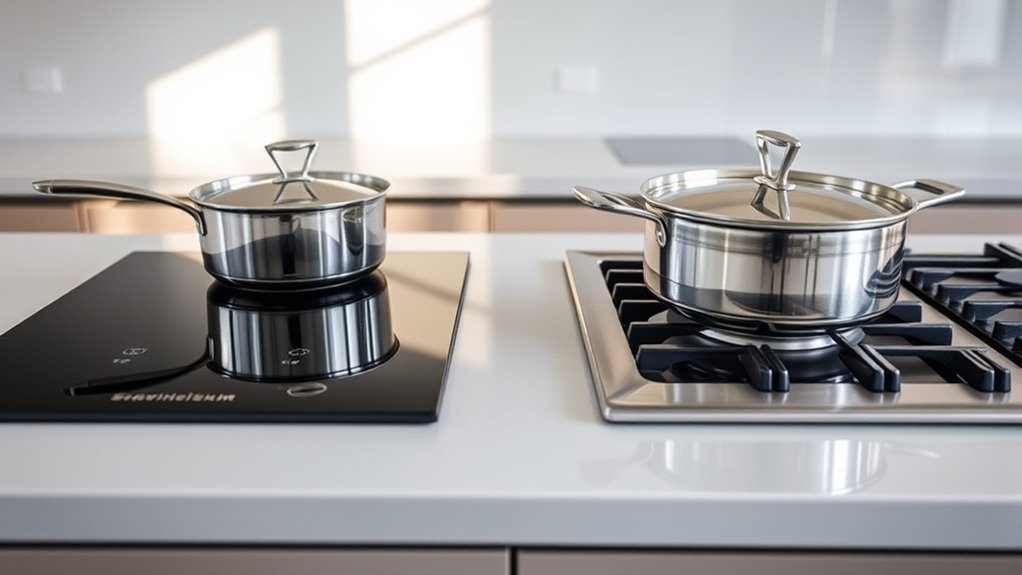
When you’re cooking on an induction stove, you’ll want to use cookware made of magnetic materials, like cast iron or stainless steel. These materials work best because induction heats through magnetic fields.
Electric stoves are a bit more forgiving—they can handle pretty much any type of cookware, so you have more options to choose from. If you’re unsure whether your pots and pans are compatible with induction, just try sticking a magnet to the bottom. If it sticks, you’re all set!
Material Requirements for Induction
Although electric stoves work with almost any cookware, induction stoves need pots and pans made from magnetic materials like cast iron or certain stainless steels. The materials must have strong magnetic properties to generate heat efficiently.
Not all cookware types meet this requirement, so it’s a good idea to check for compatibility before you buy.
Here are three key points to keep in mind:
- Magnetic properties: Only cookware with a magnetic base works on induction stoves. You can test this with a magnet.
- Material: Cast iron and some stainless steels are perfect because they’re magnetic and conduct heat well.
- Base flatness: A smooth, flat base ensures even contact and better heat transfer on induction surfaces.
Understanding these material requirements helps you get the best performance from your induction stove.
Versatility of Electric Cookware
Cookware compatibility is a big factor when choosing between induction and electric stoves. With electric cookware types, you get versatile applications that work on almost any heating element.
Unlike induction, which needs magnetic cookware, electric stoves let you use a wide range of pots and pans—cast iron, aluminum, copper, stainless steel, and more. This means you don’t need to replace your current cookware if you switch to electric.
| Cookware Type | Compatibility with Electric Stove |
|---|---|
| Cast Iron | Works perfectly |
| Aluminum | Fully compatible |
| Copper | Works well |
| Stainless Steel | Versatile use |
| Non-Magnetic Pots | Still usable |
This versatility makes electric stoves a convenient choice for different cooking styles and cookware collections.
Testing Cookware Compatibility
How can you quickly find out if your pots and pans will work on induction or electric stoves? Testing cookware compatibility is simple and key because different materials react differently on these stoves. Here’s how to check effectively:
- Magnet Test: Stick a magnet to the bottom of your cookware. If it stays firmly, it’s compatible with induction since induction uses magnetic materials.
- Check Manufacturer Labels: Look for symbols or notes about induction compatibility on your cookware packaging or bottom.
- Try It on the Stove: Most cookware, including aluminum and copper, works well on electric stoves. For induction, only ferrous metals will heat up.
Cost Comparison: Initial and Long-Term
When choosing between an induction stove and a traditional electric one, you’ll want to consider both the initial costs and the expenses over time. Induction stoves usually have higher installation costs because you might need compatible cookware and electrical upgrades.
But those upfront expenses can be balanced out by long-term savings since induction stoves heat more efficiently, cutting down energy use and utility bills. Traditional electric stoves are cheaper to install and work with any cookware, but they tend to waste more energy, which means higher operating costs over time.
If you cook often, the energy efficiency of an induction stove can really add up in savings. Even though the initial cost seems high, the faster cooking times and lower electricity bills often make it worth it in the long run.
In the end, comparing installation costs and potential savings will help you make a smart, financially sound choice.
Choosing the Best Stove for Your Kitchen
What factors matter most to you when picking a stove? Choosing the best stove for your kitchen really depends on your space and how you cook daily.
First, think about your kitchen layout. Induction stoves have sleek, flat surfaces that save space, while electric models might need a bit more clearance.
Next, consider your cooking style. If you often simmer or want precise heat control, induction offers instant adjustments. For slower, steady cooking, electric stoves work well.
Finally, think about maintenance and safety. Induction stoves cool quickly and are safer around kids, while electric stoves are easier to clean but stay hot longer.
What to Consider Before You Buy
Now that you’ve weighed your kitchen layout, cooking style, and safety needs, it’s time to focus on specific details before making your purchase. You’ll want to balance your budget with features that match how you cook.
Induction stoves usually cost more upfront but save energy and cook faster. Electric stoves tend to have a lower initial price but might boost your utility bills over time.
Think about these factors carefully:
| Factor | What to Reflect On |
|---|---|
| Budget | Is the initial cost worth the long-term savings? |
| Cooking Style | Do you need precise heat or steady heating? |
| Cookware | Will your pots and pans work with induction or not? |
| Installation | Do you have the right electrical setup and space? |
| Maintenance | How easy is it to clean and repair? |
Frequently Asked Questions
Can Induction Stoves Interfere With Medical Devices?
Yes, induction stoves can sometimes interfere with medical devices like pacemakers.
To stay safe, keep a safe distance while cooking and follow the precautions your device manufacturer recommends.
The magnetic fields produced by induction stoves can occasionally affect sensitive medical devices.
It’s important to talk to your doctor to understand the specific risks and take the right steps to protect your health when using an induction stove.
Are Induction Stove Noises Harmful or Normal?
Imagine you’re heating a pan, and a gentle humming fills the kitchen—that’s perfectly normal.
Induction stove sounds like buzzing or clicking happen because of the electromagnetic field interacting with your cookware.
These noises aren’t harmful and don’t affect cooking safety as long as your stove and pots are in good condition.
Do Electric Stoves Emit Harmful Radiation?
Electric stoves don’t emit harmful radiation levels that pose safety concerns for you. The type of radiation they produce is extremely low-frequency electromagnetic fields, which are much weaker than other everyday sources like your phone or Wi-Fi.
Studies haven’t found any direct health risks linked to using electric stoves. So, you can cook without worrying about radiation affecting your safety or well-being.
Can Induction Stoves Be Used During Power Outages?
You might think induction stoves work without electricity, but they rely entirely on a power source. During power outages, you won’t be able to use them, unlike gas stoves.
However, when the power’s on, you’ll appreciate their superior cooking efficiency, heating pots quickly and evenly. So, if you face frequent outages, consider a backup cooking method.
But for everyday use, induction stoves deliver excellent performance.
What Are the Warranty Differences Between Induction and Electric Stoves?
When you check the warranty comparison, induction stoves often come with longer, more extensive coverage because of their advanced technology.
You’ll find electric stoves usually have standard warranties, typically around one year.
Keep in mind that longevity factors in too—induction cooktops tend to last longer if you take good care of them, which makes the extended warranty worth considering.
Conclusion
Choosing between induction and electric stoves is like picking the right tool for your kitchen’s rhythm. Imagine cooking a stir-fry—induction heats instantly, giving you precise control, while electric takes its time, like a slow dance.
If speed, efficiency, and safety matter most, induction’s your partner. But if budget and cookware flexibility are more important, electric still holds its ground.
Ultimately, it’s about matching your cooking style and needs to the stove that fits best. For many, induction stove versus electric is the key to a better kitchen experience.