What Temperature Should a Freezer Be at? The Complete Answer
Many people struggle with keeping their freezer at the right temperature. It’s easy to wonder if you’re doing it correctly or risking food spoilage without realizing it. You’re not alone in this, and maintaining the perfect freezer setting is more important than you might think.
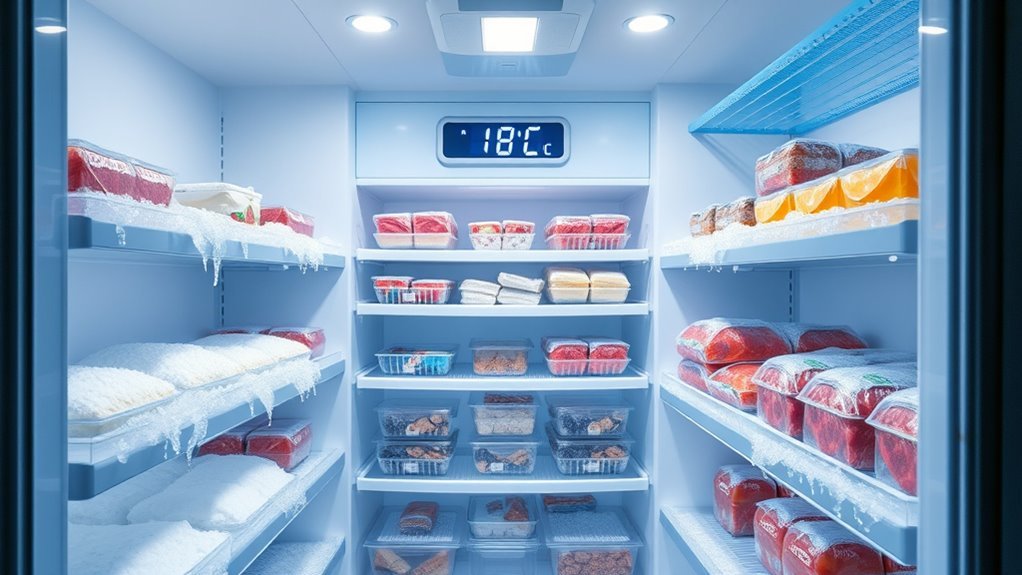
You should keep your freezer at 0°F (-18°C) to stop bacterial growth, preserve food quality, and save energy. Setting it colder won’t extend food life and wastes power, while warmer temperatures increase spoilage and risk.
Use a reliable thermometer placed in the middle to check and adjust the temperature properly. Maintaining this balance also protects your freezer’s components.
If you want to guarantee your freezer runs efficiently and your food stays fresh longer, there’s more to take into account.
Key Takeaways
- The ideal freezer temperature is 0°F (-18°C) to keep food safe and fresh.
- Use a reliable thermometer placed in the center of the freezer to get an accurate reading.
- Temperatures above 0°F can lead to spoilage and bacteria growth, while colder temps waste energy and can hurt food texture.
- Keep it at -18°C (0°F) for energy efficiency and to prevent frost buildup by cleaning regularly and organizing properly.
- If your freezer isn’t cooling properly or makes strange noises or runs constantly, call a professional to check it out.
What Is the Ideal Freezer Temperature?
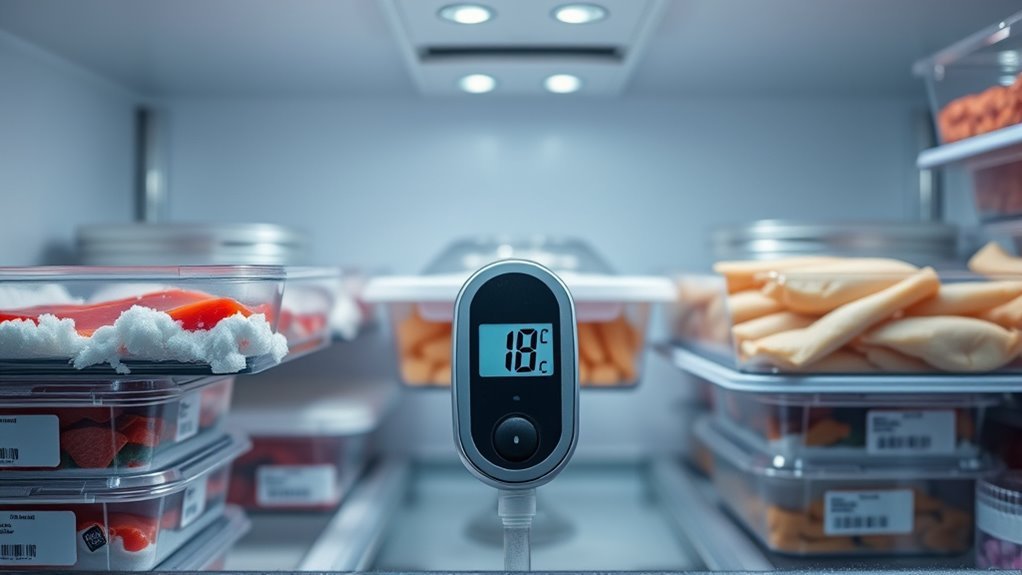
How cold should your freezer be to keep food fresh and safe? The ideal temperature is 0°F (-18°C). This setting stops bacteria from growing and keeps your food quality high.
Some people think setting the freezer colder will make everything last longer, but that’s a myth. Going below 0°F wastes energy without really adding any benefit.
If your freezer temperature rises above 0°F, food safety can become an issue. Frequent door openings or a faulty seal can cause temperature swings that lead to partial thawing. This affects the texture and taste of your food.
To keep your food safe and your freezer working efficiently, aim to stay steady at 0°F. Don’t fall for the myth that colder is better—it’s not worth the extra energy costs.
Keeping the right temperature helps you store food safely without unnecessary hassle or waste.
How to Check Your Freezer Temperature Accurately
Wondering if your freezer is really at the right temperature? Accurate measuring is key to keeping your food properly frozen. To do this, you’ll need a reliable thermometer.
Here are some options and tips to get started:
- Digital freezer thermometers: These give quick, precise readings and often come with alarms.
- Dial thermometers: They’re affordable and easy to place inside, but may be less accurate.
- Probe thermometers: Great for spot-checking frozen items directly.
Place the thermometer in the middle of the freezer, away from walls or door vents. Leave it there for several hours or overnight for an accurate reading. Try not to open the door too often during this time to prevent temperature changes.
Regularly checking your freezer’s temperature with the right thermometer helps you keep it at the ideal freezing conditions effortlessly.
Why Freezer Temperature Matters for Food Quality and Safety
Once you’ve confirmed your freezer’s temperature is accurate, it’s important to understand why maintaining the right cold level matters.
Proper freezer temperature is key for effective food preservation, keeping your items fresh and nutritious for longer. When your freezer stays at the recommended temperature, it slows bacterial growth, which directly impacts food safety.
Meeting safety standards helps reduce the risk of foodborne illnesses and spoilage. Keeping your freezer at the right temperature is essential for both quality and safety.
What Happens if Your Freezer Temperature Is Too Warm?
If your freezer temperature rises above the recommended level, your food won’t stay properly frozen. This can lead to faster spoilage and potential health risks. When temperatures fluctuate, ice crystals start melting and refreezing, which damages the texture and taste of your food.
This creates an environment where bacteria can multiply, putting your health at risk.
Here’s what you can expect if your freezer’s too warm:
- Increased food spoilage due to thawing and refreezing cycles
- Loss of food quality, affecting flavor and texture
- Higher chance of harmful bacteria growth, raising food safety concerns
To avoid these issues, keep a consistent freezer temperature at or below 0°F (-18°C). Regularly check your freezer’s thermostat and seal to prevent warm air from sneaking in. Maintaining the right temperature protects your food’s freshness and your family’s health.
What Happens if Your Freezer Is Too Cold?
If your freezer is running too cold, you might start to notice that your food doesn’t look or taste quite right anymore. The textures can change, and some items might even get freezer burn more quickly than they should. It’s like the cold is just a little too aggressive on your groceries.
You might also see your energy bills creeping up because the freezer has to work extra hard to keep everything at those lower temperatures. That constant effort can really add up over time. And all that extra work isn’t great for your freezer either — it can put a lot of strain on its parts, making it wear out faster than it normally would.
Food Quality Degradation
Although freezing helps keep food fresh longer, setting your freezer too cold can actually hurt its quality. When temperatures get too low, it messes up the balance that keeps food textures and nutrients intact.
You might notice ice crystals forming inside your food, which can damage cell structures and make the texture unpleasant. Plus, extreme cold can cause nutrients, especially vitamins, to break down faster.
And don’t forget about freezer burn—dry spots that make food tough and less tasty. So, it’s all about finding that sweet spot to keep your food at its best.
Increased Energy Consumption
When your freezer runs colder than necessary, it forces the compressor to work harder and longer, which drives up your energy bills. Overcooling wastes electricity and reduces efficiency.
You can save energy by keeping the temperature at the recommended level and using simple techniques like proper insulation and minimizing door openings. These small steps make a big difference.
If your freezer is too cold, it causes the compressor to run overtime, increasing your energy costs. Setting the correct temperature, around 0°F or -18°C, helps prevent this.
Poor insulation can lead to frequent compressor cycles. Improving insulation keeps your freezer running smoothly and more efficiently.
Longer compressor runtime can cause increased wear and tear. Regular maintenance ensures everything runs properly and extends the lifespan of your freezer.
Frost buildup is often caused by excess moisture or low temperatures. Defrost your freezer regularly to keep it functioning well.
Ignoring energy-saving tips wastes power. Applying these simple techniques will help you cut costs and keep your freezer working efficiently.
Freezer Component Stress
Running your freezer colder than recommended doesn’t just hike up energy bills. It also puts extra strain on its components. When your freezer works harder than necessary, it can cause premature wear and tear that impacts its overall lifespan. Here’s what happens when it’s too cold:
The compressor has to work harder, which can cause it to overheat and possibly fail. Frost buildup also increases, making regular maintenance more challenging. Plus, seals and gaskets can stiffen or crack from extreme cold, reducing efficiency.
Best Freezer Temperatures for Meat, Veggies & Ice Cream
Choosing the right freezer temperature is key to keeping your meat, vegetables, and ice cream fresh and safe.
For meat, keep your freezer at or below 0°F (-18°C) to stop bacteria from growing and to keep it tasting great. Vegetables do best at slightly colder temps, which helps lock in nutrients and prevents freezer burn.
Ice cream needs very cold, stable temperatures to stay smooth and creamy. Keeping it at -10°F to -20°F (-23°C to -29°C) helps avoid ice crystals and keeps that perfect texture.
Here’s a quick guide to the best freezer temperatures for different foods:
| Food Type | Ideal Freezer Temperature |
|---|---|
| Meat | 0°F (-18°C) |
| Vegetables | 0°F to -10°F (-18°C to -23°C) |
| Ice Cream | -10°F to -20°F (-23°C to -29°C) |
| Food Safety | 0°F (-18°C) or lower |
| General Storage | 0°F (-18°C) |
How to Set Your Freezer Temperature
Although setting your freezer temperature might seem straightforward, dialing in the right setting helps keep your food fresh and safe longer. Check your freezer’s guide to find the ideal temperature, usually around 0°F (-18°C). Most freezers have a dial or digital control panel—just turn it to the recommended setting.
Next, use a thermometer to verify the actual temperature inside your freezer. This way, you avoid guesswork and can be confident your freezer is at the right temperature.
Follow these simple steps:
- Find the temperature control and adjust it based on your freezer’s guide.
- Place a thermometer inside the freezer, preferably in the center, for accurate readings.
- After 24 hours, check the temperature and make adjustments if needed.
How Freezer Temperature Affects Energy Use and Costs
You probably want to know how changing your freezer’s temperature can affect your energy bills and overall efficiency. If you set it too cold, it’s just wasting energy because the freezer is working harder than it needs to. On the other hand, if it’s too warm, your food might not stay safe, which is a risk you definitely want to avoid.
Energy Efficiency Tips
When you set your freezer temperature too low, it makes the appliance work harder, which increases energy use and raises your electricity bill.
To keep your freezer efficient, follow these simple energy-saving tips that also help with proper maintenance:
Keep the temperature at the ideal -18°C (0°F) to avoid wasting energy.
Regularly defrost and clean the freezer to prevent frost buildup, which can reduce efficiency.
Make sure the door seals are airtight so temperatures stay consistent and energy isn’t lost.
Cost Impact Analysis
Setting your freezer temperature correctly not only preserves your food but also directly impacts your energy use and electricity bills.
When you do a cost benefit analysis, you’ll see that setting the freezer too cold wastes energy without improving food safety. On the other hand, setting it too warm risks spoilage.
For best efficiency, aim for around 0°F (-18°C). At this temperature, your freezer runs efficiently, balancing costs and food preservation.
Lowering the temperature further uses more electricity without much benefit, which can unnecessarily increase your bills.
Keeping the right setting helps you save money, prevents costly repairs from overworking the compressor, and keeps your food safe.
Tips to Keep Your Freezer Temperature Consistent All Year
Although freezer models vary, keeping your freezer temperature steady throughout the year depends on a few simple habits you can adopt. Start by paying attention to where you place your freezer. Avoid spots near heat sources like ovens or direct sunlight, as these can cause temperature fluctuations.
Next, regularly check the door seals. Damaged or loose seals let cold air escape, which makes the freezer work harder and can lead to inconsistent temperatures. Finally, avoid overloading your freezer. Too many items can block air circulation and cause uneven cooling.
Here are three key tips:
- Place your freezer in a cool, shaded area away from heat-producing appliances.
- Inspect and clean door seals monthly to ensure a tight, airtight closure.
- Organize your freezer to allow proper airflow between items, preventing hotspots.
When Should You Call a Pro for Freezer Temperature Issues?
Keeping your freezer in an ideal location and maintaining its seals can prevent many temperature problems, but sometimes issues still happen that need an expert’s help. If your freezer isn’t cooling properly even after basic maintenance, it’s time to call a pro.
Problems like a faulty thermostat, compressor issues, or refrigerant leaks require professional diagnosis and repair. Also, if your freezer runs constantly or makes strange noises, don’s wait—these signs often point to mechanical failures beyond simple fixes.
Trying DIY repairs on complex parts can make things worse or even void your warranty. A technician can accurately find the problem and ensure your freezer keeps the right temperature. This protects your food and saves you money over time.
When your freezer’s temperature keeps fluctuating without a clear reason or if you notice excessive frost buildup, trust a professional to fix these ongoing issues quickly and effectively.
Frequently Asked Questions
Can Freezer Temperature Affect the Texture of Frozen Fruits?
Yes, freezer temperature can affect the texture of frozen fruits. If your freezer isn’t cold enough, larger ice crystals form, which can cause texture changes that make fruits mushy or grainy when thawed.
Keeping your freezer consistently at the right temperature helps maintain the fruit’s cell structure and preserves its firmness. So, if you want your frozen fruits to stay closer to their fresh texture, it’s best to keep your freezer cold and stable.
How Does Opening the Freezer Door Frequently Impact Temperature?
Opening your freezer door frequently disrupts temperature stability inside. Each time you open it, warm air rushes in, making the freezer work harder to cool back down.
Even if your freezer has good door insulation, constant openings reduce its efficiency and can cause temperature fluctuations. To keep your food frozen properly and save energy, try to minimize how often and how long you open the door.
This helps maintain the best temperature stability and keeps everything frozen as it should be.
Are There Differences in Temperature Settings for Chest vs. Upright Freezers?
Oh, sure, chest and upright freezers are basically twins, right? Not quite. You’ll want slightly different temperature settings to get the best out of your freezer.
Chest freezers usually do better at a steady -5°F (-20°C) because cold air stays put when you open and close the lid. Upright freezers might need to be a bit colder, around 0°F (-18°C), since cold air escapes more easily when you open the door.
Adjusting the temperature settings like this keeps your food perfectly frozen and helps save on energy bills.
Can Freezer Temperature Influence the Lifespan of Frozen Leftovers?
Yes, freezer temperature directly influences the lifespan of your frozen leftovers. Keeping your freezer at the right freezing point, around 0°F (-18°C), helps keep your food fresh longer.
When your freezer is too warm, ice crystals get bigger, which can damage the texture and flavor of your leftovers. On the other hand, making it too cold wastes energy without offering much benefit.
Is It Safe to Refreeze Thawed Food if Freezer Temperature Fluctuates?
You can refreeze thawed food only if it still feels cold and hasn’t been left out too long.
Refreezing safety depends on how long the food was thawed and the freezer temperature fluctuations.
If your freezer temperature rises above 40°F (4°C) for an extended time, bacteria can grow, making refreezing unsafe.
Always check for signs of spoilage, and when in doubt, it’s better to cook or discard the thawed food.
Conclusion
You want your freezer cold enough to keep food safe, but not so cold it wastes energy. Checking the temperature regularly helps you stay on top of this. Adjust the settings when needed, especially if you notice changes in performance.
Keeping the door closed as much as possible helps maintain a consistent temperature. Know the risks of temperatures that are too warm or too cold, like spoilage or freezer burn. If problems keep happening, it’s a good idea to call a professional.
By following these steps, you protect your food, save money, and ensure your freezer runs smoothly all year. The right freezer temperature is key to keeping everything fresh and safe.