How to Clean Kitchen Drain: A Step-by-Step Guide
Dealing with a clogged or smelly kitchen drain is a common frustration many of us face. You’re not alone—these issues can disrupt your daily routine and make your kitchen less enjoyable.
Fortunately, cleaning your kitchen drain doesn’t have to be complicated or expensive.
To clean your kitchen drain, start by checking for slow drainage or odors. Use boiling water to dissolve grease, or make a natural cleaner by mixing baking soda and vinegar, letting it fizz for 15–20 minutes before flushing with hot water.
A plunger or drain snake can help with stubborn clogs.
Prevent future blockages by avoiding grease down the sink and using strainers. If problems persist, professional help may be needed.
Keep exploring for detailed steps and tips.
Key Takeaways
- Keep an eye out for signs like slow drainage, bad odors, or water pooling to catch drain problems early.
- Grab essential tools like a plunger, drain snake, rubber gloves, and eco-friendly cleaners to get the job done effectively.
- Slowly pour boiling water down the drain to break up grease, or try a natural cleaner with baking soda and vinegar to clear buildup.
- To prevent future clogs, avoid pouring grease into the drain, use strainers, and clean them regularly.
- If you’re dealing with stubborn blockages, bad smells, or water backing up, it’s best to call a plumber to avoid costly pipe damage.
How to Identify Signs of a Clogged Kitchen Drain
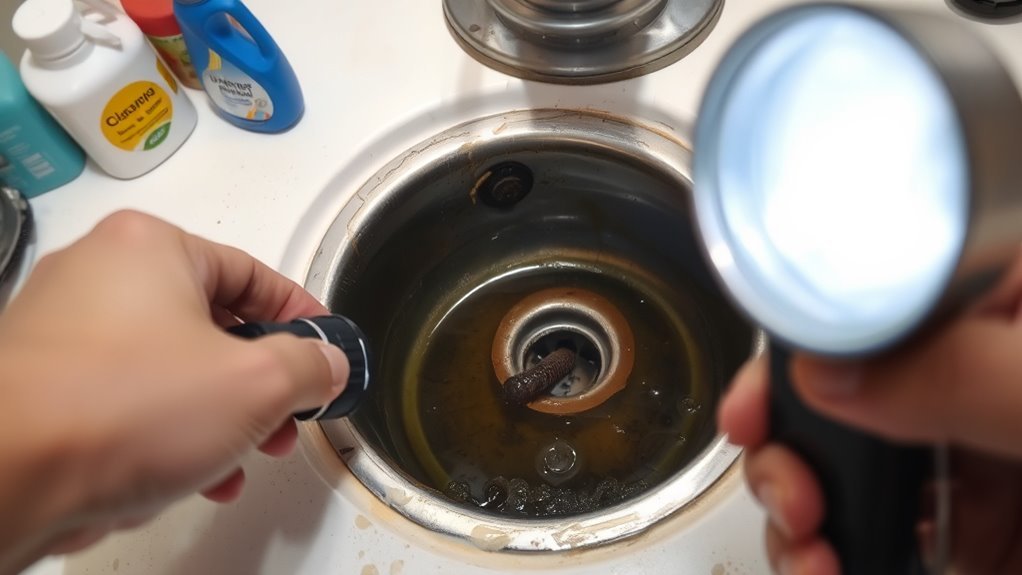
How can you tell if your kitchen drain is clogged before it becomes a major problem? Watch for slow drainage signs like water pooling around the sink or taking longer than usual to empty. When you notice these delays, it often means grease, food particles, or debris are starting to block your pipes.
Another clear warning is drain odor detection. If unpleasant smells linger near your sink, it indicates trapped waste is decomposing inside the drain. Don’t ignore these subtle hints, as they usually come before full blockages that cause backups or leaks.
Unpleasant sink odors signal trapped waste breaking down, often warning of impending blockages and leaks.
Regularly checking for these signs allows you to act early, saving you time and costly repairs. By paying attention to slow drainage signs and using drain odor detection, you can keep your kitchen running smoothly and avoid major plumbing headaches down the line.
Stay proactive, and you’ll catch clogs before they become serious problems.
Common Causes of Kitchen Drain Clogs
Noticing slow drainage or foul odors means something’s blocking your kitchen drain, but understanding what causes these clogs can help you prevent them. Common culprits include food particles that accumulate over time, soap buildup that creates sticky residue, and hair that traps debris.
You might also find foreign objects accidentally dropped down the drain or mineral deposits from hard water narrowing the pipes. Improper disposal, like pouring grease or coffee grounds down the sink, often makes the problem worse.
| Cause | Description | Prevention Tip |
|---|---|---|
| Food Particles | Bits of food stuck in the drain | Use a strainer to catch debris |
| Soap Buildup | Residue from soaps and detergents | Rinse drain with hot water |
| Hair Accumulation | Hair strands tangled in pipes | Clean drain regularly |
| Foreign Objects | Small items dropped accidentally | Avoid flushing non-degradable |
Knowing these causes helps you keep your kitchen drain flowing smoothly.
Essential Tools for Cleaning Kitchen Drains
Tackling a clogged kitchen drain requires the right tools to make the job easier and more effective. First, grab a sturdy sink plunger; it creates the necessary suction to dislodge blockages.
A drain snake or auger is another must-have. It reaches deep to break up stubborn clogs. Don’t forget a pair of rubber gloves to protect your hands during the process.
For regular drain maintenance, keep a small bucket handy to catch water when you remove the drain trap. You might also consider eco-friendly solutions like a natural enzyme-based drain cleaner, which helps maintain clear pipes without harsh chemicals.
Furthermore, a wire brush or old toothbrush can help scrub away buildup around the drain opening. By assembling these essential tools, you’ll be well-prepared to tackle any kitchen drain clog while promoting safer, greener cleaning habits.
How to Use Boiling Water to Clear Kitchen Drain Buildup
Pouring boiling water down your kitchen drain can quickly dissolve grease and soap buildup that often causes slow drainage.
To do this safely, boil about a kettle full of water, then slowly pour it directly into the drain in stages, allowing it to work through the pipes between pours.
This simple step is one of the most effective drain maintenance tips you can use regularly to keep your kitchen drain clear and flowing smoothly.
Incorporating this method into your kitchen hygiene practices helps prevent clogs before they form, reducing the need for harsh chemicals.
Remember to avoid pouring boiling water if you have PVC pipes, as it could cause damage. Instead, use warm water in those cases.
How to Make a Natural Drain Cleaner With Baking Soda and Vinegar
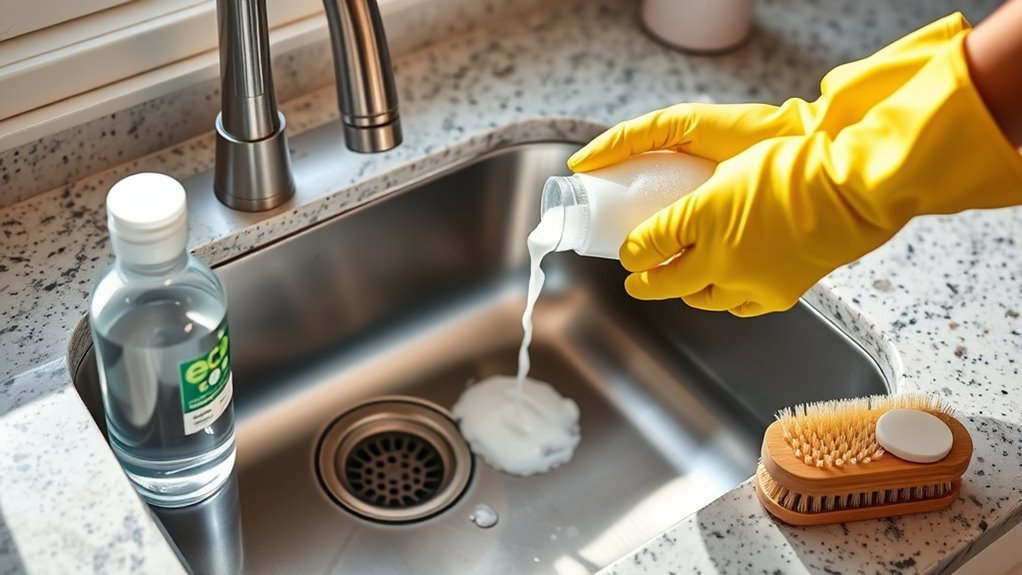
Although commercial drain cleaners can be harsh and expensive, you can easily make an effective natural cleaner using just baking soda and vinegar. These natural ingredients work together to break down grime and deodorize your kitchen drain without harmful chemicals.
Start by pouring half a cup of baking soda directly into the drain. Then, slowly add one cup of white vinegar. You’ll notice fizzing—that’s the reaction loosening buildup inside the pipes.
Let this mixture sit for 15 to 20 minutes to maximize its cleaning power. Finally, flush the drain with boiling water to wash away loosened debris.
Using this natural drain cleaner regularly is a simple, eco-friendly way to support your drain maintenance routine. It prevents clogs and keeps your drain smelling fresh.
Plus, it’s safe for your plumbing and the environment, making it a smart choice for a clean kitchen drain.
Step-By-Step Guide to Manually Removing Food Debris From Your Kitchen Drain
Before you call a plumber, try manually removing food debris from your kitchen drain to clear minor clogs quickly. Start by putting on rubber gloves to protect your hands.
Remove the drain cover carefully—most covers unscrew or lift off easily. Use a flashlight to look inside and spot any visible food debris causing the blockage.
Carefully remove the drain cover and use a flashlight to identify any visible food debris causing the clog.
Grab a pair of needle-nose pliers or a drain snake to pull out bits like vegetable peels or grease buildup. Dispose of the debris in the trash, not back down the drain.
Next, flush the drain with hot water to clear remaining particles. This simple step helps maintain smooth water flow and prevents odors.
Regular manual removal of food debris is an essential part of drain maintenance. It reduces the chance of more serious clogs.
How to Use a Plunger Safely on Your Kitchen Sink
Grasping the plunger correctly can quickly clear clogs in your kitchen sink without causing damage. To ensure safety and effective maintenance, follow these simple steps.
First, remove any standing water if it’s excessive, but leave enough to cover the plunger’s cup. Create a tight seal over the drain to maximize suction. Then, plunge with steady, controlled motions—avoid applying too much force to protect your pipes.
Keep these tips in mind for plunger safety: Use the right plunger type; a cup plunger works best for sinks. Block the overflow hole or a second drain opening to maintain pressure. Always clean the plunger thoroughly after use to prevent bacteria buildup.
How and When to Use a Drain Snake for Stubborn Kitchen Sink Clogs
If your plunger isn’t doing the trick, it might be time to grab a drain snake for those really stubborn clogs. Before you start, try to figure out if the blockage is deep down in the pipes so you don’t accidentally cause any damage. Once you’re ready, carefully feed the snake into the drain and give it a good twist as you push. Keep twisting and pushing until you break up or pull out whatever’s blocking the pipe.
Identifying Stubborn Clogs
If your kitchen sink drains slowly despite regular cleaning, you might be dealing with a stubborn clog that needs more than just a plunger or chemical cleaners.
Identifying these tough blockages is key to keeping your drain clear and preventing bigger problems. Look for signs like water pooling or draining very slowly after use.
Gurgling sounds from the drain can also indicate trapped air caused by a clog. Foul odors that linger despite cleaning are another warning sign of buildup deep within your pipes.
This buildup is often caused by grease, food scraps, or soap residue. Recognizing when a clog is stubborn helps you decide if it’s time to use a drain snake.
A drain snake can tackle blockages that chemical cleaners can’t handle. Paying attention to these signs helps you maintain an efficient kitchen drain and avoid costly plumbing issues later on.
Proper Drain Snake Usage
Tackle stubborn kitchen sink clogs effectively by using a drain snake at the right time and in the right way. You should reach for a drain snake when plunging doesn’t clear the blockage.
Insert the snake slowly into the drain, rotating the handle clockwise, and push forward to break up or retrieve debris. Using effective snake techniques helps prevent damage and guarantees clog removal.
Remember these drain maintenance tips: avoid forcing the snake, clean it after use, and use it periodically to prevent buildup.
How to Prevent Future Kitchen Drain Clogs
To keep your kitchen drain running smoothly, try not to pour grease down the sink. It tends to solidify and can cause nasty blockages over time. Instead, let the grease cool and throw it away in the trash.
Also, it’s a good idea to use drain strainers. They catch food particles and prevent them from slipping into the pipes, which can help avoid clogs before they start.
And don’t forget to flush your drain with hot water every now and then. Doing this regularly can help wash away any buildup and keep things flowing freely.
Avoid Grease Disposal
One of the easiest ways to prevent kitchen drain clogs is by avoiding pouring grease down the sink. Grease cools and solidifies, which can cause buildup and block your pipes.
Instead, try using grease traps to catch fats and oils before they reach your plumbing. You can also collect cooking grease in a container and toss it with your regular trash.
If your system allows, consider disposal options like composting small amounts of grease. This helps keep your drains clear and your plumbing happy.
Use Drain Strainers
Many kitchen drain clogs happen when food particles and debris slip down the drain unnoticed. Using drain strainers is a simple yet effective way to catch these particles before they enter your pipes.
You can easily place a strainer over your sink drain to trap scraps and prevent buildup, making drain maintenance much easier. Regularly emptying and cleaning the strainer keeps your kitchen hygienic, reducing odors and bacteria growth.
Regular Hot Water Flush
Flush your kitchen drain with hot water regularly to keep grease and residue from building up inside the pipes. The hot water helps by melting fats and loosening debris, which prevents clogs before they start. Make it a habit to pour boiling water down the drain once or twice a week.
This simple step keeps your drain flowing smoothly and reduces unpleasant odors. To get the most benefit, remember to pour boiling water slowly so the heat can break down the grease effectively. Avoid pouring cold water immediately afterward, as it can cause fats to re-solidify.
For extra cleaning power, you can combine hot water flushes with natural cleaners like baking soda and vinegar. Regular hot water routines will help keep your kitchen drain clog-free and working well.
When to Call a Plumber for Your Kitchen Drain
How do you know when a kitchen drain problem is beyond a simple DIY fix? While drain maintenance tips can prevent many issues, some warning signs mean it’s time to call in a pro.
If your drain keeps clogging despite your efforts or if you notice bad smells and slow drainage that don’t go away after cleaning, it’s a good idea to get a plumber involved.
Here’s a quick guide to plumbing warning signs:
| Warning Sign | What It Means |
|---|---|
| Persistent Clogs | Possible deep blockage |
| Foul Odors | Bacteria buildup or leaks |
| Water Backing Up | Major pipe obstruction |
Ignoring these signs can lead to expensive damage. If you see any of these issues, don’t wait. Call a plumber. They have the right tools and skills to fix things safely and quickly, saving you time and hassle.
Frequently Asked Questions
Can Chemical Drain Cleaners Damage My Kitchen Pipes?
Yes, chemical drain cleaners can damage your kitchen pipes. They cause strong chemical reactions that may corrode or weaken certain pipe materials, especially older metal or PVC pipes.
If you frequently use these cleaners, you risk causing leaks or pipe failure. Instead, consider safer alternatives like natural cleaners or mechanical methods to clear clogs.
Protect your pipes by understanding their materials and avoiding harsh chemicals that might harm them over time.
Is It Safe to Use Enzymatic Drain Cleaners Regularly?
Yes, you can safely use enzymatic drain cleaners regularly. Studies show their effectiveness improves with consistent use, breaking down organic buildup without harsh chemicals.
Unlike chemical options, they pose fewer safety concerns for your pipes and the environment. Just remember to follow the product instructions and avoid mixing them with other cleaners.
This way, you keep your kitchen drain flowing smoothly without risking damage or harmful side effects.
How Often Should I Clean My Kitchen Drain?
You should perform drain maintenance every one to three months to keep your kitchen drain running smoothly. Cleaning frequency depends on your usage and buildup; if you notice slow drainage or odors, it’s time to clean.
Regular maintenance prevents clogs and foul smells, saving you from costly repairs. So, stick to a consistent cleaning schedule based on your household’s needs to keep your drain system healthy and efficient.
Can Grease Disposal Units Help Prevent Clogs?
Think of your kitchen drain as a busy highway. Grease disposal units act like skilled traffic controllers, preventing grease buildup that causes jams.
When you use one properly, it boosts disposal efficiency by breaking down fats before they clog pipes. But remember, they’re not magic—excessive grease still overwhelms them.
What Are the Environmental Impacts of Different Drain Cleaning Methods?
You’ll find that harsh chemical drain cleaners can harm the environment by polluting water and killing beneficial bacteria. Instead, choose biodegradable options or natural alternatives like baking soda and vinegar, which break down safely. These methods reduce toxic runoff and protect ecosystems.
Conclusion
Keeping your kitchen drain clear might seem like an endless chore, but a few simple steps can make it much easier.
While stubborn clogs test your patience, using natural cleaners and the right tools can give you a real sense of control.
Remember, prevention is your best defense against future blockages.
If problems keep happening, don’t hesitate to call a plumber. Sometimes, professional help is the quickest way to restore harmony to your kitchen flow.