How Deep Are Kitchen Countertops? The Complete Answer
Are you feeling overwhelmed trying to decide how deep your kitchen countertops should be? You’re not alone—many people struggle with finding the perfect balance between style, function, and space.
Choosing the right depth is essential for a kitchen that works for you, whether for cooking, prep, or gathering.
You’ll find most kitchen countertops are about 24 inches deep, fitting standard cabinets and appliances nicely. Depending on your material—like granite, wood, or laminate—the depth can range from 22 to 36 inches.
Kitchen layout matters too: island counters are often deeper, around 36 inches or more for seating.
Custom depths can help match your workflow and space, but keep appliance fit and kitchen flow in mind.
There’s more to investigate about how depth shapes your kitchen’s function and style.
Key Takeaways
- Standard kitchen countertops are usually 24 inches deep, which fits most kitchens and appliances for a good balance of usability and space.
- The depth can change depending on the material: laminate ranges from 22 to 25 inches, granite and quartz from 24 to 30 inches, and butcher block or wood from 24 to 36 inches.
- The layout of your kitchen also plays a role: single wall kitchens often use 24 inches, L-shaped or U-shaped kitchens typically go for 25 to 30 inches, and islands are usually around 36 inches deep.
- Kitchen islands with seating usually have a total depth of about 48 inches, including 12 to 18 inches for knee space.
- Customizing the depth can help improve your workflow, but you’ll need to balance appliance fit, cabinet alignment, and available space to avoid crowding.
What Is the Standard Depth of Kitchen Countertops?
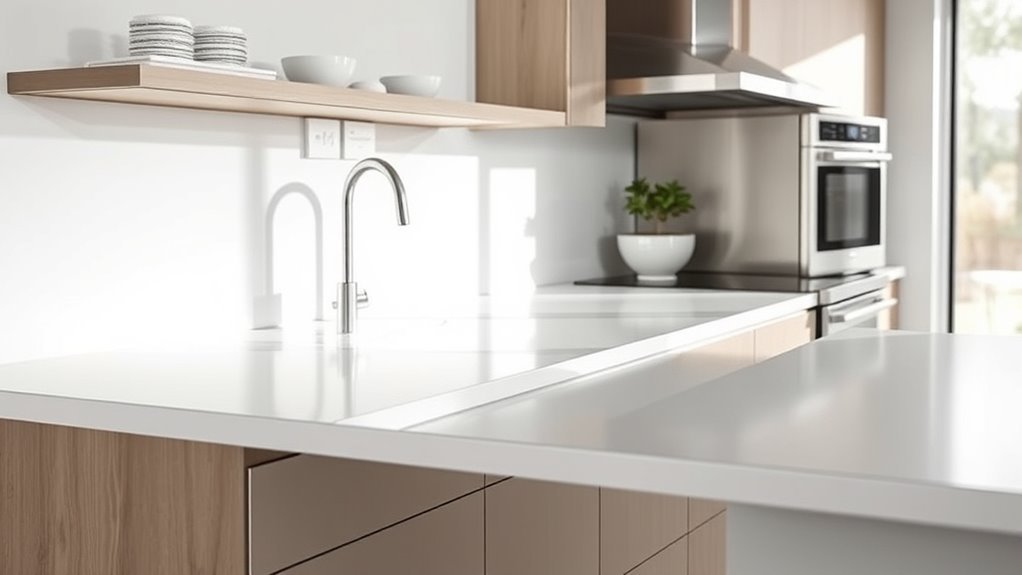
The standard depth of kitchen countertops is typically 24 inches. When planning your kitchen, this measurement is a good starting point because it fits most kitchens and appliances easily.
This depth provides enough space for food prep without taking up too much room. You’ll find that 24 inches strikes a good balance between usability and space efficiency.
Countertop materials vary—from granite to laminate—but the standard depth stays the same. This ensures your cabinets and appliances line up properly.
Of course, you can customize the depth based on your needs or kitchen size, but sticking to the standard makes installation and upgrades simpler.
Whether you’re remodeling or designing a new kitchen, knowing this standard helps you make smarter choices about space, workflow, and style.
Keeping that 24-inch depth in mind helps you optimize both function and look in your kitchen design.
What Are Typical Countertop Depths by Material?
Although the standard countertop depth is usually 24 inches, the material you pick can affect the typical depth options. Different materials have unique properties that influence their installation and appearance.
For example, laminate countertops generally stay close to the 24-inch standard but can range from 22 to 25 inches due to flexibility and custom cuts.
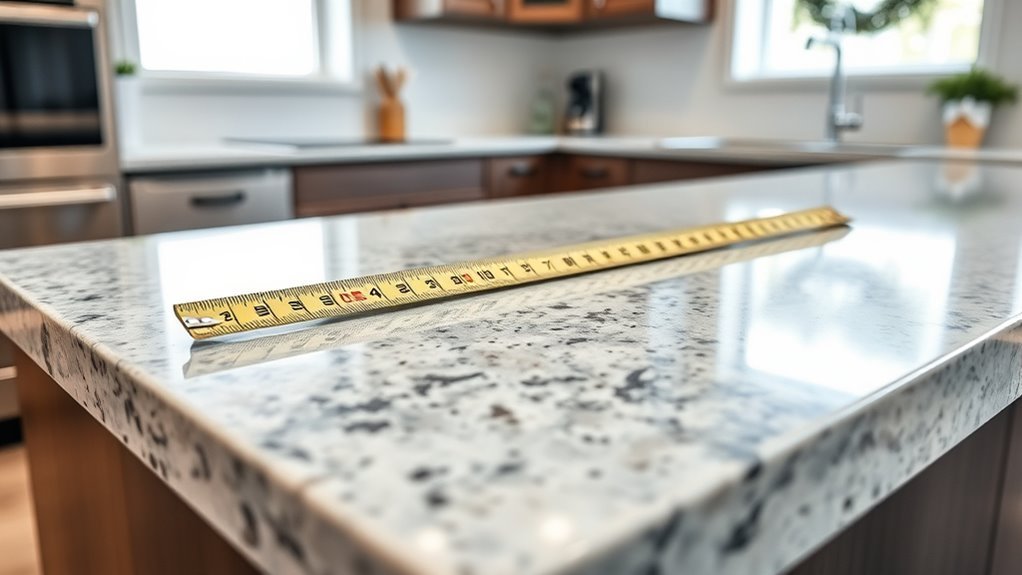
Granite and quartz slabs tend to be thicker, allowing depths from 24 to 30 inches, especially if you want a more substantial look or overhang.
Granite and quartz offer thicker slabs with depths ranging from 24 to 30 inches for a bold, substantial look.
Butcher block and wood options are highly customizable, with depths that can range from 24 up to 36 inches to fit your kitchen’s design and function.
Knowing these differences helps you plan better, so the material you choose will also guide your countertop’s depth. Keep this in mind when designing your kitchen to ensure the look and usability meet your needs.
How Does Kitchen Layout Affect Countertop Depth?
Your kitchen layout really influences how deep your countertops should be. It’s not a one-size-fits-all situation—different setups call for different depths. For example, if you have an island, the countertop might be a bit different compared to a galley or L-shaped kitchen.
Getting the right depth is all about making the most of your space without sacrificing comfort or functionality. So, knowing how your layout affects countertop depth can help you plan a kitchen that’s both practical and stylish.
Standard Layout Depths
Kitchen layout plays an essential role in determining the depth of your countertops, influencing both functionality and aesthetics. When planning, you’ll notice standard layout depths help balance countertop aesthetics with practical depth variations.
Single Wall Kitchens: Usually have 24-inch deep countertops, which give a sleek look that maximizes space without making the room feel crowded.
Galley Kitchens: Often feature 24 to 25-inch depths on each side, providing enough workspace while keeping the walkway comfortable.
L-Shaped or U-Shaped Layouts: Typically use 25 to 30-inch deep counters, offering more surface area for prep and appliances and enhancing the overall look.
Impact on Workspace
Several factors in your kitchen layout directly influence the depth of your countertops and, consequently, the available workspace. For example, if you have an open layout with plenty of room, you can choose deeper countertops, giving you more surface area to spread out tasks.
In tighter or galley kitchens, shallower countertops might be necessary to keep things flowing and avoid feeling crowded. Your countertop depth also impacts how efficiently you can work—deeper surfaces make it easier to keep prep tools and ingredients within reach, speeding up cooking and cleanup.
On the other hand, if the depth is too shallow, you might feel cramped, which can reduce your effectiveness. So, when planning or remodeling, think about your kitchen’s shape and size to maximize both workspace and task efficiency.
How Deep Should Kitchen Island Countertops Be?
When planning a kitchen island, deciding on the right countertop depth is essential for both functionality and comfort. You want an island that fits your space while accommodating how you use it every day. Typical kitchen island dimensions often range from 24 to 48 inches deep, but seating considerations can influence that choice.
Here are three key points to guide you:
- Standard Depth: Aim for about 36 inches deep for prep and cooking tasks. This gives you enough workspace without overcrowding the kitchen.
- Seating Space: If your island includes seating, add 12 to 18 inches for knee space beyond the base cabinet depth. This usually makes the total depth around 48 inches.
- Walkway Clearance: Make sure to leave at least 36 inches of space around the island. This allows for comfortable movement around your kitchen.
Balancing island dimensions with seating considerations helps you create a kitchen island that’s both practical and inviting.
Should You Customize Countertop Depth for Your Kitchen Layout and Workflow?
Thinking about customizing your countertop depth? It’s a smart move because it can really improve how your kitchen works for you. When you adjust the depth to fit your layout and daily routines, everything feels more natural and accessible.
Workflow Efficiency Considerations
Although standard countertop depths suit many kitchens, customizing the depth can greatly boost your workflow efficiency. When you tailor your countertops, you’re directly improving workflow optimization and task efficiency, making daily cooking smoother. Consider these points:
- Reach and Accessibility: Deeper countertops may require more stretching, which can slow you down. Custom depths help keep tools and ingredients within easy reach.
- Task-Specific Zones: Adjust the depth in prep areas for extra space, while keeping other zones shallow to speed up tasks like washing or plating.
- Appliance Compatibility: Custom depths ensure appliances fit seamlessly, preventing awkward layouts that disrupt your workflow.
Space Optimization Benefits
Since every kitchen layout is unique, customizing countertop depth can really improve how you use your space. By tailoring the depth to fit your needs, you can unlock space-saving tricks that make your kitchen feel less cluttered and more functional.
Shallower countertops free up room in smaller kitchens, while deeper ones give you extra surface area for meal prep without making the space feel crowded. This customization helps you organize efficiently, so appliances, utensils, and ingredients are within easy reach.
You’ll find it easier to create zones for cooking, cleaning, and prepping, which helps streamline your workflow. Adjusting the depth ultimately helps you make the most of every inch, ensuring your kitchen works for you.
How to Measure Your Kitchen Space for the Right Countertop Depth
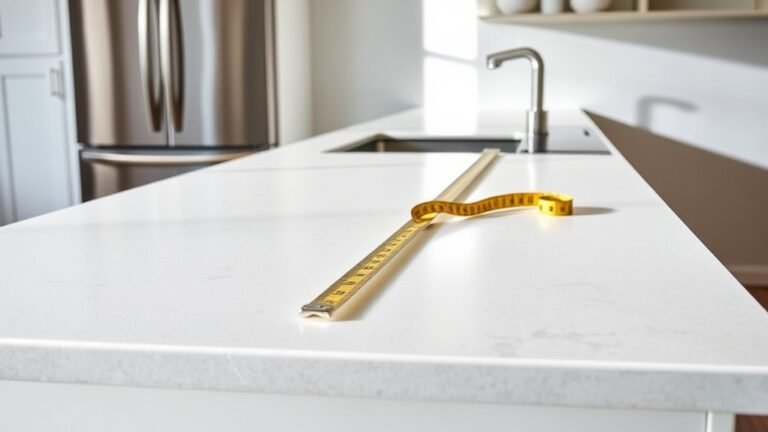
When measuring your kitchen space for the right countertop depth, start by checking the length of your wall and the layout of your cabinets. Accurate measurements are key to ensuring your countertop fits well without overcrowding or leaving awkward gaps.
Remember to measure the width and height of your base cabinets with a tape measure. Keep in mind that countertops usually extend a bit beyond the cabinet edges.
Look for any appliances, handles, or light fixtures that might get in the way. Include these obstructions in your measurements to avoid surprises.
Decide how much overhang you want beyond the cabinet front. Typical overhangs range from 1 to 1.5 inches to make everything comfortable and stylish.
How Countertop Depth Affects Appliances and Cabinets
When you’re thinking about your kitchen, it’s important to consider how the depth of your countertops will affect everything else. If the countertops are too deep, your appliances might end up sticking out more than you’d like, and that can make the space feel a bit crowded.
Plus, the overhang from a deeper countertop can influence how easy it is to use your kitchen and also change the overall look. So, finding the right depth is all about balancing style with practicality to make sure everything fits nicely and works well for you.
Appliance Fit Considerations
One key factor to consider with countertop depth is how it affects the fit of your appliances and cabinets. You want to make sure your appliances will fit well to avoid awkward gaps or overhangs that can disrupt your kitchen’s flow.
Here are three things to keep in mind:
- Standard Depth Appliances: Most appliances are made for standard countertop depths of about 24 inches. If your countertops are deeper, appliances might sit too far back, making them harder to use.
- Custom Depth Needs: If your countertops are deeper, you might need custom appliances or modifications to keep everything aligned and working properly.
- Design Aesthetics: The depth of your countertops also impacts how appliances line up visually with your cabinets. A mismatch can break the seamless look you’re going for.
Cabinet Storage Impact
Choosing the right countertop depth isn’t just about fitting appliances—it also affects how much storage you have inside your cabinets.
When countertops are deeper, cabinets extend further back, which can give you more storage space but might make them harder to access.
On the other hand, shallower countertops are easier to reach into but limit how much storage you can have.
Finding the right balance between these factors helps make your kitchen more functional.
| Countertop Depth | Cabinet Storage Impact |
|---|---|
| Standard (24″) | Balanced accessibility and storage |
| Deeper (25-30″) | More storage, less accessibility |
| Shallower (18-22″) | Easier to reach, less storage |
| Custom Depths | Customized to fit your needs |
Think about how you move around your kitchen to choose the depth that improves both cabinet access and storage space.
Countertop Overhang Effects
Although countertop depth might seem like a minor detail, it directly impacts how your appliances fit and how cabinets function beneath. The overhang from deeper countertops affects both how they look and how you use them in your kitchen.
For example, appliances like dishwashers and ovens need precise clearance. An excessive overhang can block doors or controls, making appliances harder to access.
Cabinets under deeper countertops might lose storage space or need custom adjustments to fit the overhang properly. That’s something to keep in mind when planning your layout.
The aesthetic overhang adds style to your space, but it also influences how you use the countertop’s edge for seating or prep work. Balancing looks and function is key.
What Are the Pros and Cons of Deeper Kitchen Countertops?
When you opt for deeper kitchen countertops, you get extra workspace that can make cooking and meal prep much easier. They offer more surface area, so you can spread out ingredients and tools, making your cooking more comfortable. This extra space is especially handy if you often prepare large meals or enjoy baking, helping keep everything organized and within reach.
But deeper countertops also come with some downsides. They can make your kitchen feel cramped if space is tight, reducing your movement room. Installation costs might go up because of the extra material needed, and appliances or cabinets may not line up well with unusual depths. Plus, reaching the back of a deeper countertop can be tricky, which might be inconvenient during use.
Think about these pros and cons carefully to see if deeper countertops fit your kitchen’s layout and your cooking style.
Tips for Choosing Countertop Depth for Style and Comfort
Since kitchen countertops are central to both function and design, you’ll want to pick a depth that balances comfort and style. When choosing the right depth, think about your style preferences along with comfort features to make your space both beautiful and practical.
Here are three tips to help you decide:
- Assess your kitchen layout – A deeper countertop can boost style but might limit movement in smaller spaces. Choose a depth that fits your room size and flow.
- Prioritize comfort features – Consider your height and how you use the countertop. Standard depths work for most, but if you prep a lot, a slightly deeper surface can prevent uncomfortable reaching.
- Match your style preferences – Deeper counters give a luxurious, substantial look, while shallower ones look sleek and minimalist. Pick a depth that complements your overall kitchen style.
Balancing these factors ensures your countertop depth supports both your style and comfort needs.
How Countertop Depth Influences Kitchen Functionality
Choosing the right countertop depth not only shapes your kitchen’s look but also affects how well the space functions. When you pick the right depth, you make meal prep and cleanup easier and more comfortable.
A deeper countertop gives you extra workspace, which is great for baking or handling multiple dishes. But if it’s too deep, reaching the back can strain your arms and shoulders, disrupting your workflow.
Extra countertop depth boosts workspace but can cause strain if reaching too far back.
Your choice of countertop material also matters. Heavier materials like granite or quartz might need sturdier cabinets to support the weight, while lighter options like laminate offer more flexibility.
Think about how you use your kitchen daily. If you need room for appliances or prefer a minimalist setup, the depth should reflect that. Balancing countertop depth with ergonomics and material makes your space both practical and enjoyable to use.
Frequently Asked Questions
How Much Does Countertop Depth Impact Kitchen Resale Value?
Countertop depth can impact your kitchen resale value because it affects how the space looks and how buyers see it.
Deeper countertops give you more workspace, which many buyers find appealing for both style and function.
If your countertops are too shallow or too deep, they might look awkward or make the space less usable, which could turn buyers off.
Choosing a depth that balances good looks and practicality can help boost your home’s resale value and appeal.
Are There Safety Concerns With Very Deep Countertops?
Yes, very deep countertops can pose safety concerns because they affect how comfortable and ergonomic they are to use. When the countertop is too deep, reaching items at the back can become difficult.
This increases the risk of overreaching and straining your muscles. Over time, this can lead to discomfort or even accidents in the kitchen. To stay safe and comfortable, it’s best to choose a depth that offers enough workspace without making it hard to reach everything.
What Maintenance Differences Exist for Deeper Countertops?
Deeper countertops can feel like cleaning a small ocean, but don’t worry, you won’t need to scrub endlessly. You’ll need to increase your cleaning frequency to keep every inch spotless, especially in hard-to-reach corners.
Material durability becomes even more important since larger surfaces face more wear and tear. Choosing durable materials means less maintenance hassle, so your countertop stays beautiful without turning your routine into a chore.
Can Deeper Countertops Support Heavier Kitchen Equipment?
Yes, deeper countertops can support heavier kitchen equipment, but you need to ensure proper stability. When you choose a deeper surface, how the weight is distributed becomes really important because uneven support can lead to sagging or damage.
Make sure the countertop is well-supported underneath, with sturdy cabinets or extra bracing. This way, your heavier appliances won’t compromise the durability or safety of your countertop, so you can work confidently in your kitchen.
How Does Countertop Depth Affect Lighting and Visibility?
You’ll find that countertop depth directly impacts lighting and visibility by influencing how light spreads across your workspace.
Deeper countertops can create shadows, which reduce visibility and make it harder to see what you’re doing.
On the other hand, shallower countertops allow more natural or artificial light to reach your workspace, making tasks easier to see.
This not only improves functionality but also enhances the overall look of your countertop.
Finding the right balance in depth helps you stay well-lit and comfortable while working, making your kitchen both beautiful and practical.
Conclusion
When considering countertop depth, comfort and customization are key.
Choosing the classic 24-inch depth creates consistent, convenient counter space.
Deeper designs, on the other hand, add dynamic, decorative details and can double as dining or display areas.
Don’t forget how depth influences your daily tasks, from prepping to plating.
By balancing your kitchen’s layout with your lifestyle needs, you can craft countertops that blend style, space, and functionality.
This way, you get countertops that enhance your cooking experience while fitting your space perfectly.
In the end, understanding how deep your kitchen countertops should be helps you create a more efficient and beautiful kitchen.