How Much Does a Kitchen Remodel Cost? The Complete Answer
Thinking about giving your kitchen a fresh new look but feeling overwhelmed by how much it might cost? You’re not alone—many people struggle with budgeting for a remodel that hits their style and financial goals.
You can expect to spend between $10,000 and over $50,000 on a kitchen remodel, depending on your goals, materials, and labor costs.
Budget-friendly options like repainting cabinets save money, while high-end features and custom designs raise expenses.
Location and project complexity also affect pricing. Balancing style and budget is key, with a 10-15% contingency for surprises.
Investigate how different choices impact your remodel to plan confidently and avoid unexpected costs.
Key Takeaways
- Kitchen remodel costs can start at around $10,000 for small updates and go over $50,000 for high-end renovations.
- The overall budget really depends on material choices and labor costs.
- If you’re looking to save, consider repainting cabinets and just updating hardware instead of a full overhaul.
- Luxury remodels often include custom designs, smart tech, and top-tier appliances, which can significantly increase expenses.
- It’s a good idea to add a 10-15% contingency for unexpected costs and focus on key elements like cabinets and appliances first.
How Much Does a Kitchen Remodel Cost?
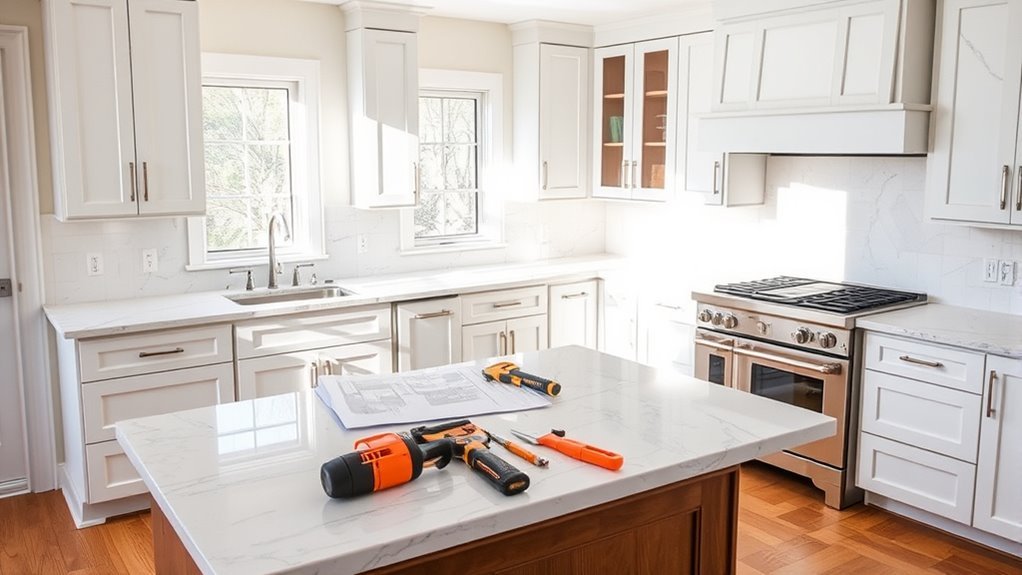
Wondering how much a kitchen remodel will set you back? The cost can vary a lot depending on what you choose.
If you’re into kitchen design trends, you’ll find plenty of options, but they don’t all have to be expensive. Budget-friendly upgrades like repainting cabinets, updating hardware, or installing new lighting can really transform your space without costing a fortune.
On average, a minor kitchen remodel might cost between $10,000 and $20,000, while a mid-range project usually runs from $20,000 to $50,000.
High-end remodels that include custom cabinetry, premium appliances, and luxury materials can easily go over $50,000.
The key is balancing your style goals with your budget. Focusing on smart, budget-friendly upgrades aligned with current kitchen design trends can give your kitchen a fresh look and improve functionality without overspending.
You don’t have to choose expensive options to create a beautiful, modern kitchen.
Key Factors That Impact Kitchen Remodel Costs
When you’re thinking about remodeling your kitchen, the kind of materials you pick can really make a difference in how much everything costs. It’s important to consider that higher-end materials might look fantastic but can also bump up your budget pretty quickly.
Plus, don’t forget about the labor costs and design fees. These can vary a lot depending on who you hire and how complex your project is. Knowing these main factors upfront can help you make smarter choices and keep your remodel within your budget.
Material Quality Choices
Although you might focus on design and layout, the quality of materials you choose plays a crucial role in your kitchen remodel costs. When selecting cabinets, countertops, and flooring, think about durability options to make sure your investment lasts.
High-end materials like granite or hardwood offer better durability but come at a higher price. On the other hand, laminate or engineered options are more budget-friendly but may wear faster.
Your aesthetic choices also impact costs. Sleek modern finishes often cost more than basic styles. Finding a balance between durability and style helps you stay within your budget without sacrificing the look you want.
Labor and Design Fees
Since labor and design fees make up a big part of your kitchen remodel costs, understanding how they impact your budget is important. When you schedule a design consultation, you’ll work with professionals to create a plan that fits your vision and budget.
This service usually comes with a fee that varies depending on the designer or firm. Labor contracts cover the costs of skilled workers like electricians, plumbers, and carpenters who bring your remodel to life. These contracts outline the scope, timeline, and payment terms, so you know what to expect and can avoid surprises.
Labor fees can change based on how complex your project is and where you’re located. By reviewing labor contracts carefully and discussing design consultation fees upfront, you can better manage your expenses and keep your kitchen remodel on track financially.
How Kitchen Size Changes Your Remodel Budget
Your kitchen’s size plays an essential role in determining the overall cost of your remodel. A larger kitchen means more materials, labor, and time, which directly increases expenses. When planning your layout, think about space efficiency to get the most function without unnecessary expansion.
Smaller kitchens often need creative storage solutions and carefully chosen appliances to make the most of limited space. Staying updated on design trends can help you choose lighting options and color schemes that improve your kitchen’s feel without costly structural changes.
Renovation timing also matters. Larger spaces usually take longer, which can affect labor fees and your daily life. Whether your kitchen is compact or spacious, smart planning around its size helps you balance style, function, and your budget effectively.
Keep these factors in mind to avoid surprises and achieve a beautiful, efficient kitchen remodel within your financial goals.
What Materials Affect Kitchen Remodel Costs?
When you’re thinking about remodeling your kitchen, the materials you choose can really influence the overall costs. For example, cabinets come in a wide range of options—from budget-friendly laminates to more luxurious hardwoods. Picking the right one depends on your style and your wallet.
Same goes for your countertops. Whether you go for laminate, quartz, or granite, each material has its own price tag and level of durability. So, it’s worth considering what matters most to you—whether it’s saving some money or investing in something more long-lasting.
All these material choices play a big role in shaping your overall budget, so it’s good to weigh your options carefully.
Cabinet Material Choices
Choosing the right cabinet materials is key when planning a kitchen remodel. Your selection influences the overall cost, durability, look, and functionality of your cabinets and storage options.
Different materials come with various benefits and price points, so it’s important to pick what fits both your budget and design style. Solid wood offers a classic, high-end appearance but tends to be more expensive.
Plywood strikes a good balance between cost and durability, making it a popular choice. MDF and laminate are more budget-friendly options, but they’re generally less durable over time. Your choice will affect the look and long-term value of your kitchen.
Countertop Surface Options
Countertop materials play a major role in shaping both the look and cost of your kitchen remodel. Your choice affects durability, style, and budget, so consider these popular options:
- Granite offers natural beauty and durability. It’s known for its tough surface and timeless benefits.
- Quartz combines quartz durability with low maintenance. It’s a great long-term investment.
- Laminate stands out for its affordability and wide variety of styles. It’s perfect if you want budget-friendly options.
- Marble delivers unmatched aesthetics but requires more care. It’s ideal if you prioritize luxury.
You can also explore eco-friendly choices like recycled materials, solid surface, butcher block, or concrete. These options let you personalize your kitchen while staying green. Choose what fits your lifestyle and budget best.
What Drives Up Costs in High-End Kitchen Remodels?
Luxury finishes and custom features often drive up costs in high-end kitchen remodels. When you choose luxury appliances, you’re investing in top-tier brands that offer advanced technology, superior performance, and sleek designs—each adding significantly to your budget.
High-end finishes like exotic stone countertops, custom cabinetry, and designer backsplashes also increase expenses because they require premium materials and specialized craftsmanship. Features such as built-in wine coolers, smart kitchen systems, and custom lighting improve both functionality and style but come with a higher price tag.
Even small details, like custom hardware or hand-painted tiles, can add to costs when you want your remodel to truly stand out. By opting for these upscale elements, you’re creating a kitchen that’s not only beautiful but also tailored to your lifestyle—though it means a larger investment compared to standard remodels.
How Labor and Contractors Affect Your Remodel Cost
While materials and design choices shape your kitchen’s look, labor and contractors play a crucial role in determining the overall cost. Understanding how labor pricing and contractor experience affect your budget helps you plan better. Skilled contractors with strong reputations often charge more but can save you money with quality work and fewer mistakes. Labor availability can influence your project timeline, which in turn impacts costs.
Consider these key factors:
- Contractor reputation and experience. Higher expertise usually means higher rates but better results.
- Labor pricing. Know if rates are hourly or flat and negotiate to find a fair price.
- Subcontractor roles. Specialized tasks might require subcontractors, adding to costs.
- Labor warranty. A solid warranty provides peace of mind and can help you avoid future expenses.
Effective labor negotiations and clear project timelines help you control costs and promote a smoother remodel.
What Upgrades Are Worth the Extra Expense?
Which upgrades truly add value to your kitchen without breaking the bank? Start with energy efficiency by choosing luxury appliances that save power and reduce bills. Incorporating smart technology like app-controlled ovens or lighting makes your kitchen more convenient and modern.
Open layouts improve flow and space, giving your kitchen a fresh, airy feel that buyers love. Sustainable materials not only help the environment but also add a unique touch with durability. Don’t overlook lighting upgrades. They brighten work areas and create ambiance.
Stylish backsplash designs add personality and protect walls, while smart storage solutions keep your kitchen organized and clutter-free. Flooring options like durable hardwood or eco-friendly tiles balance aesthetics with function.
Finally, thoughtful color schemes can transform your kitchen’s mood and appeal. By focusing on these upgrades, you’ll boost your kitchen’s value and enjoyment without overspending.
How to Set a Realistic Budget for Your Kitchen Remodel
Before you dive in, it’s a good idea to get a clear picture of your financial situation. Knowing your limits upfront can help you avoid going overboard later on. Think about what parts of the kitchen remodel are most important to you and your lifestyle—whether it’s new cabinets, appliances, or countertops.
Once you’ve got your priorities straight, set a budget that feels realistic. This way, you can focus on the things that truly matter without stressing over every dollar. It’s all about making smart choices so your dream kitchen doesn’t break the bank.
Assess Your Financial Limits
How much can you realistically spend on your kitchen remodel without stretching your finances too thin? Start by evaluating your financial limits carefully. Effective budget planning and diligent expense tracking are key to staying on course.
Here’s how to get started:
- Review your current savings and set aside a comfortable remodeling fund.
- Calculate your monthly income and expenses to determine disposable income.
- Factor in unexpected costs by adding a 10-15% contingency buffer.
- Decide if you’ll finance the remodel and understand potential loan terms or interest rates.
Prioritize Key Remodeling Elements
Once you’ve set a clear budget, focus on the remodeling elements that matter most to you. Start by evaluating your kitchen layout to improve flow and functionality.
Think about current design trends, but stick to timeless choices in color schemes and backsplash styles to ensure they last. Look into lighting options that enhance ambiance and help with tasks.
Storage is key—go for smart, space-saving solutions. Upgrading appliances can boost performance, but pick ones that fit your budget and needs. If eco-friendliness is important, incorporate sustainable materials without sacrificing style.
For flooring, choose options that are durable and look good while matching other elements. By identifying these functional features, you create a realistic budget aligned with your priorities, making sure your remodel offers maximum value and satisfaction.
When to DIY and When to Hire a Pro
Although tackling some kitchen remodel tasks yourself can save money, knowing when to hire a pro is essential to avoid costly mistakes and ensure safety. Understanding your DIY limitations helps you decide which jobs you can handle and which require professional skills.
Consider these points when deciding:
- Complex Electrical or Plumbing Work: These tasks need licensed professionals to follow safety codes and prevent hazards.
- Structural Changes: If you’re removing walls or changing layouts, hire a pro to keep your home’s integrity intact.
- Custom Cabinetry and Finishes: Professionals bring precise craftsmanship and quality materials that might be tough to replicate on your own.
- Simple Updates: Painting, installing backsplash tiles, or swapping hardware are great DIY projects that save on labor costs.
Thinking about these factors helps you enjoy the benefits of professional work while managing your budget by handling easier tasks yourself.
How to Avoid Unexpected Remodel Costs
Because kitchen remodels often involve many moving parts, unexpected costs can quickly add up if you’re not careful. To avoid surprises, start by setting a solid budget contingency—usually 10-20% of your total budget. This cushion helps cover hidden expenses like plumbing issues, electrical upgrades, or materials that run out of stock.
Next, plan thoroughly and get detailed quotes from contractors to spot potential problems early. Communicate openly with your team so you understand where costs might change. Keep track of every expense during the project to avoid overspending.
Finally, prepare for hidden expenses by inspecting your kitchen’s current condition before remodeling. Sometimes what’s behind walls or under floors isn’t visible until work begins. By anticipating these risks and including a budget contingency, you’ll stay in control and complete your remodel without costly surprises.
Frequently Asked Questions
How Long Does a Typical Kitchen Remodel Take?
A typical kitchen remodel usually takes about 6 to 12 weeks, but your timeline depends on several factors.
Think about how complex the design is, whether you’re making structural changes, and how available materials and contractors are.
Budget also matters—higher budgets might speed things up with premium services.
Staying flexible with your timeline helps manage unexpected delays and keeps the project running smoothly.
What Permits Are Needed for a Kitchen Remodel?
You might think kitchen permit requirements are just red tape, but they’re actually vital for safety and making sure everything meets code.
For your remodel, you’ll likely need permits for electrical, plumbing, and structural changes. Since rules vary depending on where you live, it’s best to check with your local building department before you start.
Getting the right permits helps you avoid fines and ensures inspections confirm your work is up to standard. This keeps your kitchen safe and protects your investment throughout the project.
How to Choose the Right Kitchen Layout?
To choose the right kitchen layout, think about your workflow and how you move between cooking, cleaning, and storage areas.
Pick a layout that fits your room’s size and shape—whether it’s L-shaped, U-shaped, or an island design.
You want a setup that minimizes walking and maximizes counter space so your kitchen feels efficient.
Ultimately, the goal is to make cooking and entertaining comfortable and smooth.
What Are the Latest Kitchen Design Trends?
You’ll love using sustainable materials and smart appliances to create an eco-friendly, efficient kitchen. Current color palettes lean toward earthy tones and muted shades, while open shelving adds airiness.
Backsplash trends favor bold patterns or textured tiles. Minimalist designs with vintage accents bring timeless charm. Plus, multifunctional spaces are a must, letting you cook, dine, and entertain seamlessly.
Adopt these trends to make your kitchen both stylish and practical.
How to Improve Kitchen Lighting During a Remodel?
To improve kitchen lighting during your remodel, focus on layering task lighting and ambient lighting. Install bright, focused lights under cabinets for tasks like chopping. Use softer ceiling fixtures to create a warm atmosphere.
Choose fixtures that match your style but prioritize energy efficiency with LED bulbs. This helps cut costs and reduces environmental impact. Don’t forget to add dimmers, which make it easy to adjust light levels based on the time of day or activity.
Conclusion
Remodeling your kitchen can feel like a grand adventure, but with thoughtful planning, you’ll navigate costs smoothly.
By understanding what influences your budget—from size and materials to upgrades—you can make choices that truly improve your space without unnecessary extravagance.
Knowing when to roll up your sleeves and when to call in experts helps keep surprises at bay.
Welcome this journey with confidence, turning your kitchen dreams into a beautifully balanced reality.
Focusing on how much a kitchen remodel costs will help you stay on track and enjoy the process every step of the way.