How Much to Tip at a Restaurant: Complete Guide with Practical Tips
How much to tip at a restaurant depends on the type of service and setting, with 18-20% being the standard for good service. A 15% tip is acceptable at casual places, and 10% can be a nice bonus for exceptional service. Tips vary for takeout, delivery, and large groups, so adjusting based on the situation and service quality is important.
This guide is for anyone dining out or ordering food in the United States who wants clear, practical advice on appropriate tipping amounts. You’ll find straightforward tips for different restaurant types, quick calculation methods, and special cases like bars or wine service.
Key Takeaways
- Tip 18-20% for good service at sit-down restaurants as the standard amount.
- Leave 10-15% for buffet or drink-only service where waiter interaction is limited.
- Tip 5-10% for takeout orders to recognize staff preparing and packaging your food.
- At casual or local restaurants, 15% is polite but 18-20% is appreciated when you can.
- For large groups, consider tipping at least $2 per person or maintaining 18-20% total.
- If a 3-5% service or wellness fee appears on your bill, still tip your server separately.
How Much to Tip at Different Restaurant Types

Tipping in restaurants depends on the level of service provided. In places with full table service, like casual or fine dining, you usually leave between 18% and 20% of the bill before tax. For outstanding service, especially in upscale restaurants, it’s common to tip between 22% and 25% to show extra appreciation. At casual sit-down spots, 18% is a common base tip. At bars, people often tip $1 to $2 per drink or around 15% to 20% for bottle service.
Fast-casual restaurants that offer counter ordering with some table delivery usually expect tips between 10% and 15%. Fast food or pure counter service without table delivery do not require tipping, but leaving $1 to $2 for a larger or complex order is welcome.
Coffee shops do not require tips, but if you order something complicated or your visit involves several drinks or food items, leaving 10% to 15% is a considerate gesture. Always base your tip on the quality and effort involved in the service provided regardless of the venue.
| Restaurant Type | Standard Tip | Excellent Service | Notes |
|---|---|---|---|
| Sit-down (casual) | 18, 20% | 22, 25% | Of pre-tax total |
| Sit-down (fine dining) | 20% | 25%+ | Same rule, higher stakes |
| Fast casual (table service) | 10, 15% | 18, 20% | Counter order, table delivery |
| Fast food counter | Not expected | $1, 2 if you want | No expectation |
| Coffee shop | Not expected | 10, 15% | Tip for complex or large orders |
| Bar (per drink) | $1, 2/drink | $2, 3/drink | $1 beer/wine, $2 cocktail |
To decide how much to tip, consider the level of service and your restaurant type. In full-service restaurants, always calculate your tip on the pre-tax amount starting at 18%. Good service is rewarded with a tip of 20% or more. For fast-casual, 10% to 15% covers the service involved, but you could tip closer to 20% if the staff really goes above and beyond. Coffee shops usually welcome small tips on complicated orders, but tipping remains optional.
Tipping less than the standard for the service style might be appropriate for poor service, but withholding a tip entirely is rare and may offend. Conversely, tipping more than the guidelines signals appreciation for exceptional effort, which can improve the dining experience and build positive relationships with staff.
How to Calculate Your Tip Quickly and Accurately
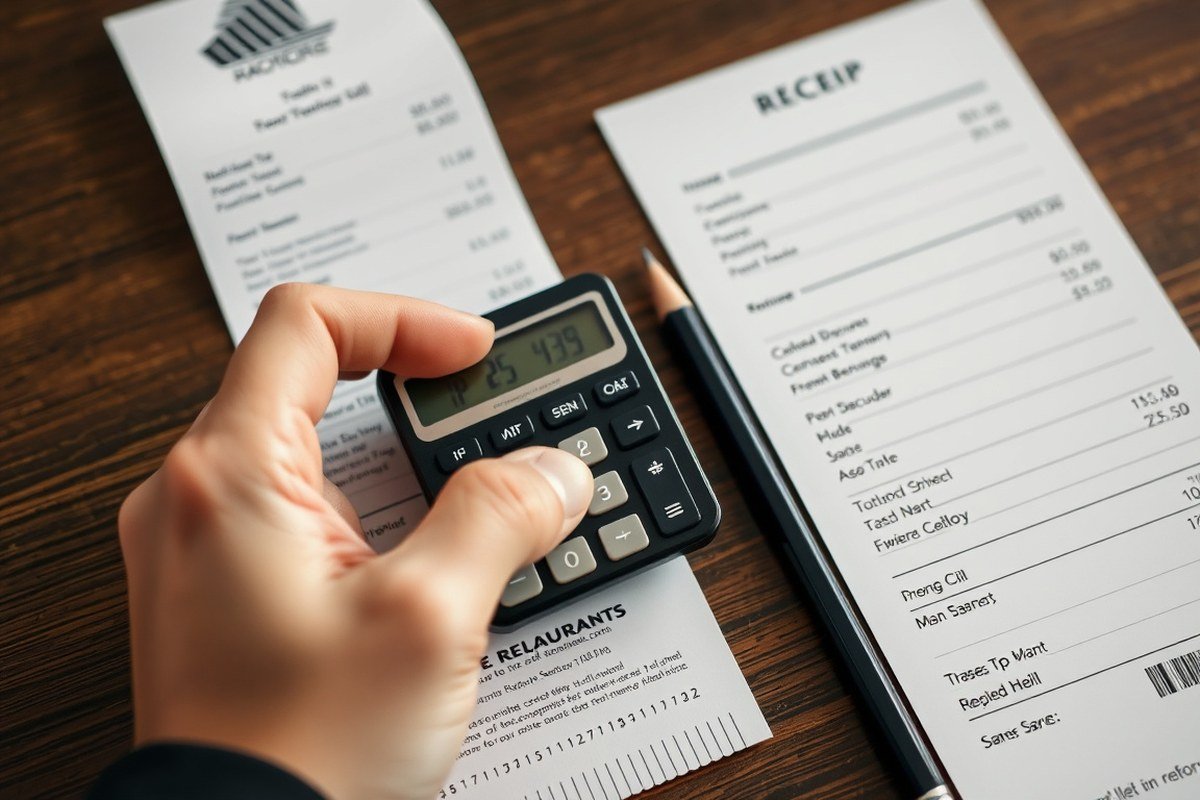
You can calculate common tip percentages quickly using mental math tricks to avoid pulling out a calculator at the restaurant. Most people tip on the post-tax total for convenience, although tipping on the pre-tax amount is more traditional. Rounding the tip to an easy number keeps things simple without shortchanging your server.
Calculating 20% Tip Mentally
Calculating a 20% tip in your head is straightforward and fast. This percentage is a common tipping standard, making it a helpful skill.
- Read the total bill amount aloud or in your head.
- Divide the total by 10 to find 10% of the bill.
- Double the 10% figure to get 20%.
- Use the result as your tip amount.
For example, if your bill is $45, 10% is $4.50, and doubling it makes $9.00 for a 20% tip.
Quick tip: Practicing this method will make it second nature and save time at the table.
Choosing Pre-Tax vs Post-Tax Amount
Tipping on the pre-tax amount was the traditional approach because the tax does not compensate your server. Today, most people tip on the total including tax for simplicity. The difference is usually less than a dollar on standard restaurant bills.
Whether you tip on pre-tax or post-tax totals won’t typically affect your server’s income significantly. Checking if the bill shows tax separately helps if you want precise calculations.
Both ways are socially acceptable, so pick whichever is easier for you at the moment. Some digital tip calculators default to post-tax amounts but allow toggling to pre-tax for exactness.
Rounding Tips for Convenience
Rounding your tip to the nearest dollar or a simple number helps you avoid awkward change and keeps payments smooth. It can also prevent under-tipping while simplifying mental math or cash handling.
One common method is to round the bill up to the closest $5 or $10 before calculating the tip on the total, making your math easier. Alternatively, calculate the exact tip, then round that amount itself to the nearest dollar.
This practice ensures your server receives a fair tip and you don’t have to fiddle with cents or odd amounts. Just don’t round down too much, as that cuts into the gratuity that servers rely on.
Adjusting Tips Based on Service Quality
Tipping should reflect the quality of service without unfairly penalizing the restaurant staff. For excellent service, tipping 20% of your bill is standard in the United States. Good service calls for a tip around 15 to 18%. Adequate or average service usually warrants about 15%, while genuinely poor service justifies a lower tip of 10 to 15%. For example, if your bill is $50, tipping $10 for excellent service or about $7.50 for good service matches typical expectations. Tipping significantly below 15% without a service issue can be seen as impolite or ungrateful.
It’s generally not recommended to leave no tip, even if the service was disappointing. Servers often rely on tips for income, and no tip can be very discouraging. Instead, consider tipping the lower end of the scale, around 10%. This still acknowledges the effort of staff while signaling dissatisfaction. If the server was rude, ignored you, or consistently got orders wrong, a reduced tip is fair. Bringing concerns to the manager’s attention is another constructive way to address poor experiences without cutting off all gratuity.
Communicating dissatisfaction professionally helps avoid unfairly affecting staff who may not control some service issues. When tipping less, you can say something like: “Thank you for your efforts. I had some issues with the order and wanted to let the manager know.” This approach shows you recognize the server’s work but want the restaurant to improve. Avoid complaining loudly to the server or refusing to tip altogether in retaliation, as this can create tension and may not fix the underlying problem.
When service is very good, consider tipping more than 20% to reward exceptional attentiveness or extra effort. Conversely, a slow pace or minor errors during a busy night might still warrant a 15% tip rather than a cut. Buffet or limited-service situations where the server only refills drinks generally deserve about a 10 to 15% tip. For takeout, a 5 to 10% tip is appropriate if the order was large or complex, recognizing the staff who prepared and packaged it.
Tipping for Takeout, Delivery, and Food Pickups
For takeout orders, tipping is generally not required but offering 5% to 10% is appreciated for complicated or large orders. Delivery drivers should receive 15% to 20% of the bill, with a $3 to $5 minimum, since they handle your food on the road and provide doorstep service. Service fees added by the restaurant usually do not replace your tip unless explicitly stated.
Takeout Order Tipping Guidelines
Takeout doesn’t often involve the same level of service as dining in, so tipping is not expected by default. However, if your order involves special requests or is large and complex, tipping 5% to 10% is a good way to recognize the extra effort put into preparing and packaging your food.
When you pick up food directly, the staff still handles your order carefully, so leaving a tip shows appreciation. For simple orders like coffee or a sandwich, a tip is optional but can help support the staff, especially if they offer extra help or prompt service.
Food Delivery Tipping Recommendations
Delivery drivers should be tipped at 15% to 20% of the order total, with a minimum tip of $3 to $5 regardless of how small the order is. This covers their time, gas, and effort to bring your food to your door in good condition and on time.
Most delivery drivers rely heavily on tips to supplement their earnings. Even when a default tip is included in your app, consider increasing it for quick service, extra effort, or tough weather conditions. Giving less than 15% or skipping a tip might come across as rude.
Understanding Service Fees vs Tips
Restaurants sometimes add service fees or wellness fees between 3% and 5% to customer bills. These fees often fund staff wages or cover increased costs but do not replace tips. You should still tip according to the level of service you received unless the bill explicitly states the fee is a gratuity that replaces tipping.
Ignoring tips even with a service fee can hurt workers who rely on gratuities. When in doubt, follow the standard tipping range for the service provided to ensure fair compensation.
| Provider | Typical Tip |
|---|---|
| Restaurant servers | 15% – 20% |
| Bartenders | Tip bartenders $1 to $2 per drink, or about 15% to 20% of the total bill. |
| Takeout | Not expected, but 5% – 10% for complex orders |
| Food delivery drivers | 15% – 20%, minimum $3 – $5 per delivery |
| Grocery delivery drivers | 10% – 20% |
This table shows typical tipping expectations for different food-related services. The ranges vary depending on the effort involved and the type of service. Takeout tipping is lowest because there’s less direct interaction, while delivery drivers receive higher tips commensurate with the added responsibility and time spent delivering.
How to Tip for Large Groups and Shared Bills
Tipping for large groups requires checking if the restaurant already added a gratuity charge and carefully deciding how to split the tip when bills are shared. A standard approach is to confirm automatic gratuity, then calculate or split a tip fairly, often including a per-person fixed amount. This ensures servers are fairly compensated for the extra work large parties demand.
Auto-Gratuity on Large Parties
Many restaurants automatically add an 18% to 20% gratuity to the bill for groups of six or more. This reflects the increased effort needed to serve large parties, including taking orders, coordinating courses, and managing payments. Before leaving an additional tip, verify your receipt to see if this charge is included, as adding more may not be necessary.
Some establishments may call this an automatic gratuity while others label it a service charge; however, the amount usually covers the tip expected for large groups. Check the bottom of the menu or the fine print on the bill to confirm these charges and understand if they are distributed to the servers or other staff. If already added, generally no extra tipping is required unless service was exceptional.
Always scan your receipt carefully, automatic gratuities for large parties are common but not universal, and you want to avoid tipping twice for the same service.
Dividing Tips When Splitting Checks
In cases where the bill is split among diners, deciding how to split the tip fairly can be tricky. One method is for each person to calculate their share based on the percentage tip they would normally leave on their individual part of the bill. For instance, if your portion is $30 and you tip 20%, then you leave $6.
Another option is to pool the tip and split it evenly at payment time, which can be simpler for the group and ensures the server receives a reasonable tip overall. This method is especially practical when courses and drinks are shared or ordered unevenly. Communicating clearly with your group about how the tip will be handled prevents confusion or awkward moments at the end.
Clear communication within your group about who pays the tip and how prevents under-tipping or disputes after the meal.
Per Person Tipping Guidelines
Tipping a flat amount such as $2 or $3 per diner on top of the percentage tip is a common way to ensure fairness in large parties. This covers the extra attention servers give to multiple guests, handling orders individually, and coordinating delivery of food and drinks. This additional per-person amount can sometimes be higher than a simple percentage of each person’s share.
For example, on a $50 per person tab, a 20% tip is $10 each. Adding $2 per person extra acknowledges the server’s extra work without significantly increasing your cost. This method works well when the bill is divided unevenly or when there are many separate drink or food orders. Consider rounding up the tip if the service was particularly attentive or if there were many special requests.
Adding a few dollars per person helps reward servers fairly, especially since large groups typically take more time and effort to serve.
Special Tips for Bars, Sommeliers, and Wine Service
At bars and cocktail lounges, tipping usually means giving $1 to $2 per drink or 15% to 20% of your total tab. For simple orders like beer or wine by the glass, $1 per drink is common. Mixed or craft cocktails deserve $2 per drink because of the extra effort. When paying for drinks one at a time, tipping per drink is a simple approach. However, when running a tab, tip 20% at the end, just like at a restaurant. This approach lets you reward the overall service rather than individual drinks.
Wine service can demand higher tips due to its complexity. A sommelier’s assistance in choosing or pairing wines calls for a larger tip. Adding $5 to $10 per bottle is standard, reflecting their expertise. When wine is decanted tableside, which takes extra time and skill, tipping $15 to $25 per bottle shows appreciation for that added service. For very expensive bottles, people often tip a lower percentage of the bottle’s price, around 10% to 15%, but still tip fully on other items.
The reason for these ranges is tied to the labor intensity and skill involved. Bartenders serving standard drinks work quickly but still expect fair compensation since their wages often rely heavily on tips. Sommeliers play a specialised role, guiding your meal’s wine experience and handling delicate decanting processes. Their work improve your enjoyment and is why they are tipped differently from the bar staff.
Keep in mind that tipping just 15% may be seen as indicating average or okay service. A 20% tip is starting to be the floor for many bars, especially if the service was smooth and attentive. When you receive exceptional attention, such as expert wine advice or friendly, prompt bar service, leaning toward 25% or the higher dollar-per-drink range acknowledges that extra effort. On the other hand, if the service was slow or inattentive, tipping closer to 15% signals your dissatisfaction without cutting off the server’s main income.
For drinks at the bar, a good guideline is a $1 tip per beer or glass of wine and $2 per cocktail each round. Closing a tab? Leave 20% of the total as a tip. When a sommelier serves wine, add $5 to $10 per bottle or $15 to $25 if decanting is done. Tip less on expensive bottles, but tip the full amount on the rest. Always review your bill for any included service fees; without them, these tips ensure fair pay for staff.
Following these ratios ensures you respect the time and skill bartenders and sommeliers provide. It also supports the complex staff structure behind fine dining and cocktail experiences, where servers, bussers, and wine specialists share tips. Tipping appropriately helps maintain quality service at your favorite bars and restaurants.
Cash vs. Digital Tipping: What You Need to Know
Consider the advantages and disadvantages of tipping with cash versus using digital methods. Cash tips go straight to your server without deductions, so they keep the entire amount you give. According to the New York State Department of Labor, many servers have a base wage of only $9.45 per hour and depend on tips to increase their earnings. Providing a cash tip ensures the server often gets the full amount promptly, sometimes even before their work shift finishes.
On the other hand, tipping by credit card or mobile payment is convenient. You can simply add the tip after you pay for your meal, either by signing a receipt or tapping on a digital screen. Many servers prefer card tips because it creates a digital record, making the process transparent and easier to track for taxes or employer reporting. Although it might seem kinder to give cash to guarantee the whole tip reaches your server, they generally appreciate digital tips over no tip at all.
One important tradeoff with digital tipping is the fees involved. Restaurants and payment processors often deduct at least 3% from credit card tips, which reduces the actual amount servers receive. For example, if you leave a $10 tip on your card, your server might only get around $9 after fees. That small difference can add up over a shift. To make a digital tip more impactful, you could increase it slightly, say, add 3% or 4% extra if you can, to help cover those charges.
Knowing when and how to tip in cash can make the experience smoother. For dine-in meals, handing your server the tip in cash at the end of the meal or discreetly placing cash on the table when you leave often works best. You might say, “Thank you for the great service” to make it clear the cash is a tip. For larger bills split across cards, cash tips allow you to give each server directly without confusion or complex calculations on digital receipts.
However, tipping in cash is less practical for takeout or when you pay fully with a card at the register, where digital options dominate. In those cases, adding the tip on the card transaction or through a mobile app is straightforward though less immediate. A good approach if you want to combine methods is to leave a small cash tip directly and add the rest digitally, ensuring servers receive some money right away.
Balancing convenience and direct support helps you decide. Choosing cash ensures your server receives the entire tip amount immediately without any deductions. But digital tips are widely accepted and appreciated, especially when you cannot leave cash, and they can be adjusted to account for fees. To show appreciation for your server’s work, make sure your tip is clear and given promptly, regardless of whether it’s in cash or by card.
Common Tipping Mistakes and How to Avoid Them
One common tipping error is calculating the tip on the post-tax total, which inflates the amount you leave. Tax varies by state but typically adds 5% to 10% to your bill. Since servers do not receive tax money, tipping before tax keeps your gratuity fair and focused on service.
Another mistake is failing to notice a service charge already included in your bill. Restaurants often add a service fee, especially for large groups or special events, but this fee goes to the restaurant, not the server. Leaving a separate tip on top of that can mean double tipping, while skipping a tip assuming the service charge covers it may shortchange your server. Check your bill carefully to decide if a tip is necessary or if the service charge replaces it.
Under-tipping is sometimes caused by confusion over the level of service that deserves a standard gratuity. In sit-down restaurants, leaving at least 15% before tax is customary. Going below that significantly undervalues the server’s effort unless the service was genuinely poor. Over-tipping out of guilt or habit is less common but can strain your budget unnecessarily.
- Always calculate your tip based on the pre-tax total to avoid inflated amounts.
- Look for service charges or fees on the bill before deciding how much to tip.
- Tip 15, 20% on pre-tax amounts in sit-down restaurants for standard service.
- Adjust your tip only if the service was exceptional or poor, but keep within 10, 25% ranges.
- You can return to add cash or change a digital tip before you leave if you tip too little by accident.
- Avoid tipping on top of a mandatory service charge unless you want to reward extra care.
- For takeout, tipping 10% is often appropriate, keeping it proportional to service differences.
Doing these requires a quick review of your bill and a simple mental checklist: find pre-tax total, check for service charges, pick your tip percentage, and calculate. This practice ensures both fairness to your server and control of your dining expenses.
Double-check your bill for service charges before tipping to avoid accidentally overpaying your server.
When you realize you’ve tipped too little or too much, you can correct the amount physically or digitally. Adding cash directly to the server on departure is common. When paying by card and you catch the mistake early, ask your server or manager to fix the tip before processing. Many restaurants allow tip modifications within a short time after payment, especially on digital receipts or apps.
Quick-Start Action Plan for Tipping at Restaurants
Follow these steps to tip correctly and confidently at any restaurant situation you face. This plan helps you adapt your tip based on the setting and service quality.
- Before You Order: Check if the restaurant includes a gratuity charge on the bill. Skip adding a tip if it’s already included and confirm the rate covers the service quality.
- During Your Meal: Observe your server’s attentiveness. Note if they refill drinks regularly and answer questions courteously as signs of good service.
- When the Bill Arrives: Calculate 15-20% of the pre-tax total using your phone calculator or a quick mental method (like doubling 10%). Adjust the percentage up or down based on service quality.
- Paying Cash: Hand your tip directly to the server when you pay or leave it clearly on the table. Make sure the amount matches your planned percentage.
- Using Card or Mobile Pay: Add your tip before finalizing payment. When unsure of service quality, leave a smaller tip and adjust next visit.
- For Large Groups: Confirm if gratuity is automatically added. When not, add at least 18% and distribute fairly among the service staff if possible.
- Takeout and Deliveries: Tip at least 10%, with more for bad weather or heavy orders. Give the tip directly to the person delivering when possible.
- After Dining Regularly at One Place: Track your tipping accuracy and your server’s consistent quality to build a tipping habit that feels fair and respectful.
Frequently Asked Questions
Is Tipping Less Than 15% Acceptable for Poor Restaurant Service?
Yes, tipping less than 15% can reflect poor service, signaling dissatisfaction while still acknowledging the effort of your server. It’s better to communicate concerns politely to the manager rather than skip tipping entirely.
Should I Tip on the Total Bill Amount Including Alcohol?
Yes, you typically tip on the full bill, including alcoholic drinks, since servers handle all orders. Alcohol service usually requires the standard 18-20% tip.
How Much Should I Tip for a Buffet-Style Restaurant?
For buffet service, tipping between 10-15% is appropriate since servers assist with drinks and clearing plates. This reflects less table service compared to full-service restaurants.
Are Service Charges Included in the Restaurant Bill the Same as Tips?
Service charges are not the same as tips since they might go to management or split differently among staff. Check your bill; if a service charge is included, extra tipping may not be necessary.
Do I Tip the Host or Hostess at a Restaurant?
It’s not customary to tip the host or hostess unless they provide special assistance like seating you promptly or accommodating a special request. Tipping is generally reserved for servers and bartenders.
Should I Tip If I Only Order Coffee or Snacks at a Cafe?
Tipping isn’t required for counter-service coffee or snack orders, but you can leave change or a small tip if you want to show appreciation. No tip is acceptable when choosing “No Tip” on screens.
Before You Go
Good tipping reflects your appreciation for the service and helps ensure quality care in the future. Start by calculating your tip on the pre-tax amount and adjusting for service or special situations. Next time you dine out, try using these guidelines to feel confident about your tip and how it rewards your server.