Microwave With Convection Oven Guide: What to Know Before You Buy
Finding the perfect microwave convection oven can be tricky, especially if you’re tired of waiting for meals to cook or ending up with uneven results.
Many people struggle with choosing a unit that’s versatile enough for all their cooking needs while fitting comfortably in their kitchen. You’re not alone—there’s a lot to consider!
When buying a microwave convection oven, you’ll want one that combines fast microwave heating with convection’s even browning.
Look for models with at least 1000 watts for efficient cooking and versatile functions like baking, grilling, and roasting. Choose a size that fits your kitchen space and cooking needs.
Using microwave mode is great for reheating, while convection guarantees crisp, evenly cooked meals.
Keep these basics in mind, and you’ll find out how to make the most of your oven’s features and energy savings.
Key Takeaways
- Microwave convection ovens combine microwave heating with convection air circulation for faster, evenly cooked, and crisped meals. They’re great for versatile cooking in one appliance.
- Choose a wattage of 1000 watts or higher to ensure efficient cooking and the ability to bake or roast with ease. Higher wattage means quicker, more consistent results.
- Measure your kitchen space and think about ventilation, power outlets, and capacity needs before picking an oven size and style. This helps you find the perfect fit.
- Look for models with multiple cooking functions, preset menus, and customizable settings. They make cooking more convenient and adaptable to different dishes.
- Opt for reliable brands like Panasonic, Samsung, or Breville that offer strong warranties and have positive customer reviews. This way, you get quality and peace of mind.
How Microwave Convection Ovens Work and Why They Matter
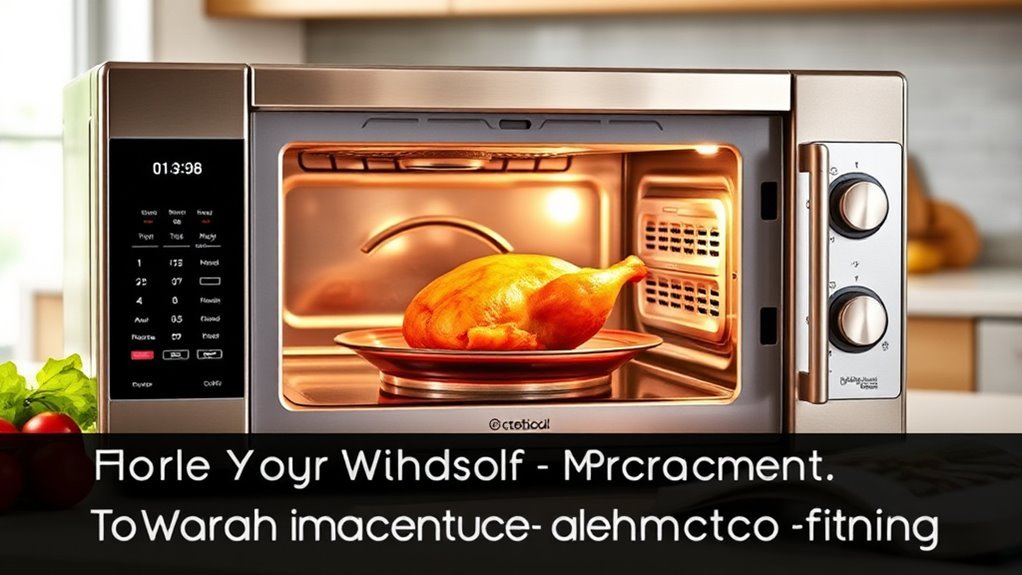
Although microwave convection ovens combine two different cooking methods, they work together smoothly to give you faster, more even results. When you use microwave technology, the oven quickly heats food from the inside out by agitating water molecules.
This fast heating saves you time, especially compared to traditional ovens. The convection part comes from a built-in fan that circulates hot air around your food.
This airflow helps ensure even browning and crisping, which microwave-only ovens can’t do. Overall, these ovens give you the best of both worlds — quick and evenly cooked food.
Essential Features to Look For in Microwave Convection Ovens
When you’re picking out a microwave convection oven, it’s a good idea to look at the different cooking functions it has. That way, you can make sure it suits what you need to cook regularly.
Also, don’t forget to check the power ratings—higher wattage usually means more efficient cooking. And of course, think about the capacity to make sure it can handle your typical meal sizes. All these features really make a difference in how well the oven performs in your kitchen.
Cooking Functions Variety
Because you want a microwave convection oven that adapts to all your cooking needs, paying attention to the variety of cooking functions is crucial. A versatile oven offers multiple techniques like baking, grilling, roasting, and microwaving, letting you handle everything from quick reheats to full meal prep.
Look for models with preset menus and customizable settings that save time and guarantee consistent results. Some ovens even combine convection heat with microwave power for faster, evenly cooked dishes.
The more cooking functions you have, the more you can experiment with recipes and simplify your kitchen routine. Choosing an oven that supports diverse techniques means you’ll get the most out of your investment and enjoy greater flexibility in preparing meals every day.
Power and Capacity Ratings
Two key factors you should focus on when choosing a microwave convection oven are its power and capacity ratings. Power efficiency matters because higher wattage means faster cooking and better convection performance, saving you time and energy.
Look for models with at least 1000 watts to guarantee strong heating and consistent results. Capacity considerations are just as important. Think about the size of your household and the types of dishes you’ll prepare.
If you cook for a family, opt for a larger interior around 1.5 to 2 cubic feet to fit bigger trays or multiple plates. Smaller units are better for single users or limited counter space. Balancing power efficiency with proper capacity ensures your microwave convection oven meets your daily cooking needs without wasting energy or space.
Choosing the Right Size Microwave Convection Oven for Your Kitchen
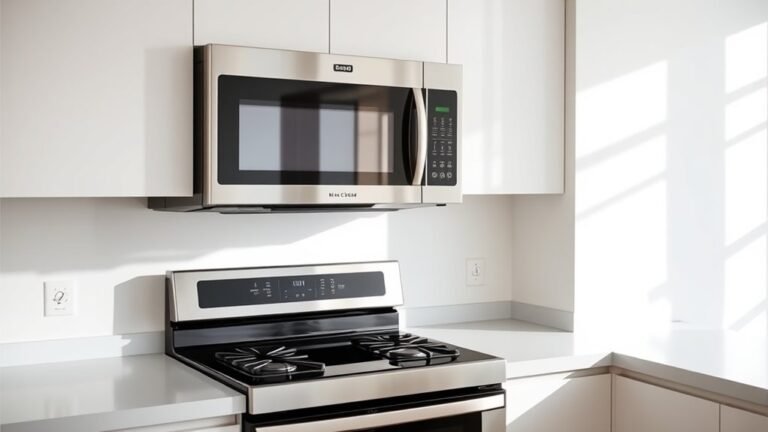
Selecting the right size microwave convection oven is key to fitting your kitchen space and meeting your cooking needs. Start by measuring your available countertop or built-in area to ensure a good fit.
Choosing the right size microwave convection oven starts with measuring your available kitchen space accurately.
Think about installation details like ventilation and power outlet placement, which can influence where you set up the oven. Your personal preferences matter too; if you cook for a family, a larger capacity might be better, while singles or those with limited space might prefer a smaller unit.
Don’t forget to consider style and finish so it matches your kitchen décor. Lastly, explore different brands to find reliable models that suit your size and design preferences.
Balancing these factors will help you choose a microwave convection oven that works well and enhances your kitchen’s look and function.
Understanding Wattage for Faster, Better Cooking
When you know the wattage of your microwave convection oven, you can cook meals faster and more evenly. Wattage impacts how efficiently your oven heats, so higher wattage means quicker heating and steady temperatures.
This leads to shorter cooking times and better textures in your dishes. Understanding wattage helps you pick the right oven for your cooking needs and makes your meals turn out perfect.
Here’s a quick look at wattage levels and what they mean:
| Wattage | Cooking Speed | Ideal For |
|---|---|---|
| 800-900 W | Slower | Simple reheating |
| 1000-1100 W | Moderate | Everyday cooking |
| 1200+ W | Fast, efficient | Complex meals, baking |
Choosing an oven with the right wattage boosts your efficiency and ensures your food is cooked thoroughly. Keep wattage in mind to get the best performance from your microwave convection oven.
Microwave Convection Oven Cooking Modes Explained
Although microwave convection ovens combine different cooking technologies, understanding their modes helps you get the best results for each dish. The microwave mode uses rapid electromagnetic waves to heat food quickly, which is one of the main benefits of microwaves. It’s great for reheating or cooking simple meals fast.
The convection mode uses a fan to circulate hot air evenly around your food. This allows you to bake, roast, and crisp dishes just like in a traditional oven, giving you browning and texture that microwaves alone can’t provide.
Many microwave convection ovens also have a combination mode, where both microwave and convection functions work together. This speeds up cooking while ensuring even heat and a crispy finish. Mastering these modes will help you make the most of your oven and enjoy versatile, high-quality cooking with added convenience.
Best Cookware and Accessories for Microwave Convection Ovens
When it comes to cookware for your microwave convection oven, it’s best to go with materials that are oven-safe—think glass, ceramic, or metal. These materials can handle the heat and give you the best results. On the other hand, steer clear of plastic or anything that isn’t oven-safe because they can melt or warp when exposed to high temperatures.
It’s also a good idea to have some handy accessories. Items like microwave-safe covers help keep splatters contained, making cleanup a breeze. Racks can be super helpful too, especially if you want to cook multiple dishes at once or get even heat distribution. Having these essentials can really make your cooking experience more efficient and mess-free.
Oven-Safe Cookware Materials
Since microwave convection ovens combine microwave energy with hot air circulation, choosing the right cookware is essential to guarantee even cooking and safety. You’ll want oven-safe materials that withstand high heat and don’t interfere with microwaves.
Ceramic cookware is a great choice because it heats evenly and is microwave-safe. Stainless steel works well in convection mode but not in microwave mode, so use it carefully.
Avoid materials like aluminum foil or plastic that aren’t oven-safe. Glass is both microwave and convection safe and durable. Silicone is oven-safe and flexible, but always check the maximum temperature it can handle.
Essential Microwave Accessories
Choosing the right accessories can truly transform how you use your microwave convection oven. Start with microwave trays and convection racks to ensure even cooking and good airflow.
Steam covers are great for keeping moisture in, making them perfect for reheating leftovers without drying them out. Silicone mats make cleanup easy and prevent food from sticking.
Temperature probes and food thermometers are essential for monitoring internal heat accurately. This helps you cook safely and precisely every time. Don’t forget heat-resistant gloves—they keep your hands safe when handling hot dishes.
Always choose microwave-safe dishes designed to handle high heat without cracking or releasing harmful substances. These essential accessories not only improve your cooking experience but also help extend your oven’s lifespan and keep your food tasting its best.
Pro Tips for Perfect Cooking With Microwave Convection Ovens
Anyone looking to master their microwave convection oven can benefit from a few insider tips that boost cooking results. Combining microwave and convection cooking techniques lets you prepare meals quickly while getting that perfect crisp or browning effect.
To get the most out of your oven, keep these pro tips in mind:
Maximize your microwave convection oven’s performance with these essential expert tips.
Use microwave mode for defrosting or reheating, then switch to convection for baking or roasting to ensure even cooking and food safety.
Choose cookware labeled microwave and oven safe; glass or ceramic dishes work best to avoid hotspots and ensure thorough heat distribution.
Avoid overcrowding the oven; proper air circulation is key for consistent convection cooking, helping your food cook evenly and safely.
Saving Energy and Money With Your Microwave Convection Oven
When you use your microwave convection oven wisely, you can cut down on both energy consumption and utility bills. Focusing on energy efficiency not only saves money but also makes your cooking experience better.
By reducing cooking time and optimizing meal prep, you’ll enjoy greater kitchen convenience. Regular maintenance like cleaning filters and checking seals helps your appliance last longer.
Here are some tips to help you get the most out of your oven:
| Tip | Benefit |
|---|---|
| Use convection mode selectively | Saves energy and time |
| Cook multiple dishes at once | Maximizes kitchen efficiency |
| Preheat only when necessary | Reduces unnecessary power use |
| Keep door seals clean | Maintains heat and efficiency |
| Follow manufacturer’s cleaning guidelines | Extends appliance lifespan |
Comparing Top Microwave Convection Oven Brands and Models
Exploring five leading microwave convection oven brands can help you find the perfect fit for your kitchen needs. When comparing models, focus on brand reliability and customer reviews to ensure your investment lasts and performs well. Brands like Panasonic, Samsung, Breville, LG, and Sharp often top the list for quality and innovation. Each offers unique features, so consider what matters most to you.
Here’s what to keep in mind:
- Brand reliability: Opt for brands known for durable products and strong warranties.
- Customer reviews: Check for consistent praise or common issues reported by users.
- Model features: Pay attention to cooking presets, power levels, and size options to suit your lifestyle.
Troubleshooting Common Microwave Convection Oven Problems
After narrowing down your options and selecting a microwave convection oven that fits your needs, you might run into some common issues. Knowing basic troubleshooting tips can save you time and frustration.
Here’s a quick guide to handle frequent problems:
| Common Issue | Possible Cause | Troubleshooting Tip |
|---|---|---|
| Microwave not heating | Magnetron failure | Check the power supply; if it’s fine, call a service technician. |
| Convection not working | Fan or heating element fault | Make sure the fan is unobstructed, then reset the oven. |
| Uneven cooking | Incorrect rack placement | Use the recommended racks and avoid overcrowding. |
| Error codes displayed | Sensor or control board issue | Refer to your manual, reset the oven, or seek repair. |
Frequently Asked Questions
Can Microwave Convection Ovens Be Used for Baking Desserts?
Yes, you can use microwave convection ovens for baking desserts. They combine microwave speed with convection benefits like even heat distribution and browning, which are great for cakes, cookies, and pastries.
You’ll get faster cooking times without losing texture or flavor. Just remember to switch to convection mode when baking desserts to get that perfect golden crust and fluffy interior.
This way, your treats will taste just like traditional oven-baked goodies.
How Do Microwave Convection Ovens Differ From Traditional Ovens?
Picture a compact kitchen gadget that heats up quickly, unlike a traditional oven’s slow warm-up. Microwave convection ovens combine microwave energy and hot air circulation, boosting your cooking efficiency.
You’ll notice they use less energy since they cook faster and don’t need preheating. Traditional ovens rely solely on radiant heat, taking longer and using more power.
Are Microwave Convection Ovens Safe for Metal Cookware?
You should be cautious with metal cookware in microwave convection ovens.
While convection cooking allows metal pans, avoid using them during microwave mode alone because metal can cause sparks.
For convection cooking tips, use metal cookware only when the oven is in convection mode, not microwave mode.
Always check your oven’s manual to verify if your metal cookware is compatible.
This way, you can cook safely and effectively without damaging your appliance or risking sparks.
What Maintenance Is Required to Keep the Oven in Good Condition?
To keep your microwave convection oven in good shape, regular cleaning is key. Wipe down the interior after each use to prevent food buildup, and don’t forget to clean the turntable and racks often.
Use mild detergents and steer clear of abrasive materials that could damage the surfaces. It’s also a good idea to check the door seals for any damage and make sure the vents aren’t blocked.
Doing these simple maintenance steps will help your oven last longer and work efficiently every time you use it.
Can Microwave Convection Ovens Replace a Standard Microwave or Oven?
Think of a microwave convection oven as a Swiss Army knife in your kitchen. It can replace a standard microwave and oven in many cases.
You’ll enjoy better cooking efficiency since it combines fast microwaving with even convection baking. Plus, it often uses less energy than running two separate appliances.
However, if you often bake large meals, a full-sized oven might still be your best choice.
Conclusion
Now that you understand how a microwave convection oven works, imagine the crispy edges and perfectly cooked meals waiting for you. It’s like having a professional kitchen in one appliance.
Picture the convenience of combining microwave and convection baking in a single device, saving you time and energy. No more juggling multiple appliances or waiting for your oven to heat up.
Before you make a decision, consider the features, size, and wattage that match your kitchen and cooking style. The right microwave convection oven can make all the difference.
Your perfect oven is just a decision away. Are you ready to transform your cooking experience with this versatile appliance?