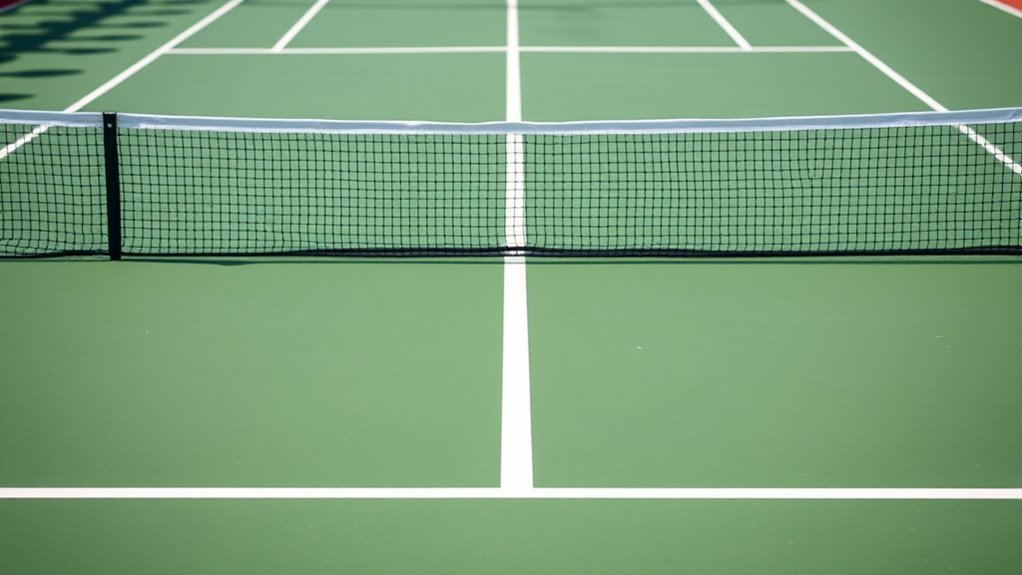
How Big Is the Kitchen in Pickleball? The Complete Answer
Many pickleball players find themselves frustrated by the confusion around the kitchen’s size and rules. You’re not alone—this area can feel tricky to master at first. Knowing exactly how big the kitchen is can make a big difference in your game.
The pickleball kitchen measures 7 feet from the net on each side, creating a 14-foot-wide zone that runs 20 feet across the court. You can’t volley while standing inside this area, which makes it essential for strategic play near the net.
Stepping into the kitchen while volleying causes a fault, but standing in it without volleying is allowed. Understanding its size helps you position and time your shots better.
Keep going, and you’ll uncover how to master your moves around this essential zone.
Key Takeaways
The pickleball kitchen extends 7 feet from the net on both sides, making it 14 feet in total depth.
It runs parallel to the net and spans 20 feet across the court’s width.
This area prevents players from volleying while inside, encouraging strategic shot placement and timing.
You can step into the kitchen, but you can’t volley the ball while inside or you’ll fault.
Knowing the kitchen’s dimensions is key for positioning and planning your game near the net.
What Are the Official Dimensions of the Pickleball Kitchen?
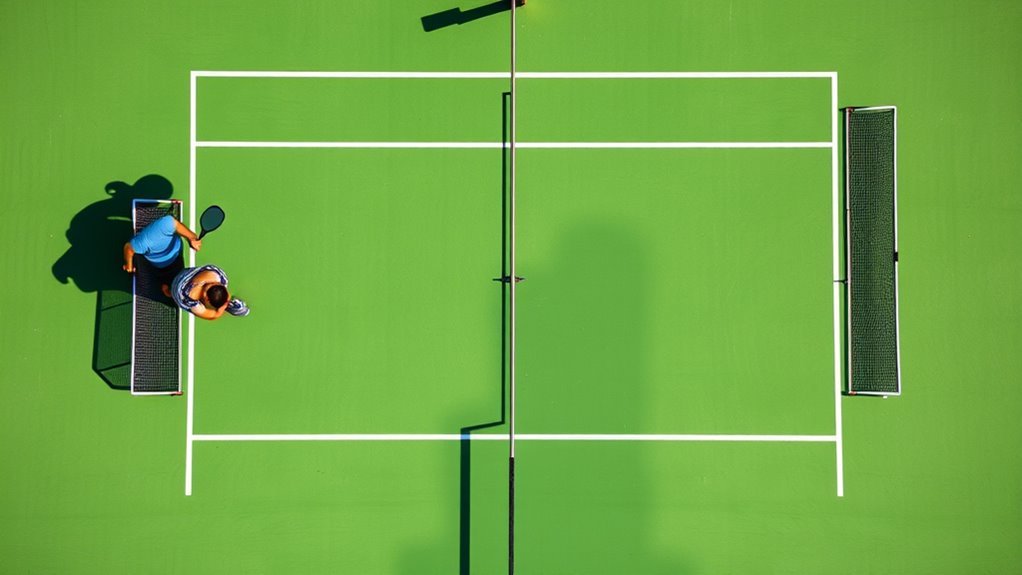
The pickleball kitchen, also called the non-volley zone, is exactly 7 feet from the net on each side. When you’re on the court, you’ll see this 14-foot-wide strip running parallel to the net. It extends 20 feet across the court’s width.
Knowing the official kitchen dimensions is key because it affects how you play near the net. The rules say you can’t volley the ball while standing inside this zone. So, you have to let the ball bounce first, which changes your strategy for aggressive shots.
Understanding where the kitchen starts and ends helps you position yourself correctly and avoid faults. Stay clear of crossing into this zone when volleying, and you’ll follow the rules better. This knowledge will improve your game and help you stay in play.
Why Is the Pickleball Kitchen Important for Rules and Strategy?
Because the kitchen restricts volleying near the net, you have to be more mindful of your timing and shot choices. You can’t just rush the net and smash every ball because of this rule.
The kitchen rules prevent you from hitting a volley while standing inside this 7-foot zone, which encourages more strategy. This makes the game less about pure power and more about placement and patience.
By understanding how to use the kitchen effectively, you can set up drop shots and lobs that force your opponent to move. This can lead to mistakes and open up opportunities for you.
You’ll also learn to be patient, waiting for the right moment to approach the net legally. Mastering the kitchen rules helps you control the pace and positioning, giving you a tactical advantage in rallies.
What Happens If You Step Into the Kitchen When Volleying?
If you step into the kitchen while volleying, you’ll immediately commit a fault that stops the point in your opponent’s favor. Kitchen violations happen because volley rules clearly prohibit hitting the ball in the non-volley zone, also known as the kitchen, without letting it bounce first. This rule helps prevent players from dominating close to the net and keeps the game fair.
Here’s a quick rundown of what happens if you step into the kitchen during a volley:
| Situation | Violation? | Outcome |
|---|---|---|
| Volley inside kitchen | Yes | Point to opponent |
| Step in kitchen, no volley | No | Play continues |
| Volley outside kitchen | No | Play continues |
| Foot touches kitchen line | No | Play continues |
| Step in kitchen after volley | No | Play continues |
Knowing these kitchen rules can help you avoid costly mistakes during your game.
How Does the Kitchen Change Your Volleying?
The kitchen really changes how you approach volleying, doesn’t it? It’s like a little boundary that keeps you from just smashing the ball anywhere. So, you’ve got to be more precise with your shots, especially when you’re close to the net.
Basically, you want to keep the ball low and controlled when you’re in that zone. It’s all about finesse rather than power. If you can master your volleys around the kitchen, you’ll have a big advantage in the game. It’s just a matter of adjusting your strategy a bit to play smarter in that tight space.
Kitchen Impact On Volleys
When you volley near the kitchen, your timing and positioning need to adapt to the zone’s rules. It’s important to stay aware of the non-volley zone to avoid faults.
The kitchen rules mean you shouldn’t step into that area. Doing so can result in a fault, so foot placement is key. Respect for your opponent’s space is also part of good etiquette and fair play.
| Aspect | Effect on Volleys |
|---|---|
| Foot Placement | Must stay outside the kitchen line |
| Reaction Time | Quicker reflexes are needed to volley |
| Shot Control | Precision helps avoid faults |
Getting these elements right helps you volley effectively while respecting the boundaries. This improves your overall game and keeps play fair.
Volley Strategy Near Kitchen
Mastering your volley near the kitchen means adjusting both your tactics and mindset. Since you can’t step into the kitchen to volley, your positioning just outside the non-volley zone is key. Stay close enough to react quickly but avoid crossing into the kitchen to prevent faults.
Your volley tactics should focus on control and anticipation. Use soft, angled shots to make opponents make mistakes rather than power shots that risk pushing you into the kitchen. Keep your paddle up and your body balanced so you can respond swiftly.
Understanding how the kitchen limits your movement will improve your net play. It forces opponents to hit tougher shots. With smart positioning and precise volley tactics, you’ll control the net and turn defense into offense more effectively.
How to Position Yourself Around the Kitchen for Better Defense
Although the kitchen is a no-volley zone, you can’t stay passive around it if you want to defend well. Proper positioning near the kitchen helps you anticipate shots and react quickly. You want to stay close enough to cut off dinks but far enough back to avoid faults.
Focus on controlling angles and staying ready. Keep your paddle up and in position to minimize reaction time. Position yourself slightly behind the kitchen line to avoid stepping in.
Adjust your stance based on your opponent’s shot patterns and tendencies. Good communication with your partner is key to covering vulnerable spots effectively.
Mastering these defensive tactics will help you control the pace near the kitchen. This turns it from a weak spot into a strategic advantage during rallies.
Tips for Using the Kitchen to Set Up Winning Shots
Looking to set up those winning shots? The key is positioning yourself smartly close to the kitchen. It might sound simple, but being in the right spot gives you a real advantage.
And don’t forget about timing. Hitting your shots just at the right moment can make all the difference against your opponent. When you’re quick to capitalize on openings, it keeps them on their toes.
Oh, and angles are your friends here. Using them effectively can make your shots tricky to return. So, experiment a bit and find those perfect angles that keep your opponent guessing.
Positioning Near The Kitchen
When you position yourself near the kitchen, you gain a strategic advantage that lets you control the pace and direction of the game. Mastering kitchen defense and strategy here helps you intercept volleys and put pressure on your opponents.
Staying close to the kitchen line allows you to react quickly to soft shots and set up offensive opportunities. Keep your paddle up and ready for quick volleys, and maintain balanced footwork to cover angles efficiently.
Use the kitchen line as a reference to avoid faults, and anticipate your opponents’ shots to make precise returns. This positioning gives you the upper hand and keeps you prepared for any play.
Timing Your Kitchen Shots
Positioning yourself near the kitchen line puts you in a great spot to time your shots for maximum impact. Focus on your shot selection—soft dinks or well-placed volleys that make your opponent work harder to return.
Watch their paddle and body language closely. This helps you anticipate when to strike and stay one step ahead. Remember, good kitchen etiquette means avoiding aggressive smashes in the kitchen, which can cause faults and disrupt fair play.
Instead, be patient and precise. Use smart shot choices and perfect timing to control the pace of the game. This approach increases your chances of setting up winning points while respecting the rules that keep the game fair.
Using Angles Effectively
Although mastering timing is essential, using angles effectively in the kitchen can transform your shots from predictable to game-winning. By focusing on precise angle placement, you can force your opponents to stretch and react quickly, giving you the upper hand in the rally.
Incorporate these kitchen strategy tips to improve your play:
- Aim for sharp cross-court angles to pull opponents wide off the court.
- Use subtle angle variations to keep your opponent guessing.
- Combine angle placement with soft dinks to set up easy put-away shots.
- Target opponents’ weaker side by adjusting your angle placement in the kitchen.
Mastering these angle techniques not only adds variety to your shots but also makes your kitchen play a powerful weapon for winning points consistently.
How the Kitchen Size Compares to Other Court Areas
Since the kitchen plays a vital role in pickleball strategy, understanding its size compared to other court areas can help you improve your game. The kitchen, also known as the non-volley zone, measures 7 feet from the net on both sides, making it a 14-foot-wide strip across the court.
Looking at the full court layout, which is 20 feet wide by 44 feet long, you’ll see the kitchen takes up a small part of the total playing area. Compared to the 15-foot distance from the baseline to the kitchen, the kitchen is shorter but crucial for controlling net play.
While the backcourt gives you room for powerful groundstrokes, the kitchen forces you to focus on finesse and quick reflexes. Knowing these size differences helps you position yourself smartly and adapt your shots based on where you are on the court.
What Are Common Mistakes in the Pickleball Kitchen Zone?
Understanding the size and role of the kitchen helps you navigate this area more effectively, but many players still make common mistakes when playing in the non-volley zone. These errors often lead to kitchen violations that can cost points and momentum.
One key mistake is stepping into the kitchen while volleying, ignoring the rule that you can’t strike the ball in this zone without letting it bounce first. Another frequent error is poor kitchen strategy—rushing into the zone without proper positioning or anticipation, which makes you vulnerable to opponents’ shots. Many players also fail to maintain balance and footwork, causing them to lose control near the net.
Finally, some don’t recognize when to play aggressively or defensively in the kitchen, missing chances to pressure opponents or recover quickly. To avoid these pitfalls, focus on staying out of the kitchen during volleys, choosing your moments carefully with kitchen strategy, maintaining stable footwork, and reading your opponent’s shots accurately.
How to Practice Shots and Footwork Around the Kitchen
Mastering just a few key shots and footwork drills can really boost your play around the kitchen. Focus on drills that emphasize dinking and soft volleys, since these shots need precision and control near the net.
Practice gently placing the ball over the net to improve your touch and accuracy. At the same time, work on footwork exercises that highlight quick lateral moves and good balance. Stay light on your toes and take small, controlled steps to stay ready without crossing into the non-volley zone.
Combine these drills by moving side-to-side while hitting soft shots, simulating real match situations. This helps you stay well-positioned and react quickly to your opponent’s returns.
Regular practice of both kitchen shots and footwork will improve your agility and shot consistency. This gives you an edge when you’re close to the kitchen area. Focus on smooth transitions between movement and shots to build confidence and control around the kitchen.
How to Play in the Kitchen at Any Skill Level
No matter your skill level, playing effectively in the kitchen requires quick reflexes and smart shot placement. Mastering kitchen strategy helps you control the pace and keeps your opponents guessing.
Effective kitchen play hinges on quick reflexes and strategic shot placement to control the game’s pace.
You want to pair sharp footwork with smart positioning to make the most of every opportunity near the non-volley zone. This combo keeps you agile and ready for any shot.
To get better at playing in the kitchen, focus on a few key areas. First, maintain a low stance for faster reactions and better balance.
Next, use soft dinks and angled shots to force your opponents into tough returns. Reading their paddle position and body language can help you anticipate their shots.
Practicing quick lateral movements will keep you agile and prepared for fast volleys. The better you get at these basics, the more control you’ll have at the kitchen line.
Frequently Asked Questions
Can the Kitchen Size Vary in Different Pickleball Tournaments?
No, the kitchen size doesn’t vary in different pickleball tournaments because tournament regulations set standard kitchen dimensions to keep the game fair.
You’ll find the non-volley zone always measures 7 feet from the net on both sides, no matter the event.
What Materials Are Used to Mark the Kitchen on the Court?
Imagine the kitchen as a cozy, well-defined garden in your pickleball playground. You’ll find kitchen markings made from durable court materials like acrylic paint or thermoplastic. These are designed to withstand weather and heavy play.
These materials cling tightly to the court surface, making sure your kitchen stays visible and inviting every game. When you step in, you’ll know exactly where the safe haven begins and ends.
This helps keep your play precise and fair, so everyone can enjoy the game without confusion.
Are There Any Historical Changes to the Kitchen Dimensions?
Yes, the kitchen dimensions have changed over time since pickleball was first played. At the beginning, there weren’t strict rules about the size, so court setups varied a lot.
As the game grew in popularity, official organizations stepped in to set consistent kitchen sizes. This was to make sure everyone played fairly and safely.
Today, when you play pickleball, you’re following those well-established rules that came from earlier, more informal guidelines. This evolution has made the game more uniform and more fun for everyone.
How Does Weather Affect the Kitchen Area on Outdoor Courts?
Weather conditions can really impact the kitchen area during outdoor gameplay. If it’s windy or rainy, controlling shots near the kitchen becomes tougher, so you might need to adjust your strategy.
Slippery surfaces from moisture can affect your footing, which can lower your performance around that zone. Staying aware of weather changes helps you adapt quickly and keep control when playing near the kitchen on outdoor courts.
Can Kitchen Rules Differ in Casual Versus Professional Play?
Like a recipe that changes from home cooking to fine dining, kitchen rules can differ between casual and professional play. When you’re playing casually, kitchen strategy is more relaxed, and casual etiquette lets you bend some rules for fun.
But in professional play, the rules are strict, and kitchen strategy becomes essential to winning. You’ll need to follow every rule precisely to compete at that level.
Conclusion
You might not realize it, but mastering the pickleball kitchen is like unlocking a secret level in a game—you get control, strategy, and precision all at once.
Coincidentally, the more you respect its size and rules, the better your volleys and defense become.
So, next time you step near the kitchen, remember: it’s not just a small space, but a powerful zone that can change your entire pickleball game for the better.