Parts of a Stove: A Simple Guide
Many people struggle with cooking efficiently because they don’t fully understand their stove’s main parts. You’re not alone—getting comfortable with your stove can make all the difference in meal prep.
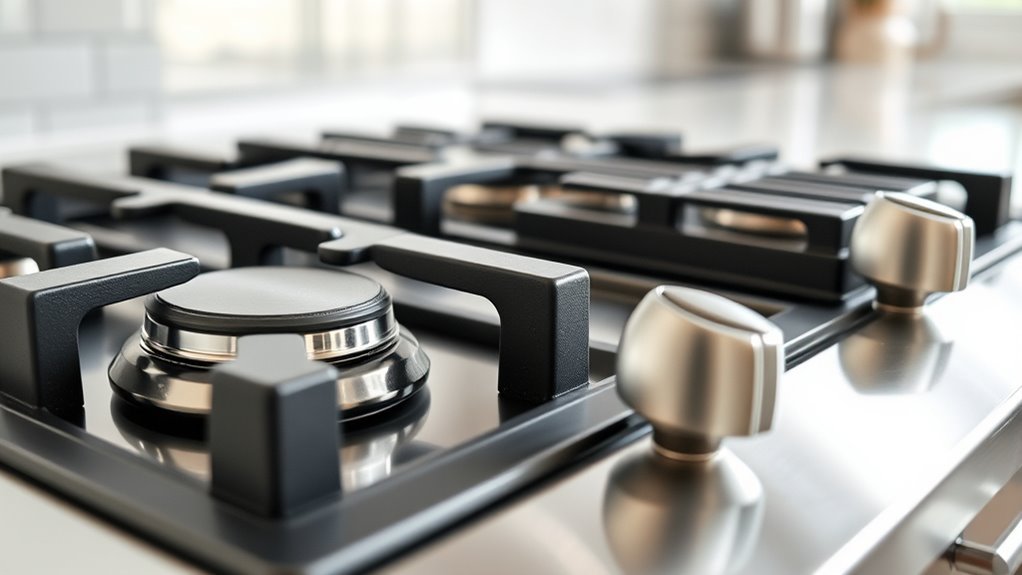
You rely on your stove’s main parts like the cooktop with burners, control knobs, and oven compartment to cook meals efficiently. Burners ignite through electric sparks or pilot lights, letting you adjust heat precisely.
Ovens include heating elements and thermostats to bake evenly. Ventilation systems keep your kitchen safe by clearing smoke, while safety features prevent accidents.
Using accessories like griddle plates can also improve your cooking experience. Regular maintenance guarantees everything runs smoothly. Investigate further to master your stove’s full potential.
Key Takeaways
- A stove usually has a cooktop with burners, control knobs or touch controls, and an oven with racks.
- Burners ignite using electric sparks, pilot lights, piezo systems, or batteries to give you adjustable heat levels.
- The oven parts include heating elements, a thermostat, an oven door, and racks for baking or roasting.
- Stove surfaces come in different types like glass-ceramic, cast iron, and induction-compatible, which affect how you cook and how you care for them.
- Safety features such as automatic gas shut-off, gas leak sensors, child locks, and heat indicators help keep things secure.
What Are the Main Parts of a Stove
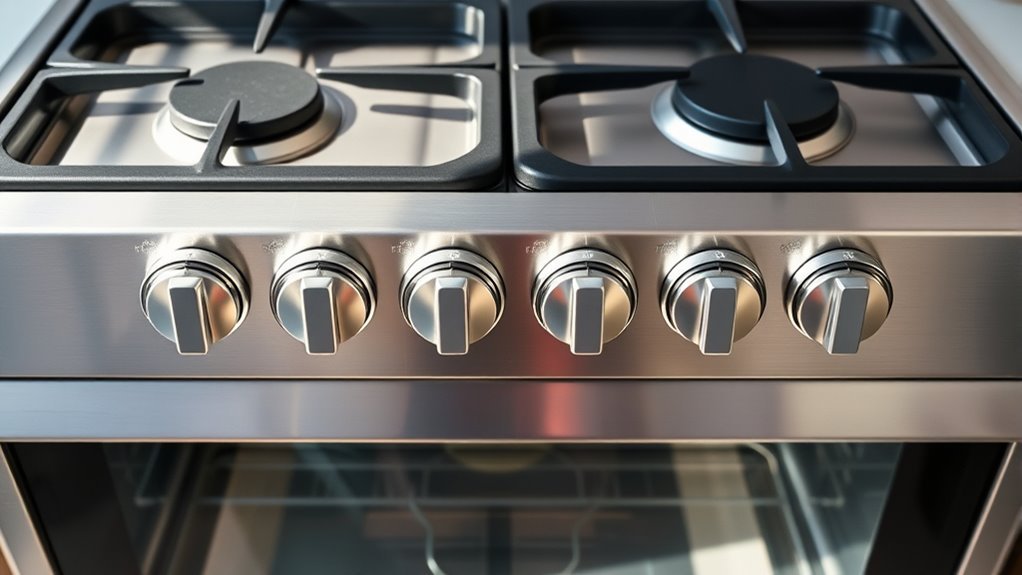
A stove has several key parts that work together to cook your food efficiently. Depending on the stove type, these parts might vary a bit, but the basics stay the same.
You’ll find the cooktop where you place your pots and pans, featuring burners or heating elements. Control knobs or touch controls let you adjust the heat just right.
The oven compartment below is essential for baking and roasting. Inside, you’ll see racks that hold your dishes at different levels.
Stoves can use different energy sources like electricity, gas, or induction. This choice affects how the heating parts are designed and how they work.
For example, gas stoves have visible burners with flames, while electric ones rely on coils or smooth-top surfaces. Induction stoves heat cookware directly with magnetic fields, making cooking quick and efficient.
Knowing these main parts helps you use your stove better and understand how your meals come together.
How the Burners Work on Your Stove
Now that you’re familiar with the main parts of a stove, let’s talk about how the burners actually work. When you turn the knob, it activates the ignition process, which sparks a tiny flame. That spark catches the gas, and voilà—the burner ignites, giving you a fire to cook with.
Controlling the heat is pretty straightforward. Turning the knob adjusts how much gas flows to the burner, which in turn changes the size of the flame. So, you can make your cooking hotter or cooler just by twisting that knob. Getting to know these steps makes using your stove safer and helps you cook more efficiently.
Burner Ignition Process
When you turn the knob to start a burner, an electric spark ignites the gas flowing through the stove’s burner. This ignition process mainly uses electric spark and pilot light systems.
Most modern stoves use electric spark ignition, which quickly lights the burner as you turn the knob. If your burner doesn’t ignite, start troubleshooting by checking gas flow, spark presence, and cleanliness around the igniter.
Sometimes food debris or moisture can block the spark, preventing ignition. Make sure the igniter clicks and sparks properly when you turn the knob.
Understanding the burner ignition process helps you spot issues quickly and keep your stove working safely and efficiently without guessing or unnecessary repairs.
Heat Control Mechanism
Although the burner ignition starts the flame, you control the heat by adjusting the gas flow through the stove’s knobs. These knobs regulate how much gas reaches each burner, so you can choose different heat settings—from low simmer to high boil.
When you turn a knob, you’re mainly controlling the temperature of that burner. This affects how quickly your food cooks and its overall quality.
Some stoves also have clicks or indicators to show when you’ve reached certain heat levels. Knowing how the heat control works helps you cook more efficiently and confidently every time.
How the Ignition System Lights Your Stove
Before you can start cooking, the ignition system sparks the flame that brings your stove to life. It uses different types of ignition to create the spark needed for combustion.
Most modern stoves use an electric spark ignition, which generates a quick spark to ignite the gas safely and efficiently. Some older models rely on a pilot light, which keeps a small flame burning continuously.
Understanding how the spark is generated helps you appreciate how your stove works. When you turn the knob to ignite, a small electric current passes through the igniter, creating a spark that lights the gas flowing from the burner.
This process is instant, safe, and prevents gas buildup. Here’s a quick look at the main types of ignition systems:
| Ignition Type | Description |
|---|---|
| Electric Spark | Produces a quick spark on demand |
| Pilot Light | Small continuous flame |
| Piezo Ignition | Manual spark via mechanical press |
| Battery Ignition | Battery-powered spark generation |
This ignition system guarantees your stove lights reliably every time.
How Control Knobs Help You Manage Your Stove
Since you control the flame’s intensity, the control knobs play an essential role in managing your stove’s performance. These knobs let you adjust heat levels precisely, helping you cook various dishes perfectly.
The knob functionality is designed for ease of use, allowing you to turn the flame up or down smoothly. When you rotate a knob, it regulates the gas flow to the burner, directly affecting the flame size.
This simple yet effective feature greatly improves your experience by offering quick, intuitive control. You don’t have to guess or work hard to get the right temperature; the knobs respond immediately to your adjustments.
Whether you’re simmering, boiling, or frying, the control knobs give you the confidence to handle your cooking with accuracy. Overall, their design balances functionality and convenience, making them an essential part of your stove’s operation.
Understanding the Stove Oven and Its Components
The stove oven gives you versatile cooking options beyond just the burners. You can bake, roast, and broil with ease. Understanding its components helps you get the most out of this essential kitchen tool.
Ovens have come a long way from simple wood-fired chambers to modern appliances packed with features like convection fans and self-cleaning modes. These innovations make cooking more efficient and convenient.
Here’s a quick look at some key stove oven components:
| Component | Function | Modern Innovations |
|---|---|---|
| Heating Element | Provides heat for cooking | Convection heating |
| Oven Door | Seals heat inside | Double or triple glazing |
| Thermostat | Regulates temperature | Digital temperature control |
| Racks | Hold cookware | Adjustable, non-stick |
How Stove Surfaces Affect Your Cooking
You’ll see that different stove surfaces spread heat in their own special ways, which can really change how your food cooks. For example, some surfaces heat up quickly, while others take a bit longer to get going. It’s interesting to see how these differences can impact your cooking process.
The material of the surface also plays a big role. Glass, ceramic, and metal all behave differently when it comes to heat retention and temperature control. Knowing how each one works can help you cook more efficiently and get the results you’re aiming for. So, understanding these little details can make a big difference in your everyday cooking!
Heat Distribution Patterns
Understanding how heat distributes across your stove’s surface can really improve your cooking results. Different areas of your stove create distinct heat zones, which affect how evenly your food cooks. Recognizing these patterns helps you cook more efficiently and avoid undercooked or burnt spots.
Here’s why it matters:
- Consistent heat zones let you place pots and pans where the heat matches your needs.
- Uneven heat spots mean you can adjust the temperature or move cookware to prevent burning.
- Controlled heat distribution helps you save energy by using your stove smarter, not harder.
Surface Material Types
Heat distribution depends not only on where you place your cookware but also on what your stove surface is made of. Ceramic surfaces offer excellent heat retention and a smooth feel, making them easy to clean and giving your kitchen a stylish look.
Stainless steel surfaces are known for their durability and resistance to scratches, but they may heat unevenly. Glass tops give a sleek, modern appearance and are easy to maintain, though you need to handle them carefully to avoid cracks.
If you use cast iron cookware, you’ll appreciate its rugged durability and heat retention. However, it might scratch delicate surfaces. Also, if you rely on induction cooking, check for compatibility since not all surfaces work with induction cooktops.
Choosing the right surface can really improve your cooking efficiency and match your kitchen style.
How Stove Ventilation Systems Keep Your Kitchen Safe
Although cooking fills your kitchen with delicious aromas, it also produces smoke, steam, and harmful gases that can build up quickly. That’s why stove ventilation systems are so important—they help improve air quality and get rid of these unwanted byproducts. Knowing the different types of ventilation helps you pick the right one for your space and cooking style.
Here’s how proper ventilation keeps you safe:
- It quickly clears smoke and odors, so you don’t feel uncomfortable or irritated.
- It reduces moisture buildup, which can cause mold and damage your surfaces.
- It removes harmful gases like carbon monoxide, keeping you safe.
Whether you have a range hood, downdraft system, or exhaust fan, each type plays a key role in keeping your air fresh and breathable. Making sure your stove’s ventilation works well creates a safer, more enjoyable cooking environment every time.
How Safety Features Protect You While Cooking
Because cooking involves open flames and high temperatures, your stove has safety features to protect you from accidents and injuries. These features help prevent fires by automatically shutting off the gas if the flame goes out, reducing flare-ups.
Many stoves also have sensors that detect gas leaks and alert you immediately. This way, you can take action before the situation gets worse. Child safety locks prevent little hands from turning on burners accidentally, giving you peace of mind.
Some stoves include heat indicators that warn you when surfaces are still hot. That helps you avoid burns while cooking. All these safety mechanisms work quietly in the background to keep your kitchen secure.
Common Stove Accessories and Attachments to Know
When you want to get the most out of your stove, using the right accessories and attachments can make a big difference. These stove accessories not only improve your cooking efficiency but also add convenience and safety to your kitchen.
Here are three must-know attachments that can transform how you cook:
- Griddle Plates – Perfect for pancakes or grilled sandwiches, these plates fit right over your burners and expand your cooking options effortlessly.
- Simmer Rings – These help you control heat more precisely, especially when cooking delicate sauces or melting chocolate without scorching.
- Wok Rings – Designed to stabilize round-bottomed woks, these rings let you enjoy authentic stir-frying on your flat stove surface.
Pairing these accessories with your essential cooking tools guarantees you’re ready for any recipe. Choosing the right attachments will unlock your stove’s full potential and make every meal more enjoyable.
How to Maintain and Clean Your Stove Parts
Keeping your stove parts clean and well-maintained guarantees they work efficiently and last longer. Start by establishing a maintenance schedule that fits your cooking habits.
Regularly wipe down burners, knobs, and surfaces after each use to prevent buildup. Use mild detergents and avoid abrasive tools that can damage finishes.
For stubborn grime, soak removable parts in warm, soapy water before scrubbing gently. Check burner flames for evenness; yellow or uneven flames may signal clogged ports needing careful cleaning.
Don’t forget to clean under the stove and ventilate the area to prevent grease buildup and odors. Inspect gas connections regularly for leaks or damage.
Following your maintenance schedule keeps your stove safe, improves performance, and boosts energy efficiency. By sticking to these stove cleaning tips, you’ll extend your appliance’s lifespan and enjoy hassle-free cooking every day.
Frequently Asked Questions
Can I Convert My Stove From Gas to Electric?
Yes, you can convert your stove from gas to electric, but it’s not a simple swap. You’ll need a stove conversion that involves electrical work and possibly changing your cooktop.
Always prioritize gas safety by having a professional handle the disconnection of gas lines to avoid leaks. Also, check if your kitchen’s electrical system can support the new electric stove.
Consulting a licensed technician will make the process safe and efficient.
What Materials Are Stoves Typically Made From?
It’s funny how just when you wonder about stove materials, you might be touching one without realizing it.
Stoves usually feature a mix of metal, glass, and ceramic in their construction.
The body often uses stainless steel or cast iron for durability, while the cooktop might include tempered glass or ceramic to handle heat.
This stove construction guarantees safety and efficiency, making your cooking experience smoother and your appliance long-lasting.
How Do Stove Warranties Generally Work?
Stove warranties usually cover defects in materials and workmanship for a set period, often one or two years.
If you have an issue, you’ll need to follow the claim process outlined by the manufacturer. This typically involves providing proof of purchase and details about the problem.
Keep in mind, warranty coverage might exclude normal wear and tear or damage caused by misuse. Always read the fine print to understand what’s included and how to file a claim.
Are There Energy-Efficient Stove Options Available?
You can definitely kill two birds with one stone by choosing energy-efficient stove options.
Induction cooking tops are a great choice since they use electromagnetic energy to heat pots directly, wasting less energy.
Plus, they’re part of a growing trend of eco-friendly appliances that help reduce your carbon footprint.
If you want to save on bills and help the planet, these stoves are worth considering for your kitchen.
What Should I Do if My Stove Emits a Strange Odor?
If your stove emits a strange odor, the first step is to identify what might be causing it, such as gas leaks, food spills burning, or electrical issues.
Turn off the stove right away and open windows to ventilate the area. Don’t ignore the smell—safety is most important.
Check the connections and look for any obvious signs of trouble. If you suspect a gas leak or electrical problem, call a professional immediately.
Avoid using the stove until it has been inspected to keep yourself and your home safe.
Conclusion
Just like a well-orchestrated symphony, each part of your stove plays a crucial role in creating the perfect cooking experience. When you understand how burners ignite, knobs control, and safety features protect, you’re not just using a stove—you’re mastering a timeless kitchen companion.
Keep your stove maintained and clean, and it will serve you faithfully, much like a trusted conductor guiding every note to harmony in your culinary masterpiece. Remember, understanding the parts of a stove helps you cook better and keep your appliance in top shape.