How to Organize a Pantry: Practical Tips for a Clutter-Free Kitchen
Organizing a pantry starts with categorizing your food items and wiping down all surfaces. Begin by removing everything and sorting items into groups like baking, canned goods, snacks, and spices. Then, decide what to keep, toss expired products, and wipe shelves clean before returning items thoughtfully.
A well-organized pantry not only makes meal preparation faster but also helps minimize food waste by keeping everything visible and accessible. Knowing where each item belongs can reduce stress and chaos in your kitchen, turning your pantry into a space you find useful and enjoyable.
This article will guide you through practical steps for organizing a pantry, from selecting storage containers and labeling systems to arranging items for easy access. You'll also find helpful advice on maintaining the order you've created so your pantry stays tidy over time.
Planning Your Pantry Organization

Assessing Your Pantry Space
Start by measuring your pantry's dimensions to understand what storage options fit best. Consider shelf heights, widths, and depth to maximize vertical and horizontal space. Take note of any awkward corners or areas prone to shadow where smaller items might get lost.
Consider how often you use each category of food and allocate shelf space accordingly. For example, daily-use items should be at eye level, while rarely used bulk goods can go higher or lower.
Setting Categories for Efficient Sorting
Divide your pantry contents into categories such as grains, canned goods, baking ingredients, snacks, breakfast items, and spices. Grouping like items together helps you find what you need quickly and keeps the pantry visually consistent.
Decide on subcategories if necessary, for example separating sweet snacks from savory ones, or dry pasta from rice, to refine your system further and reduce clutter.
Choosing the Right Containers and Labels

Benefits of Clear, Airtight Containers
Using transparent airtight containers keeps food fresher for longer by protecting it from moisture and pests. It also prevents spills and allows you to see contents clearly, making inventory checks easier.
Choose containers that match the size of your pantry shelves and food portions. Stackable containers save space, while uniform shapes create a tidier look.
- Glass or BPA-free plastic options
- Containers with measuring marks
- Variety of sizes to fit all food types
For more on this, see our related guide: How to Organize Kitchen Pantry: A Step-by-Step Guide.
Labeling Strategies for Quick Identification
Labels help everyone in your household find items quickly and know when they are running low. Use waterproof labels and permanent markers or printable stickers to keep labels neat and durable.
Include essential information such as the contents and, if possible, expiry dates to keep track of freshness. Position labels at the front of containers or shelves for maximum visibility.
- Color coding labels by food group
- Using chalkboard labels for reusability
Arranging Items for Accessibility

Prioritizing Frequently Used Foods
Place the foods you use daily or weekly at eye level to minimize bending or reaching. This includes staple items like cereals, cooking oils, and snacks.
Reserve higher or lower shelves for bulk staples, seasonal items, or infrequently used goods to avoid cluttering primary areas.
Utilizing Shelf Risers and Baskets
Shelf risers increase vertical space by creating additional levels within a single shelf. This is especially useful for canned goods or spices.
Baskets and bins keep smaller or loose items grouped and prevent them from toppling over. Clear bins allow you to spot contents quickly, speeding up meal preparation.
- Stackable shelf risers
- Wire or plastic baskets
- Lazy Susans for corner access
Maximizing Pantry Door and Wall Space
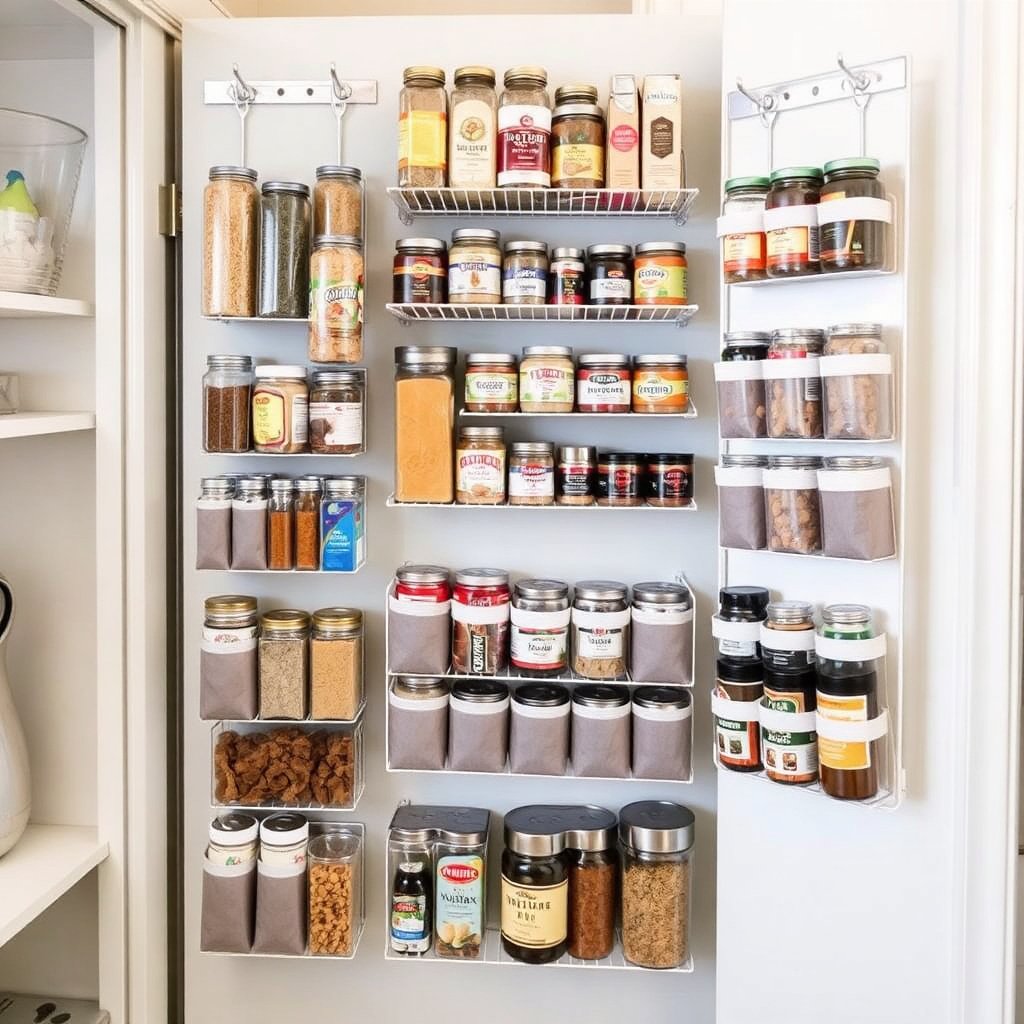
Installing Over-the-Door Organizers
Over-the-door racks or pockets add accessible storage for spices, seasoning packets, or small jars without using shelf space. These organizers make use of often overlooked areas, freeing main shelves for bulkier items.
Select sturdy organizers that fit your door size and can hold the weight of your items securely.
For more on this, see our related guide: How to Organize Kitchen Cabinets: A Step-by-Step Guide.
Adding Hooks and Magnetic Strips
Hooks mounted inside the pantry or on walls can hold utensils, bags, or lightweight kitchen gadgets. Magnetic strips are perfect for metal tools like scissors or spice jars with metal lids.
These additions keep items visible and prevent them from cluttering shelves, while also creating quick access points.
Maintaining Your Organized Pantry

Regularly Checking Expiration Dates
Schedule a monthly or quarterly review of your pantry to remove expired or stale items. This practice helps keep the pantry clean and prevents food waste.
During these checks, reorganize any misplaced items and update your shopping list based on current stock.
For additional advice on keeping your kitchen storage efficient and food safe, check out pantry organization tips from the USDA. pantry organization tips from the USDA.
Establishing a Restocking System
Keep a notepad or digital list near your pantry to jot down items that run low. This makes grocery planning efficient and prevents double-buying.
Consider rotating older products to the front when restocking to use up items before they expire.
Pantry Storage Solutions Category Comparison
Here's a comparison of popular pantry storage solutions highlighting their pros and cons to help you decide what fits your needs best.
| Category | Cost | Durability | Space Efficiency | Ease of Cleaning |
|---|---|---|---|---|
| Glass Jars | $$ | High | High | Easy |
| Plastic Containers | $ | Medium | High | Easy |
| Wire Baskets | $ | High | Medium | Moderate |
| Over-the-Door Racks | $ | Medium | High | Easy |
| Shelf Risers | $ | Medium | High | Easy |
Frequently Asked Questions
How often should I reorganize my pantry?
Reorganizing every few months helps keep your pantry tidy and ensures expired items are removed, maintaining an efficient storage system.
What are the best containers for pantry organization?
Clear airtight containers made of glass or BPA-free plastic work best because they preserve freshness and allow quick content identification.
Can pantry organizers save space effectively?
Yes, using organizers like shelf risers, bins, and door racks can significantly increase usable space and keep items accessible.
Should I label all pantry items?
Labeling is highly recommended to speed up finding ingredients and to track expiration dates, helping reduce waste.
How do I maintain pantry organization with a busy lifestyle?
Create simple habits like jotting down items when running low and doing quick monthly checks to keep your pantry orderly despite a busy schedule.
Key Takeaways
- Sort pantry items into clear categories to streamline access.
- Use airtight, transparent containers for freshness and visibility.
- Arrange frequently used foods at eye level for convenience.
- Incorporate extra storage like door racks and shelf risers.
Conclusion
Deciding how to organize a pantry involves a careful assessment of the space, your food habits, and storage needs. By categorizing items clearly, choosing appropriate containers, and arranging shelves thoughtfully, you create a system that supports efficient cooking and reduces stress. Regular maintenance, including checking expiration dates and restocking, sustains this order over time, turning your pantry into a well-functioning hub for your kitchen.
For those with limited space, pantry storage solutions such as over-the-door organizers and shelf risers offer room-saving advantages without sacrificing accessibility. Glass jars and labeled containers enhance visibility and freshness, especially for dry goods and baking supplies. Baskets and bins corral smaller items, making cleanups simpler and deterring clutter. Whether your pantry is a walk-in or a cupboard, adapting these strategies to your unique kitchen can boost usability significantly.
Start with a full empty-out and clean of your pantry, then apply these techniques step-by-step to transform your storage area. Maintain the organization by integrating easy habits like quick monthly audits and clear labeling. With a bit of effort, your pantry will stay streamlined and inviting, making meal prep a smoother and more enjoyable experience.