How to Get Rid of Ants in Kitchen: A Step-by-Step Guide
Dealing with ants in your kitchen can be incredibly frustrating—many people struggle with these unwelcome visitors invading their space.
If you’re tired of tiny ants marching across your countertops and pantry, you’re not alone.
To get rid of ants in your kitchen, start by spotting their trails and sealing entry points like cracks and gaps.
Clean surfaces with vinegar or soapy water to erase their scent trails.
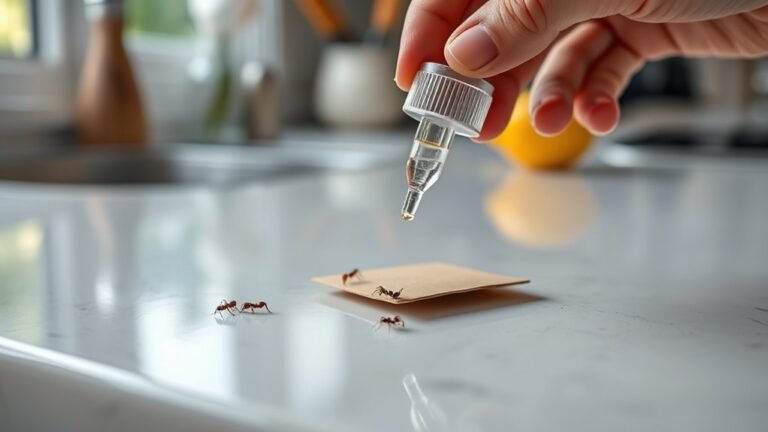
Use natural remedies such as citrus peels or essential oil sprays, and set bait stations near their activity spots.
Store food in airtight containers and maintain consistent cleaning habits.
If ants keep coming back, you’ll find tips to tackle them effectively and prevent future invasions ahead.
Key Takeaways
- Identify the ant species and what attracts them, like food sources and moisture, so you can target your control methods effectively.
- Inspect your kitchen for any entry points like cracks and gaps, then seal them up to keep ants from getting inside.
- Clean surfaces with soapy water or vinegar to wipe away pheromone trails and stop ants from following the same paths.
- Try natural remedies like essential oil sprays, citrus peels, or place ant baits near trails and food sources.
- Keep up with regular cleaning, store food properly, and watch for ongoing ant activity to prevent future infestations.
How to Identify the Ants Invading Your Kitchen
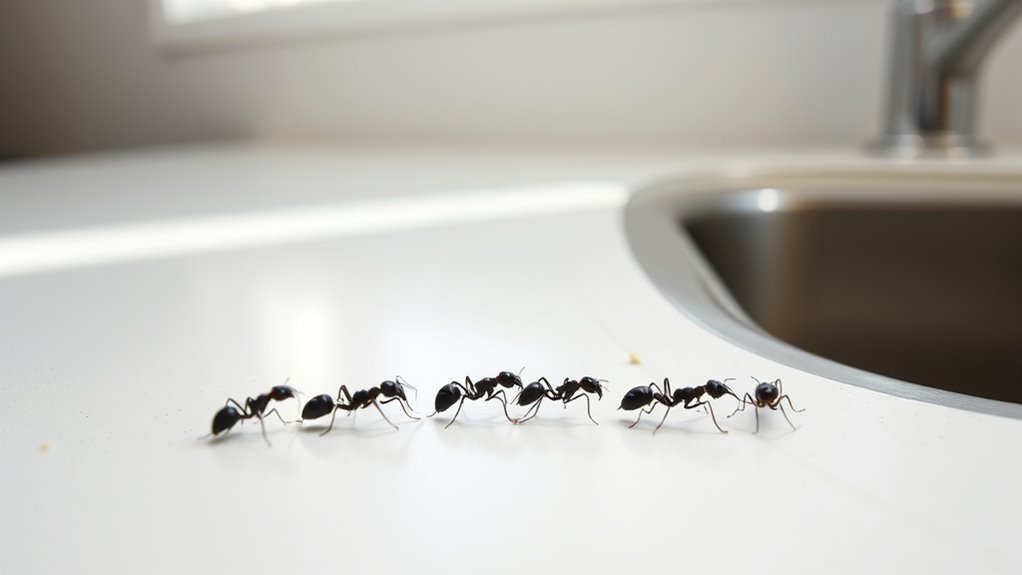
To effectively get rid of ants in your kitchen, start by identifying the type of ants invading your space. Knowing their behavior helps you figure out their species, which guides the best way to remove them.
In kitchens, common invaders include sugar ants, odorous house ants, and carpenter ants. Sugar ants are tiny and love sweet foods, while odorous house ants emit a strong smell when crushed. Carpenter ants are larger and prefer moist wood but also look for food in your kitchen.
Watch how they move—are they creating trails to a specific food source? Noticing their size, color, and how they move can help you identify them. Also, check near typical hotspots like crumbs, spills, or damp areas.
How to Find and Seal Where Ants Are Coming In
If you want to stop ants from invading your kitchen, the first thing you need to do is find out where they’re coming in. Take a close look around your windows, doors, and any cracks in the walls — those tiny gaps are usually where they sneak inside. Sometimes, you might even notice a trail of ants leading right to an entry point.
Once you’ve spotted those spots, it’s time to seal them up. You can use caulk or weatherstripping to close off those gaps and keep the ants out for good. Just make sure you’re thorough — sealing every tiny crack can make a big difference in keeping those ants from coming back.
Identifying Entry Points
Although ants often seem to appear out of nowhere, you can usually trace their path back to specific entry points. Start by watching where they gather most often in your kitchen.
Look closely at common entry spots like gaps around windows, door frames, cracks in walls, and spaces near pipes or vents. These areas give ants easy access when they’re searching for food.
Follow their trails carefully—it’s usually easier to find where they’re coming in than you might think. Use a flashlight to check dark corners and along baseboards.
Also, examine spots where different materials meet, like tile and wood, because ants often exploit tiny gaps there. Finding these entry points precisely helps you target your efforts and stop ants before they spread inside.
Effective Sealing Methods
Once you’ve identified where ants are sneaking in, focus on sealing those entry points effectively. Start by sealing gaps around doors and windows with quality caulking.
Install door sweeps to block ants from sliding under doors, and check window screens for tears or holes. Don’t forget foundation cracks and gaps around utility lines—they’re common ant highways.
Weather stripping can help close tight spaces where ants might enter. Also, inspect drainage areas near your kitchen, since moisture attracts ants.
To keep pests out long-term, store food airtight and keep everything clean to reduce attractions. Combining these sealing methods creates a strong barrier that stops ants from getting into your kitchen and supports your overall pest control efforts.
How to Clean Your Kitchen to Remove Ant Trails
Because ants rely on scent trails to navigate, thoroughly cleaning your kitchen is essential to disrupt their paths. Start by identifying the ant trails—look for shiny, narrow lines or clusters of ants moving in a consistent direction.
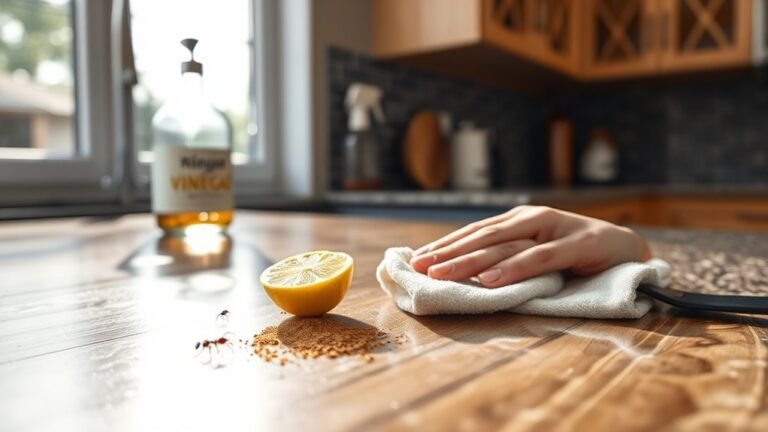
Once you spot these trails, focus your cleaning efforts there. Use kitchen cleaning techniques like wiping surfaces with soapy water or a vinegar solution to break down the pheromone trails ants leave behind.
Target ant trails by wiping surfaces with soapy water or vinegar to erase their scent paths.
Pay special attention to countertops, cabinet edges, and along baseboards where trails often form. Don’t forget to clean spills, crumbs, and sticky residues that attract ants.
Empty trash bins regularly and clean inside them to remove lingering scents. After cleaning, dry surfaces completely to prevent moisture, which ants love.
How to Use Natural Remedies That Actually Work
If you want to tackle ants without harsh chemicals, natural remedies are a safe and effective alternative you can easily try at home. Start by using natural deterrents like citrus peels or coffee grounds, placing them near entry points to keep ants away.
Essential oils such as peppermint or tea tree mixed with water make powerful sprays that disrupt ant trails and repel them. Vinegar solutions are great for cleaning surfaces and erasing the scent paths ants follow.
Sprinkle diatomaceous earth around baseboards—it’s a non-toxic powder that damages ants’ exoskeletons and helps control the infestation. You can also use a soap solution to break down their protective coating and wipe them away more easily.
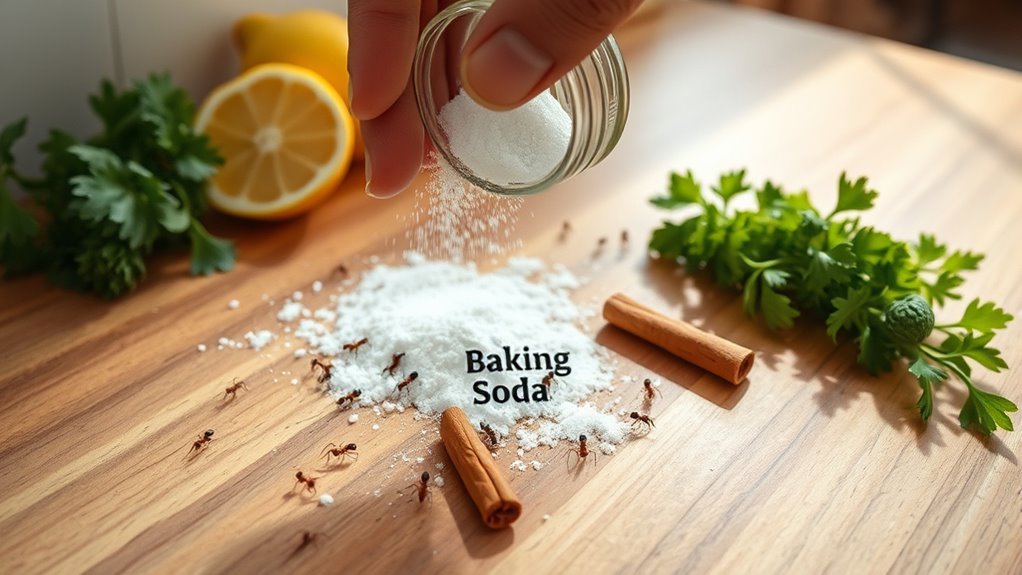
Baking soda combined with sugar attracts ants but kills them when ingested, making it an effective bait. For tougher problems, a borax mixture with sugar works well but be careful around pets and kids.
Herbal repellents like rosemary or thyme are also great for naturally keeping ants at bay, offering a pleasant-smelling way to deter pests.
How to Set Up Ant Baits to Stop Kitchen Ants
Natural remedies can help keep ants at bay, but sometimes you need a more targeted approach to eliminate them completely. Setting up ant baits effectively involves choosing the right ant bait types and using smart placement strategies. Here’s how you can do it:
- Select the Right Ant Bait Types: Pick baits that attract the specific ants in your kitchen. Sugar-based baits work well for sweet-loving ants, while protein-based ones target other types.
- Identify Ant Trails: Follow the ants to find their paths and entry points. This helps you place baits where ants are most active.
- Place Baits Strategically: Set baits near baseboards, under sinks, or close to food sources. Keep them out of reach of pets and children. Avoid putting them directly on countertops to prevent contamination.
How to Safely Use Store-Bought Ant Killers
When you decide to use store-bought ant killers, handle them carefully to stay safe and get the best results. Always follow the instructions on the label, wear gloves if recommended, and keep the product away from kids and pets.
Choosing the right ant killer depends on your kitchen’s needs. Gel baits, sprays, or powders each have specific uses and safety tips to keep in mind.
Here’s a quick guide to store-bought safety and ant killer options:
| Ant Killer Type | Usage Area | Safety Tip |
|---|---|---|
| Gel Baits | Cracks, corners | Avoid contact with food |
| Sprays | Surfaces, trails | Use in well-ventilated areas |
| Powders | Baseboards, cracks | Keep dry and avoid inhaling |
| Traps | Entry points | Place out of kids’ reach |
How to Prevent Kitchen Ants by Storing Food Properly
While store-bought ant killers can help get rid of existing ants, stopping them from entering your kitchen starts with how you store your food. Proper food storage is essential for keeping ants at bay. Use airtight containers for all dry goods like flour, sugar, and cereals to prevent ants from sensing or reaching your food.
Next, focus on organizing your pantry. Keep shelves clean and group items so you can quickly spot any spills or crumbs. Regular inspections help catch problems early and keep your kitchen ant-free.
Finally, manage leftovers carefully by sealing them tightly and refrigerating them promptly. This reduces attractants that might draw ants into your space.
Here are three simple steps:
- Use airtight containers and ensure they’re properly sealed to block ants.
- Keep your pantry organized and check for any signs of ants or food spills regularly.
- Store leftovers correctly by sealing and refrigerating them to avoid attracting pests.
Why Ants Keep Coming Back (And How to Stop Them)
Ants keep coming back because your kitchen has everything they love—food, water, and cozy spots to hide. If you don’t do anything about these attractants, they’ll just keep finding their way in. So, let’s take a look at what’s drawing them in and how you can make sure they stay out for good.
Ant Attraction Factors
Because food crumbs, moisture, and easy access create the perfect environment, ants often return to your kitchen. Knowing what attracts them helps you figure out why they keep coming back. Here are three main ant attraction factors:
- Food sources and cleanliness standards: Ants are attracted to leftover food, pet food, and sugary residues. When your space isn’t clean, these sources stick around.
- Moisture levels and environmental factors: High humidity, water leaks, and damp areas invite ants to nest and boost their activity.
- Pheromone trails and seasonal behaviors: Ants leave chemical trails to guide others, and weather changes or landscaping problems can push them indoors during certain seasons.
Effective Prevention Strategies
Since ants keep coming back because of persistent food sources, moisture, and pheromone trails, you need a targeted approach to stop them effectively. Start by keeping your kitchen super clean—wipe down counters, sweep floors, and clean up spills right away to get rid of any food residue.
Store food in airtight containers so ants can’t get to it. Next, seal cracks, gaps, and entry points around windows, doors, and pipes to block their access. Fix any leaks to eliminate moisture that attracts ants.
Take out the trash regularly and keep bins tightly closed. Finally, disrupt pheromone trails by cleaning surfaces with vinegar or soapy water. By combining these tips, you’ll reduce the chances of ants coming back and keep your kitchen ant-free for good.
How to Keep Your Kitchen Ant-Free Long Term
To keep your kitchen ant-free long term, you’ll want to develop habits that cut down on attractants and block entry points. The key is making maintenance simple and consistent.
Develop habits that reduce attractants and seal entry points for simple, consistent ant-free kitchen maintenance.
Here are three easy steps to help you stay ant-free:
- Clean regularly: Wipe down counters, sweep floors, and clean up spills right away. This keeps crumbs and sticky messes from attracting ants.
- Seal entry points: Check around windows, doors, and pipes for gaps. Use caulk or weather stripping to close these openings and stop ants from sneaking in.
- Store food properly: Keep all food in airtight containers and don’t leave pet food out overnight. This reduces the chances of attracting ants to your kitchen.
How to Handle Persistent Ant Problems
If ants keep showing up, the first thing you want to do is figure out what kind they are. Knowing the species is super helpful because different ants respond better to different treatments. Once you’ve identified them, you can pick the right approach to deal with them effectively.
From there, it’s all about applying long-term solutions that get to the root of the problem. This way, you’re not just dealing with the ants temporarily, but actually preventing them from coming back again and again.
Identifying Ant Species
How can you effectively tackle persistent ant problems without knowing what type of ants you’re dealing with? Identifying ant species is key because their behavior, nesting habits, and food preferences can be very different.
Start by observing these important factors:
First, look at their size, color, and where they tend to nest—inside your home, in the soil, or in wood. These details can tell you a lot about their environment and colony structure.
Next, pay attention to when you see them most often. Their seasonal activity and reproductive cycles can help you predict when an infestation might get worse and give clues about the pheromone trails they follow.
Finally, identify what attracts them—sweets, proteins, or greasy foods—and where they build their nests. Knowing this helps you disrupt their lifecycle more effectively.
Effective Long-Term Solutions
Understanding the specific ant species in your kitchen helps you tackle stubborn infestations more effectively. Once you identify the type, you can choose the best natural repellents for your situation.
For long-term control, make a habit of cleaning surfaces regularly and sealing entry points to stop new ants from sneaking in. Habitat modifications are also important—remove moisture sources and trim plants near your home to cut down on nesting spots.
Proper food storage is key; keep all food in airtight containers to prevent easy access for ants. Combining these strategies creates an environment ants find unappealing, which helps reduce reinfestation.
Sticking to these steps consistently ensures you can manage persistent ant problems and keep your kitchen ant-free over the long run.
Frequently Asked Questions
Are Kitchen Ants Harmful to Humans or Pets?
Kitchen ants aren’t usually harmful to humans or pets, but they can contaminate food with bacteria because they often forage through dirty areas.
To prevent them from invading your space, try sealing food containers and cleaning up spills quickly.
Can Ants Damage Kitchen Appliances or Cabinets?
Yes, ants can damage your kitchen appliances or cabinets. Over 25% of homeowners have reported structural issues caused by ant activity.
Some species chew through wood or insulation, which can lead to costly repairs. To protect your kitchen, focus on prevention tips like sealing cracks, keeping surfaces clean, and storing food in airtight containers.
What Attracts Ants to Kitchens Besides Food?
Besides food, ants are attracted to scent trails left by other ants, which guide them to your kitchen. They also look for moisture sources like leaky pipes, damp sponges, or condensation around sinks.
If you don’t fix these issues, ants will keep coming back even if you clean up crumbs. Make sure to repair leaks and wipe away any water to cut off their access to the moisture they need to survive.
How Quickly Do Ants Infest a Kitchen?
Ants can infest your kitchen surprisingly fast, sometimes within a day or two once they detect food or water. Their behavior drives them to quickly establish trails and recruit others, so prevention is key.
You should act immediately by sealing cracks, cleaning spills, and storing food properly. Doing these things right away can stop ants before they multiply and become a bigger problem.
Following these prevention tips can save you time and effort in the long run by keeping your kitchen ant-free.
Do Different Ant Species Require Different Treatment Methods?
Yes, different ant species need different treatment methods because over 12,000 species exist worldwide, each with unique behaviors.
If you’re dealing with carpenter ants, you’ll want to target their nesting sites. Sugar ants respond better to sweet baits.
Knowing the ant species helps you choose the right treatment methods, making your efforts more effective and preventing reinfestation quickly.
Conclusion
Now that you know how to identify, stop, and prevent ants in your kitchen, isn’t it time to take control for good? Sealing entry points, cleaning up trails, and using natural remedies or baits can help keep these pesky invaders away.
Remember, consistent food storage and regular cleaning are your best defenses. These simple steps will help you maintain an ant-free kitchen and enjoy peace of mind every day.
Why wait to reclaim your space from ants? Take action now and enjoy a cleaner, pest-free home.