How to Organize Your Kitchen: A Step-by-Step Guide
Many people struggle with keeping their kitchens organized and clutter-free. It’s easy for countertops to become overwhelmed with utensils, appliances, and pantry items. If this sounds familiar, you’re not alone — but good news, organizing your kitchen can make cooking and daily routines much more enjoyable.
To organize your kitchen, start by decluttering and sorting items into categories like cookware, utensils, and pantry staples. Toss expired food and donate what you don’t use.
Maximize space with shelf risers, pull-out shelves, and drawer dividers, while using vertical storage like hooks or magnetic strips. Store perishables properly and create zones for prep, cooking, and cleaning.
Keep up with daily tidying habits to maintain order. With some effort, your kitchen can become a highly functional, enjoyable space.
Key Takeaways
- Start by decluttering and sorting kitchen items into categories, discarding expired or unused supplies for better organization.
- Maximize storage with pull-out shelves, stackable containers, drawer dividers, and cabinet door racks for easy access.
- Use vertical space, magnetic strips, and wall hooks to creatively store pots, utensils, and knives.
- Label airtight containers with dates and group pantry staples to maintain freshness and quick identification.
- Develop daily habits like wiping counters, quick declutter checks, and involving family to maintain kitchen order.
Why Kitchen Organization Matters and How to Begin
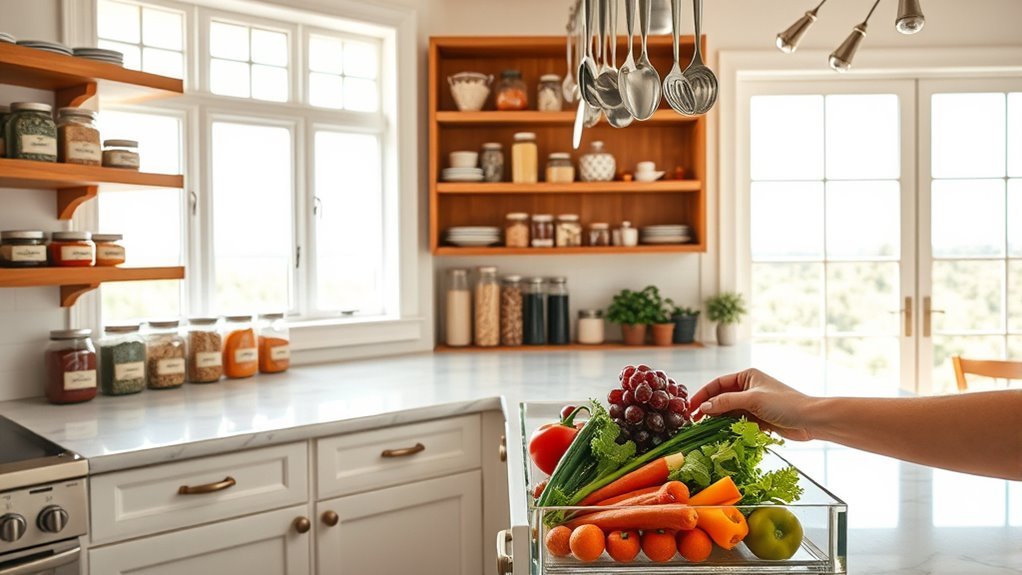
Although organizing your kitchen might seem overwhelming at first, it’s essential for creating a functional and enjoyable cooking space. When you focus on kitchen efficiency, meal planning becomes smoother, and your cooking habits improve.
Start by adopting an organization mindset. This helps you prioritize space optimization and effective time management. Think about how you use your kitchen daily and arrange items for easy access.
Involve your family in the process. Sharing tasks promotes teamwork and keeps everyone invested in maintaining order. Don’t forget to incorporate sustainable practices like reducing waste and choosing eco-friendly storage options.
Clear Out the Clutter to Start Fresh
First, try sorting your kitchen stuff by category. It’s a great way to see what you actually have and get a clearer picture. Once you’ve done that, go through your food and toss out anything that’s expired—keeping things fresh and safe. And don’t forget about those supplies you no longer use; donate them to free up some space and help others who might need them.
Sort Items By Category
Before you put anything back, take everything out and group similar items together. Sorting by category helps create clear kitchen zones, making it easier to find what you need when cooking or cleaning. For example, keep baking supplies in one area, cooking oils and spices in another, and snacks separate.
Using storage containers can further organize these zones, keeping items visible and accessible while reducing mess. Label containers to maintain order and prevent confusion. As you sort, think about how often you use each item and place frequently used things in the most convenient zones.
This method not only saves time but also maximizes your kitchen’s functionality. Once sorted, you’re ready to arrange items thoughtfully, setting a strong foundation for a well-organized kitchen.
Discard Expired Food
Clear out expired food to make space and keep your kitchen safe and fresh. Regularly check expiration dates and toss out anything past its prime.
Proper disposal of expired food helps prevent contamination and keeps pests away. Remember to follow these food safety tips: avoid eating expired goods and clean shelves after you discard them.
| Food Type | Check Frequency | Disposal Method |
|---|---|---|
| Dry Goods | Monthly | Trash or compost |
| Canned Items | Every 6 months | Recycle cans, trash contents |
| Dairy Products | Weekly | Trash only |
| Fresh Produce | Weekly | Compost or trash |
Donate Unused Supplies
Once you’ve removed expired items, look at the supplies you haven’t used in a while. Donating unused kitchen supplies is a great way to clear out clutter and help others.
Start by sorting items that are still in good condition but no longer serve you. Use these decluttering tips to make the process easier:
- Group similar items like pots, pans, and utensils together
- Check local donation centers for their accepted items list
- Clean and pack supplies neatly to make donating easier
- Schedule a drop-off or pickup with the donation center
Sort and Categorize Your Kitchen Items Efficiently
Start by grouping your kitchen items into clear categories like cookware, utensils, pantry staples, and cleaning supplies. This basic sorting helps you get a clear kitchen inventory, making it easier to know what you have and what you need. Once everything is categorized, you can spot duplicates or expired items to remove.
Next, think about storage solutions tailored to each category. For example, stack pots and pans together, place frequently used utensils in a container near your prep area, and store pantry staples in labeled, airtight containers. Keep cleaning supplies separate and accessible but out of food areas.
Make the Most of Cabinets and Drawers
Want to make the most of your cabinets and drawers? It’s easier than you think! You can add extra shelves, risers, or hooks to keep everything within easy reach and prevent clutter. Trust me, a little organization goes a long way.
And don’t forget about your drawers. Using dividers or small trays to separate utensils, gadgets, and other small items can really make a difference. It’s like giving each thing its own little home. These simple tricks will help you utilize every inch of your kitchen storage and keep things looking neat and tidy.
Maximize Cabinet Space
Although cabinets and drawers often get overlooked, they hold a lot of potential for organization. To make the most of your cabinet space, try installing pull-out shelves and shelf risers. They make it easy to access items and create extra levels for storage.
Use stackable containers to keep dry goods neat and visible. Lazy Susans and corner cabinet solutions are great for making use of those hard-to-reach spots. Don’t forget about cabinet door storage, like magnetic spice racks and wire racks, to store small items without cluttering your shelves.
You can also add adjustable dividers inside cabinets to customize sections. Under-sink organizers are perfect for keeping cleaning supplies tidy and easy to find. These simple strategies will turn your cabinets into efficient, clutter-free zones that help simplify your kitchen routine.
Organize Drawer Contents
Drawers often get jammed with miscellaneous items, making it tough to find what you need quickly. Start your drawer organization by emptying each drawer and sorting contents into categories like kitchen essentials, cooking gadgets, and seasonal items. Use drawer dividers and utensil trays to keep similar items grouped and prevent clutter.
Label systems are a game changer. They help you quickly identify where everything belongs, making maintenance easier. For small appliances that fit in drawers, assign specific spots to avoid overcrowding. Keep frequently used utensils and gadgets within easy reach, while stashing seasonal items or less-used tools in lower drawers.
Use Vertical and Hidden Spaces for Extra Storage
When maximizing kitchen storage, don’t overlook vertical and hidden spaces. They offer valuable room without cluttering your countertops. You can turn unused areas into efficient storage spots by thinking vertically and creatively.
Use shelf risers to double the space inside cabinets, letting you stack dishes or pantry items neatly. Wall hooks and pegboard storage are great for hanging pots, pans, and utensils, freeing up drawer space.
Magnetic strips hold knives or metal tools within easy reach without taking up drawer or counter space. Under shelf baskets slide onto existing shelves, creating extra layers for items like spices or snacks.
Corner shelves make use of awkward corner spaces, and pull-out racks in cabinets offer easy access to items tucked away in the back. These smart solutions help you make the most of every inch.
Organize Your Kitchen Pantry for Easy Access
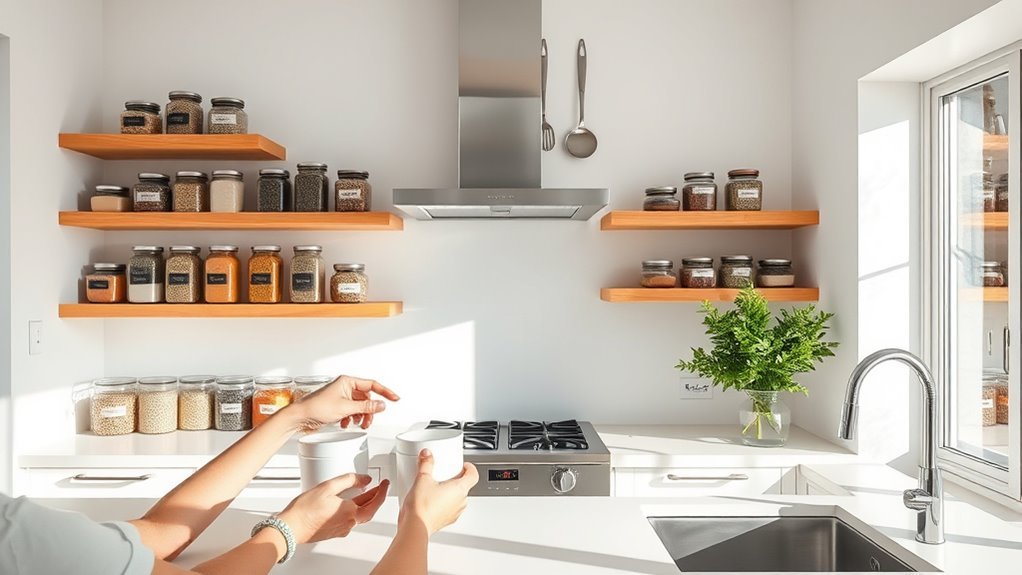
Organizing your kitchen pantry can transform meal prep and reduce stress by making everything easy to find. Start by sorting items into categories and using pantry labels to clearly mark each section.
Use shelf baskets to group smaller packages, preventing clutter and maximizing space. Snack bins keep grab-and-go items accessible, making it easier to spot what you need quickly.
For larger items, bulk storage containers streamline your pantry and keep food fresh. Keep frequently used items at eye level and less-used goods on higher or lower shelves.
| Storage Solution | Benefit |
|---|---|
| Pantry Labels | Quick identification |
| Shelf Baskets | Organize small packages |
| Snack Bins | Easy access to snacks |
| Bulk Storage | Neat storage of large quantities |
These simple steps help you maintain an orderly pantry, so you can focus on cooking instead of searching for ingredients.
Arrange Cooking Tools for Faster Meal Prep
Want to make your meal prep faster and more efficient? Just try grouping similar cooking tools together so you can grab what you need without hunting around. It’s a simple trick that can save you a lot of time in the kitchen.
And don’t forget to keep your most-used items within easy reach. That way, you’re not wasting time rummaging through drawers or cabinets. Instead, everything you use often is right where you need it.
Finally, pick storage solutions that are both accessible and organized. Clever containers or designated drawers can make a big difference, helping you find what you need in a flash and keeping your kitchen neat and tidy.
Group Similar Tools Together
Since meal prep often requires quick access to specific tools, grouping similar items together can save you valuable time. You’ll want to organize your kitchen so that everything has a clear, logical place.
For example, store all your measuring spoons and cups in one drawer or container. Use a utensil caddy on the counter to keep frequently used spoons, spatulas, and whisks handy.
Consider a dedicated spice storage rack to keep your herbs and seasonings neatly arranged and easy to find. This method reduces the time spent hunting for tools and keeps your workspace clear.
You can also store baking tools like whisks, rolling pins, and measuring cups together. Keep cutting utensils such as knives and peelers in one drawer for quick access.
Prioritize Frequently Used Items
Focusing on your most-used cooking tools can speed up meal prep a lot. Start by figuring out which items you use daily or weekly. Keep these tools within easy reach to save time and avoid frustration. For example, store your knives, spatulas, and measuring cups near your main prep area.
While you don’t want clutter, making sure these essentials are accessible helps you work more efficiently. Next, look at your current storage solutions and tweak them to highlight your go-to items. Use drawer dividers or countertop holders strategically, but don’t overcrowd.
Arranging your kitchen tools based on how often you use them creates a smoother cooking flow. This thoughtful approach keeps things organized and makes meal prep faster, so you can enjoy cooking without unnecessary delays.
Use Accessible Storage Solutions
Once you’ve identified your frequently used tools, make them even easier to grab by choosing storage solutions that keep everything within arm’s reach. Use pull-out shelves for pots and pans to make access effortless. Magnetic strips work great for knives and metal utensils, freeing up drawer space.
Lazy Susans and tiered organizers are perfect for maximizing corner cabinets and pantry shelves, keeping items visible and organized. Under-shelf baskets and stackable bins create extra storage layers, ideal for small gadgets and snacks.
Think about these options to boost efficiency: drawer dividers for utensils and small tools, hanging racks for mugs and frequently used pots, and clear containers with labeled bins for easy identification. Under-shelf baskets help utilize vertical space.
These accessible solutions make meal prep smoother and help reduce clutter around your kitchen.
Store Food Properly to Extend Freshness
Properly storing your food can greatly extend its freshness and reduce waste. Start by choosing the right containers—airtight ones keep moisture and air out, which helps preserve flavors and textures. Use sealing techniques like vacuum sealing or clips to lock in freshness.
Label organization is essential; clearly mark dates on containers so you can track expiration dates easily. Keep perishables in the fridge and store your pantry in a cool, dry place. This helps maintain the right temperature and prevents spoilage.
Organizing your pantry makes it easy to spot older items first, helping you avoid forgotten food going bad. When handling bulk storage, divide large quantities into smaller portions to limit repeated exposure to air.
Incorporate meal prep by storing pre-cut veggies or marinated proteins in suitable containers. This saves time and keeps your ingredients fresh longer. Follow these tips consistently to reduce food waste, save money, and enjoy better-tasting meals.
With smart storage practices, your kitchen stays organized, and your ingredients last longer.
Create Functional Zones to Streamline Workflow
Extending the freshness of your food is just one part of having an efficient kitchen. To really improve how your space works, try creating functional zones that match your kitchen layout and boost workflow. Organizing your space into specific areas helps you move smoothly from one task to the next without unnecessary steps or clutter.
Think about dividing your kitchen into zones for different activities. For example, have a preparation zone with knives, cutting boards, and mixing bowls close at hand. Keep pots, pans, and utensils near the stove in your cooking zone. Arrange dish soap, sponges, and trash bins by the sink in your cleaning zone. Finally, group pantry items and frequently used ingredients together in your storage zone.
Keep Your Kitchen Organized With Simple Daily Habits
Develop simple daily habits to keep your kitchen organized without the stress. Start by wiping down counters, putting utensils back in their spot, and tidying up after each meal.
These small daily routines help prevent clutter from piling up and keep your space functional. Try quick declutter checks, like tossing expired items during meal planning or shopping efficiently.
Stick to cleaning schedules tailored to your kitchen’s needs to keep surfaces and appliances spotless. Using maintenance checklists can help you stay on top of tasks without feeling overwhelmed.
Smart storage solutions are a game-changer—keep items accessible yet out of the way to maximize counter and cabinet space. Involve your family by assigning simple chores, making organization a team effort.
This teamwork speeds up daily upkeep and builds good habits. By combining these easy tips, you’ll enjoy a tidy kitchen that’s always ready for your next cooking adventure.
Frequently Asked Questions
What Are the Best Materials for Durable Kitchen Shelves?
The best shelf materials for durable kitchen shelves include solid wood, plywood, and metal because they offer great weight capacity and aesthetic appeal.
You’ll want solid wood for a classic look, plywood for budget-friendly strength, and metal for a modern touch. When installing, use sturdy brackets and anchors to support heavy cookware.
Don’t forget to measure carefully and choose shelf materials that match your kitchen’s style and your storage needs.
How Can I Childproof My Kitchen Storage Areas?
Want to keep your little ones safe while cooking? You can childproof your kitchen storage areas by installing safety locks or latches on cabinets and drawers.
Consider using high shelves or locked containers for hazardous items like cleaning supplies or sharp utensils. Keep everyday essentials in lower, easy-to-reach spots that are safe for kids.
Taking these steps helps ensure your kitchen stays both functional and secure for your family.
What Are Eco-Friendly Options for Kitchen Organization Products?
You can choose sustainable storage options like bamboo or reclaimed wood containers that last long and look great.
Biodegradable bins made from materials like cornstarch or recycled paper help cut down on plastic waste.
Look for glass jars with metal lids instead of plastic ones. They’re reusable and eco-friendly.
How Do I Organize a Small Kitchen Without Remodeling?
You can organize a small kitchen without remodeling by focusing on space-saving solutions like vertical shelving, magnetic strips for knives, and stackable containers.
Adopt a minimalist design to reduce clutter—only keep essentials visible. Use hooks for pots and utensils, and invest in multi-functional items to make the most of every inch.
Keeping your counters clear and using drawer organizers will help you create an efficient, tidy kitchen without any major changes.
Can Smart Kitchen Gadgets Help With Organization?
Yes, smart kitchen gadgets can definitely help with organization by offering smart storage solutions that maximize your space efficiently.
You’ll enjoy benefits like real-time inventory tracking, automated reminders, and multi-functional tools that reduce clutter.
These gadgets streamline your workflow, making it easier to keep everything in its place.
Conclusion
Organizing your kitchen isn’t just about tidiness. It’s about creating a space where every meal begins with ease and joy.
Imagine the calm that flows when everything has its place and you can find what you need in a heartbeat.
By clearing clutter, sorting smartly, and building functional zones, you’re not just organizing—you’re crafting a kitchen that works for you.
So, take these steps today and watch your kitchen—and your cooking—transform with better organization.