How to Change a Refrigerator Water Filter: A Step-by-Step Guide
Many people struggle with keeping their refrigerator water fresh and clean. It’s a common frustration to notice changes in taste or flow, making you wonder if your filter needs replacing. Don’t worry—you’re not alone in this.
Changing a refrigerator water filter might seem tricky, but it’s easier than you think.
To change your refrigerator water filter, first identify when it’s time by checking alerts or noticing taste or flow changes.
Turn off the water supply, remove the old filter by twisting it counterclockwise, then insert and lock the new one in place.
Flush fresh water through the filter for several minutes to clear debris and improve taste. Proper installation prevents leaks and guarantees quality water.
Keep following to uncover tips for troubleshooting and extending your filter’s lifespan.
Key Takeaways
- Locate the water filter in your refrigerator, usually in the upper right corner or behind the grille.
- Turn off the water supply and remove the old filter by twisting it counterclockwise and pulling it out.
- Prepare the new filter by checking compatibility, then insert it and twist clockwise until it’s securely locked.
- Flush the new filter by running water for about five minutes to remove loose carbon particles and ensure clean water.
- Check for leaks and proper water flow after installation, and reset any filter replacement indicators if needed.
How to Identify When Your Refrigerator Water Filter Needs Changing
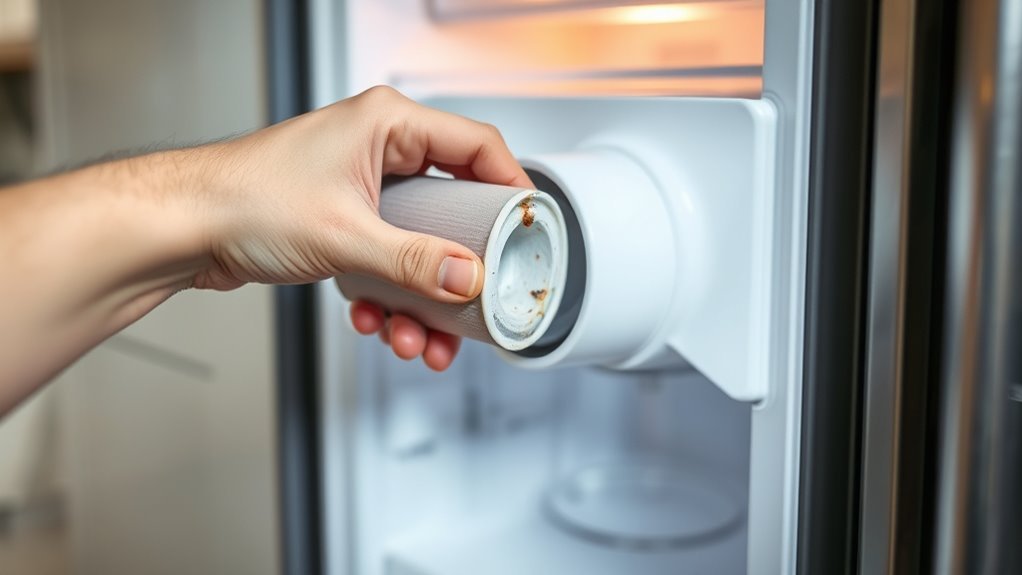
How do you know when it’s time to change your refrigerator water filter? One key sign is when the filter lifespan is nearing its end, usually shown by your fridge’s alert system or what the manufacturer recommends.
You might notice a change in the water taste or a decrease in flow rate—that’s a clear sign to act. Paying attention to these signs helps you keep your water clean, fresh, and free of contaminants.
To stay on top of it, keep track of when you installed the filter so you can replace it on time. Regularly check the filter for visible buildup or discoloration. If you notice an unusual odor or your ice starts tasting off, it’s also time to check the filter.
Following these simple habits ensures your filter works efficiently and helps your fridge last longer. Don’t wait for problems to happen—being proactive with maintenance keeps your water crisp and safe.
How Often Should You Replace Your Refrigerator Water Filter?
You should swap out your refrigerator water filter roughly every six months to keep your water tasting fresh and clean. But hey, if you start noticing a change in the taste, smell, or how the water flows, it’s probably a good idea to change it sooner rather than later. Keeping an eye on these signs helps make sure your filter is doing its job and keeping your water nice and pure.
Recommended Replacement Frequency
Most refrigerator manufacturers recommend replacing the water filter every six months to keep your water tasting fresh and your appliance running smoothly.
This timeframe matches the typical filter lifespan, which usually covers 100 to 200 gallons of water or about six months of regular use.
Some models include replacement indicators to alert you, but sticking to the six-month schedule helps ensure peak filtration performance.
Changing your filter on time prevents buildup of contaminants and keeps water flow efficient.
Even if you don’t notice any signs, replacing the filter as recommended safeguards the quality of your drinking water and extends your refrigerator’s lifespan.
Signs To Replace Filter
Although replacing your refrigerator water filter every six months is a good rule of thumb, certain signs can tell you it’s time to change it sooner.
If you notice a drop in water quality, like strange tastes or odors, that’s a clear indicator the filter’s reached the end of its lifespan. Slow water flow or reduced ice production can also signal clogging inside the filter.
Some refrigerators have indicator lights that alert you when the filter needs replacing. Don’t ignore these warnings.
Remember, using an expired filter can let contaminants slip through, affecting both taste and safety.
How to Choose the Right Replacement Refrigerator Water Filter
When selecting a replacement refrigerator water filter, the key is to ensure compatibility with your specific refrigerator model. Start by checking your fridge’s manual or the manufacturer’s website to find the correct filter number. This helps avoid issues with a poor fit or reduced filtration performance.
Next, consider comparing brands. While OEM filters offer guaranteed compatibility and quality, third-party filters can be more affordable but may vary in reliability. Read reviews and look for certifications to judge their effectiveness.
Also, check the filter’s capacity and lifespan to match your water usage needs. Avoid guessing or buying generic filters, as they might not meet your fridge’s standards. By focusing on compatibility and carefully comparing brands, you’ll pick a filter that keeps your water clean and your fridge working smoothly.
How to Prepare Your Refrigerator for a Water Filter Change
Before you start changing your refrigerator water filter, take a few simple steps to prepare your fridge and workspace. First, clear out any items near the filter area to give yourself easy access. This helps prevent spills or damage during the process.
Next, check your refrigerator’s manual for specific instructions and the filter location. Turning off the water supply connected to the fridge is also important to avoid leaks.
Consult your fridge manual for filter details and turn off the water supply to prevent leaks.
It’s a good idea to place a towel or shallow container under the filter area in case of drips. Organize your tools and new filter nearby so you won’t have to search mid-task.
These preparation steps make the filter change smoother and more efficient. They help protect your appliance and keep your kitchen clean.
Taking these simple precautions ensures your filter maintenance goes smoothly and keeps your water clean and fresh.
How to Remove Your Old Refrigerator Water Filter
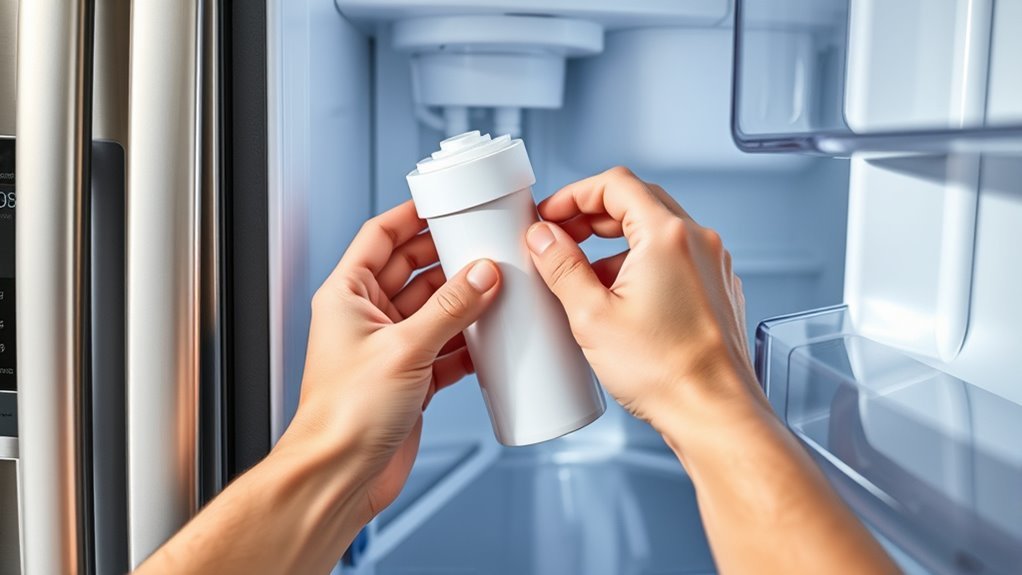
First off, you’ll want to find the water filter inside your fridge. Usually, it’s tucked away in the upper right corner or sometimes behind the grille. Once you’ve found it, give it a twist counterclockwise—that’s the way to unlock it. After that, just gently pull it straight out, and the old filter will come right out.
Locate The Filter
Finding the water filter in your refrigerator is key to making the replacement easy. Knowing where it is helps you plan your next steps and ensures you can access it without hassle.
Most refrigerators have the filter in one of these common spots:
- Inside the fridge compartment, near the top right corner
- At the base of the fridge, behind a kick plate or grille
- Inside the interior back wall, often hidden behind a small panel
- Inside the fresh food section, sometimes near the crisper drawers
If you’re unsure, check your user manual for the exact filter location. Making sure the filter is easy to reach means you won’t struggle when it’s time to replace it.
Once you find it, you’re all set to move on to the next step in replacing your old water filter.
Twist And Pull
Grip the old water filter firmly and twist it counterclockwise to disengage it from its housing. Depending on your refrigerator model and filter types, this might take a bit of force, but don’t overdo it to avoid damage.
Once loosened, pull the filter straight out. Some filters have a release button—press it if needed to make removal easier. Remember, regularly changing your filter keeps your water clean and your fridge working well.
After removing the filter, check inside the compartment for any debris or leaks. Dispose of the old filter following the manufacturer’s instructions. With the old filter out, you’re all set to install the new one and keep your water fresh and your fridge functioning smoothly.
How to Install a New Refrigerator Water Filter Correctly
Although installing a new refrigerator water filter might seem tricky, you’ll find it straightforward once you know the steps. To guarantee success, keep some essential filter installation tips in mind and avoid common mistakes like forcing the filter or misaligning it.
Installing a new refrigerator water filter is easy when you follow key tips and avoid common errors.
Follow these steps to install your new filter correctly:
- Align the new filter with the mounting bracket, matching the filter’s tabs with the slots.
- Push the filter into place gently but firmly until it stops.
- Twist the filter clockwise about a quarter turn until it locks securely.
- Check for a snug fit and listen for a click, signaling proper installation.
Avoid excessive force, which can damage the filter or housing. Also, don’t skip aligning the tabs, as this can cause leaks or improper function. By following these tips, you’ll install your new refrigerator water filter correctly and enjoy clean, fresh water in no time.
How to Flush Your New Refrigerator Water Filter
After you’ve installed your new water filter, it’s really important to flush it out first. This helps get rid of any loose carbon particles that might be in the filter and makes sure your water tastes fresh and clean.
To do this properly, just run water through the filter for the amount of time or volume recommended by the manufacturer. Don’t skip this step or rush through it, because not flushing long enough can affect how your water tastes and its overall quality. Taking a few extra minutes to flush properly really makes a difference!
Why Flushing Is Important
Because your new refrigerator water filter contains carbon particles and other materials, you need to flush it before use to remove any loose debris and ensure clean, fresh-tasting water. Flushing is a crucial part of filter maintenance that directly affects water quality.
Skipping this step can cause unpleasant tastes, cloudy water, or even clogging. Here’s why flushing matters:
- It clears out carbon dust and loose particles.
- It helps prevent early filter clogging.
- It confirms your water tastes fresh and clean.
- It allows your filter to perform at its best for longer.
How To Flush Properly
Start by running water through your new filter for about five minutes or roughly two to three gallons. This initial flushing helps remove any loose carbon particles and activates the filter media. Use steady water flow and avoid stopping intermittently to make sure the flushing is thorough.
Proper flushing techniques help prevent cloudy water and improve taste right away. During this process, keep an eye on the water pressure; it should stay consistent, which means the filter is working correctly.
Flushing is an essential part of filter maintenance. Be sure to do it every time you replace the filter. Once you’re done, check for leaks around the filter housing and make sure the water runs clear.
Following these steps will help your new filter perform well and last longer.
Common Flushing Mistakes
One of the most common mistakes people make when flushing their new refrigerator water filter is not running enough water through it. Proper flushing techniques are key to maintaining the filter and getting clean, fresh water.
Here are four mistakes to watch out for:
- Flushing too briefly—run at least 3-5 gallons to clear out carbon dust.
- Using cold water only—some filters need a mix of cold and room temperature water.
- Forgetting to flush after replacing the filter—this activates it and removes impurities.
- Not checking the water flow—weak flow might mean improper installation or clogged lines.
Troubleshooting Common Refrigerator Water Filter Issues
When your refrigerator’s water filter isn’t working properly, it can disrupt your access to clean, fresh water and ice. If you notice leaks, check to make sure the filter is seated correctly and the O-rings are intact. Damaged seals are often the cause of leaks.
Leaking water filters often result from improperly seated filters or damaged O-rings—check seals to restore fresh water access.
Pressure issues like weak water flow might come from clogged filters or installation mistakes. Double-check that the filter is installed securely and oriented the right way.
Taste problems usually mean the filter has expired or isn’t compatible with your fridge model. Make sure to verify compatibility before replacing it.
If you notice any unusual taste or odor, switching to a certified filter usually fixes the problem. Compatibility concerns can cause malfunctions too, so always use filters recommended by your fridge’s manufacturer.
Tips to Extend Your Refrigerator Water Filter’s Lifespan
Although refrigerator water filters need regular replacement, you can take steps to maximize their lifespan and keep your water tasting great. Proper filter maintenance not only extends how long it lasts but also ensures you get clean, fresh water every time.
First, make sure to flush the filter after installing it. Just run water through it for a few minutes to clear out any loose particles and get it ready for use.
Next, keep your water pressure steady. Fluctuations can put extra strain on the filter and make it less effective over time.
Don’t forget to clean the filter housing regularly. Wipe down the compartment when you replace the filter to prevent dirt and debris from affecting water quality.
Finally, use filtered water consistently. Drinking tap water directly can bypass the filter and reduce its performance and lifespan.
Following these simple tips will help you get the most out of your water filter and enjoy cleaner water for longer.
Where to Buy Quality Refrigerator Water Filters
Where can you find reliable refrigerator water filters that guarantee both quality and compatibility? Start by checking major retailers like Home Depot, Lowe’s, or Best Buy. They often stock filters from top-quality brands.
These stores usually provide clear information on filter compatibility, making sure you pick the right filter for your refrigerator model. You can also visit the manufacturer’s official website; buying directly gives you confidence in the authenticity and quality of the filter.
Online marketplaces such as Amazon offer a wide range of options. Just make sure to read reviews and confirm filter compatibility before purchasing. Avoid generic or off-brand filters that might not meet safety standards or fit properly.
Prioritize quality brands that certify their filters meet NSF standards for effective contaminant removal. By focusing on trusted sellers and verified compatibility, you’ll ensure your refrigerator water filter performs well and keeps your water clean and fresh.
Frequently Asked Questions
Can I Use a Generic Water Filter Instead of the Brand-Specific One?
You can use a generic water filter, but make sure to check if it’s compatible with your fridge. Not all generic filters fit perfectly or meet the same standards, which could impact water quality or how well your fridge works.
When you compare costs, generics might save you money upfront. But brand-specific filters often offer better reliability and warranty coverage.
Think about the pros and cons before choosing the filter that’s right for you.
Does Changing the Water Filter Affect My Refrigerator’s Warranty?
It’s funny how something as small as changing your water filter can make you worry about your fridge’s warranty coverage.
Good news: as long as you use the correct filter and follow the manufacturer’s instructions for filter maintenance, you won’t void your warranty.
Just avoid using incompatible filters or neglecting maintenance, since that’s when issues can come up.
How Do Water Filters Impact the Taste of Ice Cubes?
Water filters directly impact the purity of your ice by removing impurities and contaminants from your water. When you use a clean filter, your ice cubes will taste clearer and fresher.
This flavor improvement means your drinks won’t carry off-flavors or odors, making every sip more enjoyable. So, keeping your filter fresh guarantees your ice tastes better and stays pure.
That way, you’re boosting the overall quality of your beverages and enjoying them even more.
Are There Any Health Risks if I Don’t Change the Filter Regularly?
Yes, if you don’t change your filter regularly, you risk exposure to waterborne contaminants that the filter can no longer trap.
Over time, the filter’s lifespan ends, and it becomes less effective, allowing bacteria, dirt, and other harmful particles to pass through.
This can lead to health issues, especially if you drink or cook with contaminated water.
Staying on top of filter changes keeps your water safe and healthy for you and your family.
Can I Recycle My Used Refrigerator Water Filter?
Yes, you can recycle your used refrigerator water filter, but it depends on the brand and your local recycling programs.
Check out specific disposal methods to make sure you’re doing it right. Proper recycling helps cut down on environmental impact by keeping plastics and contaminants out of landfills.
It’s a good idea to contact the manufacturer or your local recycling center for guidelines. That way, you can dispose of your filter responsibly and help protect the environment.
Conclusion
Changing your refrigerator water filter is like tending a garden. Neglect it, and the fruits won’t taste fresh. Recognizing the signs and swapping filters regularly keeps your water pure and healthy.
Choosing the right filter and flushing it properly ensures your water flows clear. Just like steady care keeps a garden blooming, proper maintenance keeps your fridge functioning well.
Stay vigilant, and your fridge will reward you with crisp, clean water every time. Regularly changing your refrigerator water filter is key to enjoying fresh, great-tasting water.