How Deep Are Upper Kitchen Cabinets? The Complete Answer
Are you feeling overwhelmed trying to decide how deep your upper kitchen cabinets should be? You’re not alone—many people struggle with balancing storage needs and kitchen flow.
Finding the right depth can make a huge difference in how functional and stylish your space feels.
Upper kitchen cabinets typically range from 12 to 15 inches deep, balancing storage space and ease of use. A 12-inch depth gives you ample storage without overwhelming your kitchen, while 15 inches offers extra room but might affect flow and reach.
Your choice depends on style, storage needs, and your kitchen layout. Deeper cabinets can hold bulky items but may be harder to access.
Keep going, and you’ll uncover how to measure and choose the perfect depth for your space.
Key Takeaways
- Standard upper kitchen cabinet depths usually range from 12 to 15 inches, which balances storage space and kitchen flow.
- A 12-inch depth is common for everyday use and helps prevent overcrowding.
- Deeper cabinets, up to 15 inches, offer more storage but can make access harder and might make the kitchen feel less open.
- The depth you choose affects how ergonomic, functional, and visually appealing your kitchen looks.
- Custom depths can vary depending on your kitchen style, wall space, and specific storage needs.
What Are the Standard Depths for Upper Kitchen Cabinets?
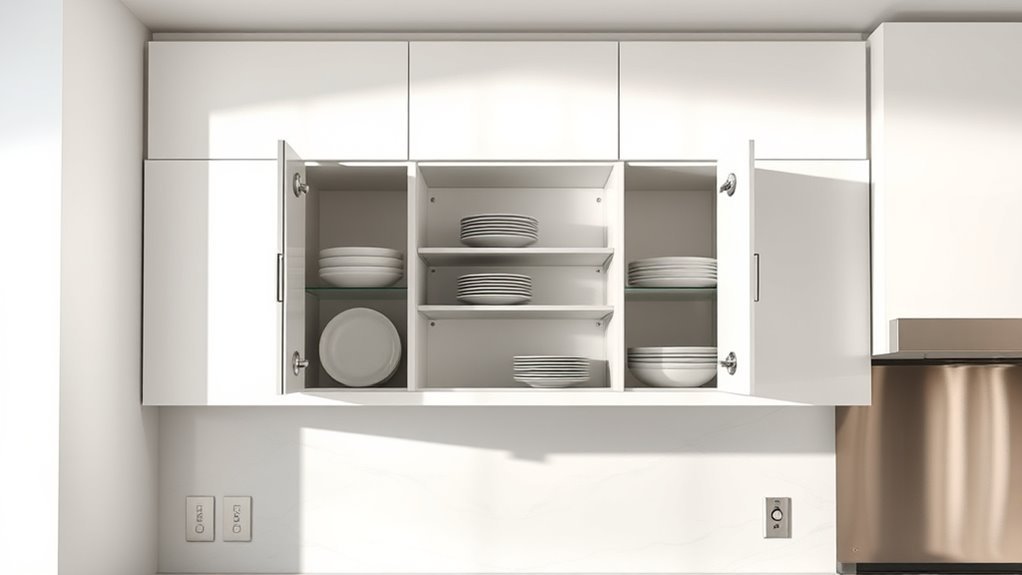
When choosing upper kitchen cabinets, you’ll find that their standard depths typically range between 12 and 15 inches. This range is key for making sure your cabinets fit well above the countertops without taking up too much space.
Most manufacturers stick to these depths to balance storage and kitchen flow. A 12-inch depth is common and provides enough room for plates and glassware while keeping the space open.
Most manufacturers choose 12-inch deep cabinets to balance ample storage with an open, functional kitchen space.
On the other hand, 15-inch deep cabinets give you extra storage but can stick out more, which might affect how smoothly your kitchen functions.
You’ll also see some variations based on custom designs or specific needs, but these depths are the typical starting point.
Knowing these standards helps you choose cabinets that match your kitchen’s layout and style without sacrificing usability.
Understanding these basics gives you a solid foundation before diving into more detailed design choices.
Why Upper Cabinet Depth Matters for Kitchen Use
Choosing the right depth for your upper kitchen cabinets goes beyond standard measurements. It directly impacts how you use your kitchen daily. When you pick the ideal cabinet depth, you can optimize storage solutions that fit your lifestyle.
If the cabinets are too shallow, you might struggle to store everyday items conveniently. On the other hand, if they’re too deep, you risk awkward reach or a cramped kitchen workspace.
Your choice also affects how your kitchen looks. Deeper cabinets can make the space feel bulkier and overwhelming, especially in smaller kitchens. Shallower ones, however, give a sleek, modern look but might limit functionality.
Balancing depth helps your kitchen feel spacious and visually appealing without sacrificing practicality. Understanding why cabinet depth matters helps you make smarter decisions that improve both style and function.
It’s all about finding that sweet spot where your cabinets complement your kitchen’s style and support your daily cooking and organizing needs efficiently.
How Cabinet Depth Impacts Storage Capacity
When you go for deeper cabinets, you actually get more storage space, which is great if you need to store a lot. But, here’s the thing—reaching items at the back can be a bit tricky. You might find yourself stretching or bending just to grab that one thing in the back.
On the other hand, shallower cabinets make it much easier to access everything inside. They help keep things organized and quick to find. The trade-off is that you might not be able to store as many items or larger items in them.
Knowing this, it’s all about finding the right balance for your needs—more storage versus easier access. That way, you can make the most of your kitchen space without any hassle.
Storage Space Efficiency
Upper kitchen cabinet depth really affects how much storage space you actually get. When you pick deeper cabinets, you open up more room for storage solutions that maximize vertical space. This way, you can fit taller items and stack more layers easily.
Here’s a quick comparison of how different cabinet depths impact storage:
| Cabinet Depth | Storage Volume | Ideal Use |
|---|---|---|
| 12 inches | Low | Small plates, spices |
| 15 inches | Medium | Glassware, canned goods |
| 18 inches | High | Larger dishes, storage bins |
Choosing the right depth helps you make the most of your storage without wasting space. It keeps your kitchen functional and organized.
Accessibility and Organization
Although deeper cabinets provide more storage space, they can sometimes make it harder to reach items in the back. To improve accessibility and organization, consider adjusting shelf height to better fit your frequently used items.
Proper cabinet placement also plays a key role in ergonomic design, making sure you can easily access what you need without straining. Incorporate smart storage solutions like pull-out trays or lazy Susans to maximize usable space and keep everything within reach.
Common Depth Variations by Kitchen Style
Traditional kitchens usually have upper cabinets that are about 12 inches deep. They give off that classic look and offer practical storage space. It’s a pretty standard size that works well in most setups.
On the other hand, modern kitchens tend to play around with cabinet depths—sometimes going shallower or deeper—to match their sleek, contemporary vibe or to make the most of the space they have. If you’re looking for something more unique, custom cabinets are a great option because you can pick the exact dimensions that suit your style and needs perfectly.
Traditional Cabinet Depths
Different kitchen styles often have specific cabinet depths that match their overall look and function. When it comes to traditional styles, upper cabinets are usually deeper than in modern kitchens. This helps with both storage and visual appeal.
These depths maintain classic proportions and practical use, highlighting the timeless charm of traditional kitchens. They strike a balance between style and functionality.
| Kitchen Style | Typical Upper Cabinet Depth | Design Focus |
|---|---|---|
| Traditional | 12-15 inches | Rich detailing, depth |
| Rustic | 14-16 inches | Heavier, solid feel |
| Colonial | 12-14 inches | Symmetry, classic lines |
Choosing the right depth helps keep the traditional look intact while making the most of your kitchen space.
Modern Kitchen Variations
While traditional kitchens favor deeper upper cabinets for a classic look and plenty of storage, modern designs often experiment with cabinet depths to suit sleek aesthetics and functional needs. You’ll see that minimalist styles often choose shallower cabinets, around 12 inches deep, to keep clean lines and avoid visual bulk.
Open shelving is another popular option, replacing cabinets entirely or supplementing them with no depth restrictions. Some modern kitchens mix different cabinet depths to create visual interest and meet specific storage needs.
Here are some common depth options you might encounter:
- Shallow (12-13 inches) for minimalist designs and space-saving solutions
- Standard (15 inches) for a balanced look and practical storage
- Deep (18 inches) for extra storage without crowding the space
- Open shelving with varied depths for display and easy access
Adjusting cabinet depth allows you to customize your modern kitchen’s look and functionality.
Custom Cabinet Dimensions
Although kitchen cabinet depths can vary widely, custom dimensions often reflect the style and function of your space. When you choose custom cabinets, you can tailor the depth to fit your specific needs, whether that’s to maximize storage or keep a sleek look.
For example, traditional kitchens might have deeper upper cabinets around 15-18 inches to hold larger dishware. Meanwhile, minimalist styles often prefer shallower depths, sometimes as little as 12 inches, to maintain clean lines.
Using custom materials allows you to play with thickness and durability. This way, your cabinets will fit your lifestyle perfectly. Ultimately, your design preferences guide these choices, balancing practicality with visual appeal to create a kitchen that’s uniquely yours.
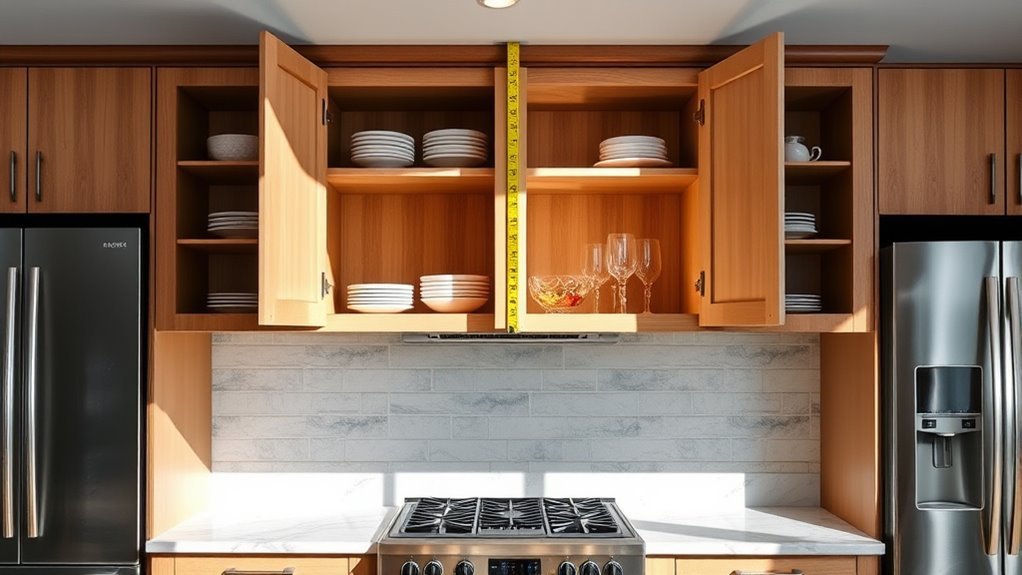
How to Measure for Upper Cabinet Depth
Measuring the depth of your upper kitchen cabinets starts with knowing exactly where to take your measurements. Accurate techniques ensure you get the right dimensions for your space and cabinet placement. Begin by identifying the front edge of the cabinet and the back wall where it mounts.
Follow these steps for precise measurements:
- Use a tape measure to gauge from the cabinet’s front face straight back to the wall.
- Measure at several points along the cabinet’s depth to account for any irregularities.
- Note the position relative to appliances and countertops to guarantee proper clearance.
- Record measurements carefully, as small differences can impact installation or function.
Choosing the Right Upper Cabinet Depth for Your Layout
When you’re picking out the right upper cabinet depth, it’s a good idea to look at the standard sizes first. This helps ensure everything stays functional and looks balanced. Think about how much room you’ve got to work with and what you plan to store up there.
Getting the depth right means you can make the most of your storage space without making your kitchen feel crowded or cramped. It’s all about finding that sweet spot that works perfectly for your space and needs.
Standard Cabinet Depths
Choosing the right depth for your upper kitchen cabinets depends on your space and how you plan to use them. Standard cabinet depths usually range from 12 to 24 inches, helping you balance storage with kitchen flow.
When picking your cabinet depth, keep these points in mind:
- 12 inches: Great for smaller kitchens or to keep an open feel.
- 15 inches: A common depth that fits most dishware and glassware.
- 18 inches: Provides extra storage without making the space feel crowded.
- 24 inches: Ideal for deep storage but needs careful planning to avoid clutter.
Also, consider the materials and design of your cabinets. These choices affect durability and how well they match your kitchen’s style. Pick what works best for your layout and daily needs.
Space Optimization Tips
Finding the right depth for your upper kitchen cabinets can do more than just boost storage. It helps you make the most of your kitchen’s layout.
Choosing a shallower depth opens up more floor space and creates a less cramped cooking area. Deeper cabinets, on the other hand, maximize vertical storage and let you store larger items, reducing clutter on countertops.
To optimize space, think about how you use your kitchen daily. Pick a cabinet depth that balances easy access with your storage needs.
Don’t forget to add cabinet lighting. It brightens the interior and makes it easier to find items in deeper units.
Thoughtful depth choices combined with good lighting improve both function and looks, making your kitchen more efficient and inviting.
When to Opt for Custom Upper Cabinet Depths
If your kitchen layout or storage needs don’t fit the standard cabinet sizes, choosing custom upper cabinet depths can really make a difference. Custom design allows you to tailor your cabinets to fit your space and style perfectly, improving both function and appearance. You’ll get a look that’s both functional and stylish, balancing storage with your kitchen’s overall design.
Consider opting for custom depths when your kitchen has unusual wall dimensions or obstacles. It’s also a good idea if you need to store bulky or oddly shaped items. Custom cabinets can help you create a layered or stepped look, adding visual interest.
You might also want to go for custom depths if you’re trying to maximize storage without crowding your countertops. This way, your cabinets will work better for your specific space and needs.
How Cabinet Depth Affects Accessibility and Ergonomics
Custom cabinet depths can improve your kitchen’s style and storage, but they also directly impact how easy it is to reach and use your items. When you think about ergonomic placement, you ensure shelves match your height and reach, making it easier to access things and work efficiently.
User preferences are a big part of choosing the right depth. Some people like deeper cabinets for more storage, while others prefer shallower ones to keep the space looking balanced and avoid feeling crowded. Height considerations also matter for comfortable interaction with your cabinets.
Keeping your cabinets at the right height helps you reach easily and reduces strain. It also keeps your kitchen’s work triangle efficient and functional. Choosing the perfect depth supports both comfort and smooth workflow in your kitchen.
| Factor | Impact on Accessibility & Ergonomics |
|---|---|
| Ergonomic Placement | Reduces strain and improves reachability |
| Height Considerations | Matches your natural reach |
| User Preferences | Balances storage needs and ease of use |
Aligning Upper Cabinet Depth With Countertops and Appliances
When you align the depth of your upper cabinets with your countertops and appliances, you create a seamless and balanced look that boosts both style and functionality. Proper cabinet alignment ensures your kitchen feels cohesive and prevents awkward overhangs or gaps that can disrupt the flow.
It also helps with appliance compatibility, making sure your microwave, range hood, or other built-ins fit perfectly without sticking out or looking recessed. To get it just right, consider these points:
- Match upper cabinet depth closely with your countertop thickness for a consistent look.
- Make sure the depth accommodates appliances like microwaves or range hoods for a flush fit.
- Avoid cabinets that are too deep, which can block light or make counters feel cramped.
- Plan your cabinet alignment early so you can coordinate with appliance sizes and your overall kitchen layout.
Tips for Picking the Perfect Upper Cabinet Depth
Choosing the perfect upper cabinet depth requires balancing aesthetics with practicality to fit your kitchen’s specific needs. Start by measuring your available wall space and considering how much storage you need.
Shallower cabinets, around 12 inches deep, keep your kitchen feeling open and align well with current design trends emphasizing minimalism. If you need more storage, 15-inch or 18-inch depths provide extra space without overwhelming the room.
Keep cabinet aesthetics in mind. Deeper cabinets can look bulky if your kitchen is small, while too shallow cabinets might underutilize available space. Also, think about how your cabinets will coordinate with countertops and appliances for a seamless look.
Finally, don’t forget your daily habits. If you often use large dishes or bulky items, deeper cabinets might suit you better. By weighing these factors, you’ll pick an upper cabinet depth that perfectly blends style, functionality, and current design trends in your kitchen.
Frequently Asked Questions
What Materials Are Best for Upper Kitchen Cabinets?
You’ll find that solid wood types like maple, oak, and cherry work best for upper kitchen cabinets because they’re durable and stylish.
If you want cabinet styles that suit your kitchen’s vibe, consider shaker or flat-panel doors for a modern look, or raised-panel for something classic.
MDF with a veneer finish can be budget-friendly and smooth.
Ultimately, choosing wood types and cabinet styles that fit your taste and maintenance needs will make your kitchen stand out.
How Do Upper Cabinet Depths Affect Kitchen Lighting?
Upper cabinet depths directly impact your kitchen lighting by changing the angles of the light and creating shadows from the cabinets. When cabinets are too deep, they can block light and cast shadows on your countertops.
This makes tasks harder because the light isn’t reaching all areas effectively. You want to choose a depth that allows your light fixtures or under-cabinet lights to shine without being obstructed.
Adjusting the cabinet depth helps you control those shadows. It ensures your workspace stays bright, functional, and inviting.
Can Upper Cabinet Depth Influence Kitchen Resale Value?
You might not think cabinet dimensions could sway resale trends, but they do. If your upper cabinets are too shallow, buyers might feel limited storage hurts functionality.
On the other hand, deeper cabinets can offer more space but might make the kitchen feel cramped. Finding the right balance can really boost appeal and resale value.
What Are Popular Finishes for Upper Kitchen Cabinets?
You’ll find popular finishes for upper kitchen cabinets often include matte and glossy paints, wood veneers, and laminate options. Cabinet color trends lean toward soft grays, crisp whites, and deep blues, which perfectly complement modern design.
These finishes not only boost your kitchen’s style but also offer durability. If you’re after a sleek, contemporary look, consider finishes with subtle textures or muted tones that match current cabinet color trends.
How to Maintain and Clean Upper Kitchen Cabinets?
You probably love the thrill of scrubbing greasy fingerprints off your upper kitchen cabinets, right?
To keep them looking fresh, use gentle cleaning techniques like a soft cloth with mild soap and water. Avoid harsh chemicals that can damage finishes.
For maintenance tips, regularly dust and promptly wipe spills to prevent stains.
Don’t forget to check hinges and handles for tightness. A little upkeep now can save you from big headaches later.
Conclusion
Choosing the right depth for your upper kitchen cabinets is like finding the perfect pair of shoes. They need to fit your space and style comfortably.
Too deep, and you risk feeling cramped. Too shallow, and your storage might fall short.
By measuring carefully and considering your kitchen’s needs, you’ll step confidently into a space that’s both functional and inviting.
Remember, the right depth makes your kitchen flow effortlessly, just like a well-worn favorite pair.
And when it comes to upper kitchen cabinets, knowing how deep they should be is key to creating a balanced and efficient kitchen.