How to Install Kitchen Base Cabinets: A Step-by-Step Guide
Are you feeling overwhelmed at the thought of installing your kitchen base cabinets? You’re not alone—many people struggle with getting everything just right.
But with a little guidance, you can handle this project confidently and avoid common mistakes.
To install kitchen base cabinets, start by measuring your space accurately and choosing cabinets that fit your layout. Gather essential tools like a drill, level, and measuring tape.
Prepare walls and floors, ensuring studs are secure and surfaces are level.
Position cabinets with shims if needed, then secure them to studs and connect cabinets tightly with screws.
Finally, confirm everything is level and stable before preparing for your countertop.
Follow these steps carefully, and you’ll be surprised how smoothly the process goes.
Key Takeaways
- Measure your kitchen walls carefully, taking note of doorways and appliances so you can plan where to place your cabinets. This helps avoid surprises later on.
- Check your walls and floors for any damage, make sure the studs are secure, and level the surfaces. This gives you a stable base for your cabinets.
- Use shims to level the cabinets and secure them to the wall studs with pre-drilled holes and wood screws. This keeps everything steady.
- Align your cabinets properly, clamp them tightly, and drill pilot holes before fastening them together. This makes for a seamless, professional look.
- Before installing the countertops, clean the tops of your cabinets and double-check your measurements. This ensures everything stays stable and precise.
How to Choose Kitchen Base Cabinets That Fit Your Layout
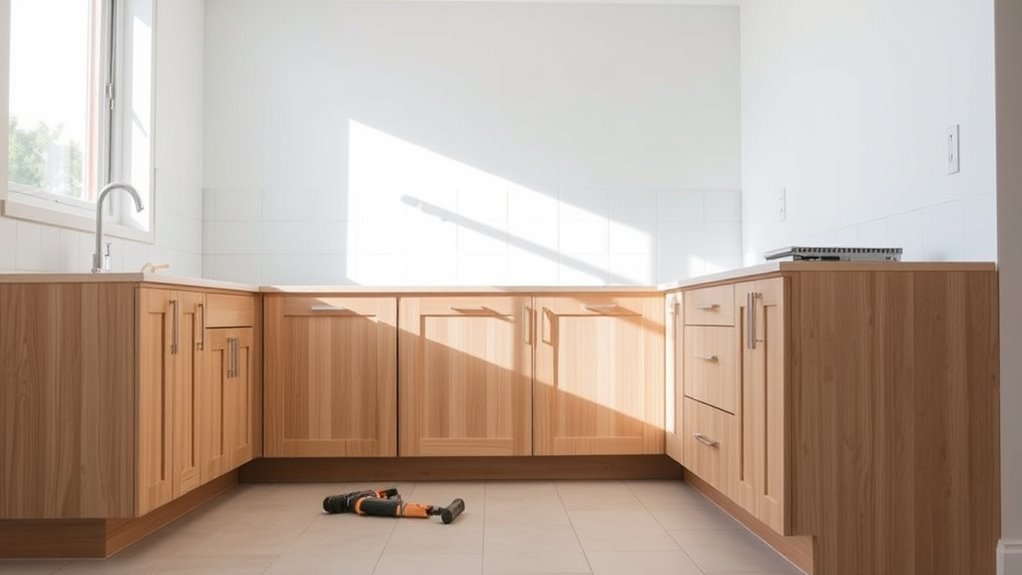
Before you pick out your kitchen base cabinets, think carefully about your space’s layout. The shape and size of your kitchen will influence which cabinet styles work best. For example, L-shaped kitchens benefit from corner cabinets, while galley kitchens need narrow, efficient options. When choosing styles, consider doors, drawer fronts, and hardware that match your overall design.
Next, explore material options. Solid wood is durable and has a classic look. Plywood offers strength at a lower cost. MDF is budget-friendly and smooth, perfect for painted cabinets. Laminate resists moisture and is easy to clean. Pick materials that balance style, durability, and your budget.
How to Measure Your Kitchen Space for Base Cabinets
When measuring your kitchen space for base cabinets, accuracy is really important to ensure everything fits perfectly. Start by measuring the length of each wall where you want to put cabinets.
Make sure to note any doorways, windows, or appliances that could affect your available space. Write down all your measurements clearly so you don’t make mistakes later.
Be sure to record any doorways, windows, or appliances that impact your available cabinet space.
Next, think about how you want to arrange your cabinets. Consider corner cabinets, drawers, and storage options within your space.
Measure the height and depth to make sure your cabinets won’t interfere with countertops or appliances. Keep standard cabinet sizes in mind, but adjust them to suit your kitchen’s unique layout.
Finally, double-check all your measurements before buying or cutting any materials. Proper measurements and thoughtful planning will help you create a functional, professional-looking kitchen that fits perfectly.
Tools Needed to Install Kitchen Base Cabinets
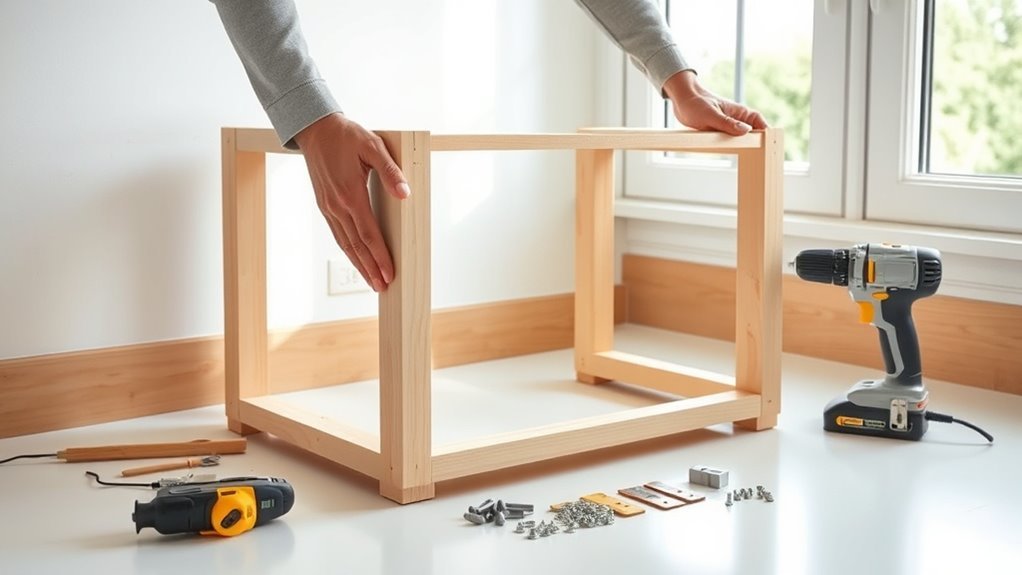
To install your kitchen base cabinets smoothly, you’ll want to gather a few essential tools first. A drill, a level, and a measuring tape are definitely must-haves. These will help you make sure everything is aligned perfectly and that your cabinets are installed securely.
Don’t forget about safety gear, too. Gloves and eye protection are important, especially when you’re working with power tools. Being prepared with the right safety equipment will help keep you safe as you work through the installation process.
Having all the right tools and safety gear ready beforehand will make the whole job much easier and more precise.
Essential Installation Tools
Gathering the right tools makes installing kitchen base cabinets much smoother and faster. To master cabinet installation techniques, you’ll need specific tools that guarantee precision and efficiency.
Essential measurement tools are vital for accurate cabinet placement and alignment. Here are the four must-have tools:
- Tape Measure – For precise dimensions and spacing.
- Level – To keep cabinets perfectly horizontal.
- Stud Finder – To locate wall studs for secure mounting.
- Power Drill with Screwdriver Bits – For fastening cabinets quickly and firmly.
With these tools, you’ll confidently tackle your kitchen base cabinet installation. This ensures everything fits seamlessly and stays sturdy.
Don’t forget to gather these essentials before you start. They’re the foundation of successful cabinet installation techniques.
Safety Equipment Requirements
Safety gear plays an essential role in protecting you throughout the kitchen base cabinet installation process. Start by wearing safety goggles to shield your eyes from dust and debris when cutting or drilling.
Work gloves protect your hands from sharp edges and splinters, helping you maintain a firm grip on tools and materials. A protective mask is vital, especially when sanding or working with particleboard, to prevent inhaling harmful dust particles.
Since you’ll spend a lot of time kneeling, don’t forget knee pads. They cushion your knees and prevent discomfort or injury. Wearing the right safety equipment guarantees you stay safe and comfortable, letting you focus on installing your kitchen base cabinets efficiently and without unnecessary risks.
Preparing Your Walls and Floors Before Installing Cabinets
Before you dive into installing your kitchen base cabinets, take a moment to look over your walls. Make sure there aren’t any damages or uneven spots that might cause problems later on. Fixing those up beforehand will save you a lot of headaches down the road.
Also, don’t forget to check your floors. They should be clean and as level as possible because a solid, even surface is key to a smooth installation. Taking these simple steps now will make the whole process much easier and help your cabinets sit perfectly in place.
Assess Wall Condition
Although it might seem straightforward, evaluating your wall condition is key for a smooth cabinet installation. Doing a thorough assessment ensures your cabinets have a solid foundation and helps prevent issues like sagging or detachment later on.
Start by checking for water damage, mold, or rot that could weaken the wall. Inspect for loose drywall or plaster that might need fixing or reinforcement.
Make sure the wall studs are straight, secure, and spaced correctly to support your cabinets. Also, remove any baseboards, trim, or obstacles that could interfere with placing your cabinets properly.
Taking these steps now can save you from costly repairs down the line and makes sure your cabinets are mounted firmly and safely.
Level and Clean Floors
Two essential steps to prepare your kitchen floors for cabinet installation are leveling and cleaning. Start by checking for any uneven spots with a level or straightedge. If you find dips or high points, use a floor leveling compound or sand down raised areas to make the surface flat and stable.
Proper floor preparation guarantees your cabinets sit securely and align correctly. Next, focus on cleaning the surface. Sweep and vacuum thoroughly to remove dust, debris, and grease that could affect adhesion or stability.
Wipe the floor with a damp cloth and a mild cleaner, then let it dry completely. Clean floors prevent slipping and help ensure your cabinets won’t shift over time. Taking these steps sets a solid foundation for a smooth, successful installation.
How to Level Kitchen Base Cabinets Properly
Getting your kitchen base cabinets perfectly level ensures a smooth installation and helps avoid future issues with doors and drawers. To do this, you’ll want to use effective cabinet leveling techniques along with proper floor leveling methods.
Start by checking how flat the floor is because uneven floors can throw off your cabinet alignment. Place a level on top of the cabinet frame to spot any uneven spots.
Use shims to lift the low areas, adjusting them until the cabinet sits perfectly level. Double-check with a long level or straightedge across multiple cabinets to keep everything consistent.
Once everything looks good, secure the shims temporarily while you prepare to fasten the cabinets in place.
How to Secure Kitchen Base Cabinets to the Wall
Once you’ve leveled the cabinets, the next step is to secure them firmly to the wall for stability and safety. Start by finding the wall studs using a stud finder or by tapping the wall to locate solid framing.
Anchoring your cabinets directly into these studs is key for strong support. Use long screws to drive through the cabinet’s back panel into the studs. Be sure to pre-drill holes to avoid splitting the wood.
Clamp the cabinet in place while fastening it to keep it from shifting. Double-check that it stays level as you secure it. If you only find drywall and no studs, add wall anchors rated for the cabinet’s weight.
Avoid relying solely on drywall screws, as they won’t hold the cabinet securely. Following these steps ensures your kitchen base cabinets are safely anchored and will last through everyday use.
How to Connect Kitchen Base Cabinets Seamlessly
Aligning your kitchen base cabinets tightly ensures a seamless, professional look and makes the most of your workspace. To connect your cabinets smoothly, focus on precise alignment techniques and seamless joint methods. Here’s how to do it:
Tightly aligning your kitchen base cabinets creates a sleek, professional finish and maximizes your workspace efficiently.
- Check Level and Plumb: Use a level to make sure each cabinet is perfectly vertical and horizontal before joining.
- Clamp Cabinets Together: Bring the cabinets side by side and clamp them tightly to hold their position.
- Drill Pilot Holes: Through the adjoining cabinet walls, drill pilot holes to prevent splitting the wood.
- Secure with Screws: Use long wood screws to fasten the cabinets together, countersinking the heads for a smooth finish.
Preparing for Countertop Installation After Base Cabinets
Before you install your countertop, make sure the base cabinets are fully secured and level. This helps create a stable foundation and prevents uneven surfaces that could damage your countertop.
Next, double-check your measurements to ensure they match the actual cabinet dimensions. Be sure to account for any overhang or backsplash. Accurate measurements help avoid costly mistakes and ensure a perfect fit.
Here’s a quick reference to prepare for countertop installation:
| Step | Task Description | Key Tip |
|---|---|---|
| 1. Secure Cabinets | Tighten all screws and check level | Use a level and shims if needed |
| 2. Confirm Measurements | Measure cabinet width and depth | Include overhang allowance |
| 3. Select Materials | Choose countertop materials | Consider durability and style |
| 4. Prepare Surface | Clean cabinet tops and remove debris | Confirm smooth, dust-free area |
Following these steps will help you have a smooth countertop installation.
Common Mistakes When Installing Base Cabinets
Although installing base cabinets might seem straightforward, many people run into avoidable mistakes that can cause misalignment, instability, or costly fixes later on. To ensure a smooth installation, watch out for these common errors.
Ignoring Wall Reinforcement can be a big issue. Not reinforcing walls properly can make cabinets loosen over time. Always check and strengthen wall studs where you’ll hang the cabinets.
Incorrect Cabinet Spacing can mess up your kitchen’s flow and make everything look off. Measure carefully to keep consistent gaps, especially around doors and appliances.
Skipping Leveling Techniques can lead to uneven countertops and doors that don’t line up. Use shims and a level to get everything perfectly straight.
Overlooking Installation Errors happens when rushing. Take your time to secure each cabinet properly and double-check your work as you go.
Essential Tips for Maintaining and Adjusting Kitchen Cabinets
When you want your kitchen cabinets to last and work smoothly, regular maintenance and quick adjustments are essential. Start by cleaning your cabinets with a gentle cleaner to prevent buildup that can harm the finish.
Check hinges and handles often to catch any loosening early. Tighten screws as needed to keep everything secure and in place. If cabinet doors don’t close properly or look misaligned, try tweaking the hinge screws to realign them.
For drawers that stick or don’t slide evenly, lubricate the tracks and make sure they’re seated correctly. Avoid overloading shelves to prevent sagging or warping over time. Also, keep an eye out for water damage around sinks and fix leaks quickly to protect your cabinets.
Frequently Asked Questions
What Types of Wood Are Best for Kitchen Base Cabinets?
You’ll want to choose hardwood options like maple, oak, or cherry for kitchen base cabinets because they’re durable and resist dents.
Plywood benefits make it a smart choice for cabinet boxes since it’s stable, strong, and less likely to warp compared to particleboard.
Combining hardwood fronts with plywood boxes gives you sturdy, long-lasting cabinets that handle kitchen wear and tear while looking great over time.
How Long Does a Typical Base Cabinet Installation Take?
Think of installing base cabinets like assembling a puzzle. It usually takes about a day or two, depending on your pace and preparation.
One friend spent eight hours on installation but saved time by measuring and leveling beforehand. Your timeline will go smoother if you prep the space well, gather all tools, and remove old cabinets first.
Staying organized helps you finish efficiently without rushing or missing details.
Can I Install Base Cabinets on Uneven Floors Without Leveling?
You shouldn’t install base cabinets on uneven floors without leveling. Uneven floors can cause doors to misalign and countertops to slope.
Instead, use adjustable legs to raise and level the cabinets properly. You can also apply shimming techniques between the cabinet base and the floor to fill gaps and ensure stability.
Taking these steps will help your cabinets stay secure and look professional, so don’t skip the leveling process.
Are There Eco-Friendly Options for Kitchen Base Cabinets?
Yes, you can choose eco-friendly options for your kitchen base cabinets by opting for sustainable materials like bamboo, reclaimed wood, or FSC-certified plywood. These materials help reduce environmental impact and are also durable.
You’ll want to look for low-VOC or water-based finishes for your cabinets. They keep your kitchen healthier and greener without sacrificing style.
How Do I Choose Hardware for Kitchen Base Cabinets?
When choosing cabinet hardware, start by thinking about your kitchen’s style and how you want it to function. You want hardware that matches your cabinet finishes and the overall look you’re going for.
Take some time to explore different knob styles—round, square, or more ornate options—to see what suits your taste best.
Also, consider how comfortable and easy it will be to use the hardware daily.
Don’t forget to check the durability and finish quality since you’ll be handling it every day.
Matching your cabinet hardware with your kitchen’s vibe really makes a difference in the overall look.
Conclusion
Installing your kitchen base cabinets is like laying the foundation of a masterpiece. With careful measuring, leveling, and connecting, you’re building the backbone of your culinary space.
Remember, every screw and adjustment gets you closer to a kitchen that flows effortlessly. Take your time and pay attention to details to ensure everything lines up perfectly.
Avoid common pitfalls by double-checking measurements and using the right tools. Keeping your cabinets in tune with regular care will help them stay beautiful and functional for years.
Soon, you’ll stand back and admire how your hard work transformed an empty frame into the vibrant heart of your home—your new kitchen base cabinets.