How Much to Remodel a Kitchen? The Complete Answer
Thinking about remodeling your kitchen but feeling overwhelmed by the costs? You’re not alone. Many people struggle with figuring out how much a kitchen remodel will actually cost and what’s worth the investment.
Remodeling your kitchen typically costs between $12,000 and $35,000, depending on size, materials, and labor. Setting a clear budget upfront helps manage surprises like permit fees or design changes.
Choosing efficient layouts and budget-friendly materials, like laminate countertops or cabinet refacing, can keep costs down.
You’ll also weigh DIY versus professional labor based on your skills and timeline.
If you want to make smart choices and finance your remodel effectively, there’s plenty more to investigate.
Key Takeaways
- Kitchen remodels usually cost between $12,000 and $35,000, depending on the size, materials, and how complex the design is.
- Labor costs vary based on how complicated the project is, local rates, and whether you’re doing it yourself or hiring professionals.
- When planning your budget, be sure to include materials, labor, appliances, permits, and some extra for unexpected expenses.
- You can consider financing options like personal loans, home equity lines, or renovation grants to help cover the costs.
- For a budget-friendly remodel, think about options like cabinet refacing, laminate countertops, energy-efficient appliances, and flexible design choices.
What’s the Average Cost of a Kitchen Remodel?
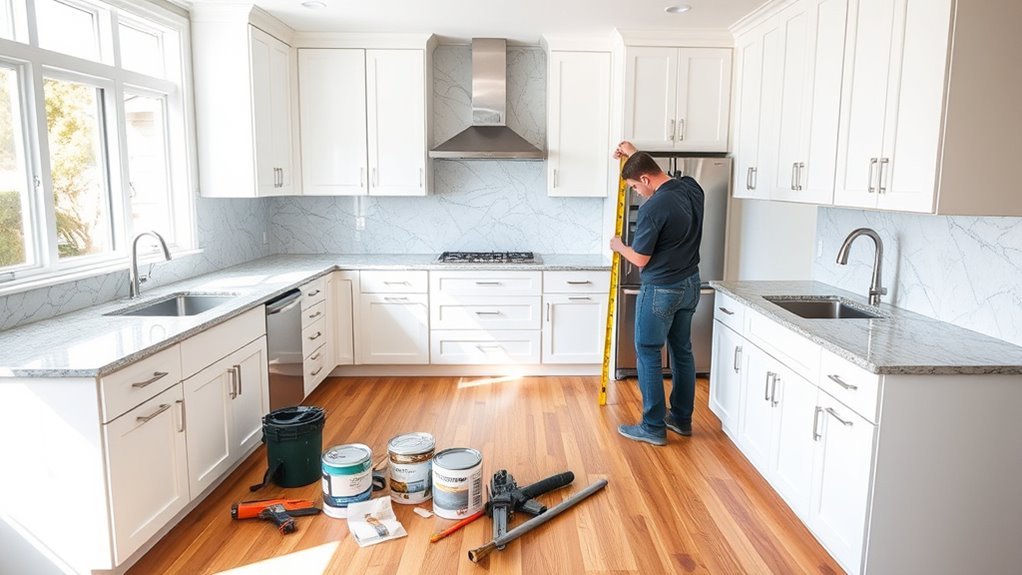
Wondering how much you’ll need to budget for a kitchen remodel? On average, kitchen renovations can cost anywhere from $12,000 to $35,000, depending on your choices. Setting a realistic kitchen budget early helps you avoid surprises and keeps your project on track.
Keep in mind that your renovation timeline will also impact costs. Longer projects might increase labor expenses or require temporary solutions. To create an accurate kitchen budget, consider materials, labor, appliances, and unexpected expenses.
You don’t have to spend a fortune to get a beautiful kitchen, but it’s essential to allocate funds wisely. Also, factor in how the renovation timeline aligns with your daily routine. Quicker timelines might cost more but can reduce inconvenience.
How Kitchen Size and Layout Affect Remodeling Costs
Because kitchen size and layout directly influence the scope of your project, they play an essential role in remodeling costs. Your kitchen dimensions determine how much material and labor you’ll need, while layout efficiency impacts the ease of your renovation.
A well-planned layout optimizes space, improves traffic flow, and enhances ergonomics. All of these factors can either raise or lower expenses depending on how complex the design is.
When planning, focus on these key factors:
- Space optimization and storage solutions: Using space efficiently can cut costs by minimizing wasted areas and adding smart storage options.
- Appliance placement and traffic flow: Properly positioning appliances improves usability but might require costly adjustments to plumbing or wiring.
- Design flexibility: More flexible layouts offer customization but may increase remodeling expenses.
Understanding these elements helps you control costs while creating a functional, attractive kitchen tailored to your needs.
How Materials Influence Kitchen Remodeling Prices
Although your kitchen size and layout set the foundation, the materials you choose greatly impact the overall remodeling cost. Different material types—from laminate countertops to natural stone—vary widely in price, so doing cost comparisons helps you balance your budget and style.
Your design choices affect not just the look but also the installation complexities. For example, custom cabinetry demands more labor than stock options. Quality impacts both upfront expenses and long-term durability.
Investing in higher-grade materials can save you money down the road. If you prefer sustainable options, materials like reclaimed wood or bamboo might cost more initially but offer environmental benefits and unique aesthetics.
What Labor Costs to Expect and Why They Vary
You’ll see that labor costs can really change a lot depending on things like how complex the project is and what kind of skills are needed. It’s not just about doing the job, but how tricky it is and what expertise is required to get it done right.
Where you live also makes a big difference since wages tend to vary from one region to another. Knowing these factors can help you get a better handle on your kitchen remodel budget so there aren’t any surprises along the way.
Factors Influencing Labor Costs
When planning your kitchen remodel, understanding what drives labor costs can help you set a realistic budget. Several key factors influence these costs, starting with the labor market. If skilled workers are in high demand and short supply, expect higher rates.
Next, project complexity plays a big role. Intricate designs or structural changes require more time and expertise, which can increase labor costs. The experience level of your contractors also matters. Veteran professionals might charge more but often work more efficiently, potentially saving you money overall.
Consider these critical factors:
- Labor market conditions and availability
- The complexity of your kitchen design and structural needs
- Contractor experience and efficiency
Regional Labor Cost Differences
Since labor costs vary widely across the country, knowing the regional differences can help you better estimate your kitchen remodel budget. The labor market in urban areas often drives higher wages because of more contractor options and higher demand.
In contrast, rural regions may offer lower labor rates but have fewer contractors, which can affect project timelines. Regional pricing reflects these wage differences along with factors like the local cost of living and supply chain expenses.
When comparing costs, think about how your project size and complexity influence labor hours. Larger or more complicated remodels naturally increase expenses. Cost differences between areas show that urban versus rural isn’t just about price but also quality and speed.
Understanding these elements helps you plan realistically and ensures you allocate enough budget for labor based on where you live.
Upgrades That Add Value: and Increase Your Budget
Although basic remodels can refresh your kitchen, adding high-end upgrades really boosts its appeal and value. When you invest in smart upgrades, you’re not just improving how it looks—you’re also making it more functional and energy-efficient.
Buyers really appreciate those improvements. While some upgrades can be costly, others are budget-friendly but still increase your kitchen’s resale value.
Here are some upgrades to consider for maximum impact:
- Energy-efficient appliances: They help cut utility bills and attract eco-conscious buyers.
- Custom cabinetry with soft-close features: These add both style and practical benefits.
- Quartz or granite countertops: They’re durable and give your kitchen an upscale look.
Hidden Kitchen Remodeling Costs You Should Know
Investing in high-end upgrades can really boost your kitchen’s look, but it’s important to be aware of hidden costs that can catch you off guard. Unexpected expenses like higher contractor fees or permit costs can quickly add up.
Always include a budget buffer to handle surprises without stressing your finances. Design changes mid-project might seem minor but can lead to costly delays and extra charges.
Appliance upgrades often go beyond the sticker price, including installation and compatibility adjustments. Timeline delays not only extend your inconvenience but might also increase labor costs.
Don’t forget waste disposal fees, which some contractors charge separately for hauling away old materials. By anticipating these hidden kitchen remodeling costs, you’ll be better prepared to manage your budget and avoid unpleasant surprises.
Planning ahead helps keep your remodel on track and within your financial goals.
How to Save Money Without Sacrificing Quality
When you want to save money on your kitchen remodel, smart planning and careful choices make all the difference. You don’t have to sacrifice quality materials to stick to your budget. Focus on budget-friendly options that give you durability and style without breaking the bank. For example, choose engineered stone instead of high-end granite, or go for semi-custom cabinets rather than fully custom ones. Prioritize where you invest in materials to get the best long-term value.
Consider these tips to save money without compromising quality:
- Mix high-end and budget-friendly options to balance cost and look
- Refinish or repaint existing cabinets instead of replacing them
- Shop for quality materials during sales or from discount suppliers
Hiring Pros vs. DIY: Which Saves You More?
Balancing cost and quality often comes down to whether you should hire professionals or tackle the kitchen remodel yourself. When considering DIY, keep in mind that skills and risks can be significant. Trying complex plumbing or electrical work without experience might lead to costly mistakes.
Hiring pros brings expertise and quality assurance, making sure your remodel meets industry standards and lasts longer. Cost-wise, DIY might save you money upfront, but hidden expenses and longer timelines can eat into those savings. Professionals often work faster, reducing delays and surprise bills.
If you enjoy hands-on work and want more design flexibility, DIY can be rewarding. But think about your skill level, how much time you have, and your comfort with risks. The decision between hiring pros and doing it yourself is all about balancing these factors for the best value and outcome.
Financing Your Kitchen Remodel: Best Options and Tips
Although kitchen remodels can really change your home, they often come with a hefty price tag that not everyone can pay upfront. To handle this, look into different financing options that fit your budget and credit score.
Kitchen remodels transform your space but often require smart financing tailored to your budget and credit.
Start with a solid budget plan and accurate cost estimates so you know exactly how much you need. Then, compare offers from different lenders to find the best loan types, like personal loans, home equity lines, or renovation grants that might be available in your area.
Here are some financing tips to help you stay on track:
- Review your credit scores to get better interest rates and payment plans.
- Explore renovation grants for possible financial help.
- Shop around and compare multiple lenders to find the best loan terms and fees.
Final Thoughts: Planning a Kitchen Remodel Within Budget
Even if unexpected expenses pop up, you can keep your kitchen remodel on budget by planning carefully and staying flexible. Start by identifying your design priorities so you know where to invest and where to save.
Focus on budget-friendly options like refacing cabinets instead of replacing them or choosing cost-effective materials that still look great. Use the table below to help balance your choices:
| Design Priority | Budget-Friendly Option |
|---|---|
| Cabinets | Reface or paint existing cabinets |
| Countertops | Laminate or butcher block |
| Appliances | Energy-efficient models |
| Flooring | Vinyl or laminate flooring |
| Lighting | LED fixtures |
Frequently Asked Questions
How Long Does a Typical Kitchen Remodel Take?
A typical kitchen remodel takes about 6 to 12 weeks, depending on how complex and extensive the project is.
It’s a good idea to stay updated on kitchen design trends so your new space feels modern and functional.
Remember to keep your remodeling budget in check by setting aside extra funds for unexpected costs.
Staying organized and communicating clearly with your contractor can help speed things up, so you’ll be enjoying your refreshed kitchen sooner than you think!
What Permits Are Needed for a Kitchen Remodel?
Wondering what permits you need for your kitchen remodel? You’ll probably need a building permit if you’re making structural changes.
Don’t forget permits for plumbing and electrical upgrades, especially if you’re moving pipes or rewiring outlets. These ensure your work meets safety codes.
Always check with your local building department before starting. Skipping permits can lead to fines or costly rework.
Why risk it when getting permits is straightforward?
How to Choose the Right Kitchen Lighting?
To choose the right kitchen lighting, focus on combining ambient lighting with task lighting. Ambient lighting provides overall illumination, making your space feel inviting.
Task lighting targets specific work areas like countertops and the stove, helping you cook safely and efficiently. You’ll want adjustable fixtures or under-cabinet lights for tasks.
For ambient glow, consider ceiling lights or pendant lamps. Balancing both types ensures your kitchen is both functional and stylish.
What Are the Best Kitchen Layouts for Small Spaces?
The best kitchen layouts for small spaces are galley, L-shaped, and single-wall designs because they maximize efficiency.
You’ll want to focus on space-saving solutions like pull-out shelves and compact appliances. Incorporate multifunctional furniture, such as foldable tables or island carts with storage, to add flexibility without crowding.
These layouts and features help you make the most of every inch while keeping your kitchen functional and stylish.
How to Dispose of Old Kitchen Materials Responsibly?
Oh sure, just toss those old cabinets and countertops in the trash—you don’t care about the planet, right? But if you do, start by exploring reuse options like donating salvageable materials to community projects or Habitat for Humanity.
Then, find local recycling centers that accept construction debris to keep waste out of landfills. You’ll feel better knowing you’re giving your old kitchen a second life instead of just adding to the trash heap.
Conclusion
Remodeling your kitchen doesn’t have to drain your wallet like a leaky faucet. By understanding costs, choosing materials wisely, and balancing DIY with professional help, you can cook up a dream space without burning through your budget.
Remember, a smart plan is your best recipe for success. Stay focused, shop smart, and watch your kitchen transform into a masterpiece that adds both joy and value to your home.
When it comes to remodeling your kitchen, knowing the costs helps you make better decisions. Whether you’re aiming for a small upgrade or a full overhaul, planning ahead keeps everything on track.
Choosing the right materials is key. Quality doesn’t always mean expensive, so do your research to find options that fit your style and budget. This way, your kitchen remodel will stand the test of time.
Balancing DIY projects with professional help can save you money without sacrificing quality. For simple tasks, tackling things yourself can be rewarding and budget-friendly.
In the end, understanding how much to remodel a kitchen is about smart planning and making informed choices. With a clear budget and good decisions, your kitchen remodel can be both affordable and stunning.