How to Set a Dinner Table: Step-by-Step Guide for Every Occasion
Setting a dinner table correctly involves arranging plates, utensils, glasses, and napkins in a way that is both functional and inviting. The main goal is to place items systematically so guests easily know what to use and where, whether it’s a casual family meal or a formal dinner.
Understanding how to set a dinner table affects the dining experience by promoting comfort and elegance simultaneously. Proper layout enhances meal flow and etiquette, letting your guests focus on the food and company without confusion.
This article will guide you through the essentials of table setting, covering both casual and formal styles, the placement of utensils and dishware, glassware options, and tips on adding personal touches to impress your guests.
Basic Elements of a Dinner Table Setting

Plates and Their Placement
Start by positioning the dinner plate in the center of the setting, approximately one inch from the table’s edge. For multi-course meals, a salad or appetizer plate should sit neatly on top of the dinner plate.
If bread is served, place a small bread plate above and slightly to the left of the main plate, with a butter knife horizontally across it or at an angle, depending on preference.
Utensils: Forks, Knives, and Spoons
Arrange utensils in the order they will be used, from the outside in. Forks always go to the left of the plate, while knives and spoons sit to the right. Knife blades should face the plate.
For multiple forks or spoons, place the salad fork to the outermost left and the soup spoon on the outermost right. Dessert utensils can be placed horizontally above the dinner plate if space allows.
Setting Glassware and Napkins

Selecting and Placing Glassware
Glassware is usually placed above the knives on the right side. Water glasses are positioned directly above the knife, with wine glasses arranged slightly to the right and lower depending on red or white wine service.
In more casual settings, using just a water glass and one wine glass is acceptable, reducing the clutter while maintaining elegance.
For more on this, see our related guide: How Long Does It Take to Get a Table at a Restaurant? A Complete Guide That Works.
Napkin Folding and Placement Options
Napkins can be laid flat to the left of the forks, placed on the plate, or tucked into glasses for decorative flair. Folding styles range from simple rectangles to more intricate fan or pocket folds depending on the occasion.
Choose fabric napkins for formal dinners and paper ones for casual meals. The napkin placement affects the overall impression, so pick a style that complements the table’s mood.
Understanding Place Setting Variations

Casual Dinner Table Settings
Casual settings simplify the arrangement, usually including only forks to the left, knives and spoons to the right, a single plate, and a water glass. This style emphasizes comfort and ease.
Napkins can be paper or fabric, and place cards are optional. The focus is on practicality without sacrificing neatness or hospitality.
- Minimal glassware
- Simplified utensil layout
- Paper or casual napkins
Formal Dinner Table Settings
Formal tables require more utensils and glassware arranged carefully by course. Multiple forks, knives, spoons, and glasses are aligned precisely to indicate the order of use.
Charger plates may be used beneath dinner plates, and place cards are common to assign seating. Details like crystal glassware and cloth napkins highlight the event’s sophistication.
- Multiple utensil pieces for courses
- Chargers and fine china
- Crystal glasses and cloth napkins
Table Centerpieces and Decorations

Choosing Appropriate Centerpieces
The centerpiece should enhance the table without obstructing guests' view or taking up too much space. Flowers, candles, or seasonal decor can add personality and warmth.
Ensure the centerpiece height stays below eye level and avoid overly fragrant arrangements that might interfere with the food’s aroma.
For more on this, see our related guide: What Is the Best Restaurant for a Family Dinner? A Complete Guide with Insider Tips.
Adding Personal Touches and Place Cards
Personalized place cards help guests find their seats smoothly and add elegance. Small decorative items, like themed napkin rings or custom menu cards, also enhance the dining experience.
In informal settings, handwritten cards or simple name tags work well, while formal events may feature calligraphy or printed designs.
Common Mistakes and How to Avoid Them when Setting a Dinner Table
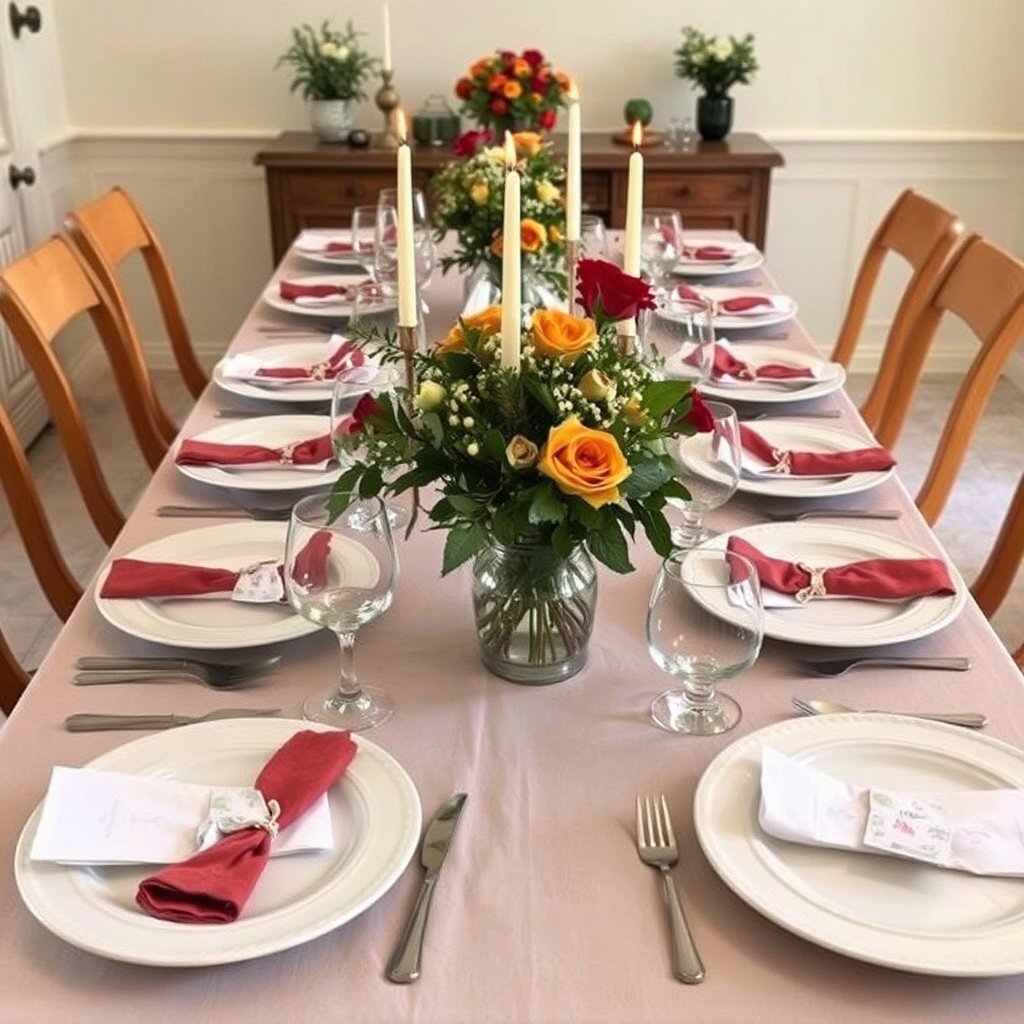
Overcrowding the Table
One frequent error is placing too many items on the table, leaving little room for plates and serving dishes. This can make guests uncomfortable and clutter the space.
Avoid overcrowding by planning ahead and removing unnecessary items. Use smaller tableware or eliminate extras not relevant to the meal.
For detailed historical context and variations, you can explore table setting guidance on Wikipedia. table setting guidance on Wikipedia.
Incorrect Utensil Placement
Another common mistake is mixing up utensil placement, which can confuse diners. Forks belong to the left; knives and spoons go to the right, with knife blades facing inwards.
Consulting a basic guide before setting the table can prevent these errors, especially if you are setting a formal dinner table for the first time.
Dinner Table Setting Styles Comparison
This comparison highlights the differences between casual, semi-formal, and formal table settings to fit your event's tone and complexity.
| Style | Utensils Complexity | Glassware | Napkins | Centerpiece |
|---|---|---|---|---|
| Casual | Minimal (fork, knife, spoon) | Water glass, optional wine glass | Paper or fabric | Simple or none |
| Semi-Formal | Moderate (multiple forks and knives) | Water and two wine glasses | Fabric, folded neatly | Small floral or candles |
| Formal | Full set for multiple courses | Water, red and white wine glasses, champagne flute | Cloth, elaborate folds | Elaborate floral or artistic arrangements |
Frequently Asked Questions
Where should the forks be placed when setting a dinner table?
Forks should always be placed to the left of the dinner plate. If more than one fork is used, arrange them from the outside in, depending on the course order.
Is it necessary to use a charger plate for casual dinners?
No, charger plates are typically reserved for formal settings. For casual dinners, the dinner plate alone is sufficient and keeps the table uncluttered.
How do I decide which glassware to use for my dinner?
Choose glassware based on the beverages served. Generally, a water glass is mandatory, with additional wine glasses depending on your wine offerings and the formality of the dinner.
Can I reuse napkins for multiple meals?
Fabric napkins can be reused after laundering, but it’s best to use fresh, clean napkins for each new meal to maintain hygiene and presentation quality.
What is the best way to fold napkins for a formal dinner?
Simple but elegant folds like the pocket, fan, or triangle styles are popular for formal dinners, allowing placement on the plate or beside the forks for a refined look.
Key Takeaways
- Place plates centrally and utensils according to use order.
- Glassware arrangement varies with formality and beverage served.
- Napkin style and placement enhance the table’s aesthetic.
- Choose centerpieces that complement without obstructing.
Conclusion
Understanding how to set a dinner table involves balancing function with style, allowing diners to feel welcomed and comfortable. Each component, from plates to glassware, contributes to the meal's rhythm. Considering the event’s tone—casual or formal—helps determine which elements to prioritize while maintaining clarity and elegance.
For casual meals, a simplified table setting with essential utensils and minimal glassware fits well, keeping the atmosphere relaxed and approachable. Formal dinners benefit from a more structured setup, including multiple utensils and glassware to accommodate various courses. Using chargers, fabric napkins, and sophisticated centerpieces elevates the experience. Semi-formal setups offer a flexible middle ground that suits many occasions.
Start by mastering fundamental placement principles: plates centered, forks left, knives and spoons right, glassware above knives, and thoughtfully placed napkins. Then tailor the setting to your guests and occasion. Consistent practice will make the process feel natural, turning your table into a welcoming stage for memorable gatherings.