How to Use a Kitchen Scale: A Step-by-Step Guide
Many home cooks find themselves frustrated when their recipes don’t turn out quite right, often due to inaccurate measurements. You’re not alone—precision is key, and a good kitchen scale can make all the difference.
To use a kitchen scale, place it on a flat, stable surface and calibrate it by pressing tare or adjusting the dial to zero. Choose the right units like grams for baking or milliliters for liquids.
Use the tare function to subtract container weight and add ingredients directly. Weigh dry, liquid, or sticky items carefully.
Remember to clean and maintain your scale regularly to keep it accurate.
Master these basics, and you’ll improve your cooking precision while exploring even more tips and tricks.
Key Takeaways
- Place the scale on a flat, stable surface and calibrate it by pressing tare or adjusting the dial to zero before use.
- Select the appropriate units—grams, ounces, pounds, or milliliters—based on your recipe and the ingredient you’re measuring.
- Use the tare function to zero out the container’s weight so you can measure ingredients precisely.
- Weigh dry, liquid, and sticky ingredients using suitable containers and techniques like spooning or lightly oiling the containers.
- Regularly clean your scale, check its calibration, replace batteries when needed, and follow best practices to keep measurements accurate and consistent.
Setting Up Your Kitchen Scale for Accurate Measurements
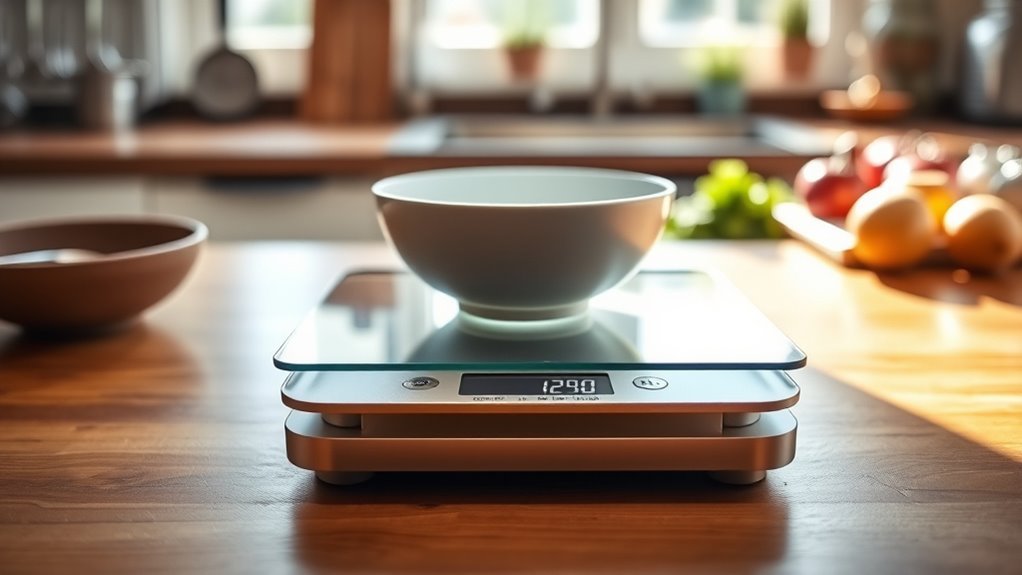
Before you start weighing ingredients, make sure your kitchen scale is on a flat, stable surface and properly calibrated. This helps ensure your measurements are accurate every time.
Different types of scales—digital and mechanical—need specific setup steps. For digital scales, place them on a level countertop and press the tare or zero button before adding anything.
Mechanical scales should be set to zero by adjusting the dial or knob. Avoid placing your scale near drafts, vibrations, or uneven surfaces, as this can cause inconsistent readings.
Always check the display to make sure it’s stable at zero before you begin weighing. If your scale has a removable bowl or platform, make sure it’s securely attached and re-zero the scale afterward.
How to Choose the Right Units on Your Kitchen Scale
When you start weighing ingredients, choosing the right units on your kitchen scale helps your measurements match the recipe’s needs. Most scales let you switch between grams, ounces, pounds, and milliliters.
Picking the right unit makes cooking easier and keeps your scale accurate. It also prevents errors from converting units. For example, weighing flour in grams is often more precise than using cups.
Here’s a quick guide to help you decide:
| Unit | Best For | Notes on Scale Accuracy |
|---|---|---|
| Grams (g) | Baking, precise solids | High accuracy, universal use |
| Ounces (oz) | Cooking, US recipes | Good accuracy, common in US |
| Pounds (lb) | Large quantities | Less precise for small amounts |
| Milliliters (ml) | Liquids | Accurate for volume measures |
Choose units that match your recipe to avoid extra conversions. This keeps your results consistent and accurate.
How to Tare Your Kitchen Scale for Precise Measuring
Selecting the right units on your kitchen scale helps you get accurate measurements. But to be precise, you often need to tare. Taring lets you exclude the container’s weight so you only measure your ingredients.
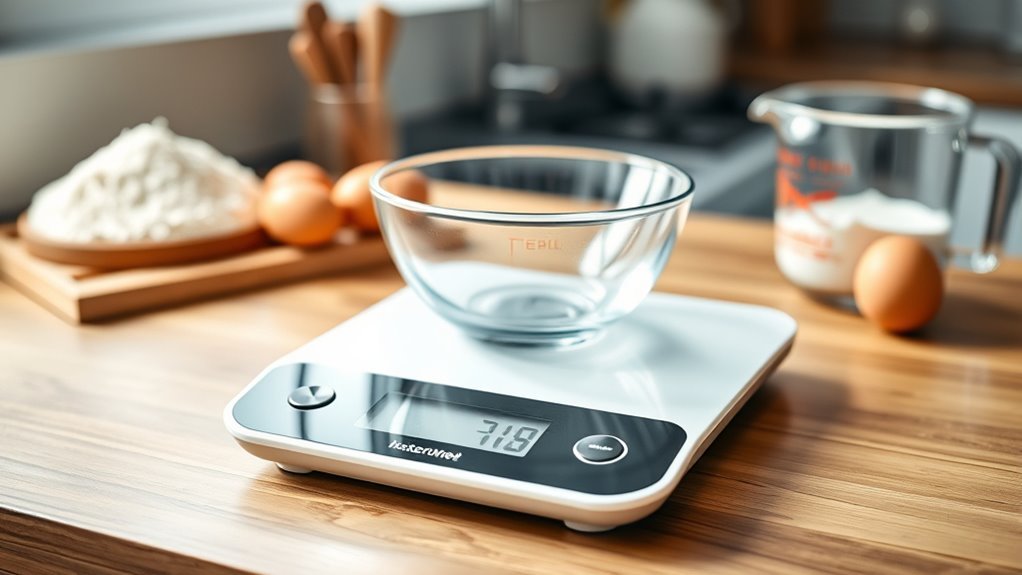
Start by placing your empty bowl or container on the scale. On most digital scales, just press the “tare” or “zero” button. This resets the display to zero, ignoring the container’s weight.
Place your empty container on the scale and press tare to zero out its weight before measuring ingredients.
Now, add your ingredient, and the scale will show only its weight. If you want to add multiple ingredients in the same bowl, just press tare after each addition. This resets the scale to zero again.
This way, you measure each item accurately without transferring them to different containers. Using tare techniques on digital scales makes cooking and baking easier, more precise, and less messy.
Mastering this step guarantees you get exact measurements every time.
How to Weigh Dry Ingredients With a Kitchen Scale
Weighing dry ingredients with a kitchen scale is simple and guarantees your recipes turn out perfectly every time. Start by placing your empty container on the scale and tare it to zero.
When measuring flour, avoid scooping directly with the measuring cup. Instead, spoon it into your container on the scale for accurate portion sizes.
Weighing sugar works the same way—just add it until you reach the exact weight your recipe calls for. Using a scale helps with ingredient conversions, whether you’re switching between grams and ounces or adjusting recipe volumes.
This precision guarantees recipe accuracy and balances ingredient ratios, which is essential for baking. Plus, it’s great for nutrition tracking since you get exact amounts for calorie counting.
How to Weigh Liquids With a Kitchen Scale
When you’re weighing liquids, the first thing you want to do is pick a container that’s easy to pour from and stable enough so it doesn’t tip over. Once you’ve got that, place the empty container on your kitchen scale and press the tare button. This resets the scale to zero, so you’re only measuring the liquid itself, not the container.
Choosing The Right Container
When you’re measuring liquids with a kitchen scale, picking the right container makes all the difference. Think about container types like bowls, cups, or jars, and choose materials such as glass, plastic, or metal.
The size is important too. Your container should be big enough to hold the liquid without spilling but still stable enough to avoid tipping over during weighing. Container stability is key—avoid lightweight or unsteady containers that might fall over.
| Container Types | Container Materials | Container Sizes |
|---|---|---|
| Bowl | Glass | Small (up to 250ml) |
| Cup | Plastic | Medium (250-500ml) |
| Jar | Metal | Large (500ml+) |
Choosing the right container helps ensure accurate, spill-free measurements every time.
Using Tare Function Properly
Although using a kitchen scale might seem straightforward, mastering the tare function is key for accurately measuring liquids. First, place your empty container on the scale. Then, press the tare button to reset the display to zero.
This step makes sure the container’s weight isn’t included in the measurement, which helps improve tare accuracy. Next, slowly pour your liquid into the container until you reach the desired amount.
Using the tare function properly prevents guesswork and allows you to measure liquids directly without doing extra math. Remember, if you switch containers or add multiple ingredients, press tare each time to keep weights precise.
How to Measure Sticky or Small Ingredients on a Kitchen Scale
When you’re measuring sticky or tiny ingredients, it’s a good idea to start by putting a container on your kitchen scale and taring it to zero. This way, you won’t have to worry about the mess or losing any of the ingredient on the scale.
It just makes everything so much easier and more accurate, especially when dealing with those tricky, small amounts. Plus, it helps keep your workspace cleaner and your ingredients exactly where you want them.
Using Containers Effectively
Measuring sticky or small ingredients on a kitchen scale can be tricky, but using containers effectively makes it much easier. Choosing the right container types and materials helps ensure accurate measurements and easy cleanup. Glass or plastic bowls and storage containers work well for most ingredients.
Pay attention to container sizes to prevent overflow and uneven weight distribution on the scale. Reusable containers are eco-friendly, while disposable options are handy for sticky ingredients like honey or syrup. Always tare your scale to zero with the container on it before adding ingredients.
Small glass bowls are great for syrup or molasses. Lightweight plastic containers work well for powders. Wide, shallow bowls help spread ingredients evenly. Reusable silicone cups are perfect for sticky items, and disposable parchment-lined containers make transferring ingredients easier.
Handling Small Amounts
Since small or sticky ingredients can cling to containers and skew measurements, you’ll want to handle them carefully on your kitchen scale. Start by placing a lightweight container or a piece of parchment paper on the scale, then zero it out. This way, you can measure spices or herbs without residue sticking to the scale surface.
When measuring spices, use a small spoon to transfer them gently to avoid spills. For sticky ingredients like honey or molasses, lightly oil the container to prevent sticking and get an accurate weight. Always tare the scale between additions if you’re combining ingredients.
How to Use a Kitchen Scale for Portion Control and Meal Prep
Using a kitchen scale for portion control and meal prep can make your cooking routine easier and help you stay on track with your diet. Measuring ingredients accurately means you’re less likely to overeat and can better hit your nutritional goals.
Start by placing your container on the scale and zeroing it out (using the tare function) before adding your food. This way, you’re only weighing the contents, not the dish. It’s a simple step that keeps things accurate.
Here are some tips to make the most of your scale: Weigh protein like chicken or fish to match your dietary needs. Measure grains and pasta to prevent oversized portions. Divide snacks into pre-portioned bags for quick access.
Use the scale to portion vegetables for balanced meals. It also helps you track calories and macros more precisely by weighing each ingredient. This makes meal prep more efficient and consistent.
Using your kitchen scale this way saves time and keeps you consistent in your healthy eating routine. It’s a practical tool for anyone looking to streamline meal prep and stay on top of their nutrition.
Troubleshooting Common Kitchen Scale Problems
If your kitchen scale isn’t giving accurate readings, it might just need a quick recalibration. It’s a good idea to check the calibration settings regularly to make sure your measurements stay precise. Let’s go over some simple steps to fix those common calibration problems and get your scale working perfectly again.
Scale Calibration Issues
Although kitchen scales are meant to be accurate, they can sometimes give inconsistent readings because of calibration issues. To keep your scale precise, it’s a good idea to regularly check and adjust it using proper calibration methods.
Many kitchen scales have a calibration mode that lets you reset them with a known weight. If your scale isn’t calibrated correctly, your measurements might be off, which can affect your cooking.
Here are some signs that your scale might need recalibration:
- Fluctuating numbers when nothing is on the scale
- Weight readings that don’t match known objects
- The scale shows zero incorrectly
- The display is unresponsive or erratic
- You’re having trouble entering calibration mode
Inaccurate Weight Readings
When your kitchen scale gives inaccurate weight readings, it can throw off your entire recipe. Weight fluctuations often happen because of an uneven surface or environmental factors like drafts or vibrations.
To fix this, make sure your scale sits on a flat, stable surface. Check for any debris on the weighing platform that could affect the measurement. Accurate calibration is important—regularly recalibrate your scale following the manufacturer’s instructions to stay precise.
If your scale has a tare function, use it properly to subtract the container weight. Finally, replace the batteries if the readings keep being erratic. By addressing these common issues, you’ll avoid inconsistent measurements and ensure your ingredients are perfectly weighed every time.
Cleaning and Maintaining Your Kitchen Scale for Longevity
Keep your kitchen scale in top shape by cleaning it regularly and handling it with care. Good scale hygiene prevents buildup that can affect accuracy, while proper maintenance tips extend its lifespan. Always wipe the surface gently with a damp cloth and mild soap, but never immerse your scale in water.
Protect the weighing platform with a silicone mat or cover to avoid scratches and spills. Battery care is essential—replace batteries promptly and remove them if you won’t use the scale for a long time to prevent corrosion.
Finally, consider smart storage solutions like keeping your scale in a dry, dust-free cabinet to avoid damage. Wipe the surface after each use with a soft cloth. Use gentle cleaning agents, avoiding harsh chemicals.
Replace batteries regularly and check for leaks. Store your scale in a cool, dry place away from heavy items. Use a protective cover to guard against spills and scratches.
Following these steps maintains your scale’s precision and durability.
Best Practices for Baking and Cooking With a Kitchen Scale
Since precise measurements can make or break your recipe, using a kitchen scale guarantees consistent results every time you bake or cook. Focus on baking precision by weighing ingredients instead of relying on volume measurements, which can vary. This helps ensure your recipe stays consistent, especially when it comes to maintaining the right ingredient ratios.
Use your scale for accurate weight conversions, switching easily between grams and ounces as needed. When scaling recipes, adjust ingredient amounts precisely to match your desired portion sizes, helping you avoid wasted food or unexpected outcomes.
Employ your scale in various culinary techniques, like evenly portioning dough or measuring delicate garnishes, to improve your dishes’ presentation and flavor balance. Always zero out your scale before adding ingredients to maintain measurement accuracy throughout the process.
Frequently Asked Questions
Can I Use a Kitchen Scale to Measure Body Weight?
You generally shouldn’t use a kitchen scale for body weight measurement because it’s designed for small items and won’t give accurate results for your weight. Kitchen scales are optimized for grams and ounces, not the pounds or kilograms you need for your body weight.
Instead, use a bathroom scale, which is built specifically for that purpose and provides precise measurements. This way, you can track your body weight accurately and safely.
Are Kitchen Scales Safe for Children to Use?
Yes, kitchen scales are generally safe for children to use, as long as you supervise them to ensure their safety.
Using a kitchen scale can be a fun way to involve kids in cooking and teach them about measurements and kitchen basics.
Just make sure the scale is sturdy and doesn’t have any small parts they could swallow.
With your guidance, children can learn safely and enjoy using a kitchen scale.
How Do Kitchen Scales Differ From Food Processors?
Think of a kitchen scale as a wise judge, offering digital versus analog precision to weigh ingredients perfectly. A food processor, on the other hand, acts like a creative artist, chopping and blending your ingredients into a masterpiece.
You rely on the scale for accuracy, making sure every gram counts. Meanwhile, the food processor transforms textures and combines flavors, helping you get the right consistency.
Both tools serve different purposes, but together they help you craft delicious dishes with ease and precision.
Can a Kitchen Scale Measure Temperature?
No, a kitchen scale can’t measure temperature since it’s designed for weighing ingredients, not temperature measurement. If you want precise temperature readings, you’ll need a thermometer.
Keep in mind, relying on a kitchen scale for temperature won’t give you accurate results because its scale accuracy focuses solely on weight, not heat. For cooking, using the right tool guarantees your measurements are spot-on, whether it’s weight or temperature.
Do Kitchen Scales Require Batteries or Can They Be Plugged In?
Digital scales usually need batteries to work, so you’ll want to keep some handy for consistent accuracy. Mechanical scales don’t require batteries or plugging in because they use springs, but they might need occasional maintenance to stay precise.
Some digital scales have plug-in options, but most rely on batteries to stay portable. Make sure to pick the right type based on what’s more convenient for you and how often you plan to use your kitchen scale.
Conclusion
Now that you’ve mastered your kitchen scale, you hold the secret ingredient to cooking success—precision. Like a chef’s trusty sidekick, your scale guarantees every recipe turns out just right, whether you’re baking or meal prepping.
Remember, a little accuracy goes a long way in the kitchen. It can transform ordinary dishes into culinary delights. So, weigh with confidence and trust your scale.
Let it be the silent hero behind every delicious bite you create. Mastering your kitchen scale means you’re always one step closer to perfecting your favorite recipes.