Why Is My Refrigerator Leaking Water? The Complete Answer
Dealing with a leaking refrigerator can be frustrating and stressful. Many people struggle with water pooling around their fridge, wondering what’s going wrong. If you’re tired of mopping up water daily, you’re not alone. Understanding the common causes can help you fix the issue quickly.
Your refrigerator is leaking water likely because of clogged defrost drains, faulty door seals, or excess condensation from high humidity or frequent door openings.
It could also stem from a broken water inlet valve or improper temperature settings that increase moisture buildup.
An unevenly leveled fridge might prevent proper drainage, causing leaks as well.
If water keeps pooling despite your efforts, knowing these causes can help you fix the issue or decide when to get expert help.
Key Takeaways
- Excess condensation from frequent door openings or high humidity can cause water to leak inside or around the fridge.
- A clogged defrost drain blocks water flow, which can lead to leaks inside or underneath the appliance.
- Damaged or dirty door seals let warm air in, increasing moisture and water buildup.
- A broken water inlet valve or cracked drain pan can cause continuous water leakage.
- Improper leveling prevents proper drainage, making water pool inside or beneath the fridge.
Common Signs Your Refrigerator Is Leaking Water
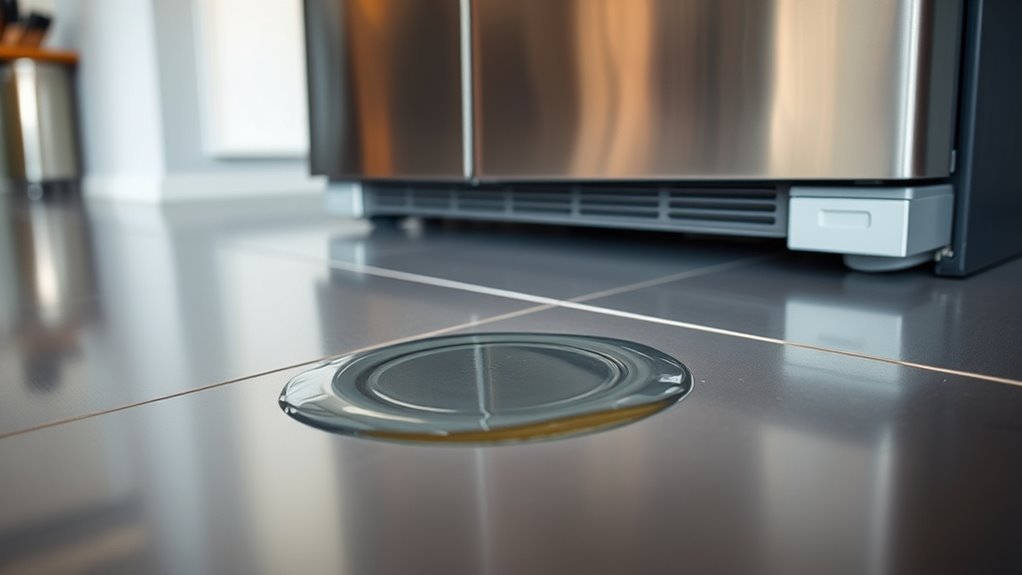
Although it might seem minor at first, spotting water pooling around or inside your refrigerator is a clear sign it’s leaking. You should immediately identify the water source to prevent further damage. Check the floor beneath the fridge and inside compartments for any signs of moisture buildup.
If you notice consistent puddles, the problem isn’t just condensation. It’s a leak that needs attention. You’ll want to inspect hoses, seals, and the water filter if your fridge has one, as these are common water sources.
Don’t ignore small leaks, as they can lead to bigger issues like mold or appliance failure. Regular cleaning and maintenance help prevent leaks by keeping components clear of debris and blockages.
Catching these signs early lets you address the problem quickly, saving you from costly repairs or water damage in your kitchen.
How a Clogged Defrost Drain Causes Refrigerator Water Leaks
If you’ve ruled out hoses, seals, and filters as the cause of your leaking refrigerator, the defrost drain is probably the culprit. During the defrost cycle, your fridge melts frost buildup inside the freezer, and the water should flow down the defrost drain to a drip pan below.
But if a frozen blockage forms in the drain, the water can’t flow freely. This causes it to back up and leak inside your refrigerator instead of draining away properly. You might notice puddles forming under or inside the fridge as a result.
A clogged defrost drain is common because debris, food particles, or ice can easily build up and cause a frozen blockage. When this happens, the water from the defrost cycle has nowhere to go but out, leading to leaks and potential water damage inside your appliance.
Recognizing this problem early can help prevent more serious issues down the line.
How to Clear a Blocked Defrost Drain
When you notice water pooling inside your fridge, clearing the blocked defrost drain quickly can prevent further leaks and damage. Start by unplugging your refrigerator for safety.
Locate the drain hole, usually at the back or bottom of the freezer compartment. Use a pipe cleaner, a small brush, or a flexible wire to gently remove any debris blocking the drain.
Find the drain hole in your freezer and gently clear debris with a pipe cleaner or small brush.
Pour a mixture of warm water and mild soap down the drain to flush out remaining dirt. For stubborn clogs, try using a turkey baster to push warm water through the drain tube.
Regular defrost maintenance tips include checking the drain during your routine cleaning and making sure it stays clear of food particles and ice buildup. Avoid harsh chemicals that could damage the drain.
Using these drain cleaning methods will keep your refrigerator running smoothly and prevent water leaks caused by blockages in the defrost drain.
Why Faulty Door Seals Cause Your Refrigerator to Leak Water
If your refrigerator door seals are damaged, warm air can sneak inside, which isn’t great because it causes moisture to build up. This extra moisture can lead to water pooling inside or underneath your fridge, and nobody wants that messy surprise.
Door Seal Damage Effects
Although you might not immediately suspect the door seal, a damaged or worn-out seal can cause your refrigerator to leak water. Door seal materials like rubber or magnetic strips create an airtight barrier, preventing warm, moist air from entering.
When this seal deteriorates, warm air seeps in, causing condensation inside. This excess moisture can drip and pool, leading to leaks. To avoid this, regular seal maintenance is essential.
Check for cracks, tears, or gaps, and clean the seal with mild soap and water to keep it flexible. If the seal’s damaged beyond repair, replacing it promptly will restore the airtight environment.
This stops water leaks and keeps your refrigerator running efficiently. Don’t overlook the door seal—it plays a key role in preventing leaks.
Moisture Buildup Causes
One common cause of moisture buildup inside your refrigerator is a faulty door seal that lets warm, humid air slip in. When this happens, the moisture from outside mixes with the cold air inside, causing condensation to form.
This excess moisture collects on walls, shelves, and the floor of your fridge, eventually leading to water leaks. You might not notice the seal damage right away, but the added humidity creates an environment where water can accumulate quickly.
To prevent this, regularly check your door seals for cracks or gaps and replace them if needed. Fixing faulty seals stops warm air from entering, reducing condensation buildup and keeping your refrigerator dry and leak-free.
How a Broken Water Inlet Valve Causes Refrigerator Leaks
When your refrigerator starts leaking water, a broken water inlet valve is often the culprit. This valve controls the water flow into your fridge, especially for the ice maker and water dispenser.
If the valve malfunctions, it might fail to shut off properly, causing water to keep flowing inside the fridge. This excess water can build up and eventually leak out, making puddles on the floor.
You might notice the leak near the back of your refrigerator or underneath it. A faulty valve can also cause inconsistent ice production or water dispensing problems.
To fix this, inspect the water inlet valve for signs of damage or wear. Replacing a faulty valve is usually simple and can stop the leak quickly.
Ignoring this issue could lead to water damage and reduce your fridge’s efficiency, so it’s best to address the problem promptly.
How a Cracked Drain Pan Causes Water Puddles
If you see water pooling under your fridge, it’s a good idea to take a look at the drain pan. Sometimes, a crack or damage in the pan can cause leaks on your floor because it’s not catching the melting water like it should.
Don’t worry too much—if it’s just a small crack, you might be able to fix it with some repair sealant. But if the damage is more severe, it’s probably best to replace the drain pan altogether to avoid any further leaks.
Identifying Drain Pan Cracks
Although you might not notice it right away, a cracked drain pan can be the hidden cause of water puddles under your fridge. To find cracks, first unplug the fridge and carefully slide it out.
Drain pans are usually made of plastic or metal, so look for visible damage like splits, holes, or warping. Use a flashlight to spot even tiny hairline cracks that might be harder to see.
Keeping the drain pan in good shape helps prevent cracks. Regularly empty and clean it to avoid corrosion or brittleness. If you find any damage, replace the drain pan quickly to stop leaks.
Staying on top of these steps ensures your fridge runs smoothly and keeps your floor dry.
Impact On Water Leakage
A cracked drain pan doesn’t just go unnoticed; it lets water escape and pool beneath your refrigerator.
When this happens, you’ll probably see puddles forming on your kitchen floor.
Standing water can cause serious damage, like warping your flooring or damaging cabinets over time.
If you ignore it, the constant moisture can also promote mold growth, which is a health hazard.
The longer you wait to fix the leak, the higher your repair costs could be—not just for the pan but for fixing water-damaged floors or walls.
Catching a cracked drain pan early helps you avoid these problems.
Repairing Or Replacing Pan
When you see water puddles under your refrigerator, a cracked drain pan is often the cause. Fixing it quickly can save you from bigger problems later on. The drain pan catches excess condensation, so even a small crack can cause leaks.
To keep it in good shape, regularly check the pan for cracks or warping. If you find damage, it’s better to replace it rather than try to repair it, since cracks tend to get worse over time.
When replacing the pan, make sure you get one that fits your refrigerator model. Secure it well to prevent future leaks. Before installing, clean the area thoroughly and double-check that the new pan is properly positioned.
With proper maintenance and timely replacement, your fridge will stay dry and work smoothly.
How Excess Condensation Causes Refrigerator Water Leaks
If your refrigerator is leaking water, excess condensation is often the culprit. When too much humidity gets inside, it causes condensation to form on the walls and shelves.
Over time, this moisture can build up and drip, leading to leaks inside or outside the fridge. You might see water pooling at the bottom or even near the door on the outside.
This usually happens because you open the door often or leave it open too long, letting humid air in. Storing hot or uncovered food can also raise internal moisture levels.
A damaged door seal allows warm air to seep inside, increasing condensation. Additionally, a clogged defrost drain blocks proper water drainage, causing leaks.
How Wrong Temperature Settings Make Your Refrigerator Leak
Because incorrect temperature settings affect how your refrigerator manages moisture, they can easily lead to water leaks. When the temperature fluctuates too much, your fridge struggles to maintain proper humidity control.
This imbalance causes excess condensation to form inside, which can drip and pool, creating leaks. If your fridge is set too cold, it may cause frost buildup that eventually melts and overflows.
Conversely, a setting that’s too warm encourages more moisture, overwhelming the drainage system. To prevent leaks, keep your refrigerator temperature steady—ideally between 37°F and 40°F (3°C to 4°C)—and your freezer at 0°F (-18°C).
A warm fridge setting increases moisture, risking drainage overflow; maintain 37°F-40°F to prevent leaks.
Avoid frequently adjusting the thermostat, as this causes temperature fluctuations that disrupt humidity control. By maintaining the correct settings, you help your fridge handle moisture efficiently and reduce the risk of leaks inside and around your appliance.
Why an Improperly Leveled Fridge Leads to Water Leaks
If your fridge isn’t perfectly level, you might notice water pooling inside or around it instead of draining away properly. When it’s tilted, the drainage system can get disrupted, leading to backups and leaks — not exactly what you want happening in your kitchen.
Importance of Proper Leveling
When your refrigerator isn’t properly leveled, water can pool and leak in unexpected places. Proper leveling ensures that condensation and defrost water flow correctly toward the drain pan instead of spilling out.
You can use specific leveling tools, like a bubble level or adjustable wrench, to get your fridge perfectly balanced. Following the right leveling techniques helps prevent damage and keeps your kitchen dry.
Here’s why proper leveling matters:
- Prevents water from leaking onto the floor
- Guarantees doors seal tightly, maintaining temperature
- Avoids uneven wear on the compressor and other components
- Helps maintain energy efficiency and prolongs the appliance’s lifespan
Effects on Drainage System
Although it might seem minor, an improperly leveled fridge can disrupt the drainage system, causing water to leak inside or beneath your appliance. When your fridge isn’t level, condensation water can pool unevenly and clog the drain hole. This leads to drainage issues like standing water, mold growth, and unpleasant odors.
To prevent leaks, you need to address these drainage problems promptly with proper drainage solutions.
| Drainage Issue | Cause | Drainage Solution |
|---|---|---|
| Water pooling | Uneven fridge leveling | Adjust fridge legs |
| Clogged drain hole | Debris buildup | Clean the drain tube |
| Mold growth | Stagnant water | Use mild bleach solution |
| Odors | Water stagnation | Regular drain maintenance |
| Leaks beneath fridge | Improper drainage flow | Guarantee correct fridge tilt |
Common Leveling Mistakes
Since your fridge relies on proper leveling to work correctly, common mistakes during this step often lead to water leaks. Skipping or rushing through leveling can cause water to pool in the wrong spots, overloading the drainage system.
Using the wrong tools or not checking if the floor is uneven can also cause improper leveling. To avoid these issues, make sure to use a spirit level or bubble level to get accurate results.
Don’t forget to check if the floor beneath the fridge is even. Adjust both the front and rear leveling legs to ensure stability, and avoid over-tightening or under-tightening, which can cause imbalance.
When to Call a Professional for Refrigerator Water Leaks
If you’ve already tried the basic troubleshooting steps and the leak still won’t stop, it’s time to call in a professional. Complex problems like faulty defrost drains, malfunctioning water lines, or internal component failures need expert leak detection and repairs.
Trying to fix these issues yourself could make things worse or even void your warranty. Here’s when it’s best to get professional help:
| Issue Type | Signs to Watch For | Why Call a Professional? |
|---|---|---|
| Persistent leaks | Constant water pooling | Advanced leak detection needed |
| Electrical problems | Fridge not cooling or running properly | Safety and accurate diagnostics |
| Frozen or clogged drains | Ice buildup in drain tubes | Proper thawing and clearing needed |
| Water dispenser leaks | Drips from dispenser or lines | Specialized repairs required |
Getting a pro involved ensures safe, effective repairs, which helps prevent further damage or costly replacements. Don’t hesitate to seek expert help if you notice these signs.
Frequently Asked Questions
Can a Leaking Refrigerator Cause Electrical Hazards?
Yes, a leaking refrigerator can cause electrical hazards. When water gets into electrical parts, it raises the risk of electrical shock.
You might not realize that water can damage the insulation on wires, which can expose conductors and cause short circuits. If you see leaks, it’s important to fix them quickly.
Doing so helps prevent insulation damage and keeps you safe from electrical shocks. Keeping your fridge dry and well-maintained is key to protecting yourself and your home.
How Does Humidity Affect Refrigerator Water Leaks?
High humidity levels increase condensation inside your refrigerator, which can lead to water leaks. When moist air gets in, it cools down and forms water droplets, causing condensation issues.
If your fridge’s drainage system is blocked or faulty, this excess moisture builds up and leaks out. To avoid this, keep an eye on humidity levels around your fridge and make sure the sealing and drainage are working properly.
Reducing humidity around your fridge helps prevent water buildup and leaks, keeping everything running smoothly.
Is It Safe to Use a Leaking Fridge Temporarily?
Using a leaking fridge temporarily is like trying to bail out the Titanic with a teaspoon. It’s not ideal but can work for a short while.
You can try temporary fixes, like sealing small cracks or clearing clogged drain tubes, to manage the leak sources. Just keep a close eye on it and clean up water promptly.
Avoid using it long-term without fixing the problem. Leaks can cause bigger issues or electrical hazards if you ignore them.
Can Water Leaks Damage My Kitchen Flooring?
Yes, water leaks can definitely damage your kitchen flooring. When water seeps underneath, it can cause swelling, warping, or even mold growth, especially on wood or laminate floors.
If you don’t address the leak quickly, you might end up facing costly flooring repairs. You should act fast to fix the source of the leak and dry the area thoroughly to prevent long-term water damage.
Doing this will help keep your kitchen safe and looking great. The sooner you handle it, the better to avoid bigger problems down the line.
Are Certain Refrigerator Brands More Prone to Leaks?
Long before refrigerators existed, people relied on iceboxes, so you know technology evolves. Yes, some brands are more reliable when it comes to preventing leaks. You’ll notice certain brands consistently design better drainage systems and use higher-quality seals, which helps reduce leaks.
But even the most reliable brands can leak if you don’t maintain them properly. So, while choosing a good brand is important, taking care of your refrigerator is just as crucial to keep leaks at bay.
Conclusion
If your refrigerator is leaking water, you’re not alone. About 30% of fridge owners face this issue at some point.
By checking common causes like a clogged defrost drain, faulty door seals, or improper leveling, you can often fix the leak yourself. These simple steps can save you time and money.
But if the problem keeps happening, don’t hesitate to call a professional. Catching leaks early helps protect your floors and keeps your fridge running smoothly.
Dealing with a leaking fridge is frustrating, but with some quick troubleshooting, you can often resolve the issue and avoid costly repairs.