Washer and Dryer Without Hookups Guide: What to Know Before You Buy
Struggling with the idea of adding a traditional washer and dryer to your space? Many people face this challenge, especially in small apartments, RVs, or remote cabins. You’re not alone—finding the right solutions without permanent hookups can seem overwhelming.
If you need a washer and dryer without traditional hookups, focus on compact, portable, or ventless models that don’t require permanent water or power connections.
Consider how you’ll supply water—either with a reservoir or direct connection—and plan for drainage using gravity hoses or portable pumps.
Evaluate energy options like solar or battery power to avoid electrical upgrades.
Maintenance and cost also matter, so weigh convenience against expenses.
Keep exploring to understand setup, care, and troubleshooting tips.
Key Takeaways
- Choose compact, portable washers and ventless dryers for easy installation without permanent water or electrical hookups.
- Think about power options like solar panels, generators, or battery storage to avoid needing electrical upgrades.
- Use water reservoir systems for portability or direct connections if you want water efficiency, depending on your space and access.
- Manage drainage with gravity drain hoses, portable pumps, or manual emptying solutions based on your washer type and location.
- Keep your appliances in good shape by cleaning filters, inspecting hoses, and managing moisture to ensure they last and work well.
How to Choose a Washer and Dryer Without Traditional Hookups
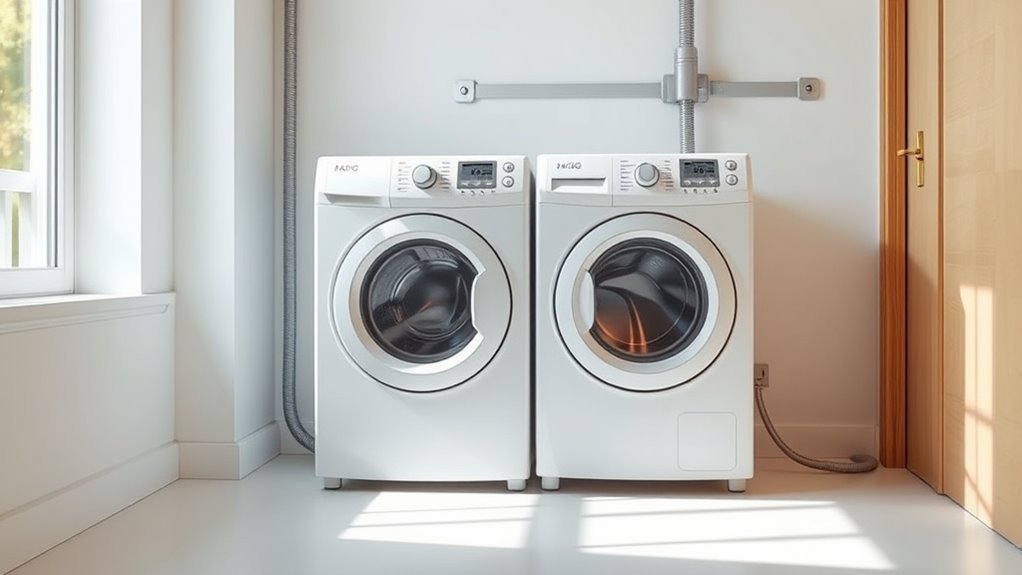
When you don’t have traditional hookups, choosing the right washer and dryer means focusing on models designed for flexibility and convenience.
Look for compact laundry units that fit easily into small spaces while still handling your laundry needs efficiently.
Space-saving solutions are essential, especially if you live in an apartment, tiny home, or RV.
Consider machines that don’t require permanent water or electrical connections, allowing you to install them almost anywhere.
Portable washers with built-in water tanks or ventless dryers are great options to keep things simple.
Also, think about your energy consumption and how much water you’ll use since these models often differ from standard machines.
Types of Washers and Dryers Without Traditional Hookups
There are actually quite a few options when it comes to washers and dryers that don’t need the traditional hookups. Portable washers are a great choice if you want something flexible—you can move them around easily and set them up wherever you need. Plus, ventless dryers are pretty handy because they save space and don’t require venting to the outside, which can be a real headache.
If you’re looking for something even more convenient, combo washer-dryers might be the way to go. They combine both washing and drying into a single unit, so you don’t need two separate machines. It’s perfect if you want to save space and keep things simple.
Portable Washer Options
Several portable washer options let you do laundry without traditional hookups, making them perfect for small spaces or mobile living. These machines give you the benefits of a compact appliance, saving space without losing cleaning power.
Plus, they’re pretty efficient, so you don’t have to worry about sacrificing cleanliness.
Here are three popular types of portable washers:
- Top-load portable washers – Easy to use and fill manually, ideal for quick loads.
- Twin tub washers – Separate washing and spinning tubs that speed up cycles and save water.
- Compact washer-dryer combos – Combine washing and drying in one unit, making the most of limited space.
Choosing the right portable washer means balancing size, efficiency, and your laundry needs so you can enjoy hassle-free washing anywhere.
Ventless Dryer Types
Portable washers offer great flexibility, but finding a compatible dryer can be tricky without traditional hookups. That’s where ventless dryers come in—they don’t need external vents.
You’ll mainly find two types: condenser and heat pump dryers. Both are excellent options, especially in small spaces. They’re efficient, using less energy, and help prevent moisture buildup in your home.
| Type | How It Works |
|---|---|
| Condenser Dryer | Condenses moisture into water |
| Heat Pump Dryer | Recycles heat for drying |
| Compact Models | Space-saving, perfect for small areas |
| Portable Options | Easy to move and set up |
| Energy Efficiency | Usually more efficient than vented dryers |
Choosing the right ventless dryer helps you save space and energy while drying your clothes effectively.
Combo Washer-Dryers
Although space and hookup limitations can make laundry tricky, combo washer-dryers offer a compact all-in-one solution that washes and dries your clothes without needing separate hookups. These units are perfect if you want laundry convenience without sacrificing precious room.
Their space-saving designs fit easily into small apartments, studios, or homes without traditional laundry setups. When considering a combo washer-dryer, keep these points in mind:
- Installation flexibility – They only need a single water hookup and drain, making setup simple.
- Cycle duration – Wash and dry cycles take longer than separate machines, so plan ahead.
- Capacity – Most models have smaller loads, great for singles or couples but less ideal for large families.
With these benefits, combo washer-dryers bring efficiency and convenience to limited spaces.
Powering a Washer and Dryer Without Electrical Upgrades
You don’t need to go through the hassle of upgrading your electrical system just to power up your washer and dryer. There are some cool alternative options like using solar panels or battery packs that can keep your laundry routine running smoothly without the extra electrical work.
And if you’re looking to save some energy and cut down on costs, picking out energy-efficient models can make a big difference. They use less power, so you can do your laundry without stressing over your electricity bill.
Alternative Power Sources
When upgrading electrical systems isn’t an option, you can still power your washer and dryer using alternative energy sources. These options help you avoid costly electrical work while keeping your laundry routine hassle-free. Here are three practical alternatives:
- Solar Power: Install solar panels to generate clean energy. It’s eco-friendly and can significantly cut your utility bills over time.
- Generator Options: Portable or standby generators offer reliable power during outages or in off-grid locations. Just make sure to choose one with enough capacity for your appliances.
- Battery Storage Systems: Pair solar panels with batteries to store excess energy. This way, your washer and dryer can run smoothly even when the sun isn’t shining.
Exploring these alternatives lets you enjoy laundry convenience without major electrical upgrades.
Energy Efficiency Options
Since upgrading your electrical system might not be feasible, focusing on energy-efficient washers and dryers can help you save power without extra wiring. Look for models with features like load-sensing sensors and moisture detectors, which optimize water and electricity use.
Eco-friendly options such as heat pump dryers consume much less energy than traditional electric models, making them perfect when hookups are limited. You can also consider manual or battery-operated washers that rely less on electrical power.
Prioritizing these technologies helps reduce your carbon footprint and utility bills while still enjoying the convenience of a washer and dryer. Choosing energy-efficient appliances is a practical solution that doesn’t require costly electrical upgrades or complicated hookups, keeping your laundry routine simple and sustainable.
Water Reservoir vs. Direct Connection: Pros and Cons for Hookup-Free Laundry
Although both water reservoir and direct connection systems let you run laundry without traditional hookups, each has its own pros and cons. Your choice depends on what you prioritize—water usage or installation ease.
Water Reservoir: You fill a tank manually, which gives you flexibility if plumbing isn’t nearby. This setup is easier to install but can use more water since you need to refill it after multiple loads.
Direct Connection: This links your washer directly to a water source, providing continuous flow. It’s more water-efficient but usually requires more complex installation, often needing professional help.
Convenience vs. Efficiency: Water reservoirs are portable and simple but less efficient. Direct connections save water and time, though they may take longer to set up.
Think about your space, water access, and how much effort you’re willing to put into installation. That’ll help you pick the best hookup-free laundry system for you.
How to Manage Drainage Without Traditional Plumbing
So, you’re looking to handle your washer’s drainage without the usual plumbing, huh? No worries, there are plenty of portable washer drain options that can make things a lot simpler. These solutions are pretty convenient and can save you the hassle of installing permanent pipes.
You might want to consider using a drain hose that can be easily directed into a sink, bathtub, or even a large bucket. It’s a simple DIY fix—just make sure the water flows safely and doesn’t cause any mess. There are also some clever devices like drain pumps or portable drainage kits that can help you manage the water more effectively.
Basically, with a bit of creativity and the right tools, you can set up a drainage system that works perfectly for your space—no traditional plumbing needed!
Portable Washer Drain Options
When using a portable washer without traditional plumbing hookups, managing drainage efficiently is key to avoiding water damage and hassle. You have several options to consider for effective drainage solutions.
Gravity Drain Hose – Just direct the drain hose into a sink, bathtub, or bucket. It works best if the outlet is lower than the washer since it relies on gravity.
Portable Pumps – Use a portable pump to transfer wastewater to a higher drain or outside. These pumps give you more flexibility when gravity drainage isn’t an option.
Drain Pan with Manual Emptying – Place the washer on a drain pan and empty it manually after each cycle. It’s simple and practical for small spaces without permanent drainage.
DIY Drainage Solutions
Since traditional plumbing hookups aren’t always available, managing washer drainage yourself requires some creative solutions that fit your space and water disposal options.
For DIY setups, you can use a large basin or a utility sink to catch the washer’s discharge, then empty it manually or connect a hose to direct water outside.
Another good option is installing a portable drain pump, which moves water to a nearby sink or drain without complicated plumbing.
You might also create a simple gravity drain system using a raised container and flexible tubing.
Whichever method you pick, make sure the water flows away safely to prevent damage or mold.
With these DIY drainage ideas, you can confidently set up your washer without relying on traditional plumbing hookups.
Ventless Dryers: How They Work and When to Choose Them
How do ventless dryers manage to dry your clothes without the need for traditional venting? They use advanced ventless technology to recycle air within the machine, so there’s no external vent needed. This makes them perfect if you don’t have a vent or want a more flexible setup.
Here’s how ventless dryers work and when to pick them:
- Heat Pump or Condenser Systems: These dryers heat the air, pass it through your clothes, then condense the moisture out before reheating it. This helps dry your clothes more efficiently.
- Space-Saving Design: Since they don’t need venting, you can install them in tighter spaces like apartments or closets.
- Energy Efficiency: Ventless dryers often use less energy than traditional models, saving you money over time.
Choose a ventless dryer if you want a versatile, efficient option without the hassle of installing a vent.
Setting Up a Washer and Dryer Without Plumbing Hookups
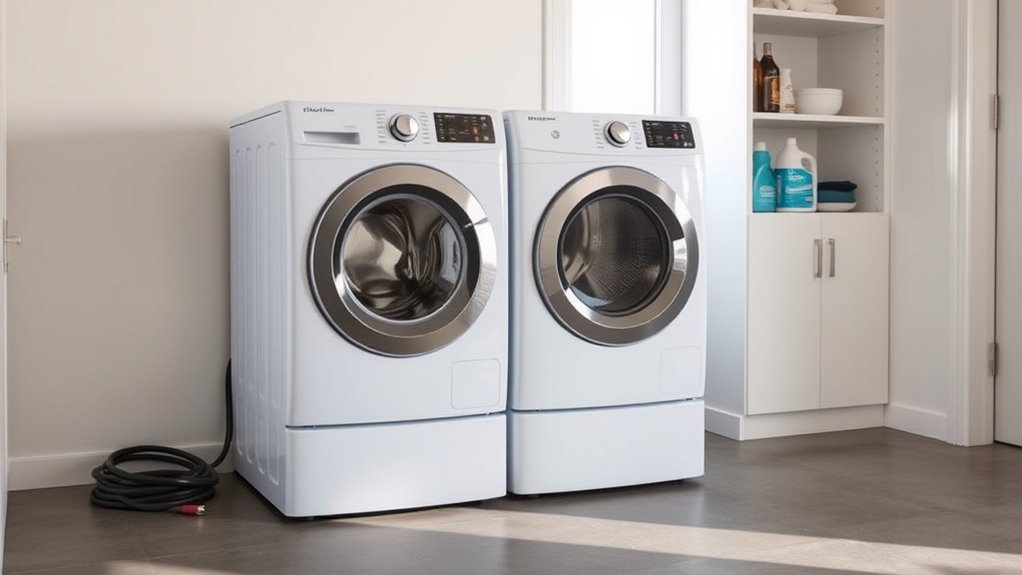
If you don’t have plumbing hookups, you can still set up a washer and dryer by choosing models designed for easy installation and water management. Look for washer units with built-in drainage options, like tanks that collect water for manual emptying or pumps that direct water to a nearby sink or drain. These features get rid of the need for permanent plumbing connections, making setup more flexible.
When planning your space, think about the size and ventilation needs of your washer and dryer. Compact, stackable units work well in tight spots, but you’ll still need enough room for proper ventilation and access to empty drainage tanks. Also, consider how close you are to a water source for filling the washer and a power outlet for both machines.
Cost Considerations for Hookup-Free Laundry Appliances
Although hookup-free laundry appliances offer convenient installation, you’ll want to carefully consider their costs before making a purchase. These units often come with higher upfront prices compared to traditional washers and dryers, so make sure to include that in your budget.
The technology or design that allows them to run without plumbing can impact both the appliance cost and the installation expenses. Here are three key points to keep in mind:
- Appliance Price: Hookup-free models usually cost more because of features like built-in water reservoirs or ventless drying systems.
- Installation Expenses: Even without plumbing, you might need to pay for specialized setup, such as filling water tanks or electrical adjustments.
- Operating Costs: Some models use more water or electricity, so consider the long-term utility bills when planning your budget.
Tips to Maintain Your Washer and Dryer Without Hookups
Understanding the costs involved in owning a hookup-free washer and dryer helps you appreciate the value of keeping them in good shape. To make them last longer, follow simple maintenance tips like regularly cleaning lint traps and filters to prevent blockages.
Wipe down your machines after each use to avoid moisture buildup, which can lead to mold and unpleasant odors. Make sure to check hoses and connections for leaks or wear and replace them as needed.
Since hookup-free models often rely on water reservoirs or ventless systems, empty and clean these components frequently to keep them working efficiently. Avoid overloading your washer or dryer to reduce strain on motors and parts.
Finally, store your appliances in a dry, well-ventilated area to prevent rust and damage. Staying on top of these tips will protect your investment and help your hookup-free washer and dryer run smoothly for years.
Troubleshooting Common Issues With Hookup-Free Laundry Machines
When your hookup-free washer or dryer acts up, knowing how to troubleshoot common problems can save you a lot of time and frustration. These machines have their own quirks, but with a few maintenance tips, you can keep them running smoothly.
Troubleshooting your hookup-free washer or dryer helps avoid frustration and keeps your machines running smoothly.
Here are three common issues and how to fix them:
- Washer Won’t Drain: Check if the water reservoir is full or if the drain pump is clogged. Clean any filters and make sure the drainage is proper to prevent water from backing up.
- Dryer Not Heating: Make sure the power source is working and that the thermostat settings are correct. Regularly clean the lint filter to improve airflow and help the dryer heat efficiently.
- Machine Won’t Start: Inspect the power supply and the door latch. Sometimes, unplugging the machine for a few minutes and then plugging it back in can do the trick.
Frequently Asked Questions
Can I Use a Washer and Dryer Without Hookups in an RV?
Yes, you can use a washer and dryer without hookups in an RV by choosing portable washing machines and compact dryers. These appliances don’t need permanent water or electrical connections, making them perfect for your mobile lifestyle.
You’ll just need to fill the washer manually and drain it after use. Compact dryers often use vents or are ventless, so you can easily dry clothes without traditional hookups in your RV.
Are Hookup-Free Washers and Dryers Energy Efficient?
Yes, hookup-free washers and dryers can be energy efficient. When you choose a portable washing machine, it often uses less water and energy compared to traditional models.
However, energy consumption varies by model, so you’ll want to check the specifications before buying. Many portable units are designed to optimize energy use, making them a smart choice if you’re aiming to save on electricity while still enjoying the convenience of washing clothes without hookups.
How Noisy Are Hookup-Free Laundry Machines Compared to Traditional Ones?
You’ll find that hookup-free laundry machines generally produce about 5-10 decibels less noise than traditional ones, making their noise levels noticeably lower. Because they often use vibration-reducing technology, these machine types run quieter.
This is great if you live in a small space or near bedrooms. While traditional machines can be louder during spin cycles, hookup-free models keep disruptions minimal.
They let you do laundry without waking the whole household. Overall, hookup-free machines are a quieter option that fits well in many living situations.
Can Hookup-Free Washers and Dryers Handle Large Loads?
Hookup-free washers and dryers generally can’t handle large loads like traditional machines. If you need to wash bulky items, portable laundry solutions often have smaller capacities.
Compact washer options are designed for efficiency but usually suit lighter loads or single-person use. You’ll want to check the specific model’s capacity to confirm it meets your needs.
If you regularly wash large loads, these might not be the best fit for you.
Do Hookup-Free Dryers Require Special Detergent or Fabric Softeners?
You might think hookup-free dryers need special detergent or fabric softeners, but they don’t. These dryers are just for drying, so the type of detergent or softener you use during washing is more important.
You can stick with your usual detergent and fabric softeners when washing your clothes. Then, just dry them in the hookup-free dryer as usual.
Just remember to avoid sprays or liquids directly in the dryer. That keeps everything running smoothly and prevents any damage.
Conclusion
Choosing a washer and dryer without traditional hookups can save you both time and money. Did you know that over 30% of renters go for hookup-free laundry options to avoid costly renovations?
With the right setup, you’ll enjoy the convenience without the hassle of plumbing or electrical upgrades. Just remember to explore your options, manage water and power carefully, and stay on top of maintenance.
You’re well on your way to stress-free laundry days with a washer and dryer without hookups!