How to Spell Kitchen: A Step-by-Step Guide
Many people struggle with spelling tricky words like “kitchen,” and you’re not alone. It can be frustrating to remember all the right letters, especially with words that have confusing sounds or unusual clusters.
You’ll spell “kitchen” by breaking it into two parts: “kit” and “chen.” Focus on the tricky “tch” sound, which combines the “t” and “ch” letters, and remember the ending “en.” Say the word aloud as you write it to connect sounds with letters easily.
Watch out for common mistakes like swapping letters or missing the “tch” cluster. Keep practicing this way, and you’ll soon master spelling “kitchen” correctly while learning useful tips and variations along the way.
Key Takeaways
- Break “kitchen” into syllables “kit” and “chen” to make spelling and pronunciation easier.
- Remember the “tch” blend sounds like “ch” in “church,” which is key for spelling it correctly.
- Pronounce the word as /ˈkɪtʃ.ən/ and stress the first syllable “kitch.”
- Be careful not to leave out or add extra letters in the “tch” part or at the end “en.”
- Use mnemonic tricks and practice writing the word while saying it aloud to help remember the spelling.
How to Spell “Kitchen” Step-by-Step
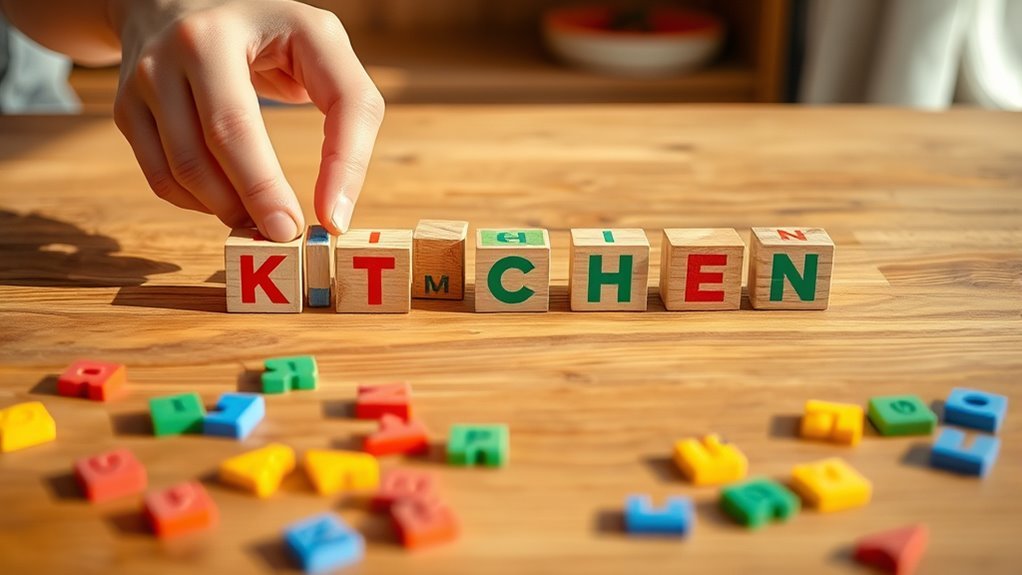
Spelling “kitchen” is easier than you might think. To master it, start by using effective spelling strategies. Break the word into smaller parts: “kit” and “chen.”
This chunking method helps you focus on manageable sections rather than the whole word at once. Next, use phonetic awareness to connect sounds to letters.
The first part, “kit,” sounds exactly like it’s spelled, so that’s straightforward. The second part, “chen,” combines the “ch” sound with “en,” which you spell as it sounds.
Pay attention to the silent letters or tricky combinations, but in “kitchen,” everything is pronounced fairly clearly. Practice writing the word while saying it aloud, reinforcing the connection between the sounds and letters.
Pronunciation of “Kitchen”
The pronunciation of “kitchen” is straightforward, making it easier for you to remember and use correctly. When you say it, focus on the clear “k” sound at the start, followed by the short “i” as in “sit.” The middle “tch” sounds like the “ch” in “church,” and the word ends softly with “en.”
Using kitchen pronunciation tips can help you avoid common mistakes, like dropping the “tch” sound or misplacing emphasis. To help you further, think of the phonetic spelling: /ˈkɪtʃ.ən/. This shows the emphasis on the first syllable, “KIT.”
Practicing this phonetic spelling will boost your confidence and ensure you say “kitchen” clearly every time. By following these tips, you’ll master the pronunciation quickly and impress others with your accuracy.
Breaking “Kitchen” Into Syllables and Sounds
Breaking “kitchen” into syllables and sounds makes it easier for you to understand and spell the word correctly. By doing a syllable breakdown and phonetic analysis, you can see how the word is structured and pronounced.
Breaking “kitchen” into syllables and sounds helps you understand its structure and spelling more clearly.
“Kitchen” has two syllables: “kitch” and “en.” The first syllable carries most of the sound, while the second is softer and shorter.
Here’s a quick guide to help you grasp the breakdown:
- Syllable 1: “kitch” sounds like “kɪtʃ,” combining a hard “k” and the “ch” sound.
- Syllable 2: “en” is pronounced as a quick, soft “ən.”
- The stress falls on the first syllable.
Understanding these sounds helps you connect spelling to pronunciation.
This phonetic analysis clarifies why the word is spelled “kitchen,” linking each sound to its letter combination.
Common “Kitchen” Spelling Mistakes and Fixes
Now that you understand how “kitchen” breaks down into syllables and sounds, it’s easier to spot where mistakes often happen. A common kitchen spelling error is mixing up the “tch” cluster, leading to versions like “kichen” or “kitchen.” These errors usually happen because the “tch” sound feels tricky, but remember it’s always together in this word.
Another frequent mistake is adding or omitting letters, such as writing “kitchen” as “kitchin” or “kitchan.” When fixing kitchen misspellings, focus on the middle consonant blend “tch” and the ending “en.” Double-checking these points can save you from common pitfalls.
Keep in mind that “kitchen” never has a “c” after the “t” or replaces the “en” with “in.” By understanding these typical kitchen spelling errors, you can confidently correct misspellings and write the word flawlessly every time.
Tips to Remember Spelling of “Kitchen”
One simple trick to remember how to spell “kitchen” is to focus on the “tch” cluster in the middle, since it often trips people up. Using mnemonic devices can make this easier. For example, you can think of “Kit” plus “chen,” imagining a kit full of tools used in the kitchen.
Word associations also help solidify the spelling by linking it to familiar concepts. Try these tips to remember the spelling:
Break it down into syllables: kit-chen. Associate “tch” with words like “match” or “catch.” Create a mnemonic phrase like “Keep It Tidy, Clean Home Every Night.” Practice writing the word repeatedly while saying each part aloud.
Teaching Kids to Spell “Kitchen”
Want to help kids learn how to spell “kitchen”? You can make it fun and engaging with some creative activities. For example, try using flashcards or colorful word maps—these visual tools can really make the letters stick in their minds.
And don’t forget, repetition is key! Practicing regularly not only helps them memorize the spelling but also boosts their confidence. Keep it light and playful, and they’ll be spelling “kitchen” like a pro in no time!
Fun Spelling Activities
Spelling games make learning the word “kitchen” an exciting adventure for kids. You can keep practice fun by using hands-on activities that reinforce each letter and sound.
Try creative worksheets and interactive spelling games to hold their attention and boost retention. These activities will make mastering “kitchen” more engaging.
Some ideas include letter matching games with magnetic or foam letters. Fill-in-the-blank worksheets with pictures from the kitchen are also great.
You can organize spelling relay races where kids spell “kitchen” aloud while moving. Word puzzles and crosswords focused on kitchen-related vocabulary are fun too.
Visual Learning Techniques
Visual cues can make learning the word “kitchen” much easier for kids. You can use visual aids like colorful flashcards showing each letter, paired with images of kitchen items to reinforce the connection.
Interactive games also help by turning spelling into a fun challenge. Try letter-matching puzzles or digital apps where kids drag and drop letters to form “kitchen.” These techniques engage multiple senses, making the spelling more memorable.
By incorporating pictures, colors, and hands-on activities, you help kids associate the word with familiar objects and sounds. This approach boosts recognition and understanding without overwhelming them.
Using visual learning techniques keeps kids interested and supports their ability to recall the correct spelling naturally.
Repetition And Practice
Practice makes perfect when teaching kids to spell “kitchen.” Repeating the word through fun exercises and daily drills helps reinforce letter order and boosts confidence. Using effective spelling strategies and varied learning methods keeps the child engaged and helps them understand where each letter fits.
Consistent practice turns spelling from a challenge into a routine skill. Try these engaging repetition techniques:
- Have your child write “kitchen” multiple times while saying each letter aloud.
- Use flashcards with individual letters to build the word step-by-step.
- Play spelling games that involve arranging letter tiles to form “kitchen.”
- Incorporate “kitchen” into daily conversations and storytelling.
These methods make repetition fun and help your child remember the correct spelling.
Using “Kitchen” in Simple Sentences
The kitchen is a common place that you can easily include in your everyday sentences. When you use kitchen vocabulary and cooking phrases, your speech sounds more relatable and clear. For example, you might say, “I’m cleaning the kitchen,” or “She’s cooking dinner in the kitchen.” These simple sentences help you practice the word “kitchen” naturally.
You can also combine kitchen words with action verbs like “prepare,” “wash,” or “chop.” Try sentences such as, “They prepare meals in the kitchen,” or “He washes the dishes after cooking.” Using these phrases regularly makes you more comfortable with the word and its context.
Spelling Variations and Related Words
Spelling variations for “kitchen” are rare, but related words like “kitchenette,” “kitchenware,” and “kitchenette” help expand your vocabulary and describe different kitchen spaces and items.
While you won’t often see alternate spellings for “kitchen,” knowing these related terms sharpens your ability to communicate specific concepts.
Alternate spellings of “kitchen” are rare, but related terms enhance your precise communication.
Here are some related terms to keep in mind:
- Kitchenette: a small kitchen or a part of a room set up as a kitchen
- Kitchenware: tools, utensils, and appliances used in the kitchen
- Kitchenette: a compact cooking area, often in hotel rooms or studio apartments
Sometimes, “kitchenette” is used interchangeably with other small kitchen setups, but it generally refers to very small kitchens.
Understanding these related words complements your knowledge of “kitchen” and helps you describe various kitchen settings and equipment accurately. Since spelling variations for “kitchen” itself are minimal and uncommon, focusing on these related terms is more helpful.
How People Spell “Kitchen” Differently Worldwide
You’ve probably noticed that people sometimes spell “kitchen” in different ways, depending on where they’re from. It’s pretty interesting how language and regional habits can influence these spellings.
Let’s take a closer look at some of the common variations and see how they differ around the world.
Regional Spelling Variations
Although “kitchen” is spelled the same in most English-speaking countries, you might come across unique variations or adaptations influenced by local languages and dialects. Regional dialects and cultural influences can subtly shape how people write or pronounce “kitchen,” even if the standard spelling remains consistent.
Here are some examples to watch for:
- In some Scottish dialects, you might hear “kitchen” pronounced with a softer “t,” affecting how it’s written in informal contexts.
- Certain Caribbean English speakers might blend “kitchen” with local Creole spellings.
- Australian English tends to keep the traditional spelling but may use nicknames like “kitch” casually.
- In South African English, some may adapt spellings to reflect Afrikaans influences in informal writing.
Understanding these variations helps you appreciate the richness behind this everyday word.
Language Influence On Spelling
The way people spell “kitchen” often reflects the languages they speak alongside English. Language evolution shapes how spelling patterns emerge, influenced by cultural influences and linguistic diversity.
You’ll notice phonetic variations in different regions, which come from dialectal differences and historical context. Speakers of languages with distinct sounds might adapt the spelling to match their pronunciation.
Educational approaches also matter, as teaching methods vary worldwide, affecting how spelling rules are learned and applied. When you consider these factors, it’s clear that the spelling of “kitchen” isn’t just about letters. It’s about how language, culture, and history intersect to create unique expressions of the same word across the globe.
Common Misspellings Worldwide
How do people around the world often misspell “kitchen”? Misspelled examples vary because of cultural influences and language differences. When you look at how “kitchen” is spelled globally, you’ll notice common mistakes based on pronunciation and local alphabets. These variations show how culture shapes spelling habits.
Here are some frequent misspellings you might come across:
- “kichen” – dropping the “t” is common in casual writing.
- “kitcen” – swapping letters due to phonetic confusion.
- “kitchin” – influenced by dialects pronouncing the ending differently.
- “kichin” – simplified vowel sounds reflecting certain accents.
Knowing these misspellings helps you avoid errors and shows how cultural influences affect spelling worldwide.
Tools to Practice Spelling “Kitchen”
Spelling “kitchen” becomes easier with the right tools at your fingertips. You can use spelling apps designed to improve your accuracy through interactive exercises. These apps often provide instant feedback, helping you spot mistakes and learn the correct spelling quickly.
Another effective method is flash card games. You can create flashcards with the word “kitchen” on one side and its definition or a picture on the other. Regularly reviewing these cards reinforces your memory and makes recall automatic.
Combining these tools keeps practice engaging and efficient. You might also try writing the word in sentences or using voice-to-text features in apps to test your spelling in different contexts.
Frequently Asked Questions
What Is the Origin of the Word “Kitchen”?
You’ll find that the word “kitchen” has etymological roots in the Old English word “cycene,” which comes from the Latin “coquina,” meaning a place for cooking. Its historical usage dates back to medieval times when it described a room where meals were prepared.
Over time, the term evolved but kept its core meaning. Understanding this helps you appreciate how language reflects daily life and cultural changes throughout history.
How Has the Word “Kitchen” Evolved Over Time?
Imagine the word “kitchen” as a traveler on a winding road, shaped by cultural significance and historical usage.
Over time, it’s evolved from Old English roots, reflecting society’s growing focus on food and family gatherings.
You’ll notice how its meaning expanded, mirroring changes in home life and technology.
When you use “kitchen” today, you’re tapping into centuries of tradition and the heart of daily living across cultures.
Are There Any Idioms or Phrases Using “Kitchen”?
Yes, you’ll find plenty of kitchen idioms and cooking phrases that spice up your language. When someone says “too many cooks spoil the broth,” they’re warning about too many people interfering.
If you hear “bring something to the kitchen,” it means contributing to the task. You might also hear “kitchen sink” to describe including everything possible.
These expressions show how kitchen idioms add flavor to everyday conversations.
What Are Common Kitchen Items Spelled Similarly?
As far as kitchen appliances comparison goes, words like “kitchen,” “kitchenware,” and “kitchenette” share similar spellings. You’ll also find “kitchenAid” often popping up, blending brand with function.
Knowing these terms helps you organize your kitchen better. It makes sorting items easier and saves you time when shopping or cleaning.
Think of your kitchen vocabulary as the secret ingredient. Master it, and you’ll cook up both order and style with ease in your culinary space.
How Do Different Cultures Design Their Kitchens?
You’ll notice kitchen layout trends vary widely because they reflect cultural cooking practices. In Japan, you’ll find compact, minimalist kitchens designed for efficiency and precision.
In Mediterranean cultures, kitchens often feature open layouts to accommodate social cooking and communal meals. When you look at different cultures, you see how kitchen designs prioritize specific needs.
For example, Indian kitchens usually have ample counter space for chopping, while Mexican kitchens often feature wood-fired ovens. These choices show how culture shapes both the form and function of kitchens.
Conclusion
So, after all that effort spelling “kitchen,” it’s kind of funny how such a common word can still trip you up. You’d think a place you visit every day would be easy to spell, right?
But hey, mastering spelling isn’t about getting everything perfect on the first try. It’s really about practice and patience. Keep these tips handy, and soon enough, “kitchen” will feel as familiar on paper as it does when you’re cooking up your favorite meal.