How Much to Replace Kitchen Cabinets? The Complete Answer
Are you tired of looking at outdated kitchen cabinets but feeling overwhelmed by the cost of replacing them? You’re not alone—many people struggle with figuring out how much it really costs to upgrade this essential part of their home.
Whether you’re dreaming of a fresh new look or just want to boost your kitchen’s functionality, understanding the costs involved can help you make smarter choices.
Replacing your kitchen cabinets can cost anywhere from $60 to over $1,200 per linear foot, depending on materials, design, and kitchen size. Labor adds to expenses, especially with complex layouts or necessary repairs.
Stock cabinets save money, while custom options offer higher quality but cost more. Don’t forget hidden fees like removal and wall fixes.
You can save by refacing or doing some work yourself.
There’s a lot to reflect on to get the best value for your budget.
Key Takeaways
- Cabinet replacement costs vary based on material, design, kitchen size, and labor. They usually range from $60 to over $1,200 per linear foot.
- Labor costs depend on how complex the installation is and where you live, averaging $45 to $75 an hour. It typically takes one to three days.
- Hidden expenses might include removing old cabinets, fixing walls, adding extra hardware, or dealing with uneven floors and walls.
- Semi-custom cabinets are a budget-friendly choice that balances price and style, while custom cabinets tend to be the most expensive.
- Refacing your existing cabinets can save money and is more eco-friendly if the cabinets are still in good shape. It’s faster and produces less waste.
What Affects Kitchen Cabinet Replacement Costs?
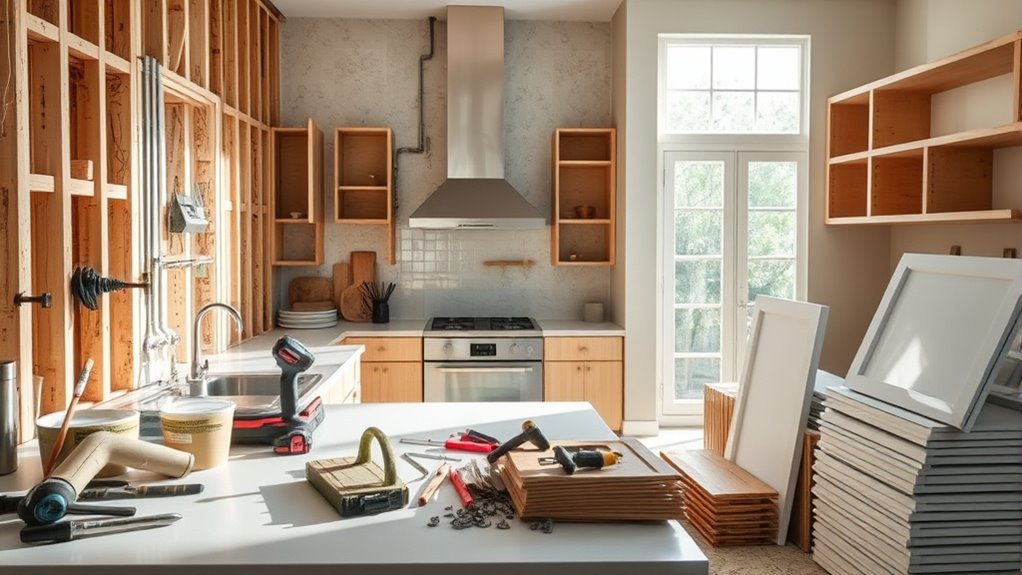
When you replace your kitchen cabinets, several factors will influence the total cost. Your design choices play a significant role, as custom or intricate styles often cost more than standard, simpler designs.
Design choices greatly affect kitchen cabinet replacement costs, with custom styles typically costing more than simpler options.
You’ll also want to evaluate material durability. While sturdier materials tend to be pricier upfront, they can save you money over time by lasting longer and resisting wear better. The size of your kitchen and the number of cabinets you need directly affect expenses too.
Labor costs vary depending on the complexity of installation and your location. Moreover, any necessary modifications, like adjusting plumbing or electrical work, can add to the total.
Keep in mind that finishes and hardware choices also impact the price but can be tailored to your budget. By understanding these factors upfront, you can make smarter decisions and balance aesthetics, function, and cost effectively.
How Much Do Different Kitchen Cabinet Materials Cost?
Although choosing the right material can feel overwhelming, understanding the cost differences will help you make an informed decision for your kitchen cabinets. Wood types like oak, maple, and cherry vary in price, with hardwoods generally costing more than softwoods. Finish options also influence costs, and painted or stained surfaces may add to your budget depending on quality.
Hardware choices matter too. Premium handles and hinges add style but increase expenses. If you want eco-friendly materials, bamboo and reclaimed wood are stylish and sustainable but might cost more upfront. Keep style trends in mind to match your kitchen’s look without overspending.
Budget tips include comparing materials based on durability and maintenance. Some materials require more upkeep, which can add to your costs. Installation methods also impact expenses—some materials are easier to work with, saving you money on labor. Balancing these factors helps you choose materials that suit your style and wallet.
How Much Do Stock, Semi-Custom, and Custom Cabinets Cost?
Understanding the cost differences between stock, semi-custom, and custom cabinets can help you choose the best option for your kitchen and budget. Stock cabinets are the most affordable, offering standard sizes and finishes with decent material quality.
Semi-custom options provide more flexibility in design and size with better materials but cost more. Custom designs give you complete control over style, materials, and dimensions, usually costing the most due to craftsmanship and premium materials.
Installation choices also impact your total cost.
| Cabinet Type | Average Cost per Linear Foot | Key Features |
|---|---|---|
| Stock Cabinets | $60 – $200 | Budget-friendly, limited styles |
| Semi-Custom | $100 – $650 | More styles, better materials |
| Custom Designs | $500 – $1,200+ | Fully tailored, premium quality |
Consider your budget and how much customization you want before making a decision.
How Does Kitchen Size Affect Cabinet Replacement Costs?
Choosing the type of cabinet—stock, semi-custom, or custom—sets the foundation for your budget, but the size of your kitchen also plays a big role in the total replacement cost. A larger kitchen means more cabinets to replace, which increases material and installation expenses.
Your kitchen layout impacts costs too. An open concept or L-shaped design might require different cabinet spacing than a galley or U-shaped kitchen. This spacing affects how many cabinets fit and how they’re configured, influencing overall pricing.
Kitchen layout shapes cabinet spacing, quantity, and configuration, all key factors in determining overall replacement costs.
If your kitchen has irregular dimensions or limited wall space, custom cabinets might be necessary, and they usually cost more. On the other hand, a smaller kitchen with a straightforward layout usually reduces costs since fewer cabinets are needed and standard sizes fit well.
Understanding your kitchen’s size and layout helps you plan and budget accurately for cabinet replacement without surprises.
What Labor Costs Should You Expect for Cabinet Installation?
When you’re planning to install cabinets, it’s important to consider the labor costs involved. This means looking at the average hourly rates for installers in your area and thinking about how long the job usually takes.
The time it takes can really depend on what kind of cabinets you’re installing and the layout of your kitchen. Keep in mind that if your project is more complex or if you’re in a location where labor costs are higher, those expenses can add up. So, it’s a good idea to get a clear estimate before you start!
Average Hourly Labor Rates
Expect to pay between $45 and $75 per hour for professional cabinet installation, depending on your location and the installer’s experience. Labor rates can vary a lot, which impacts your overall costs. Hiring a highly skilled installer might cost more upfront but can help you avoid costly mistakes and delays.
When budgeting for labor, keep these factors in mind:
- Your geographic location can significantly influence hourly rates.
- The installer’s experience level affects both efficiency and quality.
- The complexity of your kitchen layout can make installation more difficult.
- Extra services like removing old cabinets will add to the overall cost.
Installation Time Estimates
Installing kitchen cabinets usually takes about one to three days, depending on the size and complexity of your kitchen. The techniques used can also affect how fast the job gets done; for example, pre-assembled cabinets often speed things up compared to custom-built ones.
You should expect the timeline to vary based on the number of cabinets, wall conditions, and any extra adjustments needed. Professionals plan their work carefully to minimize downtime and ensure everything fits perfectly.
Knowing these time estimates helps you budget for labor costs and avoid surprises. Understanding how long the installation should take allows you to coordinate other parts of your kitchen remodel and keep things running smoothly.
Factors Affecting Labor Costs
Because labor costs can vary widely, understanding what influences them can help you plan your budget more accurately. The local labor market plays a big role—high demand and skilled installers usually mean higher prices.
Installation complexity also impacts costs. Intricate designs or uneven walls take more time and expertise, which can add to your overall expenses. The size of your kitchen and the type of cabinets you choose also matter.
Other factors include the condition of your existing cabinetry and whether any demolition or prep work is needed. Knowing these influences helps you estimate labor costs more realistically and avoid surprises.
How Do Cabinet Styles Influence Your Replacement Budget?
How much you spend on replacing kitchen cabinets largely depends on the style you choose. Cabinet aesthetics and design trends play a big role in shaping your replacement budget. Sleek, modern styles might cost more because of specialized materials, while traditional designs often require intricate details that add to labor costs.
Knowing how different styles impact pricing helps you make smarter decisions without overspending. For example, Shaker cabinets are usually moderate in material cost and low in labor complexity, making them budget-friendly.
Modern flat-panel styles tend to be more expensive due to materials and are moderately complex to install. Raised panel cabinets are classic but can be costly because of the detailed craftsmanship and high labor needs. Glass-front cabinets are stylish and add visual space, with moderate costs for materials and installation.
Hidden Costs That Add to Your Kitchen Cabinet Replacement Bill
Choosing your cabinet style sets the foundation for your budget, but what you see upfront isn’t always the full story. When replacing kitchen cabinets, hidden expenses can quickly add up and lead to unexpected fees that throw off your initial estimate. It’s a good idea to prepare for these extra costs so you’re not caught off guard.
Common hidden costs include:
- Old cabinet removal and disposal: Getting rid of your current cabinets may require labor and hauling fees.
- Wall repairs and modifications: Damaged walls or plumbing behind cabinets often need fixing.
- Hardware and accessories: Knobs, pulls, soft-close hinges, and organizers usually come extra.
- Installation complications: Uneven floors or walls can increase labor time and expenses.
How to Calculate Your Total Kitchen Cabinet Replacement Budget
Wondering how to get an accurate estimate for your kitchen cabinet replacement? Start with detailed budget planning. Break down all costs, including cabinets, hardware, installation, and unexpected expenses.
Use expense tracking to stay on top of your spending and avoid surprises. Here’s a simple table to help organize your costs:
| Expense Category | Estimated Cost | Notes |
|---|---|---|
| Cabinets | $3,000 – $7,000 | Depends on material |
| Installation | $1,000 – $3,000 | Labor charges |
| Hardware | $200 – $600 | Handles, knobs |
| Removal & Disposal | $300 – $700 | Old cabinet removal |
| Miscellaneous | $200 – $500 | Unexpected costs |
Add each category carefully, then monitor expenses as you go. This method keeps your total kitchen cabinet replacement budget realistic and manageable throughout your project.
When Is It Better to Reface Instead of Replace Cabinets?
Thinking about updating your kitchen but not sure whether to reface or replace your cabinets? Well, if your cabinets are still in good shape structurally and you’re looking to save some money, refacing might be the way to go. It’s usually less expensive than tearing everything out and starting from scratch, plus it gives your kitchen a fresh new look without the big hassle.
Cost Comparison Benefits
Although replacing kitchen cabinets gives you a fresh start, refacing can save you significant time and money when your cabinet frames are still in good shape. You’ll enjoy notable cost benefits with refacing since it involves updating doors and veneers instead of tearing out entire units.
Quality considerations matter too. Refacing keeps the sturdy structure you already have, reducing the risk of damage during a full replacement. When deciding, think about these advantages of refacing:
- Lower material and labor costs compared to full replacement
- Faster completion time, which means less kitchen downtime
- Keeps the existing cabinet layout and hardware whenever possible
- Less waste, making it a more eco-friendly choice
Refacing offers a practical balance between budget and quality when your cabinets don’t need a full replacement.
Cabinet Condition Factors
When your kitchen cabinets show minimal wear and their frames remain sturdy, refacing often makes more sense than replacing them entirely. You can extend your cabinet lifespan without the hassle and cost of a full replacement.
If the cabinet boxes and structure are solid, refacing lets you update doors, drawer fronts, and hardware, giving your kitchen a fresh look. Consider repair options like fixing loose hinges or minor dents before deciding.
However, if you notice water damage, warped frames, or mold, replacement is usually the better choice. Evaluating your cabinets’ overall condition helps you avoid unnecessary expenses while maintaining quality.
Refacing saves time and money when your cabinets are in good shape but just need cosmetic updates.
How to Save Money on Kitchen Cabinet Replacement Without Sacrificing Quality
If you want to replace your kitchen cabinets without blowing your budget, focusing on smart choices can help you save money while maintaining quality. You don’t have to sacrifice craftsmanship to find budget-friendly options. By using DIY strategies and selecting materials wisely, you can keep costs down and still enjoy durable, attractive cabinets.
Consider these tips to save money without compromising quality:
- Opt for semi-custom cabinets instead of fully custom to balance cost and style.
- Use high-quality laminate or veneer finishes for an affordable yet polished look.
- Tackle demolition and installation yourself or with help to reduce labor expenses.
- Reface existing cabinet boxes instead of replacing them completely when possible.
Frequently Asked Questions
How Long Does a Typical Kitchen Cabinet Replacement Take?
A typical kitchen cabinet replacement usually takes about one to two weeks. The exact time depends on your installation schedule and how well you plan the project.
You’ll want to include time for removing the old cabinets, preparing the space, and installing the new ones. Planning ahead and hiring experienced professionals can help the process go smoothly and stay on track.
Keep in mind, if you’re ordering custom cabinets or run into unexpected issues, the timeline might stretch out. It’s a good idea to build in some extra time just in case.
What Are the Most Durable Cabinet Materials for Kitchens?
Think of your kitchen cabinets as the fortress of your culinary space. For the most durable cabinet materials, solid hardwoods like maple and oak are excellent choices because they resist wear and tear.
Plywood also offers great durability and is usually more affordable than hardwoods. MDF is budget-friendly but tends to be less durable over time.
When comparing durability and cost, solid wood often wins if you want your cabinets to last. Plywood strikes a good balance between strength and price.
Can I Install Kitchen Cabinets Myself to Save Money?
Yes, you can do a DIY installation to save money on kitchen cabinets. It’s a great way to cut costs if you have basic carpentry skills and the right tools.
Just make sure to measure carefully, follow instructions closely, and take your time to avoid mistakes. Keep in mind, complex layouts or heavy cabinets might need professional help.
Doing it yourself can save a lot on labor costs and gives you a satisfying hands-on experience.
How Do I Choose the Right Cabinet Hardware and Accessories?
Imagine you’ve chosen sleek modern cabinet styles for your kitchen. You’ll want hardware finishes that complement that look, like brushed nickel or matte black.
When you pick cabinet hardware and accessories, think about your cabinet style’s vibe and your overall kitchen design.
Don’t forget about functionality. Features like soft-close hinges or pull-out shelves can make your space more user-friendly.
Matching finishes create harmony, while contrasting ones can add some character.
Trust your style, but keep practicality in mind to get the best results.
What Maintenance Is Required to Keep Cabinets Looking New?
To keep your cabinets looking new, regularly wipe them with a soft cloth and mild soap. These cabinet cleaning tips help prevent buildup.
Avoid harsh chemicals that can damage protective finishes. Apply a fresh coat of protective finish every few years to guard against scratches and moisture.
Also, clean spills immediately to avoid stains. By staying consistent with these habits, you’ll maintain your cabinets’ beauty and extend their lifespan effortlessly.
Conclusion
So, you’re ready to replace your kitchen cabinets and wondering about the cost? Well, it’s not just the cabinets—you’ll pay for materials, labor, hidden fees, and maybe even your patience.
Ironically, saving money might mean spending more time hunting deals or choosing refacing over replacing.
But hey, if you love surprises and unexpected expenses, go ahead and skip the budget planning.
Otherwise, you’ll thank yourself for doing the math first, especially when figuring out the total cost to replace kitchen cabinets.