
How to Play 8 Ball Pool: Step-by-Step Rules and Winning Strategies
Learning how to play 8 ball pool means mastering the rules and developing control over your shots to outplay your opponent. You start by breaking the rack of 15 balls arranged in a triangle and aim to pocket either solids or stripes, then legally sink the black 8 ball to win. This simple yet strategic game requires both precision and thoughtful positioning.
This guide suits beginners and casual players eager to improve their skills in 8 ball pool. You will find clear instructions for setting up the table, taking accurate shots, avoiding common fouls, and using winning strategies during gameplay.
Key Takeaways
- Keep your elbow bent at 90 degrees to hold the cue at waist height for a stable and controlled shot.
- Rack the balls in a tight triangle with the 8 ball centered to ensure a fair and consistent break.
- Grip the cue about 6 to 8 inches from the butt end for best shot control and power.
- Use a half-ball hit with a 30-degree cut angle to direct the cue ball accurately around obstacles.
- Always call your intended shot to avoid disputes and maintain clear gameplay for you and your opponent.
- Play safe by positioning the cue ball to make your opponent’s next shot difficult and increase your chances to win.
How to Play 8 Ball Pool: Basic Rules and Gameplay
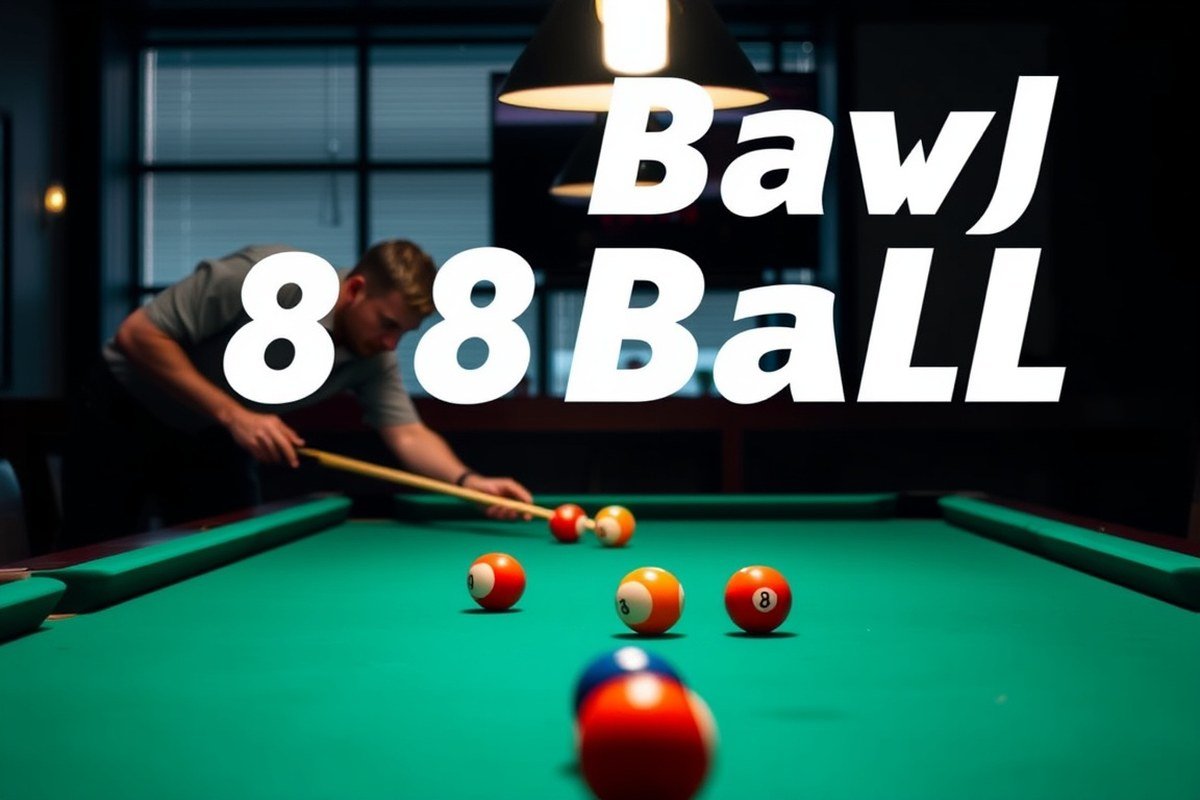
In 8 ball pool, the main objective is to pocket all the balls in your assigned group, either solids (numbered 1 through 7) or stripes (numbered 9 through 15), and then legally pocket the black 8 ball to win the game. At the start, the table is “open,” meaning neither player has claimed solids or stripes yet. Players usually determine their groups by the first ball they legally pocket after the break. For example, if you pocket a solid ball first, you are assigned solids, and your opponent gets stripes.
The cue ball is the white ball that you strike with your cue stick. It’s the only ball you can hit directly, and it serves as the tool to drive your object balls into pockets. During your turn, you aim the cue ball to hit your group’s balls first, trying to pocket them. A typical turn begins with you taking a shot, attempting to sink one of your balls or position the cue ball advantageously. Succeed in pocketing a ball from your group to keep shooting. Missing a shot or committing a foul ends your turn, and your opponent then takes over.
Turns alternate between players, with each player trying to clear their group from the table. The role of each shot includes carefully choosing which ball to target and how to control the cue ball’s position afterward, setting up easier shots in the sequence. Fail to hit your ball first or fail to have the cue ball or any object ball touch a cushion after impact, and your turn ends; the other player then gets ball-in-hand or follows local foul rules.
Winning depends on not just pocketing all your solids or stripes but then successfully sinking the 8 ball in a called pocket. You cannot attempt the 8 ball until your group is completely cleared. The game ends once the 8 ball is pocketed correctly. Pocket the 8 ball out of turn or commit a foul while sinking it, and you lose the game. Consistently controlling your turns by pocketing balls while avoiding fouls is key to victory.
Learning to manage turns by aiming carefully and knowing when a shot is too risky or too safe helps improve gameplay flow. When the table is open, it’s often wise to try pocketing a ball that clearly defines your group early. Keep in mind that rules can vary by setting or league, so following the specific house or tournament guidelines ensures fair play.
How to Set Up and Rack the Balls Correctly

To rack the balls correctly for 8 ball pool, place all 15 object balls in a tight triangle at the foot of the table. Put the 8 ball exactly in the center of the triangle, and keep one solid and one striped ball in the two back corners. The cue ball must start on the head spot at the opposite end of the table for the break shot.
Arranging the Object Balls in the Triangle
Use a triangular rack to place all 15 balls in a compact, uniform shape. The apex ball of the triangle rests on the foot spot on the pool table. This spot is a small mark roughly a quarter of the way in from the foot rail. The rack should be tight, so no gaps remain between balls, which helps ensure a consistent break.
The balls should be arranged randomly inside the triangle, except for specific spots for the 8 ball and the back corner balls. Keeping the balls compact prevents easy spills and maintains fair play during the break shot.
- Place the triangular rack on the foot spot of the table where the apex ball will rest.
- Load the object balls inside the rack, ensuring they are tightly packed with no gaps.
- Mix the solid and striped balls randomly within the triangle, except for designated positions.
Make sure to press the rack forward firmly to eliminate gaps, loose racking causes unpredictable breaks and can ruin your shot.
Positioning the 8 Ball in the Rack Center
The 8 ball always goes in the center position, which is the middle ball of the third row from the front of the triangle. This spot ensures the 8 ball is surrounded evenly by other balls.
Also, place one solid ball in one back corner of the triangle and one striped ball in the opposite back corner. This distribution helps balance the rack and follows official 8 ball setup rules.
Incorrect positioning of the 8 ball can make the game unfair and affect how the balls spread after the break. Correct placement results in a cleaner break and a more competitive game.
Placing the Cue Ball for the Break Shot
Position the cue ball on the head spot at the opposite end of the table, near the head rail. The head spot is usually marked by a small dot or triangle around a quarter of the table length from the head rail.
You must strike the cue ball from behind this line for the opening break shot. A controlled placement here allows for a good angle and enough power to break the racked balls effectively. Make sure the cue ball is free to move without touching cushions or other balls before the shot.
- Locate the head spot on the table, usually about 25% of the way from the head rail.
- Place the cue ball gently on the head spot without touching the cushions.
- Set your stance so you can aim and deliver a straight, firm stroke to break the rack.
Always confirm the cue ball is behind the head string before breaking; breaking from the wrong spot can result in a foul and loss of turn.
Taking Shots: Techniques for Accurate Pool Play
Accurate shots in 8 ball depend on a solid grip, stable stance, precise aiming, and control of the cue ball’s speed and spin. Each part works together to help you hit your target consistently and position the cue ball for the next shot.
Proper Grip and Hand Placement
Hold the cue stick firmly but not too tight to avoid tension that can affect your shot. Position your bridge hand on the table to support the cue, and your grip hand should be about 6 to 12 inches from the butt of the cue. This distance lets you control power and accuracy well.
Your thumb and forefinger on the grip hand should form a loose circle around the cue, with the other fingers relaxed. Never choke up too close on the cue tip or hold the cue too far back, as both reduce stability or control.
Body Stance and Elbow Angle
A balanced stance places your feet about shoulder-width apart with your dominant foot slightly back. Position yourself so your cue arm swings freely along a straight line toward your target. Keep your elbow bent near 90 degrees and the cue at about waist level to maintain consistency and power.
Your head should be low over the cue to align your eye with the cue tip and target ball, which helps with aiming precisely. Shifting weight slightly forward over the front foot improves stability during the stroke.
Aiming Fundamentals and Alignment
Aiming involves lining up the cue tip with the exact point on the object ball you want to hit. For basic shots, aim where the cue ball contacts the object ball, like hitting half of the ball’s surface for a half-ball hit. More advanced shots may require aiming off-center.
Visualize the line from cue ball to target, then from target ball to pocket. Align your body, cue stick, and eyes along this line to improve shot consistency. Calling your shot precisely helps avoid fouls by making sure you hit your own ball first.
- Place your bridge hand firmly on the table to steady the cue.
- Grip the cue about 6 to 12 inches from the butt with a relaxed but controlled hold.
- Stand with feet shoulder-width apart, one foot slightly back for balance.
- Bend your shooting elbow close to 90 degrees to keep the cue steady and at waist height.
- Lower your head so one eye aligns with the cue tip and the shot line.
- Aim the cue tip precisely at the contact point on the object ball.
- Stroke smoothly in a straight line through the cue ball to the target.
Managing Cue Ball Spin and Speed
Controlling spin on the cue ball helps shape its path after impact. Hitting below center applies backspin, making the cue ball roll backward after contact. Striking the cue ball at the center results in a natural roll forward. Side spin, hitting left or right of center, changes how the cue ball bounces off cushions or moves around balls.
Use topspin to follow the object ball forward after the hit. Backspin helps you draw the cue ball back for position. Side spin can help you move the cue ball around obstacles but requires practice because it also changes the angle off rails. Combine spin with smooth speed control, too hard a stroke loses spin effect and risks missing.
Practice common shot types such as half-ball hits, where you hit the object ball on its edge for a partial deflection, useful for both pocketing and safety. Adjust your spin and speed depending on the table layout and your next planned shot to keep control.
Common Fouls and What Happens When You Commit Them
In official 8 ball pool, fouls occur when you break the rules during a shot. Major fouls include hitting the wrong ball first, not hitting any ball at all, failing to send a ball to a cushion after contact, scratching (cue ball goes into a pocket), pocketing the 8 ball illegally, and jumping a ball off the table. Committing any foul immediately ends your turn and gives your opponent a significant advantage.
A scratch occurs if the cue ball goes into any pocket during a shot. This foul grants your opponent the benefit known as “ball in hand,” which lets them position the cue ball anywhere on the table before shooting. During the break, if you scratch after pocketing a ball, that ball is returned to the table, and your turn is over right away.
Illegal pocketing of the 8 ball results in losing the game immediately. Illegal pocketing refers to sinking the 8 ball before all your group balls are cleared, or pocketing it in a different pocket than called. The 8 ball falling into a pocket without a foul or being knocked off the table early does not end the game unless your local rules say otherwise. You avoid immediate loss by following the exact sequence: first clear your set of stripes or solids, then call and pocket the 8 ball legally.
Fouls let your opponent take the cue ball and place it anywhere on the table before their shot. This “ball in hand” rule applies after common errors like striking the opponent’s ball first, missing all balls, or causing a ball to jump off the table. Pocketed balls usually stay in the pockets even when a foul occurs on that shot, but your opponent still gains ball in hand.
To decide if a foul has occurred, follow this checklist after each shot: 1) Did you hit your designated group ball first? 2) Did any ball, including the cue ball, contact a cushion after initial contact? 3) Did the cue ball scratch? 4) Did you pocket a ball illegally, including the 8 ball before clearing your group? 5) Did any ball jump off the table? Any affirmative answer to these conditions means a foul has occurred.
After a foul, your turn ends immediately. Your opponent then gets ball in hand, placing the cue ball anywhere on the table before shooting. This rule encourages careful aiming and proper shot selection to avoid giving your opponent an advantage. In some local or league rules, fouls on the break can lead to a re-rack or letting the opponent take the next shot as the balls lie, so clarify rules before starting.
When and How to Call Shots During the Game
Calling a shot means telling your opponent exactly which ball you plan to pocket and into which pocket before you take your shot. This rule helps avoid disputes and ensures players shoot intentionally rather than relying on luck. In casual games, you only need to call your shot if it’s not obvious. However, in formal or league play, calling every shot might be required.
You’ll always want to call shots that aren’t clear, such as bank shots and combination shots. For example, if you intend to hit the cue ball so it bounces off the rail and pockets the 5 ball in the corner pocket, say “5 ball, corner pocket” before shooting. Combination shots involve hitting one ball first to pocket another, which often isn’t obvious. Letting others know your intended shot avoids confusion or penalties.
Usually, you don’t have to call shots if the ball and pocket are obvious, like a straight-in shot with no obstacles in the way. On the break, calling shots is never required. The big exception is the 8 ball itself: you always must call the 8 ball shot by naming the ball and the intended pocket. Missing the called pocket or sinking the 8 ball out of turn usually results in losing the game.
To say your shot clearly, use a simple script like this before shooting: “I’m calling the 3 ball in the side pocket”. Keep the statement brief and specific, name the ball number and exact pocket (side, corner, etc.). This approach works across rule variations, from house rules to official league formats like BCA, where failing to call required shots can be a foul.
The American Poolplayers Association (APA) rules stand out by not requiring you to call every shot except the final 8-ball shot. Other rule sets, like BCA, require calling every shot, and missing this call is a foul. Combination shots are generally allowed without calling the first ball contacted but calling the shot informs opponents of your plan to pocket a specific ball with the second ball. You cannot use the 8 ball as the first ball struck in a combination; it must only be pocketed legally in your called shot.
Executing the calling shot system costs nothing but a few seconds to say your intended ball and pocket. Doing this right reduces arguments and keeps the game fair. Players who skip calling non-obvious shots risk disputes or fouls, especially in leagues. When done correctly, calling shots forces you to focus and plan deliberately. This extra step often leads to better shot choices and a cleaner game experience.
Always call your 8 ball shot by naming the ball and pocket exactly to avoid losing the game on a miscalled or missed shot.
Strategies for Playing Safe and Managing Position
A safety shot means deliberately playing a defensive move instead of trying to pocket a ball. You use it to make your opponent’s next shot difficult or to avoid giving them an easy run. Choosing a safety is smart when you don’t have a clear shot, you’re likely to miss, or you want to control the table pace. By forcing your opponent into a tough position, you increase your chances of winning in the long run.
Controlling the cue ball’s position after each shot is critical. Good position sets up easier shots and helps you run the table successfully. Always plan ahead to leave the cue ball near a “key” ball, ideally one that will line up well with the 8 ball and its pocket later on. Try to position the cue ball 1 to 2 diamonds off center on the table to maintain better angles and avoid tough spots.
When playing a safety, your goal is to put the cue ball in a spot that blocks your opponent’s shot or leaves them with only low-percentage options. You can gently tap the cue ball behind other balls to hide it or leave it close to the cushion. Regularly check the table layout before deciding on a safety to see which zones deny your opponent easy shots. Avoid risky plays that might leave an unintended “split” shot, where the cue ball can hit one of your balls and one of your opponent’s balls at once.
Controlling your cue ball involves consistent, smooth strokes and avoiding fouls like a double hit or jump shot violations, which happen by scooping under the ball. Use soft, measured follow-throughs to control speed and spin, and avoid striking the cue ball twice. For example, applying a slight amount of side spin can help the cue ball curve around obstacles, but don’t overdo it to avoid unpredictable bounces.
Here’s a practical checklist: first, evaluate if your next shot is safe to attempt or if a defensive play works better. Second, look to position the cue ball near a spot 1, 2 diamonds off center for your next planned shot. Third, consider hiding the cue ball behind your balls to limit your opponent’s options. Lastly, use firm but controlled strokes to keep the cue ball from rolling too far or scratching. Remember that managing the cue ball properly influences about half of your 8-ball success, so practice this skill regularly to improve.
How to Win: Pocketing the 8 Ball Legally
You can legally shoot the 8 ball only after you have pocketed all seven of your designated group of balls. This means you must clear either all stripes or solids before attempting the 8 ball. Trying to pocket the 8 ball before finishing your group results in an automatic loss. The correct sequence ensures fair play and keeps the match competitive.
Before taking your final shot on the 8 ball, you must call the intended pocket clearly. Announce which pocket you plan to sink the 8 ball into, either out loud to your opponent or to the referee if present. Calling the pocket is essential because pocketing the 8 ball into a different pocket than the one you named causes you to forfeit the game. This rule eliminates lucky shots and tests your control and accuracy under pressure.
When shooting the 8 ball, make sure your cue ball strikes it first without committing a foul. Scratching means the cue ball either goes into a pocket or jumps off the table; doing this while sinking the 8 ball results in an immediate loss. Scratching during the final shot is a critical error that costs you the game, so position your shot carefully. Avoid risky shots that increase the chance of losing control of the cue ball.
Pocketing the 8 ball too early, sinking it in the wrong pocket, knocking it off the table, or scratching while pocketing it all cause you to lose the game automatically. These rules protect fair play by making sure the outcome depends on skill and proper shot timing.
To legally pocket the 8 ball and win, follow this checklist: first, confirm that all your group balls are cleared from the table. Next, clearly call the specific pocket where you intend to sink the 8 ball. Then take your shot, making sure the cue ball contacts only the 8 ball first, avoid scratching or knocking the ball off the table, and successfully pocket the 8 ball in the called pocket. Completing these steps right earns you the win and avoids fouls that lead to an automatic loss.
Good results look like sinking the 8 ball cleanly into the announced pocket with no fouls committed and maintaining control of the cue ball. Pocketing other balls accidentally along with the 8 ball during this final shot is usually allowed if no rules are broken, but always check your local or house rules. Errors such as miscalling the pocket or fouling cause an immediate loss, ending the match abruptly on your final turn.
Common Beginner Mistakes and How to Fix Them
Beginners often struggle with common errors like grip, stance, shot calling, cue ball handling, and safety play. Fixing these mistakes improves your consistency and reduces fouls, helping you play 8 ball more confidently.
Mistake: Improper Grip or Stance
Holding the cue too tightly or with a shaky grip reduces control and shot accuracy. Your stance matters too, a balanced position ensures smoother cue movement and better aim. You want your feet shoulder-width apart, with the foot opposite your shooting hand slightly forward. Resting the cue on your bridge hand with steady support is essential.
To fix your grip, gently hold the cue with your thumb and first two fingers, keeping the grip relaxed but firm. Avoid squeezing or letting the cue slip. For stance, align your body so your shooting eye is directly over the cue. Practice standing and aiming this way before every shot to build muscle memory.
Mistake: Failing to Call Shots Correctly
Calling your shots clearly before you strike avoids disputes and helps others follow the game. Beginners often forget or guess calls, which can lose you turns or cause fouls. In official 8 ball, you need to call the intended ball and pocket unless you’re playing “call shot” casual rules.
Use simple phrases like “9 ball, corner pocket” or “3 ball, side pocket.” This shows where you plan to send the ball. Calling shots also makes you think strategically rather than just hitting any easy ball.
- Decide the ball and pocket before your shot
- Speak clearly and confidently to your opponent
- Recognize when safety shots need to be called as such
- Avoid vague calls like “any ball” or no call at all
- Practice calling shots while setting up each cue ball position at home
Mistake: Poor Cue Ball Control
Missing position on the cue ball is a frequent obstacle. Without control, you’ll face tougher shots or end up giving your opponent an advantage. Cue ball control means managing speed, spin, and angle to place it where you want after your shot.
Improving control requires practice and aiming techniques. Focus on striking the cue ball at its center or off-center depending on desired spin. Use chalk on the cue tip to prevent miscues. Slow down your stroke for finesse shots and speed it up for breaks or longer distances.
Good cue ball control looks like consistently ending a shot with an easy next ball lined up. Poor control means scrambling or running out of options and more scratches.
Mistake: Ignoring Safety Play
Beginners often think every shot must try to pocket a ball, but playing safe can turn the game in your favor. Safety involves positioning the cue ball to make your opponent miss or foul, instead of risking a hard shot yourself.
Learning safety shots helps you avoid scratches and fouls, which lose ball-in-hand or turns. Calling a safety shot clearly signals you are conceding your turn strategically, which is allowed. Tips for safety play include:
- Blocking key balls using the cue ball or other object balls
- Hiding the cue ball near cushions or wrapped behind other balls
- Using gentle, controlled strokes instead of powerful shots
- Calling the safety shot to avoid confusion
- Being patient and waiting for better opportunities
Practice soft, controlled shots with your cue ball to build confidence in safety plays and avoid accidental scratches.
Step-by-Step Action Plan to Start Playing 8 Ball Pool
Follow these steps to get comfortable with 8 ball pool rules, shots, and strategy so you can enjoy solid games right away.
- Before You Play: Set up the table correctly by racking the balls in a triangle with the 8 ball centered, a stripe in one corner, and a solid in the other. A proper rack means the game starts fairly and legally.
- First Game: Practice your break shot aiming to scatter the balls widely and pocket at least one ball. You’ll know it worked if balls spread and you sink a ball on the break.
- Early Practice: Focus on pocketing your group of balls (solids or stripes) with deliberate, aimed shots. Successful pocketing helps you identify your group and control the table.
- Mid-Game: Use simple safety plays by leaving the cue ball tucked behind other balls or far from your opponent’s best shot. A good safety forces your opponent into a tough shot.
- During Play: Call your shots clearly before each shot and take your time aiming to avoid fouls. Consistent calling ensures the game stays fair and you understand your own strategy.
- Toward the End: Practice pocketing the 8 ball only after all your group balls are cleared, aiming carefully to avoid fouls. You’ve won when the 8 ball goes in a called pocket legally.
- After Your First Few Games: Review any foul or missed shot mistakes and adjust your stance or aim accordingly. Fixing these errors improves control and game results.
Frequently Asked Questions
Are There Different 8 Ball Pool Rule Variations I Should Know?
Yes, regional and house rules can vary slightly, affecting racking or fouls. Always clarify rules with your opponent before starting to avoid disputes.
What’s the Proper Way to Chalk a Cue Tip Before Shooting?
Chalk the tip evenly before every shot to prevent miscues and keep control. Avoid over-chalking to stop chalk dust from affecting cue ball contact.
How Does Applying English (Spin) Help in 8 Ball Pool?
Using English allows you to control cue ball direction and positioning after impact. Practice side spins carefully to improve shot placement and run-outs.
Can I Move the Cue Ball Anywhere After a Foul?
After most fouls, your opponent gets cue ball in hand anywhere on the table, not just behind the head string, improving their next shot opportunities.
What Happens If the 8 Ball Is Accidentally Knocked Off the Table?
Knocking the 8 ball off the table causes an immediate loss, so avoid risky bank or combination shots involving the 8 ball until you’re confident.
Are Striped or Solid Balls Typically Easier to Pocket for Beginners?
Solids and stripes generally have equal difficulty, but beginners often find solids easier due to simpler positioning on the table during early play.
Final Thoughts
Playing 8 ball pool well takes practice following the rules, controlling your shots, and managing position on the table. Start with focused games following the correct steps, and you’ll quickly enjoy consistent, competitive play. Take some time to play a full game, watch what works, and adjust as needed, each shot gets you closer to mastering the game.


One Comment