
How to Rest a Steak Perfectly: Proven Times, Tips & Common Mistakes
Resting a steak means letting it sit after cooking to allow juices to redistribute throughout the meat. This results in a juicier, more flavorful steak when you cut into it. Knowing how to rest a steak correctly can improve your steak dinners every time.
This article is for home cooks and steak lovers who want clear, practical tips on timing, temperature, and techniques. You’ll learn how long to rest different steak cuts, how to keep heat and flavor during rest, and common mistakes to avoid.
Key Takeaways
- Rest steaks for about half the time you cooked them; for example, 5 minutes if cooked for 10 minutes.
- Let ribeye and New York strip steaks rest 5 to 7 minutes for ideal juiciness.
- Filet mignon and sirloin should rest shorter, about 3 to 5 minutes.
- Rest steaks on a warm plate or under loose foil to maintain heat without steaming.
- Carryover cooking will raise internal temperature 5 to 10°F during resting, affecting final doneness.
- Cut thicker steaks on a timer of 5 minutes per inch thickness for proper resting.
What Does It Mean to Rest a Steak and Why It Matters
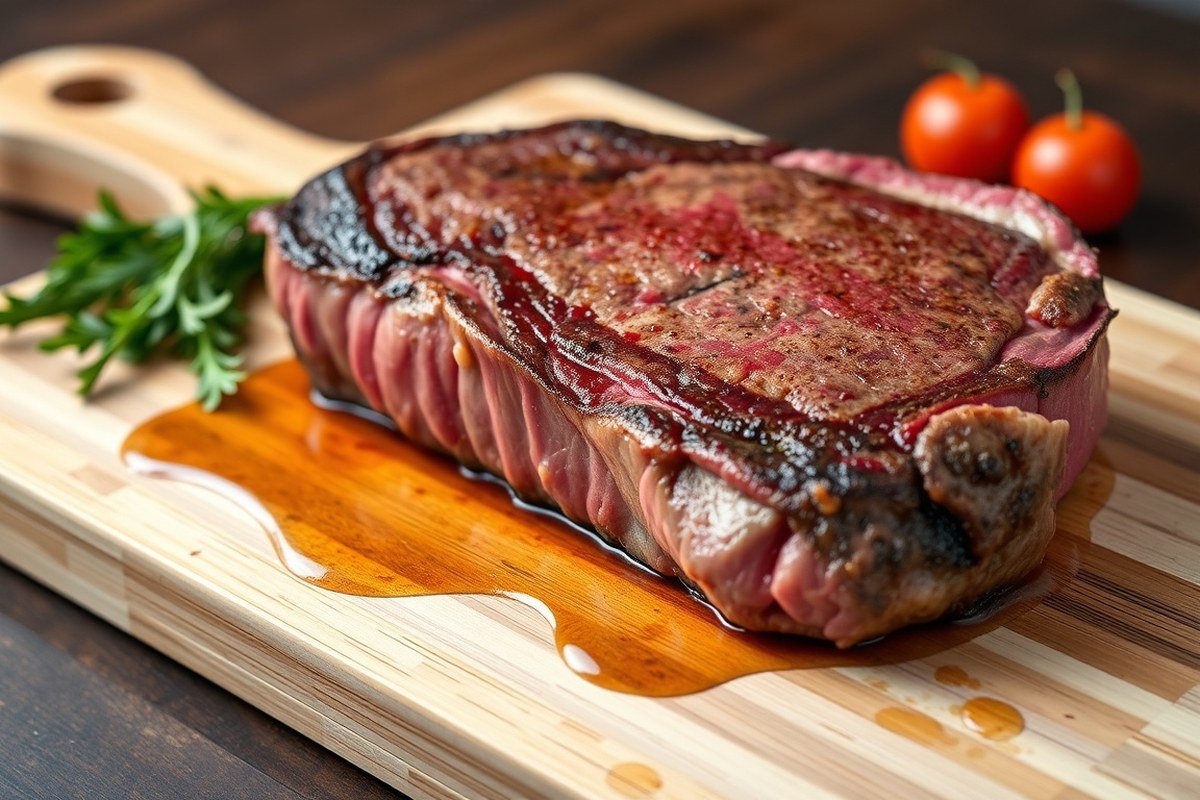
Resting a steak means letting it sit undisturbed for several minutes after cooking, before cutting into it. This pause allows the temperature inside the meat to even out and the juices to redistribute. Without resting, cutting into a steak right away causes the juices to rush out onto the plate, leaving the meat drier and less flavorful.
During cooking, heat pushes the meat’s juices toward the center and surface. The outside layers of the steak can reach temperatures over 200°F (93.3°C), while the center stays cooler. When you remove the steak from the heat, the temperature continues to rise, a process called carryover cooking. This can raise the internal temperature by 3 to 6 degrees Fahrenheit, so it’s best to take the steak off the heat when it is 3-5 degrees below your target doneness. For example, if you want a medium-rare steak at 135°F, pull it at around 130°F and let it rest.
As the steak rests, the outer layers cool down, dropping from over 200°F to about 145°F within five minutes. This cooler temperature helps the juices move back from the center toward the edges, soaking into the surrounding muscle fibers. After 10 minutes of resting, the edge temperature can fall to about 125°F, which allows the meat to absorb even more liquid. The result is a steak that stays juicy and tender instead of losing moisture on the plate.
The proteins in the steak also relax during resting. While cooking causes the proteins to contract and squeeze out moisture, resting lets them loosen up. This reduces the force pushing the juices out when you cut the meat, making slicing easier and less messy.
To rest a steak properly, remove it from the heat source and place it on a warm plate or a raised rack to allow air circulation underneath. Rest the steak loosely covered with foil to keep its surface warm but avoid trapping steam that could soften the crust. A good guideline is to rest your steak for about as long as you cooked it, usually around 5 to 10 minutes for most cuts. Larger cuts, like roasts, require longer resting times of 10 to 20 minutes.
Skipping the resting phase means the juice-rich center remains hot and under pressure, which makes the meat lose more liquid when sliced. The steak will feel firmer and less tender. Carryover cooking combined with resting ensures your steak reaches the perfect temperature evenly and keeps its moisture locked in. This science-backed step requires only a few extra minutes but greatly improves the texture and juiciness of your steak.
How Long Should You Rest Different Types and Cuts of Steak?

Resting times for steak depend largely on the cut, thickness, and weight. Thinner steaks generally require less resting, while thick or heavy steaks need more time for juices to redistribute. A common rule of thumb is to rest the steak for about one-third to one-half of its cooking time. Alternatively, resting for 5 minutes per inch of thickness is practical and easy to apply.
For example, a ribeye usually rests longer than a filet mignon because it’s often thicker and fattier. Ribeyes and New York strip steaks typically benefit from resting 5 to 7 minutes, while filet mignon and sirloin steaks need only 3 to 5 minutes. Weight also matters: steaks over 1 pound may require closer to 10, 20 minutes, especially if they are thick cuts. Large roasts need upwards of 20 minutes or more.
| Steak Cut | Thickness | Weight | Recommended Rest Time |
|---|---|---|---|
| Ribeye, New York Strip | 1 inch | 6, 8 oz | 5, 7 minutes |
| Filet Mignon, Sirloin | 1 inch | 6, 8 oz | 3, 5 minutes |
| Thick Steak Cuts (e.g., 2 inches) | 2 inches | 12, 16 oz | 10, 15 minutes |
| Large Steaks / Roasts | Varies | 1 lb or more | 20 minutes or more |
| All Thin Cuts | Less than 1 inch | Varies | 5, 7 minutes minimum |
Resting allows the center of the steak, which can cool to around 120°F, to stabilize and reabsorb juices, reducing moisture loss by about 1% to 1.5% of the cooked weight. Larger or thicker steaks require more time because their volume holds heat longer and juices take more time to redistribute evenly. Applying twice the resting time for steaks thicker than one inch helps optimize juiciness without overcooling.
Turn your steak over halfway through resting to let heat and juices redistribute evenly.
Using one of these timing strategies helps prevent cutting into a steak too soon, which causes excess juice loss and a drier bite. For example, a 2-inch-thick ribeye weighing 14 ounces should rest about 10 to 15 minutes, while a 1-inch filet mignon under 8 ounces only needs 3 to 5 minutes. Adjust rest time with cooking time, too: a steak cooked for 12 minutes total can benefit from resting 6 minutes. Extreme resting beyond recommended times cools the steak excessively, so aim to stay within these guidelines for ideal temperature and flavor.
How to Rest a Steak Without Losing Heat or Flavor
To rest a steak without losing heat or flavor, loosely tent it with aluminum foil and place it on a warm surface like a heated plate or low-temp oven. This method traps heat while allowing steam to escape, preventing the meat from cooling too rapidly or becoming soggy. Maintaining the right temperature during resting ensures juices redistribute and flavor stays locked in.
When and How to Tent Steak Properly
Tenting steak with foil is best done immediately after removing it from the heat source once it reaches about 3 to 5 degrees below your target doneness temperature. A loose tent helps retain warmth without sweating the steak, which can cause the crust to soften. Follow these steps to tent your steak correctly:
- Remove the steak from the grill, skillet, or oven once it’s a few degrees shy of your desired doneness.
- Place it on a warm surface, such as a preheated plate or cutting board.
- Tear off a piece of aluminum foil large enough to cover the steak entirely.
- Lightly drape the foil over the steak, ensuring it does not wrap tightly or press down.
- Leave some space between the foil and the steak surface to allow air circulation and prevent moisture buildup.
- Let the steak rest for 5 to 10 minutes, depending on its thickness and cut.
- Check the steak with a thermometer if desired, aiming for no more than a 5°F rise during resting.
This process works well to keep the steak warm while the internal juices redistribute, improving tenderness and flavor without risk of excessive cooling or sogginess.
Alternatives to Foil Tenting for Heat Retention
If you prefer not to use aluminum foil, you can rest your steak on a warm plate that has been heated in the microwave or oven beforehand. Placing the steak on a heated ceramic or cast iron plate retains heat effectively without trapping steam.
Another option is resting the steak briefly in a skillet or pan left on the stove at the lowest heat setting. Using an infrared thermometer can help keep the pan surface between 450°F and 475°F during cooking, then lowering heat during rest to maintain warmth without cooking further.
A melted butter bath warmed to roughly 104°F (40°C) can also keep smaller steaks warm while resting for up to 10 minutes. This gentle heat preserves juiciness but requires more careful monitoring to avoid overcooking.
Using a Warm Oven: Temperature Limits and Safety
Resting steak in a warm oven helps maintain heat evenly without drying out the meat. The oven temperature should not exceed 122°F (50°C), which is safely below the medium-rare target internal temperature of about 130°F (54°C).
This low heat environment gently keeps the steak warm for 5 to 10 minutes, extending resting time safely without cooling or overcooking. Avoid higher temps to prevent the steak from continuing to cook and losing its ideal doneness.
Use an oven thermometer to verify the temperature stays within the safe range. Do not leave the steak unattended for more than 10 to 15 minutes to minimize any food safety risks, especially if the ambient temperature dips below 120°F.
How Carryover Cooking Affects Your Resting Time Strategy
Carryover cooking happens because the heat inside the steak continues to move from the hotter outer layers toward the cooler center after you take it off the grill or pan. This transfer causes the internal temperature to keep rising for several minutes. The effect is stronger with thicker, larger cuts since they hold more heat. Waiting until the steak reaches your target temperature during cooking usually results in it being overdone when served.
For example, if you’re aiming for a medium-rare steak at about 130 degrees Fahrenheit, you should remove the steak from heat around 120 to 125 degrees. In the case of a thick cut like a picanha, pulling it at 126 degrees anticipates a rise of roughly 4 degrees during resting, bringing it to the ideal temperature without overcooking. This increase usually occurs within the first 5 to 10 minutes of resting.
Carryover cooking can raise the internal temperature as much as 10 to 15 degrees Fahrenheit in larger roasts, but for steaks, a 5-7 degree increase is more common. That means if you’re dealing with a thinner steak, you might remove it at 125 degrees, knowing it won’t rise as much. Thicker steaks require longer resting times and more careful temperature monitoring to account for heat migration.
Your resting time strategy should factor in this temperature increase by pulling the steak off the heat before it reaches your desired doneness. You can use a meat thermometer to track the internal temperature while cooking. As a rule, aim to stop cooking about 10 degrees shy of the final target. Then rest the steak loosely tented with foil to allow juices to redistribute while maintaining heat.
Not factoring in carryover cooking can lead to overcooked steak, which becomes tougher and less juicy. Overresting or removing the steak too early, however, risks it cooling off too much or losing flavor. Usually, resting for 5 to 10 minutes strikes the right balance for most cuts between 1 and 2 inches thick.
Understanding this temperature rise helps you better time the resting period. For instance, after removing your steak at 125 degrees, the temperature might peak near 130 degrees within 5 minutes. Slicing or serving too early means the temperature rise hasn’t finished and the juices haven’t settled. Wait too long and the steak may start to lose warmth. Use a thermometer to check and adjust your routine based on your specific cut and thickness.
Common Mistakes When Resting Steak and How to Fix Them
Cutting into your steak too soon is one of the most common mistakes. Doing this releases the juices trapped inside the meat before they have a chance to redistribute. The result is a drier steak with uneven color, often showing a greyish band around the edges instead of that beautiful pink hue throughout. Waiting at least 5-7 minutes allows the juices to settle evenly, producing a juicier and more tender bite.
Resting with the steak uncovered is another error. Exposing the surface to air cools the meat too fast and causes moisture loss. The best approach is to loosely tent the steak with foil. However, wrapping the foil too tightly can trap heat and continue cooking the steak, which you want to avoid. A loose tent preserves warmth without causing carryover cooking beyond your target doneness.
Signs a steak has rested properly include a change in color and texture. A rested steak should show a uniform pink throughout, not just in the center, and feel firmer to the touch compared to when it was hot off the pan or grill. You can also monitor the internal temperature with a thermometer; it should hold steady or drop slightly during resting. This steady temperature indicates the juices have settled and are not rapidly moving around inside the meat.
If you under-rest your steak, the immediate texture and juiciness suffer, but you can recover partially by letting it rest a little longer after cutting or by serving immediately to prevent further juice loss. Avoid placing it back in hot conditions, as reheating extends cooking and negatively affects texture. Also, remember that the juice loss difference between properly rested and unrested steaks may be only a few grams, though those grams affect taste and mouthfeel noticeably.
- Resist cutting too early to avoid juice loss and grey edges.
- Loosely tent with foil to keep warmth without overcooking.
- Look for uniform pink color as a sign of good resting.
- Touch the steak to check firmness before slicing.
- Rest steak at room temperature for 5-7 minutes minimum.
- Avoid reheating or tight foil wrapping after resting.
- Use a thermometer to confirm temperature stability during rest.
Rest your steak loosely covered and avoid cutting until it feels firm and uniformly pink inside, this balance preserves juices and flavor.
How to Slice and Serve Your Steak After Resting for Maximum Juiciness
Slice your steak only after it has fully rested to keep the juices inside. Cut against the grain in thin, even slices to ensure tenderness. Pour the collected resting juices over the slices or use them as a sauce to boost flavor and moisture. Serve on a warmed plate for the best presentation and eating experience.
Identifying the Grain Direction in Steak
The grain in steak refers to the way the muscle fibers run through the meat. It usually appears as lines or striations running lengthwise along the cut. Cutting across these fibers shortens them, making the steak easier to chew.
Look closely at the steak’s surface after resting to spot the grain direction before slicing. This is especially important for cuts like flank or skirt steak, which have long, visible fibers. Slicing with the grain results in tougher bites and tougher overall texture.
Recommended Slicing Thickness and Technique
Slicing steak between 1/4 inch to 1/2 inch thick balances tenderness and presentation. Thinner slices tend to be more tender and easier to eat, while thicker slices show off the steak’s juiciness.
Use a sharp carving knife with a long blade to make clean cuts in a single stroke. Avoid sawing or pressing down hard, which can squeeze out juices prematurely. Slice the steak after it has rested for at least 5 to 10 minutes, depending on the cut size, to allow juices to redistribute inside the meat.
- Place the rested steak on a clean cutting board.
- Identify and note the grain direction running through the steak.
- Hold your knife steady and position it perpendicular to the grain direction.
- Slice the steak in smooth, even strokes without forcing the blade.
- Make each slice about 1/4 to 1/2 inch thick, depending on your preference.
- Arrange the slices neatly on a warmed serving plate.
- Reserve any juices that collect on the cutting board for serving.
Collecting and Using Resting Juices
Resting juices are flavorful liquids released during cooking that settle back into the steak with adequate resting. When you slice the steak, some juices may escape onto the plate or board. Collecting these juices helps you improve the steak’s flavor and moisture.
Place the sliced steak on a warmed plate to retain heat and catch any juices. Use a spoon or brush to pour or spread the collected resting juices evenly over the steak slices. Resting juices can also be warmed slightly and served as a light sauce on the side. Avoid pouring cold juices straight from the cutting board if they have cooled; reheat gently on low heat or in a microwave for a few seconds to keep the steak warm and tasty.
Adjusting Resting Techniques for Different Cooking Methods and Steak Sizes
Resting a steak after cooking varies depending on the cooking method and the size of the cut. Grilled steaks, for example, often experience more uneven heat and potential carryover cooking due to hot spots on the grill. While a thinner grilled steak, around 1 inch thick, needs just 5 minutes of resting, thicker cuts require up to 10 minutes or about one minute per 100 grams. Pan-seared steaks usually have a more uniform crust and heat application, which typically means carryover cooking is more moderate. For these, sticking close to that same resting time works well but monitoring is easier because the pan-searing environment is controlled.
Very thick steaks, such as a 2-inch ribeye, demand a longer rest to allow heat to distribute evenly and juices to settle. Resting them 10 minutes or more prevents fluids from spilling out when sliced. Thin cuts, like flank or skirt steaks, benefit from a shorter rest, 3 to 5 minutes, because they cool faster and do not have as much internal heat to redistribute. Sous vide steaks, having cooked evenly at a precise temperature, require a very brief rest, usually 2 to 3 minutes. This prevents overcooking as they finish with a quick sear. Seasoning timing can also affect resting: if you salt early in the cooking process, the salt can improve moisture retention, making the resting juices more flavorful. If seasoning after cooking, apply during rest to allow flavors to meld without losing heat.
- Grilled steaks: rest 5 to 10 minutes, adjusting for thickness and grill hot spots
- Pan-seared steaks: rest 5 to 7 minutes with more predictable carryover cooking
- Very thick steaks (2 inches or more): rest 10 minutes or longer
- Thin cuts (under 1 inch): rest 3 to 5 minutes only
- Sous vide steaks: short rest of 2 to 3 minutes to avoid overcooking
- Season early salt for improved moisture retention, or season during resting for final flavor
- Use reserved butter to top grilled steaks during rest for flavor and moisture
Applying butter or finishing sauces while the steak rests helps lock in flavour and keeps the surface moist despite the cooling. You’ll want to loosely tent the steak with foil to keep heat but avoid trapping steam, which can cause the crust to soften. Monitoring the internal temperature before and after resting ensures you don’t lose valuable heat, especially with thin cuts. Allowing time for resting after cooking is an essential step to serve a steak juicy and tender, whether grilled, pan-seared, or sous vide.
Tools and Thermometers to Monitor Steak Temperature During Resting
Using a thermometer during the steak resting phase can improve your accuracy and results. It lets you track the steak’s internal temperature as it rises to the ideal level without overcooking. Knowing the right type of thermometer and reading temperatures properly helps you rest steaks perfectly every time, balancing heat retention with optimal juiciness.
Instant-Read vs Wireless Probe Thermometers
Instant-read thermometers provide quick temperature checks by inserting the probe and reading the temperature in seconds. They are excellent for checking the steak immediately after cooking and during resting if you prefer occasional checks. Typically priced between $15 and $40, these devices give you control without hassle.
Wireless probe thermometers stay inserted in the steak throughout cooking and resting, sending continuous temperature updates to your phone or receiver. These cost $50 to $150 or more, depending on features, but allow you to monitor the steak remotely without opening the resting cover or flipping the steak. This helps keep heat in and avoids over-resting.
| Thermometer Type | Cost Range | Usage During Resting | Advantages | Disadvantages |
|---|---|---|---|---|
| Instant-read | $15, $40 | Occasional checks | Fast readings, affordable, easy to use | Requires opening resting cover, risk heat loss |
| Wireless probe | $50, $150+ | Continuous monitoring | Remote tracking, keeps heat sealed, set alerts | More expensive, setup required |
For best results, pair your thermometer choice with the resting method. If you use foil tenting or a warm place, a wireless probe is helpful to avoid heat loss. For casual cooking, instant-read checks timed with a timer can suffice.
Key Temperature Benchmarks During Resting
The internal temperature of a steak continues to rise during resting due to carryover cooking. Monitoring this temperature helps avoid overcooking or under-resting. A steak pulled from the heat at 130°F (medium rare) may reach 135°F to 140°F during a typical 5 to 10 minute rest. Here are common internal temperature benchmarks for steak resting:
- Rare: 120°F pulled, rises to 125, 130°F at rest
- Medium rare: 130°F pulled, rises to 135, 140°F at rest
- Medium: 140°F pulled, rises to 145, 150°F at rest
- Medium well: 150°F pulled, rises to 155, 160°F at rest
Knowing these benchmarks helps you decide when the steak has rested enough. The temperature usually stabilizes or starts to drop after 10 to 15 minutes.
Using Thermometers to Adjust Your Resting Time
A timer is helpful to ensure proper resting, but temperature readings give you real-time feedback to adjust resting duration. For example, if the steak’s temperature reaches your final target sooner than expected, you can slice and serve earlier.
Wireless probes are especially useful for adjusting resting time because they alert you exactly when the ideal internal temperature is reached. You can also confirm when the temperature stops rising, signaling rest is complete.
Tip: Avoid opening the resting cover too often for instant-read checks; it cools the steak and extends resting time.
Using thermometers this way reduces guesswork and prevents over-resting, which can cause the steak to cool excessively or dry out. Combining temperature with a timer ensures you rest your steak long enough to maximize juiciness and flavor without losing heat.
Step-by-Step Action Plan for Resting Your Steak
Follow these clear steps to rest your steak properly and enjoy its full flavor and juiciness.
- Right after cooking: Remove the steak from heat and place it on a warm plate or cutting board to avoid losing heat instantly.
- Immediately cover: Tent the steak loosely with foil to retain warmth without trapping steam that can cause sogginess.
- Wait 5 to 10 minutes: Allow most steaks about 5 to 10 minutes to rest; thicker cuts may need closer to 10 minutes to balance juiciness.
- Check temperature: Use a meat thermometer to see if internal temperature has stabilized or risen slightly from carryover cooking.
- Slice carefully: Cut against the grain just before serving to maximize tenderness and juice retention.
- Serve immediately: Serve once rested and sliced to enjoy optimal flavor and juiciness without losing warmth.
Frequently Asked Questions
What Is the 3-3-3 Rule for Steaks?
The 3-3-3 rule means cooking a steak for 3 minutes per side and then resting it for 3 minutes before slicing, giving juices time to redistribute. This simple timing helps balance cooking and resting for better flavor and texture.
What Is the Best Way to Rest Steak to Keep It Warm?
Rest your steak on a warm plate or inside an oven preheated to 50°C to avoid losing heat during resting. This prevents the steak from getting cold while the juices settle for a juicier bite.
How Long Does Gordon Ramsay Let Steak Rest?
Gordon Ramsay typically lets steak rest for about 5 minutes, enough to allow juices to redistribute without cooling the meat too much. This resting time helps maintain moisture and tenderness.
How to Rest Steak Without It Getting Cold?
Place your steak on a warm plate or tent it loosely with foil to keep heat in while resting. This method preserves temperature and flavor, so your steak won’t cool down before serving.
Why Does Resting Make Steak Easier to Slice?
Resting allows juices to redistribute and firm up within the meat, making it easier to slice without losing moisture. Cutting a steak right away tends to cause juice loss and dryness.
How Long Should You Rest Your Steaks Based on Thickness?
A useful guideline is to rest steaks for about 5 minutes per inch of thickness. Thicker cuts need longer resting times for proper juice redistribution and optimal tenderness.
Wrapping Up
Resting a steak is essential to keep it juicy and tender by letting the juices redistribute evenly. Use the right timing and covering to avoid heat loss or dryness. Try resting your next steak with these steps to see how much better it tastes and feels. Start by timing your resting period precisely and notice the difference in each bite.





3 Comments