How to Choose a Kitchen Sink: A Step-by-Step Guide
Choosing the perfect kitchen sink can feel overwhelming, especially with so many options out there. You’re not alone—many people struggle to find a sink that balances style, durability, and functionality.
To choose your ideal kitchen sink, start by considering your kitchen’s style and how much space you have.
Decide on the sink type—single or double bowl, drop-in or undermount—based on your workflow and countertop material.
Pick a durable material like stainless steel or granite composite that suits your cleaning habits.
Match your sink with compatible faucets and accessories, and think about installation complexity.
Keep these in mind, and you’ll find the perfect balance of form and function for your kitchen.
Explore further to fine-tune your choice.
Key Takeaways
- Choose a sink style and material that balances your kitchen’s design, durability, and ease of cleaning for a long-lasting look and good functionality.
- Decide between single or double bowls based on your multitasking needs and the space available on your countertop.
- Select a sink depth of 7-10 inches to handle large pots easily and reduce splashing during handwashing.
- Opt for undermount sinks for a sleek appearance and simple countertop cleaning, especially if your surface is solid.
- Match your sink and faucet finishes for a cohesive look, and consider professional help if your setup is complex.
How to Choose the Right Kitchen Sink: Key Factors
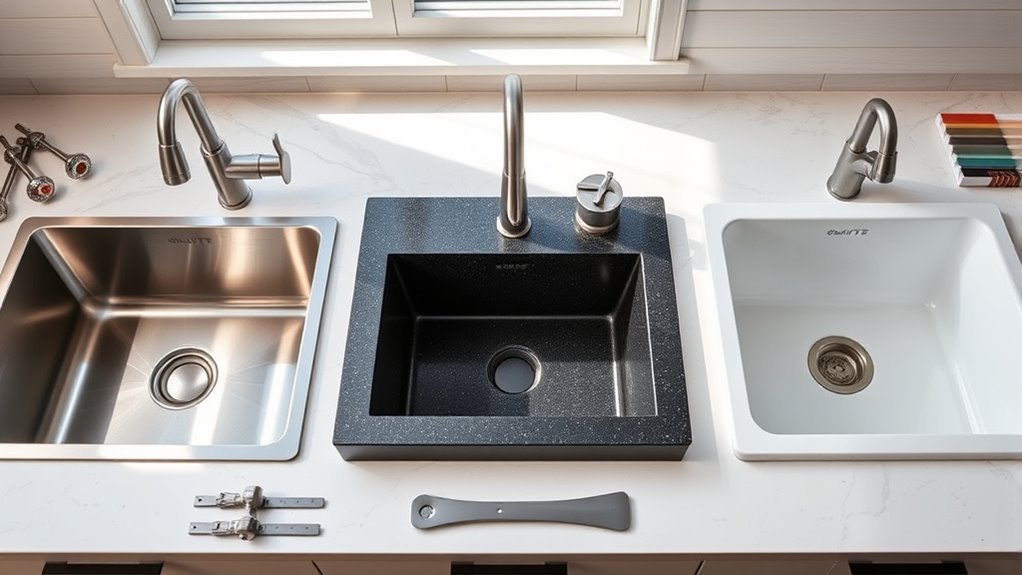
When you’re choosing the right kitchen sink, you need to think about several key factors that impact both how it looks and how well it works. First, consider the sink’s style to make sure it matches your kitchen’s overall design. Whether you like a sleek stainless steel or a cozy farmhouse look, your sink should blend well with your countertops and cabinets.
Next, think about how much effort it takes to keep the sink clean. Some materials are easier to maintain than others. For example, stainless steel is tough and simple to wipe down, while natural stone might need extra care to avoid stains. Don’t forget to look at the sink’s depth and bowl setup, as these features affect how easy it is to wash dishes or prep food.
Also, check for finishes that resist scratches and discoloration to keep your sink looking good longer. By balancing style with practical maintenance, you’ll pick a sink that’s both attractive and functional. Keep these factors in mind, and you’ll make a smart, stylish choice for your kitchen.
Which Kitchen Sink Type Fits Your Space Best?
How do you know which kitchen sink type fits your space best? First, think about your countertop and cabinet layout. Drop-in sinks are popular because they’re easy to install and fit into most counters, making them a simple upgrade.
Consider your countertop and cabinets first; drop-in sinks are easy to install and fit most counters effortlessly.
If you have a spacious kitchen with a vintage or rustic vibe, farmhouse sinks might be your ideal choice. They extend slightly past the counter edge and usually need deeper cabinets, but they offer a roomy basin and a charming look.
For smaller kitchens, single-bowl sinks can free up counter space and make washing large pots easier. On the other hand, double-bowl sinks are great if you want to multitask, but they do require more room.
Think about how you use your kitchen daily. Your sink should match your space and your habits. By measuring your area and visualizing your workflow, you’ll pick a sink that fits well and keeps your kitchen running smoothly.
Which Kitchen Sink Material Fits Your Style and Lasts Long?
What makes a kitchen sink material stand out for your style and durability? It’s all about balancing your style preferences with a durability comparison that fits your lifestyle.
If you want a sleek, modern look, stainless steel offers a timeless appeal and resists corrosion well. For a warmer, traditional vibe, consider materials like fireclay or cast iron with enamel coating—they bring charm and robust longevity.
Quartz composite sinks provide a contemporary style with excellent scratch resistance, perfect if you need something tough and stylish. When comparing durability, keep in mind that some materials handle heat and stains better, while others may chip or scratch more easily.
Your choice should reflect not only how the sink looks but how it holds up over time to daily use. Think about your kitchen’s overall design and how much wear and tear the sink will face.
This way, you’ll pick a material that truly fits your style and lasts long.
What Are the Pros and Cons of Popular Kitchen Sink Materials?
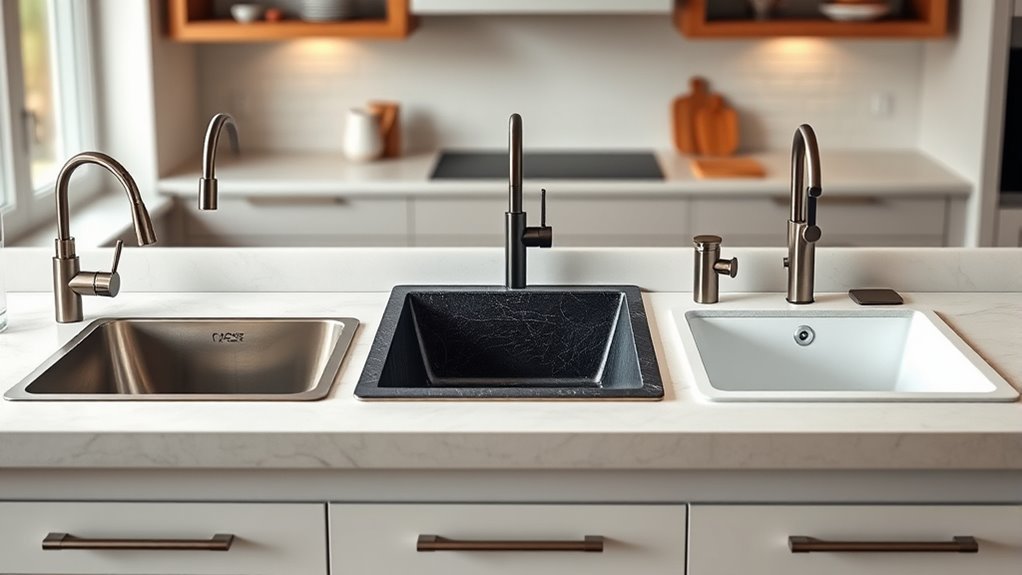
When you’re picking out a kitchen sink, it’s a good idea to think about the pros and cons of different materials like stainless steel, granite composite, and cast iron.
Stainless steel sinks are pretty durable and easy to maintain, but they can scratch over time if you’re not careful. Granite composite sinks, on the other hand, look fantastic and are resistant to stains, but they might chip if you accidentally drop something heavy on them. Cast iron sinks are known for their strength and longevity, yet they can sometimes chip or crack if they get a hard knock.
Getting a handle on these features and limitations will help you choose the sink that fits best with your kitchen style and how you use it.
Stainless Steel Benefits Drawbacks
Although stainless steel sinks have been a kitchen staple for decades, they still offer a great mix of durability and style that many homeowners love. You’ll appreciate how resistant they are to heat, stains, and corrosion, making them practical for everyday use. Plus, their sleek, modern look fits well with almost any kitchen design.
That said, they can be prone to scratches and water spots. To keep yours looking good, just follow simple maintenance tips like wiping it dry after use and avoiding abrasive cleaners. While noise from running water can be a downside, many models now include soundproofing to help reduce it.
Granite Composite Features Limitations
If stainless steel sinks offer durability with a modern look, granite composite sinks bring a different set of advantages and challenges to consider. You’ll appreciate the durability of granite since these sinks resist scratches and heat better than many other materials.
Their matte finish also helps hide water spots and fingerprints, so your kitchen looks cleaner longer. But keep in mind, granite composite needs regular cleaning with non-abrasive products to prevent dulling the surface.
While strong, granite composite can chip or crack if you drop heavy items on it. These sinks are also usually heavier and may require reinforced cabinetry for support.
Balancing granite’s durability with proper maintenance will help keep your sink functional and attractive. Just make sure to weigh these factors to see if it’s the right fit for your kitchen.
Cast Iron Durability Issues
While cast iron sinks have a timeless look and are really sturdy, they do come with some durability concerns you should think about before choosing one for your kitchen. The enamel coating can chip or crack over time, which exposes the metal underneath to rust.
This means you’ll need to do regular maintenance, like avoiding harsh cleaners and fixing chips as soon as you notice them, to keep your sink looking its best. Plus, cast iron sinks are heavy, so you’ll want a strong cabinet to support them.
Their glossy finish can also show scratches and stains more easily, which might bother some people. If these issues seem like a lot to handle, consider alternatives like stainless steel or granite composite sinks, which tend to resist chipping better and need less upkeep.
Thinking about these factors can help you choose the right sink for your lifestyle and kitchen needs.
How Many Bowls Should Your Kitchen Sink Have?
How many bowls should your kitchen sink have? Choosing between a single bowl and a double bowl depends on how you use your kitchen.
If you often wash large pots and pans, a single bowl sink offers plenty of space and makes cleaning easier. It’s also a good choice if you prefer a minimalist look or have limited countertop space.
A double bowl sink provides more versatility. You can soak dishes in one side while rinsing in the other, which helps you multitask during busy cooking sessions.
Double bowls also let you separate food prep from dirty dishes, which can be more hygienic. Think about your kitchen habits and space when deciding.
If you entertain a lot or cook complex meals, a double bowl might be a better fit. But if you want simplicity and more washing room, a single bowl is often the best choice.
Ultimately, pick what works best for your workflow and your kitchen layout.
Which Kitchen Sink Mounting Options Work Best for Your Countertop?
Choosing the right kitchen sink mounting option can really change the look and functionality of your countertop.
Drop-in sinks are the easiest to install since they simply fit into a cutout from above. They work well with most materials, especially laminate, and their rim helps protect against water damage.
However, their edges sit on top of the counter, which can interrupt a smooth surface. If you want a sleeker look and easier cleanup, undermount sinks are a great choice.
Edges on top disrupt smoothness; for sleek design and easy cleaning, choose undermount sinks.
They mount below the countertop, so you can wipe crumbs and spills directly into the sink without obstruction. Undermount sinks work best with solid surface countertops like granite or quartz.
These materials can support the sink’s weight and resist moisture. When choosing, consider your countertop material and whether you prefer easier cleaning or simpler installation.
What Sink Size and Depth Do You Need?
What size and depth of sink fits your kitchen needs best? Picking the right dimensions ensures your sink works well for your daily tasks.
Start by measuring your countertop space so your chosen sink fits comfortably without crowding your prep area.
Think about your typical cookware size—larger pots usually need sinks that are 9 to 10 inches deep, while smaller ones work with 7 to 8 inches.
Consider how you use your kitchen. If you wash lots of dishes by hand, a bigger, deeper sink helps prevent splashing and makes cleaning easier.
Don’t forget to check your cabinet space under the sink. Make sure plumbing won’t interfere with your sink’s depth or width.
Balancing these factors will help you pick a sink that’s both functional and fits your space well. Keep these tips in mind to find the best fit for your kitchen’s workflow and style.
Which Features Boost Kitchen Sink Functionality?
While selecting the right size and depth is essential, focusing on key features can greatly improve your kitchen sink’s functionality. First, consider sink accessories like cutting boards, colanders, and drying racks designed to fit your sink. These add convenience and maximize your workspace, making meal prep and cleanup easier.
Next, verify faucet compatibility; your sink should accommodate the type and number of holes needed for your faucet and accessories like soap dispensers or sprayers. Look for sinks with thoughtful design elements such as soundproofing pads to reduce noise and a sloped bottom for efficient drainage.
Moreover, durable materials that resist stains and scratches will keep your sink looking great while supporting daily use. By prioritizing these features, you’ll elevate your kitchen’s efficiency and enjoy a sink that meets your practical needs without sacrificing style or performance.
How Do You Match Your Kitchen Sink With Faucets and Fixtures?
When you’re picking out your kitchen sink, it’s a good idea to match its finish with your faucets and fixtures. It helps create a cohesive look that makes your kitchen feel put together and stylish. When everything coordinates, it just looks more intentional and balanced.
But don’t forget about how everything works together, too. Think about the functions of your fixtures and how they’ll fit into your daily routine. Making sure they’re both stylish and practical will keep your kitchen not just beautiful, but also super functional and efficient.
Coordinating Finish Choices
How do you guarantee your kitchen sink blends seamlessly with faucets and fixtures? Start by focusing on coordinating finish choices. Here’s how to nail it using current finish trends and color combinations:
- Match metals: Stick to the same metal family—brushed nickel with stainless steel, for example—to keep a cohesive look.
- Contrast smartly: Pair matte black sinks with polished chrome fixtures for a modern twist without clashing.
- Consider undertones: Warm brass fixtures work best with sinks featuring gold or bronze undertones.
- Test samples: Bring finish samples home to see how they look under your kitchen’s lighting before making a final decision.
Matching Design Styles
When matching your kitchen sink with faucets and fixtures, think about the overall design style to create a cohesive look. Paying attention to sink trends helps you choose elements that complement each other, making your kitchen look more put together.
For example, a modern sink pairs nicely with sleek, minimalist fixtures, while a farmhouse sink works well with vintage-style faucets.
| Sink Style | Faucet Style |
|---|---|
| Modern | Minimalist, brushed nickel |
| Farmhouse | Vintage, oil-rubbed bronze |
| Intermediary | Classic, polished chrome |
Picking matching styles keeps your kitchen looking clean and balanced. Stick to the same style family and finish to avoid visual clutter and highlight your design choices.
Considering Functional Compatibility
Although style sets the tone, matching your kitchen sink with faucets and fixtures also requires functional compatibility to guarantee ease of use. You need to consider how you’ll use the sink daily and make sure the setup supports that. Focus on ergonomic design to reduce strain and improve workflow.
Here’s how to match them effectively:
- Assess your sink usage—whether it’s for cooking, cleaning, or both—and choose faucets with suitable spray functions.
- Check the faucet height and reach to avoid splashing and ensure comfortable access.
- Confirm the number and placement of mounting holes on your sink to fit your desired faucet and any additional fixtures.
- Choose fixtures that match your sink’s material and durability, ensuring they last long and perform well.
This way, your sink and fixtures work together seamlessly.
When Should You Hire a Professional for Kitchen Sink Installation?
Wondering if you should handle your kitchen sink installation yourself or call in a pro? If your sink installation involves straightforward tasks like securing the sink and connecting standard fixtures, you might be able to manage with some basic DIY skills.
However, plumbing concerns such as rerouting pipes, fixing leaks, or ensuring proper drainage can quickly get complicated. If you’re unsure about local codes or lack plumbing experience, hiring a professional is a smart move.
A licensed plumber can prevent costly mistakes and make sure your installation meets safety standards. If your new sink is much larger or of a different design than the old one, you might face extra challenges that need expert skills.
In the end, hiring a pro saves you time and stress, especially when plumbing is involved. Trust your instincts—if the job feels beyond your comfort or skill level, it’s best to call in a professional for a smooth, reliable installation.
Frequently Asked Questions
How Do I Clean and Maintain My Kitchen Sink?
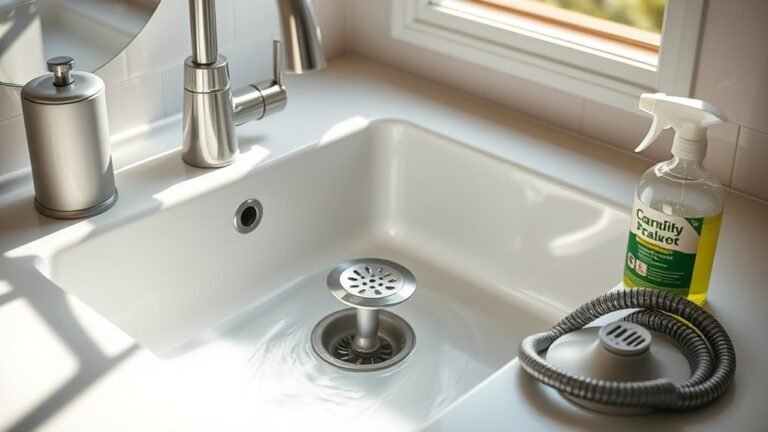
To keep your kitchen sink looking great, start with regular cleaning using mild soap and warm water. Avoid harsh chemicals that might damage the surface.
After each use, wipe the sink dry to prevent water spots and mineral buildup. For tough stains, try a gentle scrub brush or sprinkle baking soda.
Don’t forget to clean the drain and faucet aerators regularly. This helps prevent clogs and keeps the water flowing smoothly.
Can I Install a Kitchen Sink Myself Without Professional Help?
Yes, you can handle installing your kitchen sink yourself if you’re comfortable with basic plumbing and handyman skills.
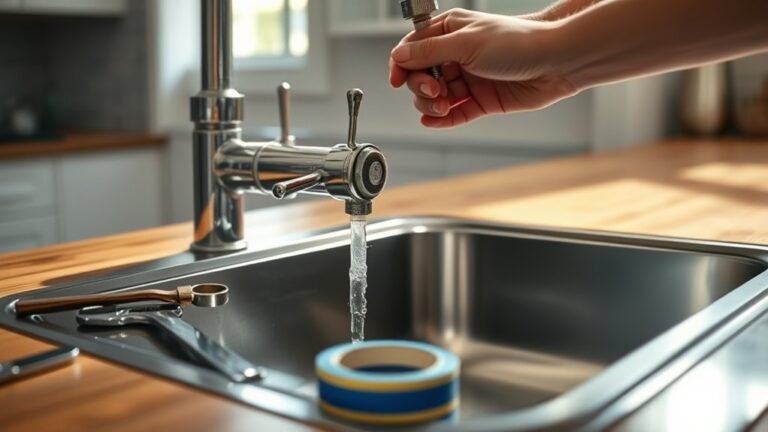
You’ll need essential tools like a wrench, plumber’s putty, a screwdriver, and possibly a pipe cutter. Just make sure to turn off the water supply before you start.
If you run into tricky plumbing or sealing issues, don’t hesitate to call a professional to avoid costly mistakes.
What Are the Best Kitchen Sinks for Hard Water Areas?
Did you know that hard water can leave mineral deposits that reduce your sink’s lifespan by up to 40%? For areas with hard water, it’s best to choose durable sinks like stainless steel or porcelain.
Stainless steel resists corrosion and is easy to clean. Porcelain sinks offer a smooth surface that resists stains. Both handle hard water well, but stainless steel is often more resilient against mineral buildup. It’s a smart choice for long-term durability.
How Do I Prevent Stains and Scratches on My Sink?
To prevent stains and scratches on your sink, choose materials like stainless steel or granite composite, which are resistant to stains.
Avoid using abrasive cleaners and opt for soft sponges to help prevent scratches. Regularly rinse and dry your sink to avoid water spots and mineral buildup.
Applying a protective coating designed for your sink material can also help keep it looking new. Follow these tips consistently, and your sink will stay fresh and damage-free for years.
Are There Eco-Friendly Kitchen Sink Options Available?
Yes, you can find eco-friendly kitchen sink options made from sustainable materials like recycled stainless steel, bamboo composite, or natural stone. These sinks often come with recycling options at the end of their life, helping reduce waste.
When you choose sinks crafted from responsibly sourced or recycled materials, you support sustainability and minimize environmental impact. Look for certifications or labels that highlight eco-conscious manufacturing to make a greener choice for your kitchen.
Conclusion
Choosing the right kitchen sink is more than just aesthetics. It directly affects your daily convenience and how smoothly your kitchen runs.
Did you know that 70% of homeowners regret their sink choice because of poor functionality or size? That’s a common mistake to avoid.
By carefully considering materials, size, bowls, and features, you can steer clear of these issues. Match your sink with the right fixtures for a cohesive look and easy maintenance.
Knowing when to call a pro for installation can save you time and ensure everything is set up correctly.
Your perfect kitchen sink makes work easier and more enjoyable, so take the time to choose wisely.