How to Season a Cast Iron Skillet for Long-Lasting Nonstick Performance
Seasoning a cast iron skillet involves coating it with a thin layer of oil and baking it to create a durable, nonstick surface. This process protects the skillet from rust and improves cooking performance. To season your skillet properly, clean it first, apply a high-smoke-point oil evenly, and bake it upside down in an oven at around 450°F for about an hour.
Proper seasoning is key because cast iron cookware is porous and reactive to moisture. Without seasoning, food sticks easily, and the skillet can quickly rust. Each layer of seasoning bonds with the cast iron, building a natural barrier that enhances flavor and extends the lifespan of your skillet.
This guide covers selecting the right oil, cleaning methods, seasoning techniques, and tips to maintain that seasoned surface. Whether you’re seasoning a brand-new skillet or restoring an older one, these steps will ensure your cast iron remains reliable for years.
Choosing the Right Oil for Cast Iron Seasoning

Oils with High Smoke Points
Selecting an oil with a high smoke point is essential to create a strong seasoning layer. Oils like flaxseed, grapeseed, vegetable, or canola oil withstand the heat during baking without breaking down too quickly.
Flaxseed oil is popular among enthusiasts for forming a hard, durable coating, although it is often more expensive and can require multiple layers. Vegetable oils offer a good balance of availability and effectiveness.
- Flaxseed oil – smoke point around 225°C (437°F)
- Grapeseed oil – smoke point around 420°F
- Vegetable oil – smoke point around 400°F
- Canola oil – smoke point around 400°F
Oils to Avoid for Seasoning
Oils with low smoke points or those that don’t polymerize well can result in sticky or uneven seasoning. Avoid olive oil or butter as they tend to burn at seasoning temperatures and leave a gummy residue.
Animal fats are less ideal for seasoning since they might go rancid over time, affecting the skillet’s smell and taste. Stick with neutral, plant-based oils that build a uniform protective layer.
Cleaning Your Cast Iron Skillet Before Seasoning
Removing Rust and Old Seasoning
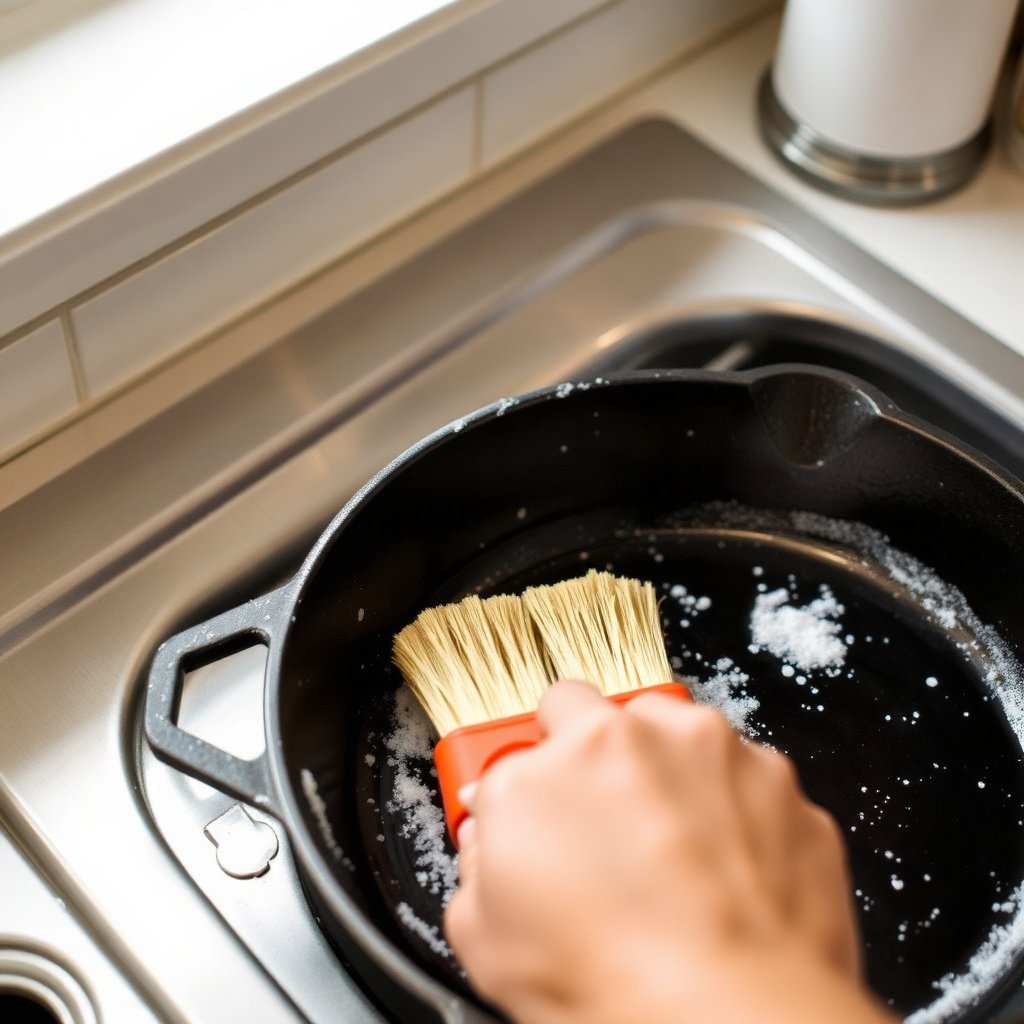
If your skillet shows rust or old, flaking seasoning, it’s important to strip it before re-seasoning. Use fine steel wool or a heavy-duty scrub pad with mild dish soap and warm water to scrub off debris.
For tougher rust spots, soak the skillet briefly in a 50-50 vinegar and water solution, but don’t leave it longer than an hour as vinegar can damage the iron. Rinse thoroughly and dry immediately after cleaning.
Proper Drying Techniques
After cleaning, cast iron must be completely dried to avoid flash rusting. The best method is warming the skillet on the stovetop over low heat or placing it in a warm oven for a few minutes.
You can also carefully wipe the skillet with a paper towel soaked in oil while warm to give it an initial layer of protection before seasoning.
Step-by-Step Guide to Seasoning Your Cast Iron Skillet

Applying Oil Evenly
Apply a thin, even coat of your chosen oil all over the skillet, including the handle and underside. Use a cloth or paper towel to spread the oil and then wipe off excess to avoid sticky buildup during baking.
The key is to have barely a sheen on the skillet surface, as thick layers do not cure properly and can flake off after cooling.
- Coat entire surface lightly
- Remove excess oil thoroughly
- Avoid pooling oil in crevices
For more on this, see our related guide: How to Season a Steak Perfectly: 8 Essential Steps for Rich Flavor.
Baking for Polymerization
Place the skillet upside down on the middle oven rack with foil or a baking tray on the lower rack to catch drips. Bake at about 450°F (230°C) for one hour to allow the oil to bond chemically with the iron, forming a hard seasoning layer.
After one hour, turn off the oven and let the skillet cool inside to avoid thermal shock and cracking. Repeat the process 2-3 times for stronger seasoning over time.
- Bake at 450°F for 1 hour
- Cool slowly inside oven
- Repeat 2-3 cycles for durability
Maintaining Seasoning Over Time

Regular Cleaning Without Stripping Seasoning
Avoid harsh soaps or abrasive scrubbing after seasoning. Instead, rinse with hot water and scrub lightly with a soft brush or sponge. For stuck-on bits, boil water in the skillet and gently scrape residue.
Dry promptly and apply a light coat of oil before storing to keep the surface protected from oxidation.
- Use mild cleaning methods
- Avoid soap unless necessary
- Re-oil after each use
Re-seasoning Tips
Over time, seasoning can wear through, especially if acidic foods were cooked or cleaning wasn’t ideal. If food starts sticking, repeat the seasoning process or spot-season by applying oil and heating on the stovetop.
Regular maintenance and occasional full seasoning cycles will keep your skillet performing well and rust-free.
Common Seasoning Mistakes and How to Avoid Them

Over-Oiling and Sticky Surfaces
One common mistake is leaving too much oil on the skillet before baking. This can create a sticky or gummy coating that peels easily. Always wipe off excess oil thoroughly.
Applying thin layers builds a smooth, durable surface, while thick layers trap oil that never fully hardens.
- Wipe excess oil completely
- Apply thin coats only
For more on this, see our related guide: How to Cook a Steak in a Cast Iron Skillet: Step-by-Step Guide That Works.
Incorrect Oven Temperatures
Using a low temperature may not cure the seasoning properly, while excessively high heat risks burning the oil. Aim for about 450°F to polymerize the oil without degradation.
An inconsistent temperature can also create patchy seasoning. Preheat the oven fully before placing the skillet inside.
- Bake at consistent 450°F
- Avoid too low or excessive high heat
Using Your Skillet After Seasoning

Initial Cooking Recommendations
After seasoning, cook fatty or oily foods first to enhance the nonstick surface with continued seasoning buildup. Avoid acidic foods like tomatoes until multiple seasoning layers are established.
This gradual use helps bond seasoning layers and prevents stripping from harsh ingredients or prolonged soaking.
For scientific details and historical context, you can explore this article on seasoning cast iron skillets. seasoning cast iron skillets.
Safe Storage Practices
Store your skillet in a dry place to avoid rust formation. You can place a paper towel between the skillet and any lid or cookware stacked on top to absorb moisture and protect the seasoning.
Avoid covering the skillet tightly if it’s still warm as condensation can cause rust spots.
Cast Iron Skillet Seasoning Oils Comparison
This table compares popular oils used for seasoning based on smoke point, polymerization quality, cost, and flavor impact.
| Oil Type | Smoke Point (°F) | Polymerization Quality | Cost | Flavor Impact |
|---|---|---|---|---|
| Flaxseed Oil | 225°C (437°F) | Excellent – forms hard coating | Higher | Neutral but slightly nutty |
| Grapeseed Oil | 420°F | Good – durable surface | Moderate | Neutral |
| Vegetable Oil | 400°F | Fair – good general use | Low | Neutral |
| Canola Oil | 400°F | Fair – adequate seasoning | Low | Neutral |
| Olive Oil | 375°F | Poor – sticky residue likely | Moderate | Distinct olive flavor |
Frequently Asked Questions
How often should I season my cast iron skillet?
You can season your cast iron skillet every few months or whenever food begins to stick. Frequent light oiling after cooking helps maintain seasoning and delays the need for full re-seasoning.
Can I use soap to clean my cast iron skillet after seasoning?
Mild soap occasionally is fine, but avoid heavy use as it can break down the seasoning layer. Hot water and scrubbing with a brush are usually sufficient for cleaning.
Is it necessary to season a brand-new cast iron skillet?
Many new cast iron skillets come pre-seasoned, but applying additional layers based on this guide will enhance their nonstick properties and longevity.
What happens if I don’t season my cast iron skillet?
Without seasoning, your skillet will rust quickly and food will stick badly, making cooking and cleaning difficult. Seasoning creates a protective barrier against moisture and improves cooking performance.
Can I season a cast iron skillet on the stovetop instead of the oven?
While stovetop seasoning can add a thin layer, oven seasoning at high heat distributes the oil evenly and polymerizes it more fully, resulting in a stronger, more durable coating.
Key Takeaways
- Use high-smoke-point oils like flaxseed or grapeseed for best seasoning results.
- Apply thin layers of oil and bake at around 450°F to build durable seasoning.
- Clean and dry your skillet thoroughly before seasoning to avoid rust.
- Maintain seasoning with gentle cleaning and periodic oiling.
Conclusion
Deciding how to season a cast iron skillet involves understanding the science behind seasoning and the practical steps needed to form a strong, nonstick surface. It requires choosing the right oil, preparing the skillet properly, and following precise heating methods. Balancing oil type and oven temperature determines how well the oil bonds chemically with the iron, directly affecting skillet performance and longevity.
For everyday use, vegetable or grapeseed oil offers a cost-effective, reliable seasoning method, while flaxseed oil suits those wanting a very hard finish and who don’t mind applying multiple coats. New skillets benefit from multiple seasoning cycles, whereas restoring older, rusted ones needs cleaning and re-seasoning before regular maintenance. Maintaining your skillet with gentle cleaning and occasional oil applications preserves the seasoned surface for years of quality cooking.
Start your seasoning by thoroughly cleaning and drying your cast iron skillet, then apply a thin, even layer of your chosen high-smoke-point oil. Bake at 450°F for an hour and cool slowly. Repeat this process several times for a solid base. With proper care and seasoning, your cast iron skillet will become a versatile, durable kitchen staple that improves with age.