
How Much Is a New Kitchen? The Complete Answer
Thinking about updating your kitchen but feeling overwhelmed by the costs? You’re not alone—many people struggle with figuring out how much a new kitchen will actually set them back.
It’s a big investment, and it’s normal to have questions about what to expect.
You’ll typically spend between $10,000 and $50,000 on a new kitchen, with costs rising based on your kitchen’s size, materials, and labor complexity.
Small kitchens cost less, while larger ones require more materials and work.
Choosing durable or luxury materials can boost costs but also improve value.
Labor and hidden expenses like permits or repairs can add up quickly.
Planning carefully and knowing when to hire pros helps keep your budget on track.
Investigate how to optimize your renovation costs effectively.
Key Takeaways
- Kitchen renovation costs usually range from $10,000 to $50,000, depending on the size and the quality of materials you choose.
- Small kitchens can cost between $5,000 and $15,000, medium-sized ones typically run $15,000 to $30,000, and large kitchens usually go over $30,000.
- Labor costs vary depending on how complex the project is and where you live, and there might be hidden expenses like permits and repairs.
- Picking durable, budget-friendly materials and doing some DIY work can really help cut down the overall costs.
- Creating a detailed budget that includes a contingency fund and getting multiple quotes from professionals can help you avoid surprises and stay on track financially.
How Much Does a Kitchen Renovation Typically Cost?
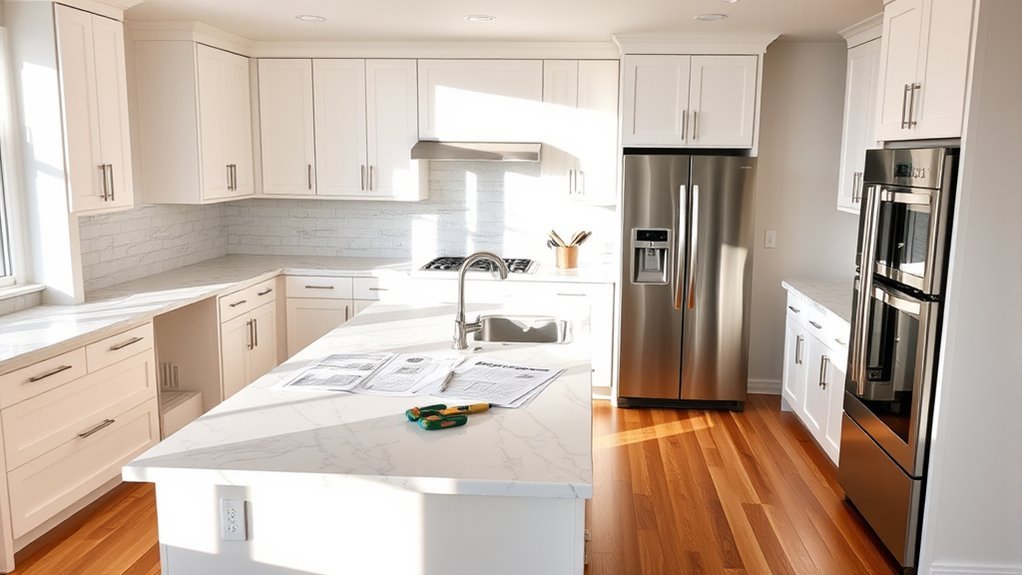
Although the cost of a kitchen renovation varies widely, you can typically expect to spend between $10,000 and $50,000 depending on the size of your kitchen and the quality of materials you choose. When planning, focus on your kitchen layout and style preferences to guarantee your renovation meets both practical and aesthetic goals.
Trendy designs can boost resale value but may increase costs. Keep budget considerations front and center by exploring DIY options for smaller tasks, which can save money. If upfront funds are tight, look into financing plans that suit your situation.
Renovation timelines vary, so set realistic expectations to avoid stress. Selecting the right contractor is essential; choose one experienced and trustworthy to keep your project on track. Also, consider eco-friendly materials—they’re sustainable and increasingly popular.
Balancing these factors helps you create a kitchen that fits your needs and budget without surprises.
How Kitchen Size Affects Renovation Costs
Your kitchen’s size greatly influences how much your renovation will cost. Larger kitchens typically need more materials, labor, and appliances, which boosts the overall expense.
Smaller kitchens can save you money, but they might require clever space optimization to make the layout work well. Sometimes, custom solutions to maximize space can add to the costs.
Here’s a quick look at how size impacts renovation costs:
| Kitchen Size | Estimated Cost Range | Impact on Kitchen Layout |
|---|---|---|
| Small (under 100 sq ft) | $5,000 – $15,000 | Needs smart space optimization |
| Medium (100-200 sq ft) | $15,000 – $30,000 | Balances space and flexibility |
| Large (200+ sq ft) | $30,000+ | Allows for an expansive layout, higher costs |
Knowing your kitchen size helps you plan your budget and design more effectively.
How Material Choices Impact Kitchen Renovation Prices
Choosing the right materials can greatly affect how much your kitchen renovation costs. When you pick durable materials, you reduce long-term maintenance costs, saving money over time. High-quality options often improve your kitchen’s resale value, making them a smart investment.
You’ll want to balance material durability with your budget flexibility. Luxury materials can boost aesthetic appeal but may strain your budget. Don’t overlook eco-friendly options, which can be cost-effective and align with trends emphasizing sustainability.
Your choices in color schemes and finishes also influence prices. Trendy, custom colors might cost more but can enhance visual appeal. Ultimately, selecting materials that fit your style and budget guarantees a kitchen you love without overspending.
What Labor Costs to Expect in Your Kitchen Remodel
When you’re planning a kitchen remodel, it’s helpful to get a sense of what labor costs might look like. This includes everything from installing cabinets to doing electrical work. Just remember, things like how complex the project is and where you live can really impact those costs.
Knowing what to expect upfront can make it easier to budget and help you avoid any surprises down the line. It’s all about being prepared so you can enjoy your new kitchen without stressing about unexpected expenses.
Typical Labor Cost Breakdown
Although labor costs can vary a lot depending on where you are and how complex your project is, understanding the typical breakdown can help you plan your budget better. When looking at labor estimates, think about the different skill levels needed—each one can impact the price.
Keep an eye on labor market trends so you’re prepared for any changes in costs. Using tips like comparing bids and clarifying what’s included can help you negotiate a fair price with your contractors.
Here’s a typical labor cost breakdown for a kitchen remodel:
- Demolition and site prep: Skilled workers remove old fixtures and get the space ready.
- Installing cabinets and countertops: This needs experienced carpenters and installers.
- Plumbing and electrical work: Certified pros handle these critical tasks.
Knowing this info helps you set a realistic budget and negotiate confidently with contractors.
Factors Influencing Labor Prices
Several key factors influence labor prices in your kitchen remodel, and understanding them can help you anticipate costs more accurately.
First, the labor market in your area plays a big role. Regional differences affect hourly rates because of varying living costs and union regulations.
The complexity of your project also matters. More intricate designs need higher skill levels and experienced workers, which can increase costs.
Economic factors and demand fluctuations impact pricing too. During busy seasons, subcontractor rates often go up due to seasonal trends.
Your contractor’s experience level influences efficiency and pricing as well.
Keep in mind, union regulations may set minimum wages or benefits that affect labor costs.
Hidden Expenses That Can Raise Kitchen Renovation Costs
When you’re ripping down walls or updating the plumbing, surprise structural issues can show up and bump up your costs. It’s like, one minute you’re planning, and the next, you’re dealing with unexpected repairs. You also can’t forget about permits and inspection fees—they’re easy to overlook but can really add up. These hidden expenses tend to sneak in and can quickly inflate your kitchen renovation budget if you’re not ready for them.
Unexpected Structural Repairs
If your kitchen renovation uncovers hidden damage like rotting beams or outdated wiring, you’ll face unexpected structural repairs that can quickly inflate your budget. These issues threaten your home’s structural integrity and need immediate attention before you move forward with cosmetic updates. Ignoring them isn’t an option because they can compromise safety and lead to more expensive fixes later on.
Common unexpected repairs include replacing damaged floor joists that weaken support, repairing or upgrading electrical wiring to meet current codes, and fixing water-damaged subfloors caused by leaks.
Tackling these problems ensures your kitchen isn’t just beautiful but also safe and durable. Planning for potential structural repairs helps you avoid surprises and keep your renovation on track financially.
Permits And Inspection Fees
Although permits and inspection fees often fly under the radar, they can significantly increase your kitchen renovation costs. Depending on where you live and the scope of your project, you might need several types of permits, like electrical, plumbing, or building permits.
Each permit has its own cost, and not getting them could lead to fines or having to redo work. Plus, inspections make sure your renovation meets local codes and safety standards. Scheduling these inspections might add extra fees and cause delays if any issues pop up.
To avoid surprises, it’s a good idea to check with your local building department early on. Understanding what permits and inspections you need will help you plan your budget better. Factoring these expenses in upfront keeps your kitchen renovation on track and prevents unexpected costs.
Budgeting Appliances and Fixtures for Your Kitchen Remodel
Selecting the right appliances and fixtures can really make or break your kitchen remodel budget. When planning, focus on both appliance choices and fixture quality to find a good balance between cost and durability.
High-end appliances often come with advanced features but can quickly add up in price. On the other hand, mid-range models can still offer reliability without overspending.
Fixture quality also matters. Choosing durable faucets and lighting ensures longevity and helps you avoid future replacement costs.
Visualize your kitchen with these essentials: a sleek stainless steel refrigerator that complements your design, a durable, modern faucet with water-saving features, and an energy-efficient range and oven that fit your cooking style.
How to Save Money on Your Kitchen Renovation Without Sacrificing Quality
While upgrading your kitchen, you don’t have to spend a fortune to get a high-quality result. Focus on budget-friendly materials like laminate countertops or engineered wood that look great without the hefty price tag.
Try DIY projects—painting cabinets or installing smart storage solutions yourself can save a lot. Choose cost-effective appliances that are energy-efficient without sacrificing performance.
DIY cabinet painting and smart storage upgrades save money; opt for energy-efficient, budget-friendly appliances without compromising quality.
Prioritize quality over quantity by selecting a few standout pieces instead of overcrowding your space. Efficient space planning and minimalist design not only improve functionality but also reduce unnecessary expenses.
Look for upcycled furnishings or thrift store finds to add character without breaking the bank. Keep an eye on seasonal sales to snag deals on materials and appliances.
When Should You Hire a Designer or Contractor?
How do you know when it’s time to bring in a designer or contractor for your kitchen renovation? If your project feels overwhelming or you want the best outcome, professional help is key. A designer offers benefits like expert space planning, style advice, and access to unique materials you might not find on your own. Meanwhile, contractors handle the hands-on work, making sure everything is built safely, on time, and up to code.
Consider hiring a designer or contractor when you:
- Struggle to visualize the layout or pick materials that match your style and budget
- Need specialized skills for plumbing, electrical, or structural changes
- Want to avoid costly mistakes and delays during construction
Recognizing these moments helps you decide when their expertise is worth the investment, making your kitchen remodel smoother and more successful.
How to Plan Your Kitchen Renovation Budget Step-by-Step
Wondering where to start with your kitchen renovation budget? First, define your priorities by deciding on the kitchen layout that best fits your space and lifestyle. Whether you want an open concept or a galley style, your choice will affect costs significantly.
Next, look at design styles that match your taste—modern, rustic, or transitional—since materials and finishes can vary a lot in price. Research and make a list of essential elements like cabinets, countertops, appliances, and lighting.
Create a detailed budget spreadsheet and allocate funds to each category based on your research. Don’t forget to include labor costs and a contingency fund for unexpected expenses.
Get multiple quotes from contractors or designers to compare prices and services. Finally, keep track of your spending throughout the project so you stay within your budget.
Tips for Avoiding Budget Surprises in Your Kitchen Remodel
When you’re planning your kitchen remodel, it’s a good idea to put together a detailed budget that includes every little thing you think you’ll need. This way, you won’t be caught off guard by hidden costs popping up along the way.
And don’t forget to set aside some extra funds—kind of like a safety net—for those surprise expenses that tend to come out of nowhere during renovations. Being prepared with both a solid budget and a contingency fund will help you avoid any unpleasant surprises and keep your project on track financially.
Detailed Budget Planning
Planning your kitchen remodel budget down to the last detail can save you from costly surprises later. Start by using budgeting tools to track every expense and adjust as needed.
Align your budget with realistic renovation timelines to avoid rushed decisions or hidden costs. Break down your budget into clear categories so nothing slips through the cracks.
Visualize your plan with a detailed spreadsheet showing materials, labor, and permits. Use a calendar to mark key renovation milestones.
Create a checklist of appliance and fixture costs to keep everything organized and on track.
Contingency Fund Importance
Although meticulous budgeting helps, unexpected expenses can still pop up during a kitchen remodel. That’s why contingency planning is so important—you need a financial cushion for surprises like hidden water damage or last-minute design changes.
Setting aside about 10-15% of your total budget as a contingency fund gives you flexibility. This way, you won’t feel stressed or pressured to cut corners if something unexpected happens.
Having a buffer allows you to handle unforeseen issues quickly without delaying your project or sacrificing quality. Without a contingency plan, you risk running out of funds, which can cause delays or incomplete work.
Keep your contingency fund separate from your main budget and only use it when necessary. This approach keeps your remodel on track and helps you avoid budget surprises.
Frequently Asked Questions
How Long Does a Typical Kitchen Renovation Take?
A typical kitchen renovation usually takes about 6 to 12 weeks. It’s important to consider your budget early on so you don’t run into surprises that could delay the project.
Choosing the right contractor is key since a skilled one helps keep things on schedule and within your budget. Take your time to find someone reliable—don’t rush this step.
What Are the Latest Kitchen Design Trends?
You’ll be interested to know 67% of homeowners prefer kitchens with minimalist aesthetics. The latest trends include smart appliances that make cooking a breeze, sustainable materials that help the planet, and open shelving to showcase your favorite items.
Bold colors add personality, while multifunctional islands provide extra workspace and storage. Incorporating these elements guarantees your kitchen stays stylish, practical, and future-ready.
How Do I Choose the Right Kitchen Layout?
You choose the right kitchen layout by focusing on your workflow and maximizing storage options. Start by mapping out your cooking, cleaning, and prepping zones to create a smooth flow.
Think about layouts like L-shape or U-shape, which make moving around easier. Then, look at your storage needs—pick cabinets, drawers, and pantry spots that fit your space and habits.
Prioritize functionality so your kitchen is both efficient and enjoyable to use.
What Permits Are Needed for a Kitchen Remodel?
You’ll need to check your local permit requirements before starting your kitchen remodel. Typically, permits cover electrical, plumbing, and structural changes, especially when moving walls or appliances.
If you’re only doing cosmetic updates, permits might not be necessary. Always contact your city’s building department to confirm what’s required.
Getting the right permits guarantees your remodel is safe, legal, and up to code, helping you avoid costly fines later.
How Can I Increase My Home’s Value With a Kitchen Upgrade?
You can boost your home’s value much like a chef spices a dish by adding kitchen islands and upgrading countertop materials. Installing a stylish kitchen island creates extra workspace and storage, making your kitchen more functional and appealing.
Choosing durable, attractive countertop materials like quartz or granite not only enhances the look but also signals quality to buyers. These upgrades make your kitchen a standout feature that adds real value to your home.
Conclusion
Renovating your kitchen doesn’t have to drain your wallet like a leaky faucet. By understanding costs—from size and materials to labor and hidden fees—you’ll keep your budget afloat.
Plan carefully, consider hiring pros when needed, and don’t cut corners on quality. With smart choices and a clear budget, your dream kitchen can become a reality without unpleasant surprises.
Remember, a well-planned kitchen remodel is the heart that keeps your home beating strong. Knowing how much a new kitchen costs helps you make informed decisions every step of the way.