What Size Is a Standard Stove? The Complete Answer
Finding the right stove for your kitchen can feel overwhelming. You’re not alone—many people struggle with choosing a size that fits their space and cooking needs. The right fit makes all the difference in your daily routine.
You’ll want a stove that fits your kitchen’s space and needs. A standard stove typically measures 30 inches wide, 25 to 27 inches deep, and about 36 inches tall. Smaller options around 20 to 24 inches suit compact kitchens, while larger 36-inch models offer more burners and oven space.
Proper sizing improves workflow, safety, and installation ease. If you want to understand how to choose and install the perfect stove, there’s more useful info ahead.
Key Takeaways
- A standard stove typically measures about 30 inches wide, 25 to 27 inches deep, and 36 inches high.
- Stoves range from compact 20-inch models to professional 48-inch ranges, depending on your kitchen size and cooking needs.
- It’s important to measure the stove area accurately to ensure it fits well and doesn’t block walkways or other appliances.
- Standard sizes match up with cabinet openings and safety clearances for proper ventilation and compatibility.
- The size of your stove affects your kitchen workflow, safety, and installation, so consider nearby counters and utility connections carefully.
Typical Dimensions of a Standard Stove
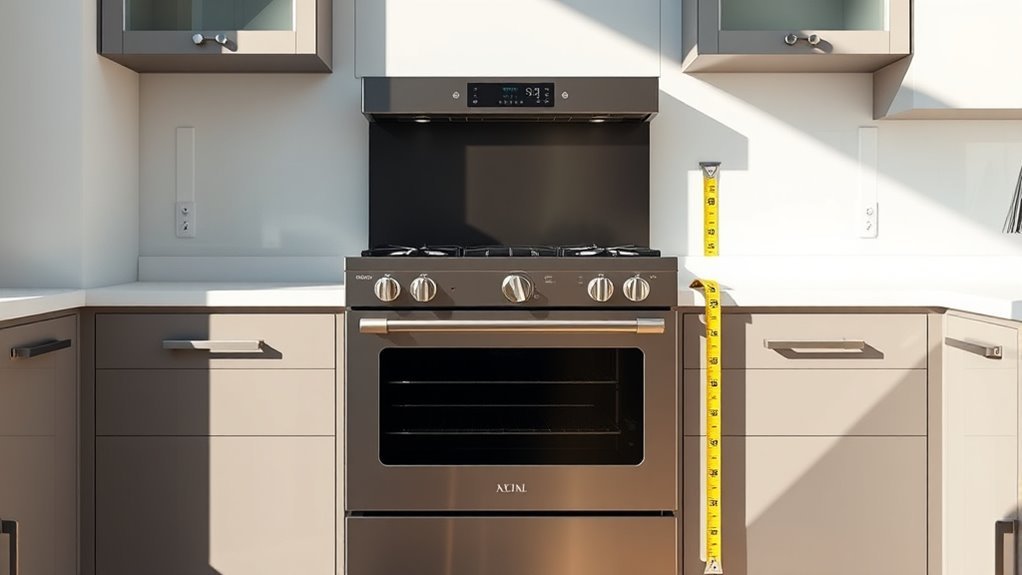
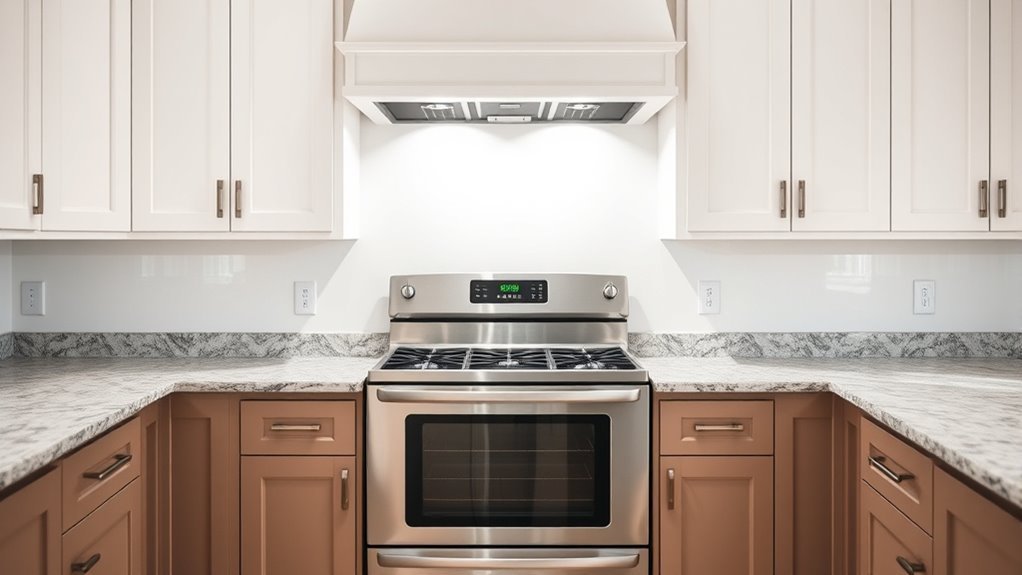
When choosing a stove, knowing its typical dimensions helps you plan your kitchen layout effectively. Most standard stoves measure about 30 inches wide, 25 to 27 inches deep, and 36 inches high. These dimensions fit well into most kitchens, but you’ll find variations depending on stove types like slide-in, freestanding, or drop-in models.
Compact stoves might be narrower, while professional-style ranges can be wider, often up to 48 inches. Understanding these sizes is essential because it impacts appliance efficiency and how well the stove integrates with your countertops and cabinetry.
Efficient stoves optimize cooking space and energy use without overwhelming your kitchen’s footprint. When considering stove types, think about how each dimension suits your cooking needs and kitchen design. Keeping these measurements in mind guarantees you pick a stove that fits perfectly, works efficiently, and complements your overall kitchen setup.
How to Measure Your Kitchen for a Stove
Before you go out and buy a stove, it’s a good idea to measure the space in your kitchen carefully. You want to make sure the stove will fit comfortably without feeling cramped.
Don’t forget to check the clearances around where you plan to place the stove. This is super important for proper ventilation and safety, so you don’t run into any issues later on.
Getting the measurements right from the start will make it much easier to find a stove that fits perfectly and keeps your kitchen looking nice and organized.
Measuring Kitchen Space
Although measuring your kitchen space might seem straightforward, getting accurate dimensions is crucial to ensure your new stove fits perfectly. Start by looking at your kitchen layout—note wall lengths, corners, and existing cabinets.
Measure the width, depth, and height of the area for the stove, keeping your tape measure level for accuracy. Think about where you’ll place the appliance and make sure there’s enough room for doors to open fully without blocking anything.
Don’t forget to consider nearby countertops, cabinets, and walkways, since these affect the size options for your stove. Sketch out your measurements and layout to see how everything fits within your kitchen design.
Checking Appliance Clearances
You’ll need to leave at least a few inches of clearance around your stove to ensure safety and proper ventilation. Start by reviewing appliance safety and clearance guidelines specific to your stove model.
Measure the space carefully to meet the minimum ventilation requirements. This helps prevent heat buildup and allows good airflow. When checking clearances, consider nearby cabinets, countertops, and walls to avoid overcrowding.
Use installation tips like leaving extra room for stove doors and controls. Proper clearance not only keeps things safe but also helps you make the most of your space, fitting the stove smoothly into your kitchen.
Following these steps will help you install your stove correctly, creating a safe, efficient, and functional cooking area.
How Industry Defines Standard Stove Sizes
When manufacturers set standard stove sizes, they focus on dimensions that fit most kitchen layouts and cabinetry. The industry defines these stove size standards to guarantee compatibility and ease of installation across homes. You’ll find that industry guidelines consider several key factors:
- Overall width, height, and depth to match standard cabinet openings.
- Clearance space requirements for safe operation and ventilation.
- Compatibility with existing kitchen countertops and backsplashes.
- Uniform sizing to streamline manufacturing and consumer choice.
These standards help you pick a stove that fits seamlessly without costly modifications. By following industry guidelines, manufacturers and retailers guarantee you get a product that meets safety codes and fits your kitchen’s design. Understanding how these stove size standards are set will make it easier for you to choose the right model for your space.
Common Standard Stove Widths and Uses
Understanding how stove sizes are defined helps you get a sense of the most common widths you’ll come across and what they’re used for. The standard stove widths typically range from 20 to 36 inches, with 30 inches being the most popular.
This size strikes a good balance, offering enough cooking space without taking up too much room in your kitchen. A 20- or 24-inch stove is great for smaller kitchens or households, providing basic functions without sacrificing too much space.
If you cook for a family or like preparing multiple dishes at once, a 36-inch stove might be your best choice. It gives you extra burners and oven space to make cooking more efficient.
Knowing these common widths helps you pick the right stove for your kitchen. It ensures you don’t overcrowd your space or limit your meal prep capabilities.
Understanding Standard Stove Heights and Depths
Stove heights and depths usually range between 36 inches tall and 24 to 28 inches deep, fitting most kitchen counters and cabinetry. Knowing the right measurements helps you choose a stove that blends seamlessly into your kitchen layout.
Here’s what you need to know:
- Standard stove height is about 36 inches, matching the countertop height for comfortable cooking.
- Stove depth typically falls between 24 and 28 inches, so it doesn’t stick out too far into your kitchen space.
- Depth includes the stove’s front knobs and handles, so measure carefully to avoid surprises.
- Matching the stove height with your countertop height prevents awkward bending or reaching while you cook.
How Standard Stove Sizes Differ by Fuel Type
Two main fuel types, gas and electric, often influence the size and design of your cooking range. When comparing gas versus electric stoves, you’ll notice some size differences based on how each operates.
Gas stoves usually need ventilation and a gas line connection, which can slightly affect their depth and sometimes their width. Electric stoves are simpler to install, often allowing for sleeker designs with less depth.
Gas stoves require ventilation and gas lines, impacting size; electric stoves offer sleeker, more compact designs.
Standard widths are usually around 30 inches for both types, but electric models may come in more compact options. Gas stoves can be a bit deeper to fit burners and ventilation, while electric ranges tend to have a more streamlined surface.
Height stays consistent across fuel types to match standard countertops. Knowing these size differences helps you choose a stove that fits your kitchen layout and utility setup perfectly.
How Stove Size Affects Kitchen Workflow
When you pick the right stove size, your kitchen workflow becomes much smoother. Proper stove placement and size are key for efficient kitchen ergonomics, helping you move easily between tasks. A stove that’s too big or small can throw off your rhythm, leading to frustration and delays.
Here’s how stove size impacts your kitchen flow:
- Optimizes Movement: The right stove size keeps your cooking area compact, so you don’t waste steps.
- Enhances Safety: Proper placement reduces the need to reach over hot surfaces, lowering the risk of accidents.
- Improves Task Flow: A balanced stove size lets you multitask comfortably without crowding your space.
- Supports Appliance Coordination: It makes working smoothly with counters, sinks, and refrigerators much easier.
Choosing the Right Stove Size for Your Kitchen
First things first, grab a tape measure and carefully measure your kitchen space. You want to get a good idea of what stove sizes will actually fit without cramping your style.
Next, think about the different stove sizes out there and how each one might work for your cooking habits. Some folks prefer a larger stove with more burners, while others might be perfectly happy with a smaller, more compact option.
It’s all about finding that sweet spot—balancing what you need for cooking with what fits nicely in your kitchen. When you get it right, your kitchen stays both functional and enjoyable to use.
Measuring Your Kitchen Space
Although choosing a stove might seem straightforward, measuring your kitchen space accurately is key to ensuring a perfect fit. Before you start shopping, think about your kitchen layout and where your current appliances are placed. This helps avoid overcrowding or awkward gaps.
Follow these simple steps to measure effectively: First, measure the width, height, and depth of the stove area. Then, note any nearby cabinets, countertops, or walls that could influence the stove size.
Don’t forget to account for the clearance space needed for ventilation and heat safety. Finally, double-check all your measurements to make sure the stove won’t block walkways or interfere with other appliances.
Stove Size Options
Choosing the right stove size is all about balancing your cooking needs with your kitchen space. When looking at stove width options, common sizes include 20, 24, 30, and 36 inches. Smaller widths are perfect for compact kitchens, while larger stoves offer more burners and oven capacity for serious cooks.
Don’t forget about stove depth, which usually ranges from 24 to 28 inches. Depth impacts how far your stove sticks out into the kitchen, affecting walkways and how your counters line up.
Balancing Function And Fit
When you balance function and fit, your stove becomes both a practical tool and a seamless part of your kitchen. Choosing the right stove size involves thinking about ergonomic design and space optimization to make cooking easier.
Start by measuring your kitchen space carefully so you don’t overcrowd the area. Pick a stove that allows for easy movement and access to other parts of your kitchen.
Look for a model with controls and features that match your cooking habits and feel comfortable to use. Also, make sure there’s enough clearance around the stove for safety and good ventilation.
Compact and Oversized Stoves: What to Know
A stove’s size can really impact your kitchen’s functionality, especially if space is tight or you need more cooking capacity. Compact stoves fit well in small kitchens, freeing up counter space and often using less energy.
Stove size affects kitchen function—compact models save space and energy, ideal for smaller kitchens.
If you live alone or don’t cook large meals often, a compact stove is a great choice. It gives you efficiency without sacrificing the essential features you need.
Oversized stoves can be more challenging. They require more space, which might not work in smaller homes. They also tend to use more energy and can be hard to fit into standard cabinetry.
But if you cook for a big family or love to entertain, the extra burners and oven space can be a real advantage. When choosing, think about your kitchen size and cooking habits to find the right stove size for you.
Installing Stoves to Fit Standard Dimensions
Understanding standard stove dimensions makes installation much smoother and helps ensure your appliance fits perfectly into your kitchen layout. When installing your stove, keep these tips in mind to avoid common pitfalls and achieve a seamless fit.
Measure the space carefully, including width, depth, and height, to match your stove’s standard dimensions. This will help you avoid surprises during installation.
Don’t forget to account for ventilation and clearance requirements to meet safety standards. Proper spacing is key for safe and efficient operation.
Think about your kitchen layout, like how close the stove will be to countertops and cabinets. This makes sure it’s easy to access and use.
Finally, verify that your electrical and gas connections match your new stove’s specifications before you start installing.
Frequently Asked Questions
What Materials Are Commonly Used to Make Stove Surfaces?
You’ll find stove surface materials commonly include stainless steel, glass-ceramic, and enamel-coated steel. These materials offer excellent heat resistance, ensuring durability and safety during cooking.
Stainless steel is popular because it’s tough and easy to clean. Glass-ceramic provides a sleek look and handles heat well. Enamel-coated steel is affordable and has decent heat resistance, making it a practical choice for many stoves.
How Do Stove Safety Features Vary by Brand?
In terms of stove safety, you know “variety is the spice of life.” Different brands offer unique safety innovations, so comparing brands really matters.
Some might include automatic shut-off features, while others focus on child locks or flame failure devices.
You’ll find that higher-end brands often pack more advanced safety tech, helping keep your kitchen secure.
Exploring these options helps you pick a stove that fits your safety needs perfectly.
What Maintenance Is Required for a Standard Stove?
You’ll need regular stove cleaning to keep your appliance running smoothly and safely. Wipe spills promptly to prevent buildup, and deep clean the surface weekly.
For burner upkeep, remove and soak burner grates and caps in warm, soapy water, then scrub gently to avoid clogs. Check ignition ports for debris and clear them carefully.
Doing this maintenance helps your stove perform efficiently and extends its lifespan.
Are There Energy Efficiency Ratings for Standard Stoves?
You might think all stoves use the same energy, but energy efficiency ratings actually help you spot the most economical choice. Yes, there are stove ratings that measure how well a stove converts energy into heat.
Checking these ratings can save you money on utility bills and reduce your environmental impact. So, when shopping, don’t skip those energy efficiency labels. They’re your guide to a smarter, greener kitchen.
What Accessories Are Compatible With Standard Stove Models?
You’ll find plenty of stove accessories compatible with standard stove models, like griddle plates, wok rings, and stove-top kettles.
When choosing cookware, look for flat-bottomed pots and pans that fit well on burners for even heat. Cast iron, stainless steel, and non-stick pans usually work great.
You can also add oven-safe thermometer probes and stove burner covers to improve your cooking experience and keep your stove running efficiently.
Conclusion
Now that you understand the nuances of stove sizes, choosing the right fit becomes much easier. Standard stoves fit well in your space, making your kitchen setup seamless.
Measuring carefully is key to mastering your meal-making moments. Whether you prefer a compact stove or a larger one, understanding dimensions helps you decide.
Remember, the right range can transform your routines by reducing clutter and creating cozy cooking corners. A well-sized stove makes all the difference.
So, size up smartly and find seamless stove solutions that match your space and style perfectly. When it comes to stove size, making the right choice enhances your entire kitchen experience.