How Much to Reface Kitchen Cabinets? The Complete Answer
Thinking about giving your kitchen a fresh new look but feeling overwhelmed by the costs? You’re not alone. Many people struggle with figuring out how much a cabinet facelift might set them back.
You can expect to spend between $4,000 and $9,000 to reface kitchen cabinets in an average-sized kitchen, but costs vary based on materials like hardwood or veneer, kitchen size, and labor.
Smaller kitchens might run $3,000 to $7,000, while larger or custom designs push prices higher.
Labor and hardware add extra costs too, so plan accordingly.
If you want to save compared to a full remodel or figure out budgeting tips, there’s more useful info ahead.
Key Takeaways
- Refacing kitchen cabinets usually costs between $4,000 and $9,000, depending on your kitchen size and the materials you choose.
- Labor costs vary based on where you live and how complex the project is, and they often make up a big part of the total cost.
- The materials you pick for your cabinets range from budget-friendly MDF to expensive solid hardwoods, which can impact your overall expenses.
- Extra costs might include fixing cabinet frames and buying new hardware, adding about $3 to $15 per piece.
- Refacing is typically 50-70% cheaper than a full remodel and allows for a quicker, less messy kitchen update.
What Does Kitchen Cabinet Refacing Include, and How Much Does It Cost?
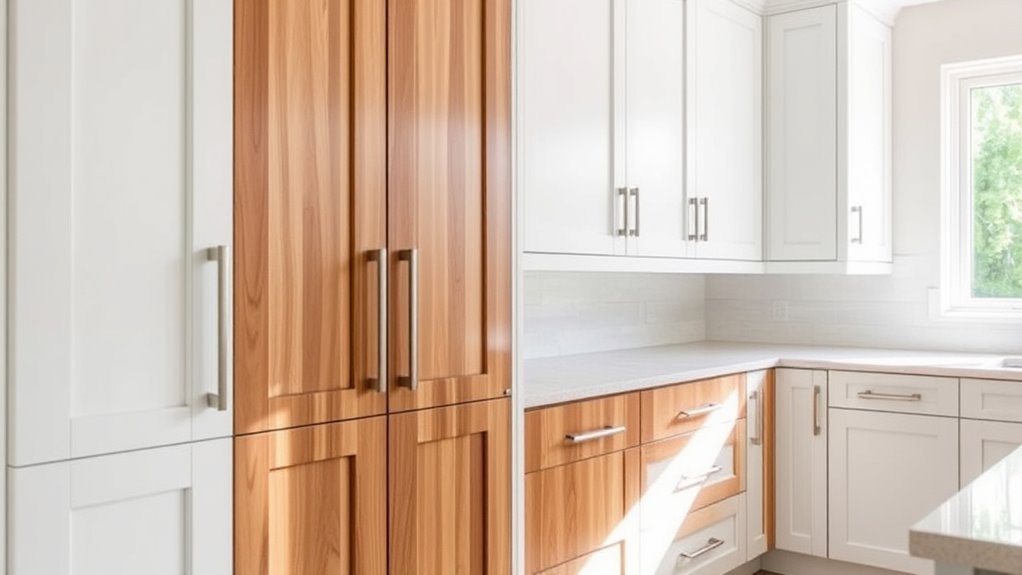
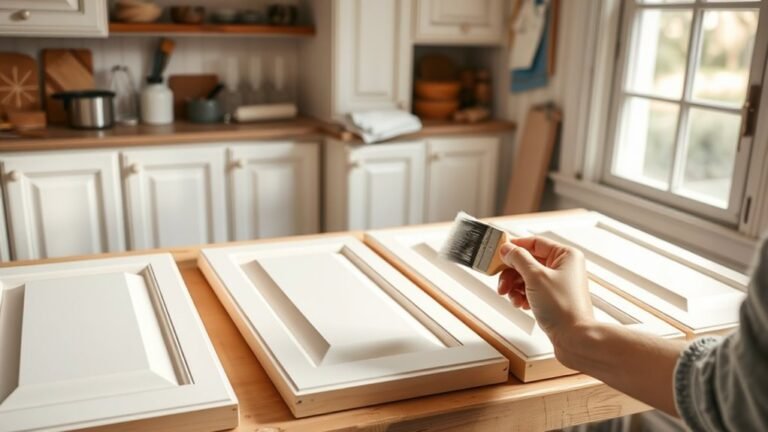
Kitchen cabinet refacing involves replacing your cabinet doors and drawer fronts while applying a new veneer to the existing cabinet boxes. This process updates your kitchen’s look without the expense or hassle of a full remodel.
Replace doors and drawer fronts, add new veneer, and refresh your kitchen without a full remodel.
When you reface, you can choose from a variety of styles—from sleek modern to classic farmhouse—that complement your home’s aesthetic. You’ll also pick cabinet finishes that suit your taste, whether it’s matte, glossy, or textured wood grain.
The cost typically ranges from $4,000 to $9,000 for an average-sized kitchen, depending on the number of cabinets and your choice of finishes. Since refacing uses your current cabinet framework, it saves time and reduces waste.
You’ll get a refreshed kitchen that looks brand new, fits your style, and costs less than a full replacement. It’s a smart and efficient way to upgrade your space.
How Cabinet Materials Affect Refacing Prices
Because the materials used in your cabinets vary widely, they play a big role in determining the overall cost of refacing. Different wood types and finish options directly affect pricing. For example, solid hardwoods like oak or maple cost more than MDF or plywood. Likewise, premium finish options such as custom stains or veneers increase expenses compared to standard paint or laminate.
Here’s a quick comparison:
| Cabinet Material | Impact on Refacing Price |
|---|---|
| Solid Hardwood | Higher due to durability and grain |
| Veneer | Moderate, offers a wood look |
| MDF (Medium-Density Fiberboard) | Lower cost, smooth finish |
| Plywood | Mid-range, sturdy and versatile |
When choosing cabinet materials, think about your budget and the look you want. Going with mid-range wood types and finishes can give you a good balance of quality and cost. High-end materials, on the other hand, will significantly increase your refacing expenses.
Typical Kitchen Cabinet Refacing Prices by Kitchen Size
When you’re thinking about refacing your kitchen cabinets, the size of your kitchen really makes a difference in the overall cost. Usually, smaller kitchens tend to be more budget-friendly because they need fewer materials and less time to complete.
On the other hand, bigger kitchens will naturally cost more to reface since they require more materials and a bit more elbow grease. It’s helpful to have an idea of what to expect based on your kitchen size so you can plan your budget accordingly and avoid surprises.
Small Kitchen Costs
Refacing a small kitchen usually costs between $3,000 and $7,000, depending on materials and labor. The layout and style of your small kitchen also influence the overall price. Compact spaces often mean fewer cabinets to refinish, but unique designs can add some complexity.
Here’s what impacts your small kitchen refacing costs:
- Material choice: Laminate is budget-friendly, while wood veneers tend to cost more.
- Labor intensity: Intricate styles with custom details can increase labor fees.
- Additional features: Upgrading hardware or cabinet interiors adds to the overall expense.
Large Kitchen Estimates
A large kitchen usually means more cabinets to update, which can raise the overall refacing cost. The layout and cabinet style you choose also matter because complex designs or custom styles need more work and materials.
When planning your budget, keep in mind that bigger kitchens tend to cost more but give you options to pick premium finishes or unique styles. This flexibility helps you create a look you love within your budget.
| Kitchen Size | Typical Refacing Cost |
|---|---|
| Large (300+ sq ft) | $5,000 – $10,000 |
| Open Layout | $6,000 – $11,000 |
| Custom Cabinet Styles | $7,000 – $12,000 |
Knowing these estimates makes it easier to balance your style preferences with your layout and budget for a successful refacing project.
How Labor Costs Impact Your Cabinet Refacing Budget
Since labor can make up a big part of your cabinet refacing budget, knowing how these costs are figured out helps you plan better. Labor rates differ based on where you live and the experience of the contractor, so getting accurate quotes is really important. Also, longer project timelines usually mean higher labor costs.
Labor costs vary by location and experience, so accurate quotes and project timelines are key for budgeting.
Here are three main factors that affect how much you’ll pay for labor:
- Complexity of the job. Custom designs or detailed work take more time, which increases labor hours.
- Number of cabinets. The more cabinets you want to reface, the longer the project will take and the higher the labor costs.
- Contractor efficiency. Skilled pros might charge more per hour but can often finish the work faster, which might save you money overall.
Should You Reface Kitchen Cabinets DIY or Hire a Pro?
Labor costs can add up quickly when hiring a professional to reface your kitchen cabinets, so you might wonder if doing it yourself is a better option. DIY benefits include saving money and gaining a sense of accomplishment by handling the project on your own schedule.
If you have basic carpentry skills and the right tools, refacing cabinets can be manageable and rewarding. However, keep in mind that professional expertise brings precision and efficiency that can prevent costly mistakes.
Pros know how to handle tricky measurements and finishes, guaranteeing a polished, long-lasting result. If you’re short on time or confidence, hiring a pro might save you stress and ensure quality.
Ultimately, weigh your comfort level with the work against potential savings. If you enjoy hands-on projects and have patience, DIY could be the way to go. Otherwise, investing in professional expertise guarantees your kitchen looks perfect without headaches.
What Extra Costs Should You Expect Beyond Doors and Drawers?
When you’re getting your kitchen cabinets refaced, it’s easy to focus just on the doors and drawers. But don’t forget to think about other costs that might pop up along the way. For example, you might need to do some repairs to your cabinet frames before applying the new veneer or finish. It’s one of those things that can sneak up on you if you’re not prepared.
And then there’s the hardware—handles, knobs, pulls—that usually don’t come included in the refacing kit. So, you’ll want to budget for those separately. Sometimes, choosing high-quality or decorative hardware can really make a difference in the overall look, but it can also bump up your costs.
All these extras can add up faster than you might expect. So, it’s a good idea to plan ahead and set aside a little extra budget just in case. That way, you won’t be caught off guard with unexpected expenses!
Cabinet Frame Repairs
Although cabinet doors and drawers often get the spotlight, the cabinet frames themselves can need repairs that add to your refacing costs. If the frame stability is compromised, it’s important to address it before refacing. You might face these common repair needs:
- Reinforcing joints. Loose or damaged joints reduce frame stability. Repair techniques like gluing and clamping restore strength.
- Replacing damaged panels. Water damage or cracks may mean swapping out sections of the frame, which adds labor and material costs.
- Fixing warps or bends. Warped frames may need reshaping or partial replacement to ensure doors and drawers fit properly.
Considering these repairs upfront helps avoid surprises and keeps your kitchen cabinet refacing on track and durable.
Hardware Replacement Costs
Replacing cabinet hardware can add a significant expense beyond just doors and drawers. When you’re refacing cabinets, you’ll want to include the cost of new knobs, pulls, and hinges.
Hardware styles vary widely—from sleek modern handles to classic vintage knobs—each affecting the overall price. Expect to pay between $3 and $15 per piece, depending on material and brand.
Choosing high-end or custom hardware can quickly increase your budget, while basic options save money but might lack durability or style. Don’t forget about installation costs if you’re hiring a pro.
Planning for hardware replacement helps ensure your refaced cabinets look complete and polished without surprises in your final bill.
How Does Cabinet Refacing Cost Compare to a Full Remodel?
How much you spend on cabinet refacing compared to a full remodel can vary quite a bit based on your kitchen’s size and the materials you choose. When you’re thinking about your budget, refacing is usually the more affordable way to go, letting you update your kitchen’s look without the high costs of a full remodel.
Here’s a quick comparison of costs:
A quick cost comparison reveals refacing is more affordable, while full remodels offer greater upgrades.
- Cabinet Refacing: You’ll typically pay about 50-70% less than a full remodel since you’re just replacing doors and veneers while keeping your existing cabinet boxes.
- Full Remodel: This involves removing cabinets, changing the layout, and possibly upgrading plumbing and electrical work. It’s more expensive but offers bigger benefits like layout changes and better functionality.
- Time and Disruption: Refacing is quicker and causes less disruption, which can also save you money on indirect costs.
In the end, if you’re after a fresh look on a budget, refacing is a smart choice. But if you want more extensive upgrades, a full remodel might be worth the investment.
How to Get Accurate Quotes for Kitchen Cabinet Refacing
Understanding the cost differences between cabinet refacing and a full remodel helps you see the value, but getting an accurate quote is key to planning your budget effectively. Start by listing all the details of your project, including cabinet size, material preferences, and any extra work like hardware replacement. When reaching out for quotes, give this info to contractors so you get precise estimates.
Next, focus on comparing quotes. Don’t just accept the first number you receive; gather at least three detailed quotes to spot differences in pricing and services. This helps you understand the market rate and find any hidden costs.
Finally, choose your contractor carefully. Check reviews, ask for references, and make sure they specialize in cabinet refacing. A trustworthy contractor will provide transparent pricing and clear timelines, keeping your project on track and within budget.
Financing and Budgeting Tips for Kitchen Cabinet Refacing
When planning to reface your kitchen cabinets, where you put your money can make all the difference between a smooth project and unexpected costs. Having smart budgeting strategies and understanding your financing options is key to staying on track.
Here are three tips to help you manage your kitchen cabinet refacing budget:
- Explore financing options: Check out low-interest personal loans, credit cards with special offers, or home improvement loans. Pick the one that works best for your financial situation.
- Set a realistic budget: Include costs for materials, labor, and surprise expenses. Adding a 10-15% buffer can help you handle unexpected costs without stress.
- Prioritize your expenses: Focus on the essential refacing elements first. If your budget allows, consider upgrades later. This way, you avoid overspending and stay focused on your main goals.
Tips to Maximize Value When Refacing Your Kitchen Cabinets
Refacing your kitchen cabinets can change the look of your space without costing a fortune, but to get the most value, you need to make smart choices. Start by comparing the costs and benefits of refacing versus options like full replacement or just painting.
Refacing often strikes a good balance between price and style upgrade. Use tips like keeping the existing cabinet boxes and only replacing doors and drawer fronts to save money. Choose durable, affordable materials that match your style without overspending.
Consider doing some prep work yourself, like removing old hardware, to cut labor costs. Timing also matters—scheduling your project during off-peak seasons can mean better contractor rates.
Finally, invest in quality hinges and hardware because they impact how long your cabinets last and how satisfied you’ll be with the result. By focusing on these tips, you’ll get great value, a fresh look for your kitchen, and keep your budget in check without sacrificing quality.
Frequently Asked Questions
How Long Does the Cabinet Refacing Process Typically Take?
The cabinet refacing process usually takes around 3 to 5 days, depending on your kitchen’s size and how complex the work is.
Things like materials and labor costs can also impact the timeline. If you decide to do it yourself, it might take longer but can save you some money.
Professional refacing is quicker but tends to be more expensive.
Planning ahead helps you balance time, costs, and effort so you get the best results for your kitchen update.
Can Cabinet Refacing Be Done on Damaged or Warped Cabinets?
Think of your cabinets as a book’s cover. If it’s torn or warped, refacing won’t fix the story inside. You can reface cabinets with minor damage, but severe warping or structural issues affect their condition.
This means your options are limited. You’ll need repairs or replacements first. While refacing can give your cabinets a fresh look, it can’t fully hide serious damage.
What Types of Finishes Are Available for Refaced Cabinets?
You’ve got plenty of finishing techniques to choose from when refacing cabinets, including wood veneer, laminate, and thermofoil. Each offers different textures and levels of durability.
For color options, you can go classic with natural wood stains or pick vibrant paints to brighten your kitchen. Some finishes even allow for custom colors, so you can match your style perfectly.
You’ll find the right combo to refresh your cabinets and transform your space effortlessly.
Will Refacing Increase the Resale Value of My Home?
Imagine potential buyers walking into your kitchen, their eyes lighting up at the fresh, modern cabinets. Yes, refacing can boost your home’s resale value by enhancing the kitchen’s look without the cost of a full remodel.
It gives your kitchen a polished, updated appearance that appeals to buyers, making your home more attractive on the market. You’re likely to see a stronger return on investment while enjoying a stylish kitchen yourself.
Are There Any Eco-Friendly Materials Used in Cabinet Refacing?
Yes, you can choose sustainable options when refacing your cabinets. Many companies now offer eco-friendly adhesives and finishes that reduce harmful emissions and use renewable resources.
Materials like bamboo, reclaimed wood, or recycled laminate are great eco-friendly choices. By opting for these, you not only create a stylish kitchen but also minimize your environmental impact.
Conclusion
Refacing your kitchen cabinets isn’t just a quick fix. It’s like giving your entire kitchen a jaw-dropping makeover without breaking the bank! You’ll save a fortune compared to a full remodel.
With the right materials and pros, your kitchen will look brand new overnight. Don’t settle for outdated cabinets when you can transform your space effortlessly.
Jump in, get those quotes, and watch your kitchen go from drab to fab faster than you ever imagined. Reface your kitchen cabinets and enjoy a stunning upgrade without the hefty price tag!