How to Make Ravioli: A Step-by-Step Guide to Homemade Pasta
Making ravioli at home is a rewarding process that starts with preparing fresh pasta dough and combining it with your chosen filling. Once you learn the basic steps, you can customize the shape, size, and filling to suit your taste. Homemade ravioli offers better flavor and texture compared to store-bought versions.
Fresh ravioli matter because they offer tender pasta and rich, flavorful fillings that factory-produced ones often lack. The connection between the dough’s elasticity and the filling’s moisture content is key, and when made properly, the ravioli will cook evenly without falling apart during boiling.
This article will guide you through each stage of ravioli making: preparing traditional pasta dough, selecting and making fillings including the best filling for ravioli, shaping and sealing, cooking methods, and tips for storage and serving. You’ll come away confident to produce restaurant-quality ravioli at home.
Preparing the Pasta Dough for Homemade Ravioli

Choosing Ingredients and Measuring Precisely
The essential ingredients for basic ravioli dough are flour and eggs. High-protein flour such as Tipo 00 or bread flour works best for elasticity and structure. Typically, the ratio is about 100 grams of flour per large egg. Salt and a little olive oil may be added for flavor and flexibility.
Accurate measuring helps produce consistent dough texture. Weighing ingredients on a kitchen scale ensures the right hydration without it becoming sticky or dry. The dough should be firm yet workable after kneading, ready to roll thin without tearing.
- Tipo 00 or bread flour
- Large eggs
- Optional: salt and olive oil
Mixing and Kneading the Dough
Start by making a well in the flour mound, cracking eggs into the center, then gradually incorporate flour with a fork. Once combined, knead the dough on a floured surface for 8-10 minutes until smooth and elastic.
The kneading stage develops gluten strands critical to pasta’s texture. Rest the dough wrapped in plastic for at least 30 minutes to relax the gluten, which makes rolling easier and prevents shrinkage during cooking.
Selecting and Preparing the Best Filling for Ravioli

Classic Ricotta and Spinach Filling
A popular and flavorful ravioli filling combines ricotta cheese with sautéed spinach, Parmesan, and seasoning. The ricotta provides smooth creaminess, while spinach adds earthiness and texture.
Pre-cook and thoroughly drain spinach to avoid watery dough. Mix the ricotta with spinach, freshly grated Parmesan, salt, pepper, and a pinch of nutmeg for balance. The filling should be firm enough to hold shape but not dry.
- Ricotta cheese
- Fresh spinach
- Grated Parmesan
- Salt, pepper, nutmeg
For more on this, see our related guide: How to Make Homemade Pasta: A Complete Guide for Beginners.
Meat and Mushroom Filling Variations
For a richer taste, combine sautéed mushrooms with ground meat such as beef or pork. Cook mushrooms until soft to release moisture and brown the meat with garlic and aromatics.
Cool the cooked ingredients before mixing with breadcrumbs or egg yolk to bind the filling. Season with fresh herbs like thyme or parsley to enhance complexity. This filling pairs well with brown butter sauce.
- Ground beef or pork
- Sautéed mushrooms
- Breadcrumbs or egg yolk
- Fresh herbs
Shaping and Sealing Ravioli Dough
Rolling the Dough Thinly and Evenly
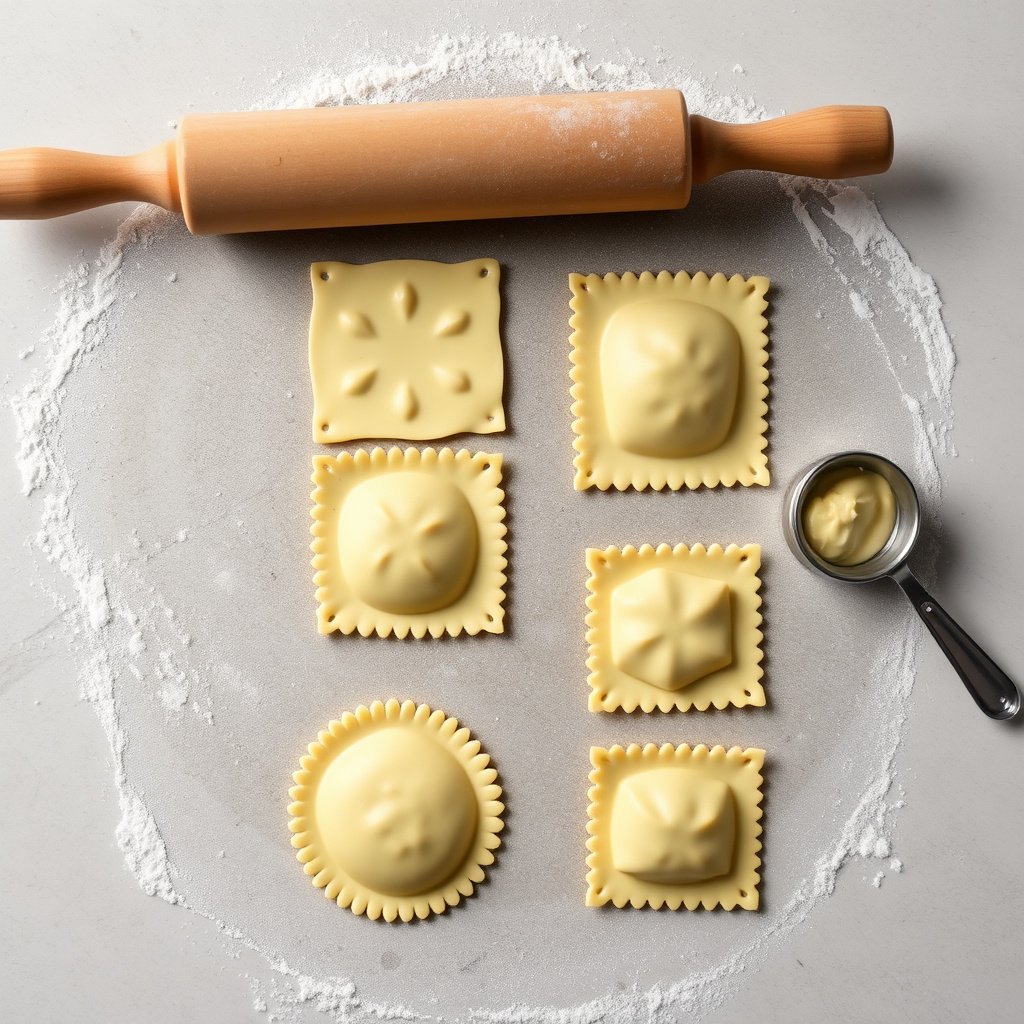
After resting, divide dough into portions and roll or press thinly, aiming about 1-2 mm thickness. Uniform thinness ensures even cooking and delicate texture without toughness.
Use a pasta machine or rolling pin, dusting with flour to prevent sticking. Roll from center outward in multiple passes, gradually thinning the sheet while avoiding tears or holes.
Filling and Sealing Techniques
Place small mounds of filling spaced evenly on the dough sheet. Brush surrounding dough with water or egg wash to help seal. Cover with a second dough sheet and gently press around filling to remove air pockets.
Cut into squares or shapes with a ravioli cutter or knife, pressing edges firmly with fingers or a fork to crimp. Proper sealing prevents filling leakage during cooking.
- Brush edges with water or egg wash
- Remove air pockets
- Press edges tightly
Cooking and Serving Homemade Ravioli
Boiling Fresh Ravioli Safely
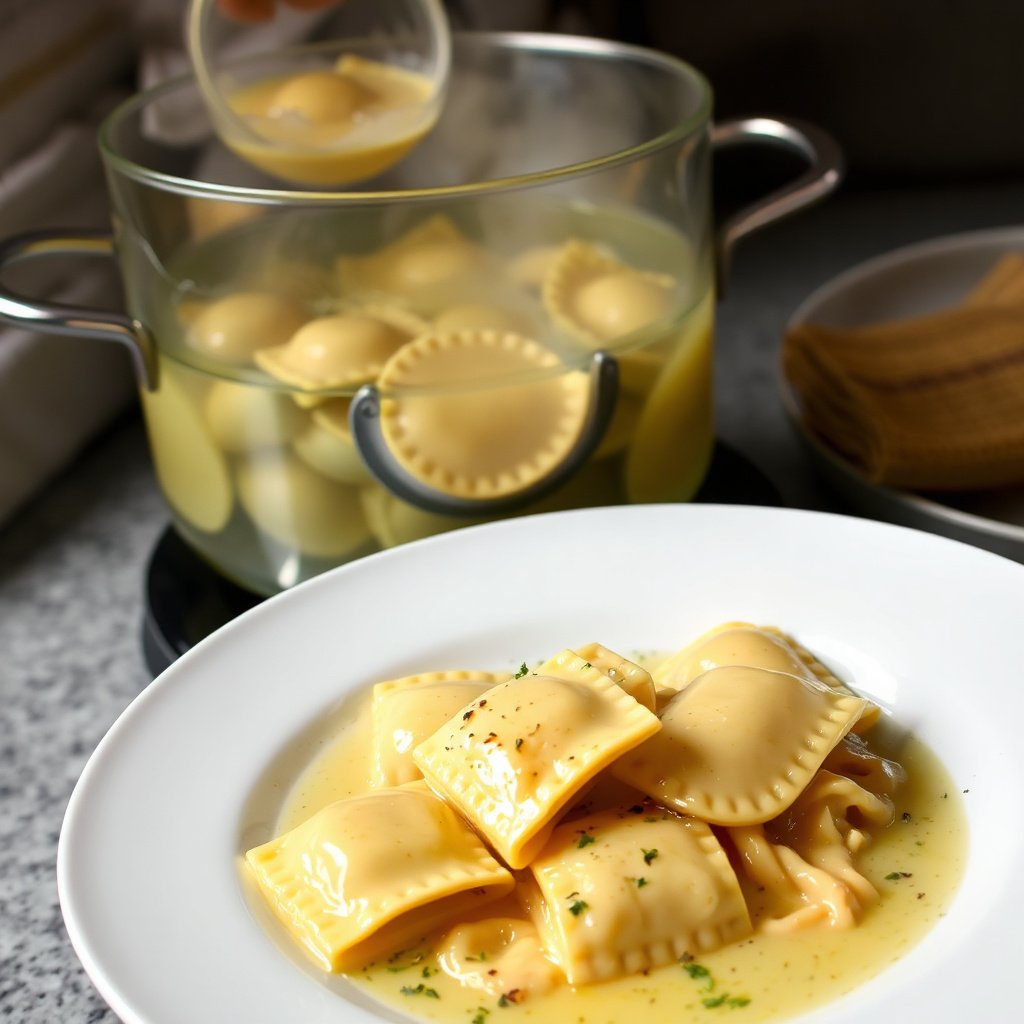
Bring a large pot of salted water to a gentle boil and cook ravioli in batches to avoid overcrowding. Fresh ravioli cook quickly, usually 2-4 minutes, and float when done.
Use a slotted spoon to remove ravioli carefully to prevent tearing. Avoid overcooking which causes the pasta to become mushy or fall apart.
- Salt the boiling water
- Cook in small batches
- Watch for floating as doneness indicator
For more on this, see our related guide: How to Make Homemade Pasta Dough: A Complete Guide for Perfect Fresh Pasta.
Ideal Sauces for Different Fillings
Pair ricotta and spinach ravioli with simple butter and sage sauce or a light tomato sauce to complement delicate flavors. Heavier fillings like meat call for robust sauces such as brown butter with herbs or a ragù.
Avoid overpowering the pasta with thick sauces. A drizzle of olive oil, grated Parmesan, and fresh herbs can elevate the dish while letting homemade pasta shine.
Storing and Freezing Ravioli Safely

Storing Fresh Ravioli Before Cooking
If not cooking immediately, place fresh ravioli on a floured tray or parchment in a single layer to prevent sticking. Cover lightly with plastic wrap and refrigerate for up to 24 hours.
Avoid stacking ravioli before cooking as this can cause sticking or tearing.
For a detailed history and variations of ravioli, see the Ravioli Wikipedia article. Ravioli Wikipedia article.
Freezing Ravioli for Longer Storage
Flash freeze ravioli on a tray lined with parchment or semolina until firm, about one hour. Transfer to airtight containers or freezer bags for storage up to 2 months.
Cook frozen ravioli straight from the freezer by adding a minute or two to boiling time.
- Spread ravioli in single layer to freeze
- Use airtight containers
- Cook directly from frozen
Ravioli Filling Types Comparison
This table compares popular ravioli fillings based on flavor, difficulty, and cooking time.
| Filling Type | Flavor Profile | Preparation Time | Best Sauce Pairing |
|---|---|---|---|
| Ricotta & Spinach | Mild, creamy, earthy | 15-20 minutes | Butter & sage |
| Mushroom & Meat | Rich, savory, umami | 30-40 minutes | Brown butter or ragù |
| Pumpkin & Parmesan | Sweet and nutty | 20 minutes | Sage butter |
| Cheese & Herb | Tangy and fresh | 10-15 minutes | Marinara or pesto |
| Seafood | Delicate and briny | 25-30 minutes | Light tomato or cream sauce |
Frequently Asked Questions
Can I use store-bought pasta dough to make ravioli?
Yes, store-bought pasta sheets can save time. Ensure they are fresh, roll thinner if needed, and follow the same filling and sealing steps for best results.
How do I prevent ravioli from sticking together?
Dust ravioli lightly with flour or semolina, lay them in a single layer without touching, and use a tray before cooking or freezing to prevent sticking.
What is the best way to seal ravioli edges?
Brush the edges with water or egg wash and press firmly with fingers or a fork to create an airtight seal that holds during boiling.
Can ravioli be frozen before cooking?
Yes, freeze ravioli in a single layer on a tray, then transfer to containers. Cook from frozen, adding extra boiling time to ensure thorough cooking.
How thin should I roll the pasta dough for ravioli?
Roll dough to about 1-2 millimeters thick. Thin enough for delicate texture but thick enough to hold filling without tearing.
Key Takeaways
- Use high-protein flour and eggs to make elastic pasta dough.
- Drain fillings well to prevent watery dough.
- Seal ravioli edges firmly with water or egg wash.
- Cook fresh ravioli briefly until they float.
Conclusion
Making ravioli from scratch requires attention to detail but rewards with fresh, customizable pasta that's hard to match in flavor or texture. The key decision points involve preparing a balanced dough and selecting fillings that complement your cooking style. The dough’s elasticity, filling moisture, and sealing technique all contribute to maintaining the ravioli’s shape during cooking, giving you confidence to experiment with flavors.
For those new to ravioli-making, starting with classic ricotta and spinach filling offers straightforward preparation and reliable results. If you’re seeking more complex flavors, meat and mushroom fillings bring richness and depth paired well with simple brown butter sauce. For convenient cooking after preparation, freezing ravioli in a single layer extends shelf life without compromising quality.
Armed with these methods, consider your next step could be experimenting with fillings and sauces based on personal preference or seasonal ingredients. Practice rolling the dough thinner to create delicate pasta sheets and use airtight sealing to avoid filling leaks. With experience, ravioli-making becomes an enjoyable culinary skill that impresses at any meal.